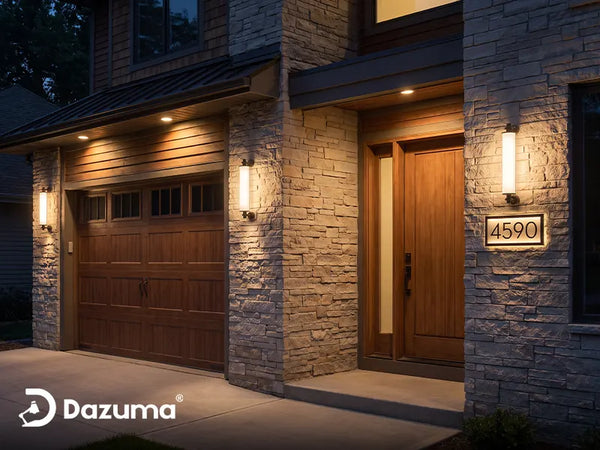

If you’ve ever stood in the lighting aisle staring at shelves of bulbs, you’ve probably asked yourself: “What wattage should I use for my outdoor lights? Is 40 watts enough? Will 100 watts be way too bright?”
You’re not alone. Choosing the right wattage for outdoor lighting can be surprisingly confusing. Pick something too dim, and you’ll struggle to see steps or driveways clearly. Go too bright, and you might blind yourself, annoy your neighbors, or waste money on unnecessary energy use.
The good news? Finding the perfect wattage doesn’t have to be complicated. In this guide, we’ll break down everything you need to know—how wattage and lumens really work, what’s best for each outdoor area, and practical tips to keep your home both safe and stylish.
Table of Contents
- Understanding Wattage and Lumens
- Why Wattage Choice Matters for Outdoor Lights
- Recommended Wattages by Outdoor Area
- Frequently Asked Questions (FAQ)
- Conclusion
Understanding Wattage and Lumens
Wattage Explained
For many years, people judged the brightness of a bulb almost entirely by its wattage. A 60-watt bulb was seen as the “standard” option for indoor spaces, while a 100-watt bulb was considered very bright, often used in garages or work areas. But wattage itself doesn’t describe brightness—it only measures how much electricity a bulb consumes. With older incandescent bulbs, higher watts usually meant brighter light, so the habit made sense at the time. Today, with efficient LEDs and CFLs, that direct link is gone. You can now get the same brightness as an old 60W bulb while using only a fraction of the power.
Lumens Are the Real Measure of Brightness
Now, the number to pay attention to is lumens, which measure the actual amount of visible light a bulb produces. This is why lighting labels in U.S. stores highlight lumens first. For instance, a 10W LED can shine just as brightly as a 60W incandescent, but with far less energy use. By focusing on lumens instead of watts, you’ll know whether a bulb creates a gentle glow for a pathway or a strong beam for security lighting—without wasting electricity.

Understanding watts versus lumens helps choose the right LED lighting
Quick Conversion Chart
Here’s a quick guide to compare traditional wattage with modern lumens:
- 40W incandescent ≈ 450 lumens
- 60W incandescent ≈ 800 lumens
- 100W incandescent ≈ 1,600 lumens
So, if you’re wondering: “What does a 5W LED equal in the old system?”—the answer is about the same brightness as a 40W incandescent. This makes it much easier to choose the right bulb without relying on outdated wattage rules.
Why Wattage Choice Matters for Outdoor Lights
Brightness vs. Safety
Too little light, and you risk tripping on steps, missing obstacles in the driveway, or leaving dark corners where intruders could hide. Too much light, on the other hand, can make it hard for your eyes to adjust and even cause glare that reduces visibility.
Energy Efficiency & Costs
Higher wattage means higher energy bills—unless you’re using LEDs. An LED floodlight might only consume 20 watts but give off the same brightness as a 150-watt halogen. That’s serious savings over time.
When selecting the ideal wattage for porch light, safety and voltage matter just as much as brightness. For DIY enthusiasts, we highly recommend upgrading to a 12V system using professional low voltage lighting, or installing classic outdoor lanterns with matching smart LED bulbs.
Aesthetic and Comfort
Outdoor lighting isn’t just about function—it sets the mood. Overly bright lights can feel harsh, while softer lighting creates a cozy, welcoming vibe. And yes, if your floodlights beam directly into your neighbor’s bedroom window, you might get a knock on the door.
Common concern: “Will bright outdoor lights bother my neighbors?” Yes, they can. That’s why choosing the right wattage and angling your fixtures correctly is key.
Recommended Wattages by Outdoor Area
Every part of your home’s exterior serves a different purpose, which means the lighting should too. Choosing the right wattage for each zone keeps your home safe, inviting, and energy-efficient. Here’s a detailed breakdown:
| Outdoor Area | Recommended Wattage | Lumens Equivalent | Lighting Goal |
|---|---|---|---|
| Front Porch & Entryway | 40W–60W | 400–800 lumens | Enough to unlock the door, greet guests, and feel safe |
| Pathways & Walkways | 20W–40W | 200–400 lumens | Gentle guidance along steps and paths |
| Driveways & Garage | 60W–100W | 800–1,600 lumens | Clear visibility for vehicles, obstacles, and movement |
| Decks & Patios | 40W–60W | 400–800 lumens | Comfortable brightness for dining or socializing |
| Garden & Landscape | 10W–30W | 100–300 lumens | Accent lighting for trees, flower beds, or decorative features |
| Security Floodlights | 100W+ | 1,600+ lumens | Strong coverage for driveways, backyards, and security purposes |
Front Porch & Entryway Lights
Recommended: 40W–60W (400–800 lumens)
Your porch light is the first thing guests see—it sets the tone for your home. You want it bright enough for safety but not so harsh that it blinds people at the door.
- Too dim: Strangers may hesitate, visitors might trip, and your front door could feel uninviting.
- Too bright: Creates glare, harsh shadows, and an uncomfortable “interrogation light” vibe.
Tips for Porch Lighting:
- Use warm white bulbs (2700K–3000K) for a welcoming feel.
- Add a motion sensor if you want extra security without running the light all night.
- For decorative lantern-style fixtures, make sure the bulb size doesn’t overpower the design.

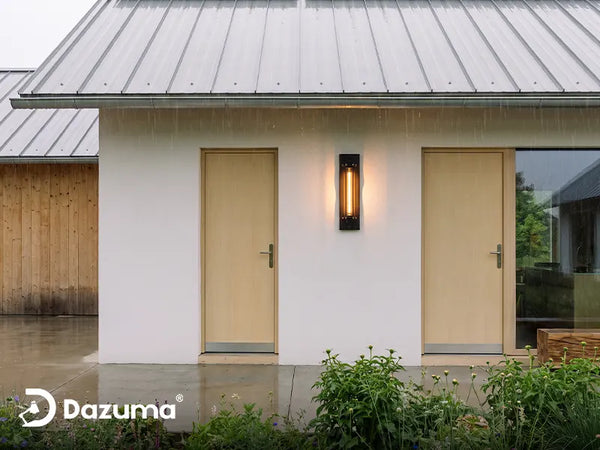
Modern wall sconces offer both style and functional outdoor lighting
Pathways & Walkways
Recommended: 20W–40W (200–400 lumens)
Garden walkway lights are all about guidance. They should softly outline the path so you and your guests can see where they’re going, without turning your yard into a runway.
- Too dim: People may miss steps or trip hazards.
- Too bright: Causes glare on the ground and ruins the cozy, subtle look.
Tips for Walkway Lighting:
- Place fixtures about 6–8 feet apart for balanced coverage.
- Consider solar-powered path lights for energy savings.
- Low-voltage LED stake lights give a soft glow and are easy to install.

Well-planned pathway lighting enhances safety and landscape beauty
Driveways & Garage Lights
Recommended: 60W–100W (800–1,600 lumens)
This is one of the most important safety zones. You need enough brightness to spot obstacles, park confidently, and discourage unwanted visitors.
- Too dim: Hard to see kids’ bikes, toys, or even approaching people.
- Too bright: Creates a blinding effect when you pull in at night.
Tips for Driveway Lighting:
- Mount garage wall lights about 6–8 feet high to spread light evenly.
- Use motion-activated floodlights for extra security without wasting energy.
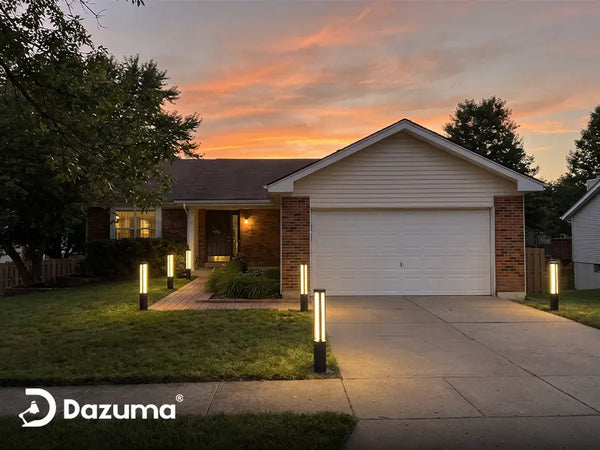
- Pair overhead lighting with ground-level bollard lights for extra style and function.

Contemporary wall lighting creates welcoming entrance illumination
Decks & Patios
Recommended: 40W–60W (400–800 lumens)
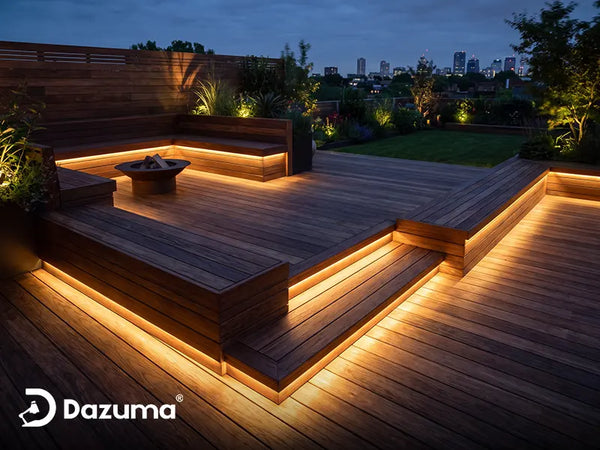
This is your outdoor living room—perfect for family dinners, barbecues, or simply unwinding at night. The key here is balance: enough light to see your food and friends, but soft enough to keep the mood relaxed.
- Too dim: Hard to eat, play games, or even chat comfortably.
- Too bright: Creates an overly harsh, sterile atmosphere.
Tips for Patio Lighting:
- Mix overhead string lights with wall-mounted fixtures for layers of light.
- Choose dimmable LEDs so you can brighten things up for dining, then dial it down for stargazing.
- Warm light (2700K–3000K) enhances comfort and ambiance.

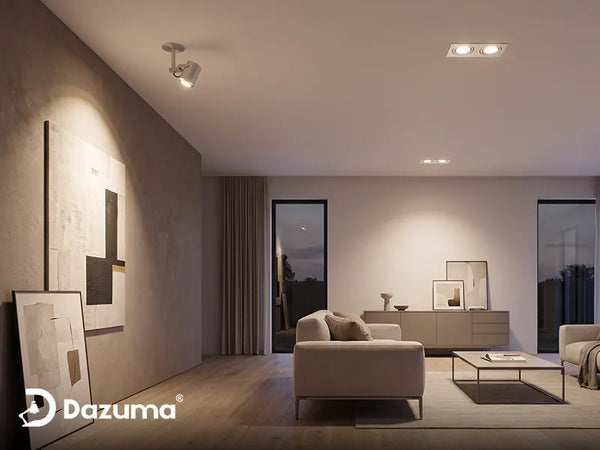
Adjustable spotlights highlight specific landscape features beautifully
Garden & Landscape Lighting
Recommended: 10W–30W (100–300 lumens)
Landscape lighting is less about function and more about showcasing your yard’s beauty. From highlighting a tree to accenting a water fountain, lower wattage is usually better.
- Too dim: Features blend into the dark and lose their impact.
- Too bright: Washes out natural beauty and creates light pollution.
Tips for Garden Lighting:
- Use spotlights or uplights at the base of trees for a dramatic effect.
- Place lights at different angles to add depth and dimension.
- Solar lights are great for flower beds and borders since they’re easy to move around.

Ground-level lighting provides subtle yet effective pathway guidance
Security Floodlights
Recommended: 100W+ (1,600+ lumens)
When it comes to security, brighter is usually better. High-power floodlights illuminate large areas, making it harder for intruders to hide and easier for you to see what’s happening.
- Too dim: Defeats the purpose—shadows provide cover for unwanted activity.
- Too bright: Can feel like a stadium spotlight and annoy your neighbors.
Tips for Security Lighting:
- Use motion sensors so lights activate only when needed, saving energy.
- Angle floodlights downward to cover your driveway, backyard, or side yard without spilling into neighbor windows.
- Pair with a camera system for maximum security benefits.

Security lighting provides safety and visibility for home exteriors
Frequently Asked Questions (FAQ)
Q: Is 40 watts too dim for outdoor lights?
A: It depends on where you’re using it. 40W incandescent (or ~450 lumens) is enough for a small porch or decorative lantern, but it’ll feel too dim for larger areas like a driveway or backyard. For those spaces, you’ll want more wattage.
Q: Is 60 watts bright enough for outdoor lighting?
A: Yes, in many cases. 60W incandescent (or ~800 lumens LED equivalent) works well for porches, patios, and small walkways. If you’re lighting a wide area or want stronger security lighting, you’ll likely need to go brighter.
Q: How many watts should a driveway light be?
A: A good range is 60–100 watts incandescent (800–1600 lumens), depending on the size of your driveway. The larger the area, the higher the wattage you’ll need for safety and visibility.
Q: Can I use a 100W bulb in an outdoor light fixture?
A: Only if the fixture is rated for it. Every fixture has a maximum wattage limit, which you should never exceed to avoid overheating or fire risks. If you want a 100W-equivalent brightness but your fixture only allows lower wattage, switch to LEDs—they give you high lumens with low watts.
Q: What wattage should garden or landscape lights be?
A: Keep it low: 10–30W incandescent (100–300 lumens LED equivalent) is plenty for highlighting trees, flower beds, or pathways. Accent lighting is about subtlety, not flooding the space.
Q: How do LED wattages compare to incandescent wattages?
A: LEDs use far less power. For example:
- 5–10W LED ≈ 40–60W incandescent
- 15W LED ≈ 100W incandescent
So don’t be surprised when a low-watt LED bulb delivers the brightness of a high-watt traditional bulb.
Q: What wattage is best for outdoor security lights?
A: For floodlights or motion-sensor security lights, aim for 100W+ incandescent equivalent (1600+ lumens). The key is brightness and coverage, but angle the lights properly so they don’t spill into your neighbor’s windows.
Conclusion
So, what wattage is best for outdoor lights? The answer depends on where you’re installing them and what you’re trying to achieve. A soft 20W glow might be perfect for a garden path, while a bright 100W floodlight makes sense for security.
The key takeaway: don’t just look at wattage—look at lumens, the purpose of your lighting, and the overall vibe you want. By mixing the right brightness levels across different areas, you’ll keep your home safe, stylish, and energy-efficient.
At the end of the day, outdoor lighting should work for you, not against you. So test, adjust, and find that sweet spot where safety, comfort, and efficiency meet.