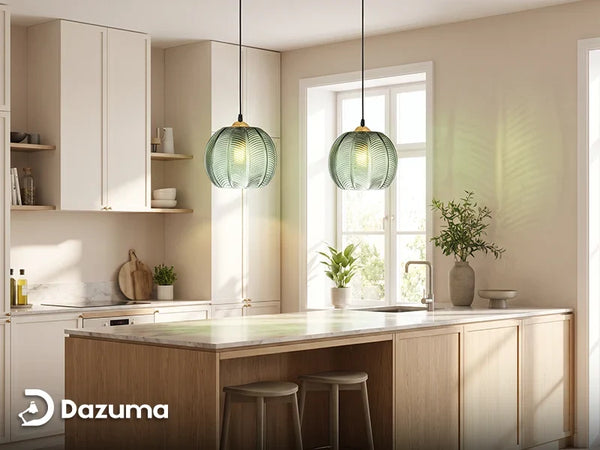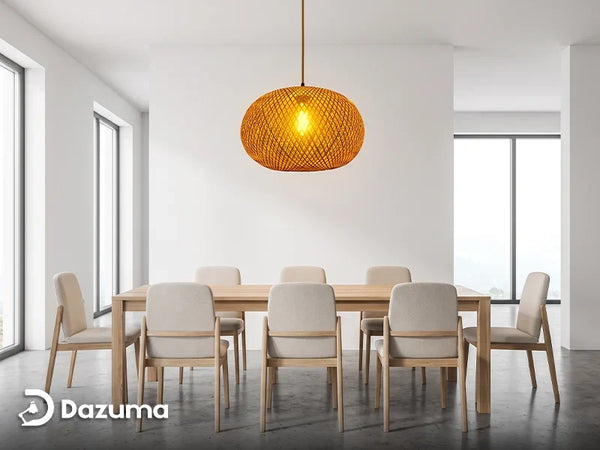

This guide is for homeowners who like the calm, light-filled feeling of coastal interiors but worry that a chandelier may look too beachy, too casual, or disconnected from the rest of the home.
Coastal Style Should Feel Breezy, Not Themed
Many homeowners love coastal interiors but worry that the main light will look like a vacation-rental prop. A sophisticated coastal room is less about literal beach symbols and more about how the space handles light: open, breathable, softly reflective, and connected to natural materials.
One useful design concept is visual porosity: how easily your eye can see through or around a fixture. Clear glass, open metal frames, separated beads, and slender arms allow the architecture to remain visible. That visual openness often matters more than whether the product is officially labeled “coastal.”

Quick Answer: What Chandelier Works Best in a Coastal Home?
The best coastal chandeliers combine an open silhouette with one or two nature-inspired materials, such as clear glass, pale wood, woven fiber, translucent beads, brushed brass, or aged nickel.
For an airy result, look for:
- Clear, seeded, ribbed, or softly colored glass that catches daylight.
- Open frames that do not block windows or ceiling height.
- Natural texture used selectively rather than covering the whole fixture.
- Warm white light that keeps white walls and pale woods comfortable.
- A shape that relates to the table and room instead of simply looking “beachy.”
Choose a woven or wood chandelier when the room needs warmth. Choose glass when it needs lightness and reflection. Choose a beaded or floral design when the room is simple enough to support a more decorative focal point.
What Makes a Chandelier Feel Coastal?
Light Can Move Through the Fixture
Heavy opaque shades can visually lower a room. Coastal chandeliers work best when light passes through, reflects from, or moves between their components.
The Materials Feel Tactile, but Not Cluttered
Coastal rooms benefit from contrast: smooth glass beside linen, brushed metal beside washed wood, or translucent beads above matte stone. Add one clear texture rather than repeating every natural material.
The Palette Comes From the Landscape, Not a Theme Kit
Sand, chalky white, driftwood brown, mist gray, sea-glass green, muted blue, and warm brass feel coastal in controlled amounts. Shells and anchors are unnecessary.
The Form Feels Relaxed but Deliberate
Irregular glass, hand-finished beads, and soft floral shapes can keep a room from feeling rigid. The key is enough structure to prevent “relaxed” from becoming sloppy. A defined metal frame or a disciplined linear layout provides that structure.

Build the Room Around Contrast
If the furniture is already woven and rustic, use a smoother glass chandelier. If the room is polished and pale, a little beadwork or wood can keep it from feeling sterile.
Best Materials for Coastal Chandeliers
| Material | Visual Effect | Works Best With | Watch For |
|---|---|---|---|
| Clear or Textured Glass | Reflective, light, water-like | White walls, stone, pale wood, linen | Visible bulbs, fingerprints, and glare |
| Sea-Glass Colors | Soft color without a strong theme | Neutral dining rooms and kitchens | Too many blue-green accents competing nearby |
| Woven Fiber | Warm, casual, shadow-rich | Modern organic and relaxed coastal rooms | Dust, uneven weaving, and overly rustic styling |
| Pale or Weathered Wood | Grounded and natural | Vaulted rooms, beams, casual dining spaces | Too many competing wood tones |
| Brushed Brass | Sun-warmed and refined | Cream, sand, warm white, clear glass | Highly polished finishes that feel too formal |
| Silver or Aged Nickel | Cool, clean, and water-inspired | Gray-blue, marble, and contemporary coastal rooms | A cold effect when the room lacks warm texture |
For homeowners who want the airiest option, the Glass Chandelier category is a practical starting point. Glass keeps views open, but the edge texture, color, and bulb exposure determine whether the result feels soft or glaring.
Coastal Chandelier Styles That Keep a Room Airy
Glass Petal and Flower Chandeliers
Petal chandeliers soften the geometry of a room without using literal coastal symbols. Textured clear glass can resemble light moving across water, while brass adds enough warmth to prevent a pale room from feeling washed out.
These fixtures work especially well when the surrounding furniture is simple. A dramatic floral chandelier above a quiet oak table can feel artistic; the same fixture surrounded by patterned wallpaper, ornate chairs, and many accessories may feel crowded. The Flower Chandelier
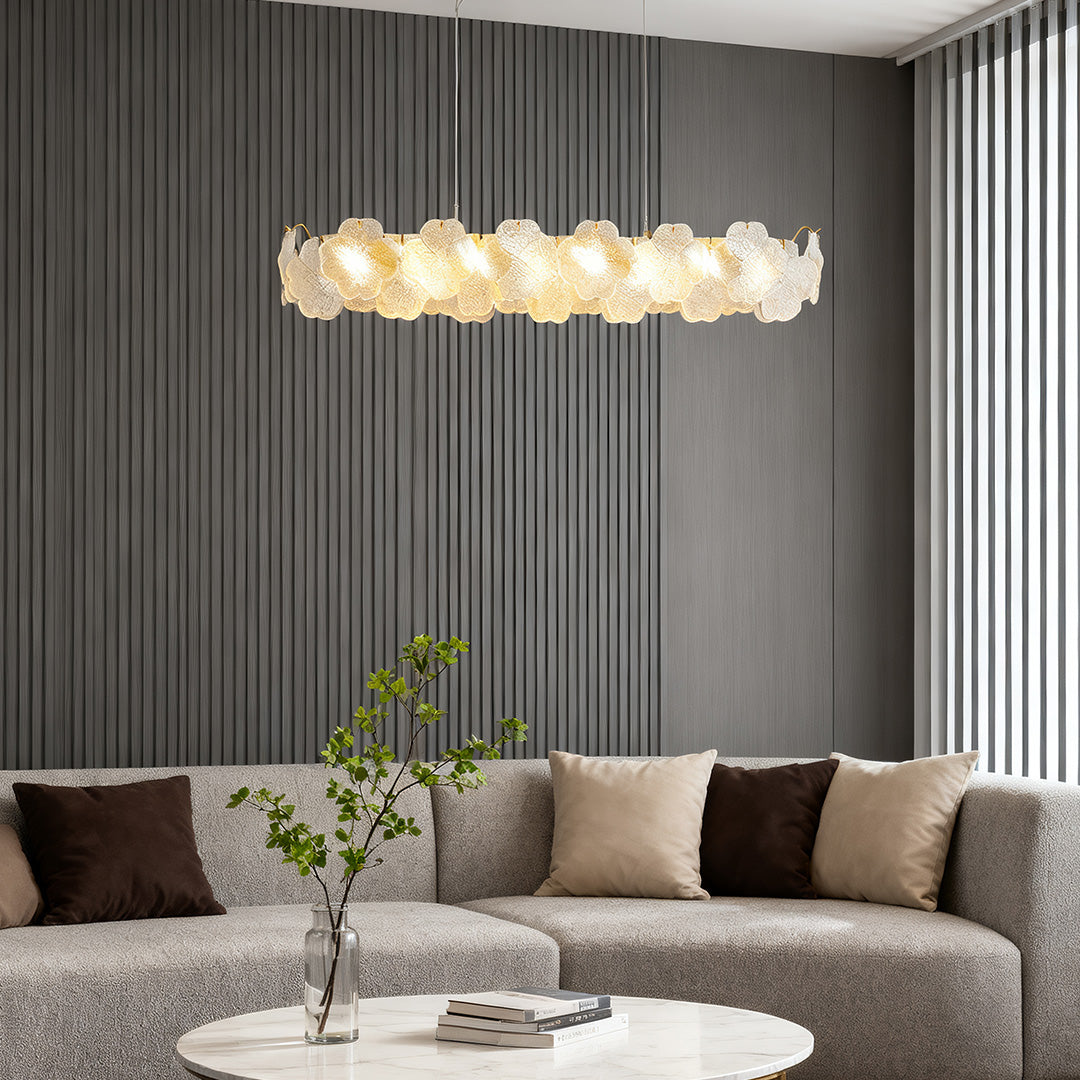
Soft Glass With a Sun-Warmed Frame
Artistic Glass Chandeliers French Flower Ceiling Lights
Price: $369.99
Best for coastal dining rooms and living spaces that need an organic focal point without blocking windows or making the ceiling feel heavy.
- Round, double-layer, and linear configurations suit different tables.
- A 1-meter adjustable chain supports varied ceiling heights.
- Three selectable color temperatures change the room’s mood.
Open-Frame Chandeliers
Open metal frames suit rooms already rich in texture. Brass, white, or black creates structure while leaving windows visible. Use black as punctuation by repeating it in window frames or hardware.
Woven and Beaded Chandeliers
Woven shades and beads add movement and hand-crafted character. They are strongest when the room needs warmth, but they can push a space toward casual bohemian style if every nearby surface is also woven, distressed, or fringed.
Use one refined counterweight: a stone table, tailored dining chairs, a clean-lined cabinet, or a polished metal canopy. The Beaded Chandelier
Linear Glass Chandeliers
Linear fixtures follow long tables and islands. A narrow row of glass adds drama without forming a wide visual barrier across an open-plan home.
Match the Chandelier Shape to the Furniture
A round chandelier reinforces a circular table or square conversation area. A linear chandelier creates better coverage and calmer proportions above a long island or rectangular table.
Where Coastal Chandeliers Work Best
Dining Room
The dining table visually anchors decorative coastal chandeliers, helping clear petals, beads, or woven layers feel intentional.
For hanging height, a common starting point is 30 to 36 inches between the tabletop and the bottom of the fixture with a standard ceiling. Adjust for fixture depth, ceiling height, and sightlines. The guide on How High Should a Chandelier Be Over a Dining Table? covers those adjustments in more detail.
Living Room
Near tall living-room windows, avoid a dark block across the view. Clear petals, slender branches, and open frames preserve daylight while creating a focal point.
Kitchen Island
A linear glass fixture softens an island full of hard surfaces. Clear and green glass pairs well with white oak, pale stone, warm white cabinetry, or gray-blue paint. Keep bright LEDs outside normal eye lines.
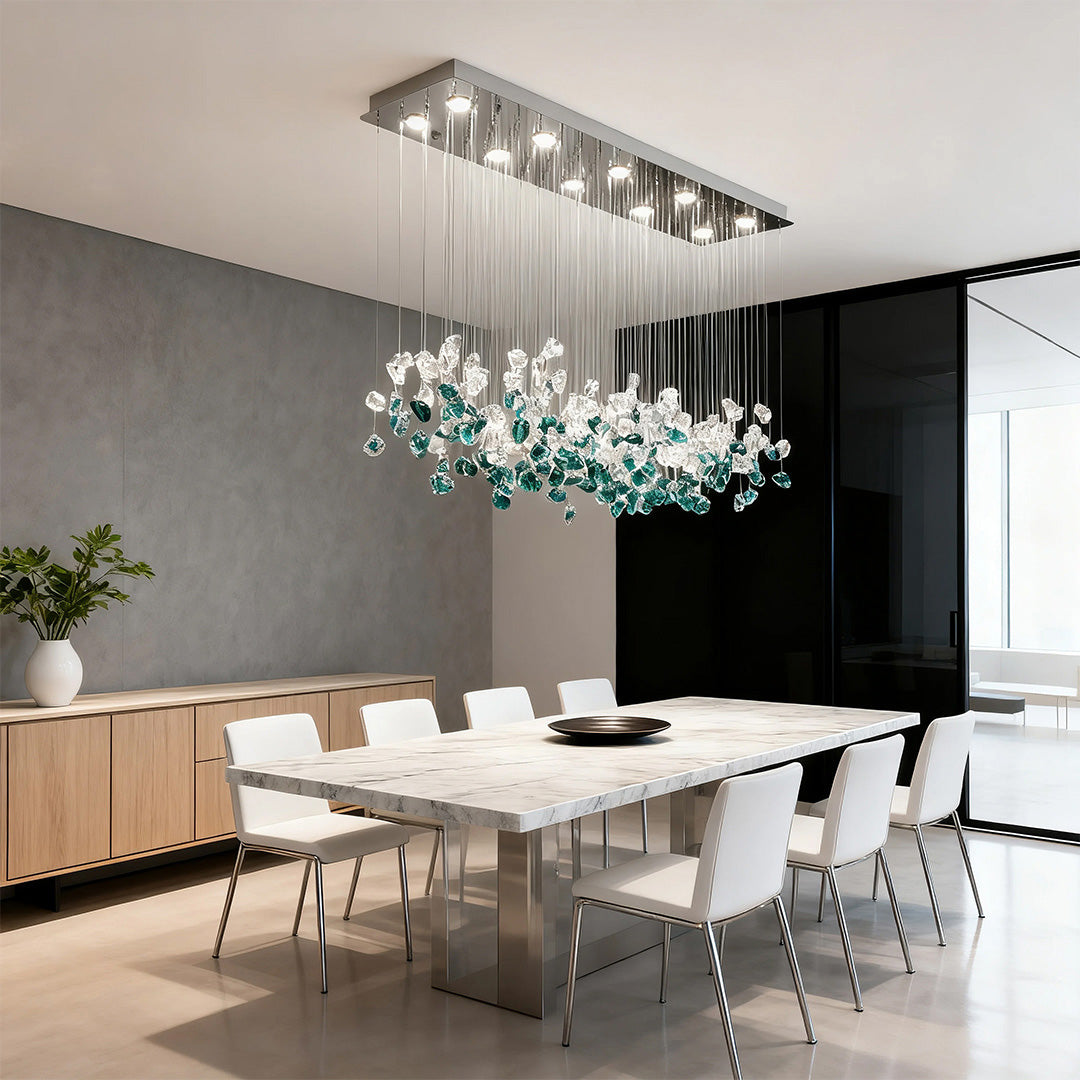
Sea-Glass Color for a Long Surface
Beaded Glass Chandelier Irregular Artistic Island Ceiling Light
Price: $765.99
Best for a long kitchen island or dining table where transparent and green glass can introduce coastal color without relying on obvious nautical decoration.
- Green and transparent pieces create a subtle sea-glass effect.
- The 90 cm suspension wire allows height adjustment.
- The narrow 11.81-inch width suits long furniture layouts.
Foyer
In a foyer, clear glass with restrained brass, green, or blue introduces the palette without revealing every idea. For two-story entries, check the view from the upper landing.
Bedroom
Bedrooms need the quietest version: smaller woven, pale wood, milk-glass, or simple clear-glass designs with dimming or lower-output lamps.
Choose the Right Size, Height, and Visual Weight
Measure the Furniture Before the Room
Use the table or island as the main sizing reference. Leave visible space around the chandelier; nearly matching the full table length feels crowded, while a much shorter fixture can look unrelated.
Account for Visual Weight
Equal-size fixtures can have different visual weight. Clear glass and open frames feel lighter than woven drums or dense wood beads, so glass can often be physically larger.
Protect Sightlines
Check the view from the sink, entry, sofa, and dining chair. Avoid blocking outdoor views or placing exposed sources in seated eye lines.
Plan for the Ceiling
Standard ceilings favor shallow fixtures or adjustable chains; vaulted rooms support more drop. Confirm sloped-ceiling compatibility before ordering.

Mock Up the Full Silhouette
Do not mark only the canopy or center point. Tape the full width and lowest edge so you can judge table proportions, sightlines, and visual weight before installation.
Color, Metal Finish, and Light Quality
Warm White Is Usually the Safest Starting Point
Warm white around 2700K to 3000K flatters pale wood, linen, brass, and cream. Very cool white can make coastal neutrals look gray at night.
Use Blue and Green as Accents
Let a sea-glass chandelier carry the main color story. Repeat its hue once or twice in artwork or a pillow rather than matching every accessory.
Choose Brass for Warmth, Silver for Crispness
Brushed brass feels sunny with sand and cream. Silver and nickel look crisp with marble and gray-blue; add warm wood or fabric so cool finishes do not feel clinical.
Control Glare Through Diffusion and Dimming
Clear glass is not automatically glaring; visible bright bulbs or LEDs are the concern. Check shielding and diffusion, and remember that color-temperature switching is not brightness dimming.
Maintenance Matters More in Light-Colored Rooms
Daylight reveals dust on clear glass, and petals or beads take longer to clean than an open frame. Match installation height to realistic maintenance access.
Choose a fixture that can be safely reached, and confirm how glass pieces are attached before cleaning. The guide on how to clean glass light fixtures provides a more detailed process. Always turn off power and follow the product’s care instructions.
Both featured products are listed for indoor use. Their coastal appearance does not make them suitable for a covered porch or salt-exposed exterior location unless a product page specifically provides the required damp- or wet-location rating.
Coastal Style Does Not Override Location Ratings
An indoor glass chandelier may look perfect for a porch, but appearance is not a weather rating. Use it only in the indoor environments stated by the manufacturer.

A Realistic Coastal Dining Room Example
Imagine a white dining room with a pale oak table, cream chairs, woven shades, and a large window. A dense rattan chandelier seems coastal online, but the room already has abundant natural texture, so it feels heavy and blocks the view.
A clear glass floral or linear chandelier adds reflection while keeping the window visible. A restrained brass frame connects to warm hardware without forcing every metal to match.
The important lesson is that the best coastal material is not always the most obviously natural one. Choose the chandelier that supplies what the room is missing. A smooth room may need weave; a textured room may need glass.
Common Coastal Chandelier Mistakes
Using Too Many Literal Beach Symbols
Shells, rope, anchors, coral shapes, and nautical stripes can quickly turn a home into a theme. One reference is enough; material, light, and color can do the rest.
Making Every Surface Rustic
Weathered wood, woven furniture, jute rugs, bead chandeliers, and distressed accessories together may feel unfinished rather than airy. Include at least one smooth, tailored, or polished element.
Choosing a Fixture That Blocks Daylight
Coastal rooms depend on openness. Check the chandelier against windows and adjacent rooms during the day, not only in a dark showroom image.
Ignoring the Bulbs
Clear glass exposes the light source. Bulb shape, finish, brightness, and color temperature become part of the design. Frosted bulbs often feel softer than clear filament bulbs at close viewing distances.
Assuming Coastal Means Casual
Glass petals, hand-blown beads, tailored linen, and brushed metal can create a refined coastal room. The degree of formality comes from proportion and material quality, not the label.
Forgetting Cleaning Access
A complex chandelier over a double-height space may look beautiful but require professional maintenance. Consider access before choosing many individual petals or beads.
Coastal Chandelier Buying Checklist
- Decide whether the room needs more texture or more visual lightness.
- Match round fixtures to compact tables and linear fixtures to long surfaces.
- Mock up the full width, depth, and lowest edge before ordering.
- Check views from seated and standing positions.
- Limit blue or green to one main accent and a few small echoes.
- Choose warm or neutral light that flatters the room’s finishes.
- Confirm whether color-temperature switching also includes brightness dimming.
- Review weight, ceiling-box support, hanging hardware, and installation access.
- Plan how the glass, beads, or woven material will be cleaned.
- Use only fixtures rated for the actual indoor, damp, or wet location.
Final Advice: Create Airiness Through Contrast
A coastal chandelier should make the room feel lighter, not announce a theme. Use glass for reflection, wood or woven fiber for warmth, colored glass for one water-inspired accent, and restrained metal for structure.
If the room is already rustic, choose glass. If it is smooth and pale, add texture. Timeless coastal interiors balance smooth with tactile, warm with cool, and structured with organic.