



Exterior Porch Light Fixtures Modern Waterproof Door Number LED Light
Features


DESCRIPTION
Installation Video
Description:
This exterior porch light fixtures features a die-cast aluminum body and glass light-transmitting panel, presenting sleek and minimalist modern lines. It is available in four length specifications to fit different wall widths. With built-in LED light source, it offers two color temperatures: warm white and cool white. The light is evenly diffused through the glass panel, creating a soft wash wall effect. Rated IP65 for comprehensive waterproofing and dustproofing, it is suitable for installation on outdoor walls such as courtyard exteriors, doorways, garages, corridors, and commercial spaces, as well as indoor walls, enhancing the modern aesthetic of the building with its understated design.
Highlights:
Four Length Specifications: This exterior porch light fixtures four length options are available for flexible matching with various wall sizes.
Two Color Temperature Lighting: Warm white provides a cozy and comfortable ambiance, while cool white offers clear and bright illumination, meeting different scene atmosphere requirements.
Even Linear Light Effect: The acrylic panel diffuses light softly, creating a continuous and uniform striped wall-washing effect.
Waterproof Outdoor Structure: The die-cast aluminum body combined with IP65 protection withstands heavy rain, dust, and corrosive environments.
Minimalist Modern Design: The black bar-shaped appearance blends subtly into the building facade, serving as decoration both day and night.
Explore More: Exterior Down Wall Lights
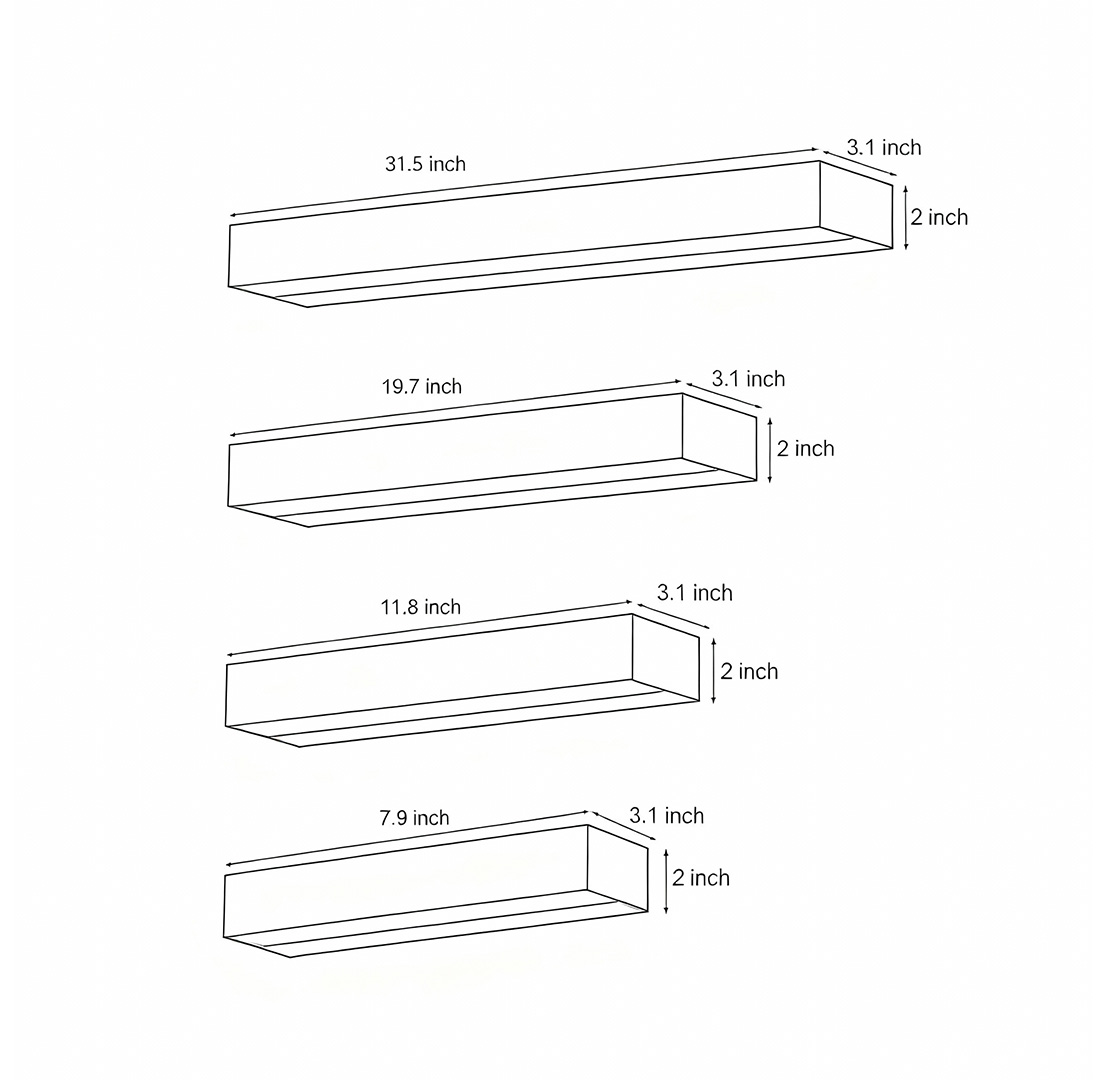
WEIGHTS & DIMENSIONS
| Length: 7.9'' | |
| Weight: | 0.88lb |
| Size: | 3.15'' Width x 7.87'' Depth x 1.97'' Height |
| Length: 11.8'' | |
| Weight: | 1.32lb |
| Size: | 3.15'' Width x 11.81'' Depth x 1.97'' Height |
| Length: 19.7'' | |
| Weight: | 1.76lb |
| Size: | 3.15'' Width x 19.69'' Depth x 1.97'' Height |
| Length: 31.5" | |
| Weight: | 5.07lb |
| Size: | 3.15'' Width x 31.50'' Depth x 1.97'' Height |
DETAILS
| Product Type: | Linear Wall Lights |
| Product Name: | Exterior Porch Light Fixtures |
| Voltage: | 110-265V |
| Style: | Modern |
| Finish: | Black |
| Material: | Die-cast Aluminum, Glass |
| Power Supply: | Hardwired |
| Bulb Included: | Yes |
| Light Source: | LED |
| Power: | 12W, 18W, 30W, 48W |
| Ingress Protection: | IP65 |
| Features: | Rust Proof,Waterproof |
| Applicable Scene: | Entrance,Gate,Indoor,Outdoor |
| Indoor/Outdoor: | Outdoor |
| Control Type: | Wall Switch |
| Mounting Type: | Wall Mount |
| Product Care: | Turn Off the Power,Wipe Clean with Dry Cloth |
NOTE
1 in = 2.54 cm; 1 cm = 0.39 in
* Should you require any further information about our products and services, feel free to Contact Us.
people also ask
people also ask
- What lengths are available — will it fit my entryway wall?
This Modern Waterproof Porch Light comes in four lengths: 7.9", 11.8", 19.7", and 31.5" — from a compact accent above a doorbell to a full-width bar across a garage or courtyard wall, there's a size for every facade.
- Is it truly waterproof for a front door or outdoor wall?
Yes. This Exterior Waterproof LED Porch Light is IP65-rated with a die-cast aluminum body — fully sealed against dust and heavy rain, built for permanent outdoor installation at doorways, garages, and courtyard entrances.
- Can I choose between warm and cool light?
Yes. This Modern Exterior Porch Fixture is available in warm white (3000K) for a welcoming, cozy glow, or cool white (6000K) for a crisp, contemporary look — choose based on your home's exterior style and lighting needs.
- Will the light look even, or will there be bright spots?
The light is evenly diffused. This Waterproof Door Number LED Light uses a glass panel that spreads illumination into a smooth, continuous linear wash across the wall — no hot spots, no visible LED dots, just clean uniform light.
- What wattage should I choose for my space?
This Modern Exterior Porch Light ranges from 12W (7.9" compact) up to 48W (31.5" full-width bar). Smaller sizes suit accent or door number lighting; larger sizes work well for wide garage walls, gates, or commercial entrances.
- Will it rust or corrode on an exposed exterior wall?
No. This Exterior Waterproof Porch Fixture is die-cast aluminum with a rust-proof finish, designed specifically for long-term outdoor wall mounting — it holds up against humidity, rain, and temperature swings without corroding.
Shipping & Delivery
Shipping & Delivery
Free Shipping
Dazuma offers free standard shipping on orders over $49. For orders under $49, a flat shipping fee of $9.99 will apply.
Processing Time
We start processing your order as soon as it is placed. You will receive an email confirmation upon placing your order. Please review your order details carefully for accuracy. Processing times are as follows:
- Standard Products: 7–10 business days.
- Custom or Bulk Orders: 10–35 business days.
- Peak Periods or Holidays: Processing times may extend during high-order volumes.
Shipping Methods & Delivery Times
Dazuma provides the following shipping options to suit your needs:
Standard Shipping
- Estimated Delivery Time: 15–25 business days.
- Cost: Free for orders over $49; $9.99 flat rate for orders under $49.
Expedited Shipping
- Estimated Delivery Time: 7–10 business days.
- Cost: Additional fees apply; calculated at checkout.
Note: Delivery times may vary depending on your location and carrier logistics.
Shipping Costs
Shipping costs are calculated based on:
- The shipping method you select.
- The weight and dimensions of your order.
- The delivery destination.
The total shipping cost will be displayed at checkout before completing your purchase.
Order Tracking
Once your order ships, you will receive an email that includes:
- A tracking number.
- A link to track your package.
- The carrier’s information (e.g., UPS, FedEx, DHL).
You can also track your order via our website on the Order Tracking page.
Shipping Delays
We strive to deliver your order on time; however, delays may occur due to:
- Inventory availability or processing capacity.
- High order volumes during peak seasons.
- Unforeseen circumstances such as natural disasters or strikes.
- Customs clearance issues or carrier delays.
If a significant delay occurs, we will notify you promptly. For urgent assistance, please contact Dazuma Customer Service.
Lost or Damaged Packages
Lost Packages
- If your package is not delivered within 15 business days of the expected delivery date, please contact us.
- We will work with the carrier to locate your package or provide a replacement/refund.
Damaged Packages
- If your package arrives damaged, please contact us within 48 hours of delivery.
- Provide photos or videos of the damaged item and packaging to expedite the resolution process.
Ownership & Authorized Online Operations
Dazuma is a lighting brand owned by DUSTERONE SARL, 44 Rue Beaurepaire, 49100 Angers, France.
Dazuma.us is an authorized online retail channel for Dazuma-branded products. HONGKONG GAOXUNBOO TECHNOLOGY CO., LIMITED is authorized by DUSTERONE SARL to support global e-commerce operations, including online store management, order processing, customer-service coordination, payment support, and logistics coordination for Dazuma.us.
Authorized U.S. Return & Exchange Receiving Facility
For approved returns and exchanges only:
Recipient: MH022 Address: 21 Central Ct STE #7, Leominster, MA 01453, United States
Please contact Dazuma Customer Support before sending any return or exchange shipment. Packages sent without prior authorization, missing order information, or sent to the wrong facility may be delayed, refused, or returned to sender.
Additional Information
- International Shipping: Available to select locations.
- Non-Serviceable Addresses: We cannot deliver to Alaska, Hawaii, P.O. Boxes, APO/FPO addresses, or restricted areas.
- Customs and Duties: All customs fees, import taxes, and duties are included in the shipping cost.
- Installation & Assembly: Dazuma does not provide on-site installation, assembly, indoor placement, or labor services.
- Non-Refundable Shipping Charges: Please note that shipping charges are non-refundable.
Return & Refunds
Return & Refunds
At Dazuma, we are committed to enhancing your home with thoughtfully designed lighting and home décor. While every order is rigorously inspected by our QA team before shipping, we understand that a return or refund may occasionally be necessary. This policy outlines the process for returns, refunds, and exchanges to ensure a seamless experience.
1. Order Cancellation Policy
Cancellation Before Shipping: You may cancel your order for a full refund at any time before the product has been shipped. Please contact us immediately at [email protected] to process your request.
Cancellation After Shipping: Once an order has been transferred to the carrier and is in transit, it cannot be canceled or modified. If you no longer wish to keep the item, please refer to our return policy after receiving the package.
Customized Orders: Once production of a custom or specialty order (non-stock sizes/designs) has begun, the order cannot be canceled or modified.
2. Return Window & Eligibility
Geographical Restriction: We only offer return and exchange services for orders delivered within the United States. We do not accept returns or exchanges from countries or regions outside the USA.
30-Day Strict Deadline: We offer a 30-day return window from the date of delivery. You must initiate your return request within this period. No returns or refund requests will be accepted after 30 days of receipt.
Condition Requirement: To be eligible for a return, items must be in their original condition: unused, unassembled, undamaged, and in their original packaging (unopened). All original tags, instructions, and inserts must be included.
3. Non-Returnable Products
The following items are strictly non-returnable and non-refundable:
Orders from outside the USA.
Customized or personalized items (unless there is a confirmed quality defect).
Items that have been assembled, used, or altered.
Clearance items, "Open Box" items, or final sale items.
Gift cards.
4. Return Shipping Costs
Quality Issues (Defective/Damaged/Mis-shipped): Dazuma will be responsible for the return shipping costs for orders that are defective, damaged, or mis-shipped. Please report such issues within 48 hours of delivery.If it is a quality issue, please contact [email protected] and provide photos/videos.
Non-Quality Issues (Change of Mind): For returns due to personal preference (e.g., style, size, or color), the customer is responsible for all round-trip shipping costs, including the original shipping cost paid by Dazuma and the return shipping fee.
5. How to Initiate a Return (USA Orders Only)
Contact Us: Email [email protected] with your order number and reason for return.
Approval: Once approved, you will receive the correct return address. Do not send items back without prior authorization.
Packaging: Securely package the item and include a note with your order number and product ID inside the box.
Tracking: Use a trackable shipping method. Dazuma is not responsible for lost or undelivered return packages.
6. Refund Process
Inspection: Once we receive and inspect your return, we will notify you of the approval or rejection.
Approved Refunds: Refunds will be issued to your original payment method within 5–10 business days.
7. Damaged or Defective Products
Visible Damage: If damage is visible upon delivery, please reject the shipment and contact us immediately.
Concealed Damage: If you discover damage after opening, you must contact us within 48 hours of delivery. Provide photos of the damaged item and all original packaging.
Dazuma will work with you to provide a replacement or refund, based on your preference.
8. 2-Year Quality Support & Warranty
We are committed to the longevity of your Dazuma lighting. To ensure your space remains perfectly lit, we provide a 2-year support framework for all fixtures:
Within 1 Year of Delivery: Should any functional issues or manufacturing defects arise (such as driver or LED failure), Dazuma will provide the necessary replacement components or a new unit at no additional cost to you.
Year 2 Support: For items entering their second year of use, our commitment continues through our Extended Loyalty Program. If a component requires replacement after the first 12 months, we offer exclusive, high-value discounts on replacement parts or new units to ensure your Dazuma collection remains in top condition.
How it works: If you have questions about your product's performance, simply reach out to [email protected]. Our technical team will review the details (please include your order number and any relevant photos) and provide the most efficient resolution for your specific case.
We strive to make returns, refunds, and exchanges simple and stress-free. For assistance, please contact Dazuma Customer Service.
9.The terms need to be explained:
If the return is caused by the consumer, consumer should be responsible for the shipping fee. The specific fee should be based on the express company you choose.
If due to our reasons, the goods received are damaged or not correct, and the consumer is not required to bear the shipping fee for this reason.
Authorized U.S. Return & Exchange Receiving Facility
For approved returns and exchanges only:
Recipient: MH022 Address: 21 Central Ct STE #7, Leominster, MA 01453, United States
Please contact Dazuma Customer Support before sending any return or exchange shipment. Packages sent without prior authorization, missing order information, or sent to the wrong facility may be delayed, refused, or returned to sender.
Ownership & Authorized Online Operations
Dazuma is a lighting brand owned by DUSTERONE SARL, 44 Rue Beaurepaire, 49100 Angers, France.
Dazuma.us is an authorized online retail channel for Dazuma-branded products. HONGKONG GAOXUNBOO TECHNOLOGY CO., LIMITED is authorized by DUSTERONE SARL to support global e-commerce operations, including online store management, order processing, customer-service coordination, payment support, and logistics coordination for Dazuma.us.
FAQ
FAQ
FAQs you need! Get instant answers to everything you want to know right here. Your questions answered in one convenient place.
Ordering & Payments
What Types of Credit Card Payments Do You Accept?
Dazuma accepts Visa, MasterCard, American Express, Discover, Diners Club, JCB, and UnionPay credit cards. Here is a list of Valid Payment Methods
What Should I Do If My Payment Method Is Declined at Checkout?
If your payment is declined, it may be due to factors such as incorrect billing details, insufficient funds, or fraud protection measures by your card issuer. Start by reviewing your card information for accuracy. If the issue persists, please contact Dazuma Customer Service for assistance.
How Will I Know My Order Has Been Received?
After placing your order, a confirmation page will display your transaction details. You can print this for your records. Additionally, a confirmation email will be sent to the email address provided. When your order ships, you’ll receive further emails with tracking information.
How Can I View an Order I’ve Placed?
Log into your Dazuma account and navigate to your Orders. If you’re unable to locate your order, please contact Dazuma Customer Service for help linking the order to your account.
Can I Change or Cancel My Order?
Once Dazuma receive your order, we begin processing it right away, so changes or cancellations may not always be possible. Additionally, orders cannot be modified online after they’ve been placed.
However, we understand that situations may arise where you’d like to request a change or cancellation. If this happens, please contact Dazuma Customer Service as soon as possible. We will do our best to accommodate your request.
If your order has already shipped before the cancellation or change is confirmed, you can return the item in accordance with our Return Policy. Please note that certain items, especially non-returnable ones, cannot be canceled.
Are Installation or Labor Costs Included in the Prices?
No, Dazuma is not responsible for installation or labor costs related to handling, storing, installing, or uninstalling items purchased from us.
Shipping & Delivery
Is Free Shipping Available?
Yes, Dazuma offers free standard shipping on orders over $49. Expedited delivery options are available at an additional cost.
How Much Does Shipping Cost?
Shipping costs are determined by the delivery location, the item's size and weight, and the selected shipping method. Exact fees will be calculated and shown during checkout. Additional surcharges may apply for deliveries to remote areas.
Are Customs Taxes Covered?
Dazuma covers all customs taxes for your orders. Whether you’re shopping locally or internationally, you can enjoy a seamless experience without worrying about unexpected customs fees.
How Long Will It Take for My Order to Arrive?
Delivery time includes both processing and shipping times:
1. Processing Time:
• Standard products: 7–10 business days.
• Custom or bulk orders: 10–35 business days.
• Processing may take longer during holidays or peak periods.
2. Shipping Time:
• Varies by location and shipping method.
• Expedited shipping: 7–10 business days (estimated).
• Standard shipping: 15–25 business days (estimated).
Delays may occur due to inventory availability, processing capacity, or unexpected events like strikes or natural disasters. If there are any delays, we will notify you promptly. For more details, visit Dazuma Shipping Info.
Why Didn’t I Receive an Email About My Order Delivery?
Once your order is dispatched, you’ll receive a tracking number via email within 1–2 business days. Please ensure your email address is accurate and check your spam folder if you don’t see the email.
How Can I Track My Package?
Visit the “Order Tracking” section on our website once your tracking number is updated by the courier. Note: Tracking updates may take time due to international shipping and customs clearance processes. Contact Dazuma Customer Service for help if you encounter any issues.
Can I Modify My Shipping Address?
You can contact Dazuma Customer Service to update your shipping address before the package ships. After shipment, address changes will not be possible.
Returns & Refunds
What Should I Do If I Receive a Damaged Item?
If your item arrives damaged, please follow these steps:
- Document the Damage: Take clear photos or videos of the damaged item, its packaging, and the shipping label.
- Contact Us: Email us at [email protected] with your order number and the photos attached.
- Resolution: After reviewing your case, we will arrange a refund or replacement at no additional cost.
How Do I Return a Product?
You can return eligible items within 30 days of delivery. Follow these steps to initiate a return:
1. Contact Customer Service: Reach out to Dazuma Customer Service to confirm the return address.
2. Package the Item: Retain all packaging materials and shipping notes. Securely pack the item and include a note with the following details:
- Order number
- Product ID or name and quantity
- A brief description of the issue with the product
3. Arrange Pickup: Make the package available for pickup as instructed.
4. Provide Tracking Information: Share the tracking number and a copy of the shipping receipt with Dazuma.
For more details, review our Return Policy.
How Is My Refund Calculated for Returns?
If you decide to return a returnable item because you’ve changed your mind, we will issue a partial refund. This refund will cover the cost of the item minus the original shipping fees. Additionally, you will be responsible for the return shipping costs.If the return is due to an item being damaged, defective, or incorrect, we will provide a full refund or a replacement at no charge. For further details, please refer to our
When Will I Receive My Refund?
Refunds are typically processed within one week after we receive and inspect the item. However, due to shipping, inspection, and banking processes, it may take up to 30 days for the refund to appear on your card.
Warranty & Support
Do Your Products Come With a Warranty?
Yes, Dazuma proudly stands behind the quality of our products. We offer a One-Year Warranty that covers defects in materials or workmanship. If you discover such a defect within one year of purchase, we will repair or, at our discretion, replace the product at no additional charge.Please note:
• The warranty does not cover defects, breakage, or malfunctions caused by mishandling or improper use of the product.
• Light bulbs included with the product are not covered under this warranty.
Who Should I Contact If I Have a Complaint?
Your satisfaction is our priority. Please contact Dazuma Customer Service via phone, live chat, or email, and we’ll do our best to resolve your concerns promptly.
Account Management
How Can I Update My Email Address?
Currently, email addresses cannot be updated. If you have no pending orders, contact Dazuma Customer Service to delete your account and create a new one with the updated email.
How Can I Update My Shipping Address?
Visit the “Profile-Address” section in My Account to add, update, or delete shipping addresses.
How Do I Unsubscribe From Emails?
Click the unsubscribe link at the bottom of any email and follow the instructions.
Promotions & Discounts
How Do Your Coupon Promotions Work?
To use a Dazuma coupon code, simply enter it during checkout. Once applied, your cart will reflect the discount associated with the code.Please keep in mind:
• They cannot be applied to special orders or previous purchases.
• Coupons cannot be combined with other discounts or markdown pricing.
• Each coupon is limited to one use per customer and is non-transferable.
• Coupons cannot be redeemed for cash or gift certificates.
Do You Offer Gift Cards?
Yes, Dazuma Gift Cards are available on our website and can be redeemed at checkout.
Custom Orders & Bulk Purchases
Can I Customize a Product?
While most items are sold as-is, we’re happy to explore customization options for bulk or special orders. Contact Dazuma Customer Service to discuss your requirements.
Do You Offer Discounts for Bulk Orders?
Yes, Dazuma offers special discounts for bulk purchases through our Trade Professionals Program, designed for qualified trade professionals such as designers, architects, and contractors.Key benefits include:
• Exclusive discounts on large orders.
• Personalized support from a dedicated trade account manager.
• Free and straightforward enrollment via our website.
If you need a quotation for a substantial purchase, our trade account managers are ready to assist. Contact Dazuma Customer Service and start saving on your next project!
Share this product


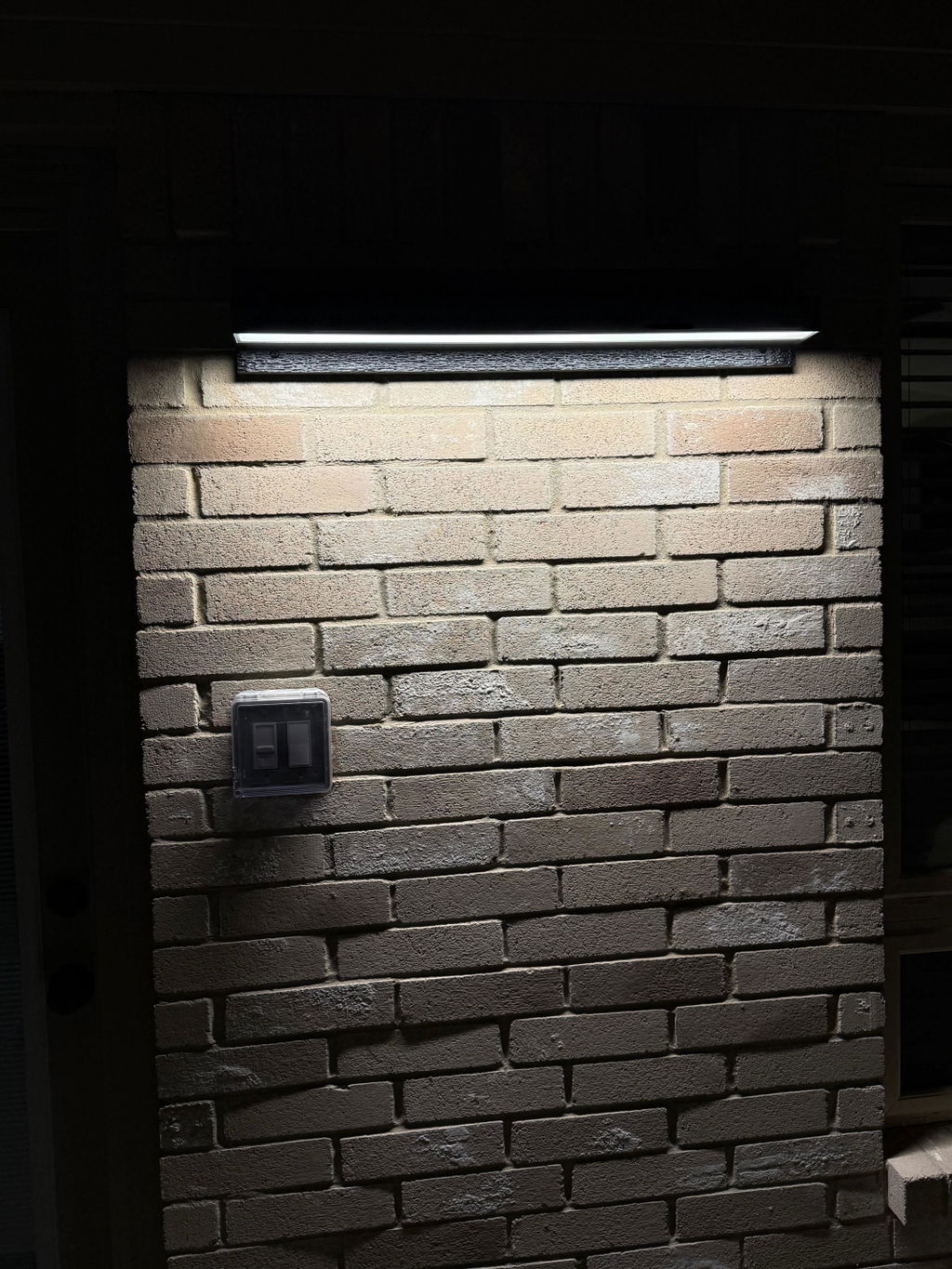
We love the modern sleek look of the light and it looks amazing on our newly renovated patio!
Dear customer,
Thank you so much for your 5-star review! We truly appreciate your support and are glad to know you're happy with your purchase.
If you ever need any assistance in the future, feel free to reach out.
Best Regards,
Dazuma Service Team
[email protected]
Perfectly simple outdoor lighting the way it should be in my opinion
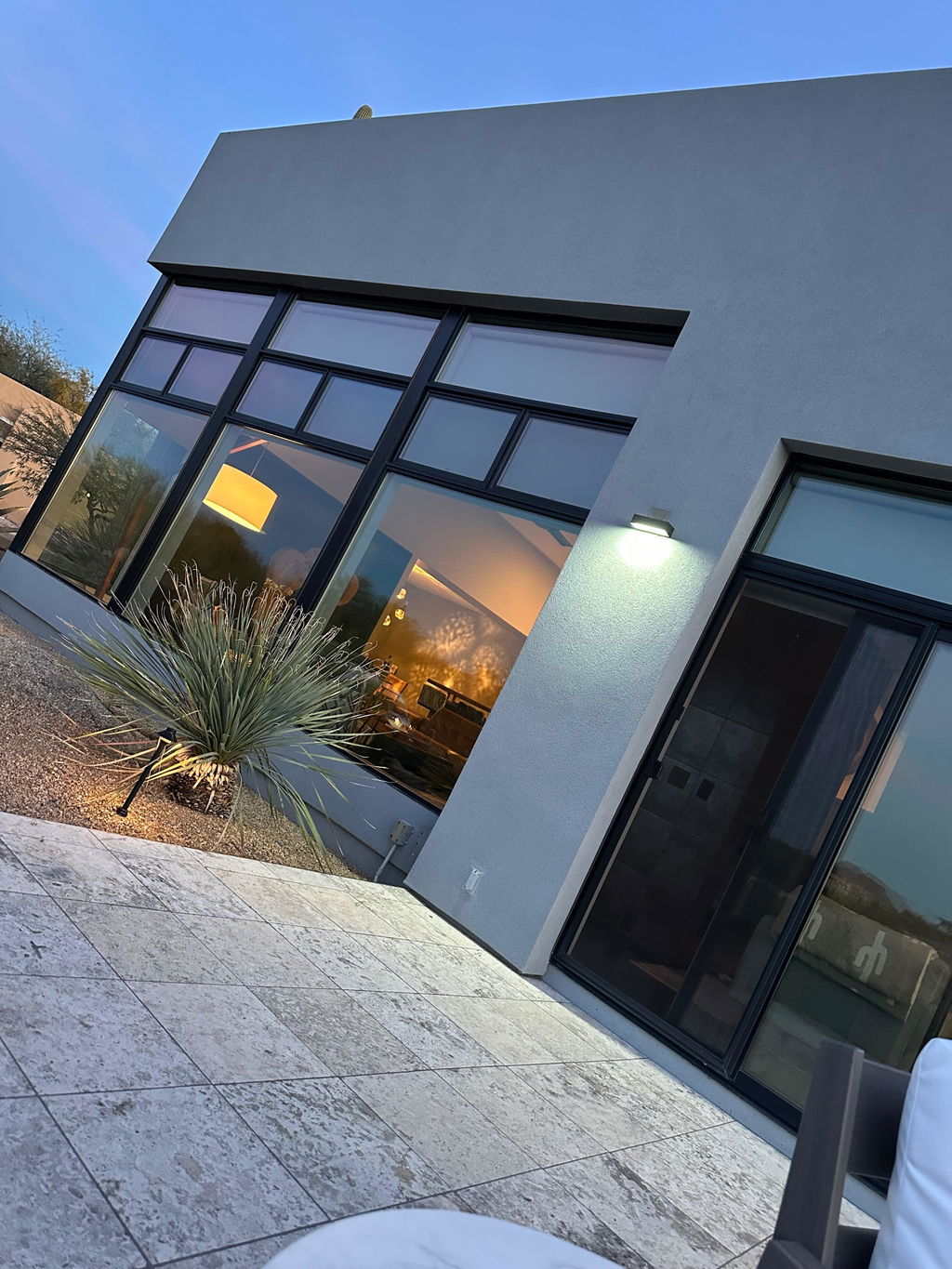
The light arrived and was exactly what I was looking for. It was easily connected and mounted. It is used to illuminate the address sign for our home, and even the neighbor's have commented on how great it looks. I held off on the review of this product pending how it looked and performed. We are totally satisfied!
Minimalist Strip Waterproof LED Black Modern Outdoor Wall Washer Light
We bought 18 Minimalist strip lights for our condo building address signs. They work perfectly, they are LED so they will last for years and burn less energy. They are very easy to install and look beautiful. Shipping took a few weeks as they come from France, well worth the wait.
Looks very sleek and contemporary design. I would love to recommend to anyone.
Excellent product for lighting outside area.
I recently purchased two modern exterior wall lights online, and I couldn't be happier. The minimalist, sleek design adds a touch of contemporary elegance, complementing our entry door perfectly. What stood out was the hassle-free installation, making the entire process a breeze. These lights not only enhance the aesthetics but also provide a user-friendly experience. Highly recommended for those seeking both style and ease of installation.
I absolutely LOVE the look of this modern, classy light!
Can this be used on wood clapboard siding? All pictures I’ve seen show a flat style siding for application (e.g., stucco).
Dear Customer,
We have already forwarded your issue to our product team for review. We will get back to you once we receive their feedback.
Thank you for your patience and understanding.
Special customer service
44 rue beaurepaire
Angers,49100
https://dazuma.us
978-678-4855(9AM-6PM EST)
If I order a light how long would it take to get it?
Hi customer,
Thanks for your interest in our product.
Since the product is MOD (On-Demand manufacturing) product, we need to take some time to produce it.
Meanwhile, if you choose the standard delivery for shipping, so as shown on the checkout page, please allow for about 22 business days for your order to arrive. If you choose the Expedited Delivery method, so as shown on the checkout page, please allow for about 10-12 business days for your order to arrive.
Should you need any further information, please do not hesitate to contact us, we are here to help.
Best Regards
Special customer service
44 rue beaurepaire
Angers,49100
https://dazuma.us
978-678-4855(9AM-6PM EST)
What is the led lamp hour life expectancy? Also I'm sure that I can add a 120 v photo cell, ?
Dear Customer,
Thank you for your inquiry.
Here are the key details regarding this product:
- **Service life:** 3+ years under normal use
- **Input voltage:** 85–265V (wide voltage range, suitable for most countries)
- **Important note:** We do not recommend adding a photocell sensor to this light, as it may cause compatibility or performance issues over time.
If you have any further questions, please feel free to let us know.
Best Regards,
Special customer service
44 rue beaurepaire
Angers,49100
https://dazuma.us
978-678-4855(9AM-6PM EST)
Does this light also have a solar powered version?
Dear customer,
Thank you for your interest in our products. We apologize, but this particular light does not have a solar-powered version available.
We look forward to assisting you.
Special customer service
44 rue beaurepaire
Angers,49100
https://dazuma.us
978-678-4855(9AM-6PM EST)
Will you be able to connect a longer cable with a plug at the end for a receptacle.
Dear customer,
Thank you for your interest in our products. We can customize this light for you with a US standard plug. What length of cord do you need?
Note: Custom products cannot be returned or exchanged. Customized orders require cst to make special notes when customers place orders. Orders that are not noted are all default shipment regular styles.
We look forward to assisting you.
Special customer service
44 rue beaurepaire
Angers,49100
https://dazuma.us
978-678-4855(9AM-6PM EST)
Is this light low voltage to a transformer or is it 120v
Dear customer,
Thank you for your interest in our products. This light operates on 110-265V. It does not require a transformer; you can wire it directly to 120V household power.
Dazuma Service Team
Im considering this for above a garage. Is there a chart that shows the lumens and watts for each size so i can calculate the efficacy?
Dear customer,
Thank you for your interest in our products. Please refer to the lumen values shown in the picture. The wattages are 12W, 20W, 30W, and 48W respectively.
We look forward to serving you.
Best Regards,
Dazuma Service Team
[email protected]
Can this fixture be placed on a dust to dawn setting?
Dear customer,
Thank you for your interest in our products. We're sorry, but this light does not have a dusk-to-dawn sensor. It is controlled by a wall switch.
We look forward to serving you.
Best Regards,
Dazuma Service Team
[email protected]
Can this be used as a bath vanity light?
Dear customer,
Thank you for your interest in our products. We recommend other options that are suitable for installation on a vanity.
https://dazuma.us/products/retractable-over-mirror-bathroom-vanity-light?_pos=1&_sid=17d78d3a4&_ss=r
https://dazuma.us/products/40-inch-swing-arm-bathroom-vanity-light?_pos=5&_sid=17d78d3a4&_ss=r
We look forward to assisting you.
Best Regards,
Dazuma Service Team
[email protected]
For a address above a garage , tha is 9' long.
What is the best way to illuminate it
Dear customer,
Thank you for your interest in our products. We recommend our 19.7'' or 31.5'' LED linear lights for your garage address sign.
We look forward to serving you.
Best Regards,
Dazuma Service Team
THE DAZUMA STANDARD

AUTHENTIC MATERIALS
Genuine natural silk, solid brass, and artisan glass.

QUALITY ASSURANCE
Rigorous 7-stage inspection for every fixture.

EXPERT SUPPORT
Provide online chat and email support services 24/7.

BESPOKE SOLUTIONS
Tailored dimensions and finishes for your specific needs.

7,000+ DESIGNS
Curated collections featuring the latest architectural trends.
Browse our selection of premium lighting, thoughtfully organized by the rooms they illuminate.


Discover our diverse aesthetics. Find the design language that speaks to your unique home décor.


Every material tells a story. From the cool touch of Stone to the warmth of Rattan, find the perfect finish to define your interior narrative.


Explore lighting optimized for specific zones—including indoor sanctuaries and outdoor landscapes.


Professional lighting support for residential and commercial projects, with project pricing, customization, and technical guidance from concept to installation.


Exterior porch light fixtures do more than make an entry visible after dark; their shape, projection, and beam direction become part of the architecture in daylight as well. The fixture shown here uses a long horizontal rectangular silhouette with a dark exterior, a shallow wall-mounted profile, and a narrow luminous-looking opening along the lower edge. When illuminated, it creates a warm-looking band of light beneath the body instead of the decorative glow of a traditional lantern.
That restrained geometry makes this style especially relevant for contemporary porches, garage elevations, garden-facing walls, and clean-lined renovations. The images also show how the same compact form can work as a single accent or repeat across a wider facade. Exact materials, dimensions, light output, color temperature, electrical specifications, weather rating, dimming capability, and control features cannot be established from photography, so those items should be confirmed on the product specification page before ordering.
What Defines Exterior Porch Light Fixtures With This Linear Profile?
This type of exterior porch light fixture is defined by a wide horizontal body, limited visual projection from the wall, and light that appears concentrated below the fixture. Compared with a lantern or tall vertical sconce, the design reads more like an architectural line. It works best when the goal is to reinforce horizontal siding, garage openings, broad walls, or modern door compositions without adding ornate visual detail.
The visible form is unusually simple: a dark rectangular housing sits parallel to the wall, while the illuminated lower edge creates a second, thinner horizontal line. That contrast between a solid upper mass and bright lower opening gives the fixture definition without visible scrollwork, glass panels, cages, or decorative arms. In daylight, the dark bar becomes a small architectural accent. At night, the light falling below it becomes at least as important visually as the fixture itself.
For buyers browsing modern outdoor wall lighting, this is a useful example of how a fixture can feel contemporary through proportion rather than decoration. Its long, low body relates naturally to horizontal window heads, garage door panels, wide gates, and flat or low-slope architectural elements. The images show it on both light and charcoal-colored walls, demonstrating a useful design difference: on pale stucco the dark body creates graphic contrast, while on a dark wall the visible beam becomes the stronger feature.
Where Do Modern Exterior Porch Wall Lights Work Best?
Modern exterior porch wall lights work best where the architecture benefits from a compact horizontal accent and controlled-looking wall illumination. Good applications include covered or open entry walls, patio doors, garden-facing facades, and garage elevations. The same design can also repeat effectively on hospitality or multi-unit projects. Placement should respond to doors, openings, walking routes, and verified light output rather than simply filling an empty section of wall.
Front entries and side porches
At a residential entry, a horizontal wall light can provide a calmer alternative to a tall carriage lantern. The fixture shown does not compete with the door for height; instead, it places a short dark line beside or near the opening and lets the lower glow define the wall beneath it. This can suit a modern front porch with simple trim, smooth stucco, board siding, stone accents, or a restrained landscape. The broader outdoor porch lighting category is useful when comparing this approach with other porch fixture formats.
If the light is installed beside a door, judge its position from the main standing approach, not only from a front elevation drawing. Avoid placing the body where an open door, storm door, shutter, or tall trim element could interfere with it. Also consider where a visitor's face will be relative to the beam. A fixture that emphasizes the wall and ground may still need support from another source if facial visibility at the lock or doorbell is important.
Garage doors and driveway-facing walls
The garage image shows why a wide, linear form can be effective on a broad facade. Multiple fixtures repeated above adjacent door sections create rhythm rather than one isolated point of light. This is a strong direction for contemporary garage exterior lights because the fixture's horizontal proportion echoes the width of the doors and the lines of the cladding. Before copying the photographed layout, confirm the available mounting surface above the door, the fixture's projection, wiring positions, and actual beam coverage.
Professional tip: on a multi-bay garage, lay out fixture centers from the garage door geometry before rough electrical work is finalized. Aligning each light consistently with a door bay, mullion, or other repeated architectural reference usually looks more intentional than spacing fixtures only by the total wall width. A simple elevation with the exact fixture dimensions can reveal small alignment errors before holes and junction locations become expensive to move.
Patios, garden-facing walls, and hospitality exteriors
On a patio or garden wall, the fixture can act as an architectural marker near a doorway or seating edge without introducing a large decorative lantern. The image beside the outdoor chairs is particularly useful: the compact black bar stays subordinate to the windows and planting while the light creates a visible pool below. For a boutique hotel courtyard, restaurant terrace, or small reception exterior, repeating this visual language can help connect several entrances without turning each fixture into a separate statement piece.
How Should You Choose Size, Placement, and Spacing?
Choose the size and placement of a horizontal porch light by relating its actual width to the door, wall panel, garage bay, or window group it accompanies. The fixture should have enough visual presence to look intentional without crowding adjacent trim. Mounting height should support safe circulation and useful illumination, while repeated fixtures should follow a consistent architectural reference. Always work from published dimensions rather than estimating scale from lifestyle images.
Start by photographing or sketching the wall straight on. Mark the door casing, nearby windows, siding joints, house numbers, doorbell, downspouts, and any projecting elements. Then add the fixture using its listed width, height, and projection. This small exercise is especially helpful for horizontal exterior wall lights, because a few extra inches of width can noticeably change the relationship with narrow wall sections. It also prevents a common mistake: choosing a fixture that fits visually but conflicts with trim or an opening door.
There is no single porch wall light height that is correct for every building. Door height, fixture dimensions, user eye level, steps, ceiling conditions, and the intended beam all matter. For a fixture beside an entry, a commonly used design starting point for many wall-mounted exterior lights is to position the center roughly 60–72 inches above the finished walking surface, then adjust for the specific door and fixture. Treat that range as a planning reference, not a rule, and follow the manufacturer's installation guidance and local requirements.
Professional tip: make a full-size paper or painter's-tape outline before installation when the wall section is tight. Mark the fixture body and the expected electrical connection point, then view it from the sidewalk, driveway, and directly at the door. For a wide linear fixture, this inexpensive mockup makes proportion and alignment much easier to judge than a dimension written on a product page.
Spacing becomes more important when two or more lights are used. On a garage, repeat the same alignment logic from bay to bay. Along a long exterior corridor, avoid treating spacing as decoration alone; verified beam spread and required light levels should influence the layout. If a project needs a broader range of sizes and mounting formats, compare the main outdoor wall lighting collection before finalizing junction-box locations.
How Does Downward Linear Light Change the Porch at Night?
Downward linear light emphasizes the wall and area immediately beneath the fixture, creating a more architectural nighttime effect than an exposed all-around lamp. On a smooth facade, the illuminated band can make texture and color more visible while keeping the bright source visually contained. The actual usefulness for steps, locks, pathways, or driveway tasks still depends on measured output, beam distribution, mounting height, and surrounding ambient light.
In the images, the wall below the dark bar becomes the main illuminated surface. On the charcoal entry wall, that produces a compact warm-looking wash that separates the fixture from the background. On the pale patio wall, the effect is softer because both the wall and surrounding area reflect more light visually. This makes surface color an important part of the lighting plan: dark masonry or paint can appear to absorb more of the scene brightness, while lighter finishes may make a modest pool of light feel broader.
This design language is related to wall wash lighting, but the terms should not be treated as identical without photometric information. A true wall-washing plan is concerned with even illumination across a surface, while the product shown appears to create a localized band beneath each fixture. If your goal is to reveal an entire textured wall or long facade, ask for beam data or test a sample rather than assuming one compact wall light will produce uniform coverage.
Beam direction also changes the visual character of an elevation. A mostly downward effect can feel grounded and restrained. A two-direction pattern creates a more graphic light composition above and below the body. If the project specifically calls for that second effect, compare dedicated up and down wall lights rather than assuming this fixture emits equally in both directions.
Which Architectural Styles Suit a Black Horizontal Porch Light?
A black horizontal porch light is especially compatible with contemporary, minimalist, modern farmhouse, and restrained transitional exteriors when the building already uses strong horizontal lines. Its simple dark bar can echo black window frames, garage hardware, roof details, or door trim without imitating them literally. On traditional architecture with ornate millwork, however, this spare geometry may feel deliberately contrasting, so the choice should be evaluated with the whole facade.
The fixture's strongest design asset is proportion. It is long enough visually to register as a line, yet its height appears comparatively shallow. That ratio makes it a natural partner for wide garage doors, horizontal siding, simple parapets, and rectangular windows. Shoppers comparing black outdoor wall lights should look beyond finish alone: a black lantern, cylinder, and linear bar can create very different relationships with the same facade even when the color is identical.
Against a light exterior wall, the dark body becomes visible from a distance and can tie into black-framed doors or windows. Against charcoal stucco or dark cladding, the fixture becomes quieter in daylight and the illuminated lower edge takes over after dark. This tone-on-tone approach works particularly well when the designer wants the lighting effect to be noticed more than the hardware. A renovation can use that contrast strategically without changing every other exterior finish.
Modern farmhouse architecture deserves a little restraint. A black finish alone does not make a light farmhouse-style. On a white-sided house, the clean horizontal form can coordinate with a metal roof and dark garage doors, as the imagery suggests, but it reads more contemporary than rustic. If the home relies heavily on traditional lanterns, divided-light doors, and decorative brackets, decide whether the new fixture should continue that language or intentionally simplify it.
What Should You Check Before Ordering These Exterior Porch Light Fixtures?
Before ordering exterior porch light fixtures, verify four groups of information: installed dimensions, electrical requirements, lighting performance, and suitability for the exact outdoor location. For this linear design, also confirm the wall-mounting footprint and projection so it clears trim and doors. Weather exposure can vary dramatically between a covered porch and an open garage facade, so never infer an appropriate location rating from an outdoor lifestyle image alone.
Use the following checklist before purchasing:
- Overall size: confirm the fixture width, height, projection, and mounting-plate dimensions against the available wall area.
- Mounting conditions: verify the junction-box position, support method, required clearances, and whether the wall surface can accept the specified mounting hardware.
- Outdoor rating: check the manufacturer's stated location or ingress-protection information for the actual exposure at your porch, patio, or garage.
- Lighting performance: review listed light output, distribution, color temperature, and any available photometric information rather than relying on the brightness shown in photographs.
- Controls: confirm switching, dimming, sensor, timer, or smart-control compatibility only if those functions matter to the project; none should be assumed from the images.
- Light source and service: check the source type, replaceability if applicable, expected maintenance procedure, and access needed for cleaning.
- Finish and material: review the actual material, finish description, care instructions, and any guidance for coastal or harsh environments.
This fixture is best suited to buyers who want a low-profile contemporary accent rather than a traditional lantern silhouette. It makes particular sense when the wall has room for a wide horizontal body and the lighting plan benefits from a concentrated-looking downward effect. It may be less suitable where a narrow wall demands a vertical fixture, where a decorative historic style is important, or where broad omnidirectional illumination is the main objective.
For a custom home, hospitality renovation, or multi-unit project, consider ordering and testing one fixture before committing to a large repeated layout when practical. Evaluate real scale, glare from normal viewing positions, wall brightness, color appearance, control behavior, and nighttime coverage. Then compare any remaining needs with the broader outdoor lighting range so wall lights, path lights, and other exterior layers work together rather than competing.
Frequently Asked Questions
Are exterior porch light fixtures like this suitable beside a front door?
They can be, provided the listed size, mounting method, outdoor rating, and light distribution suit the entry. A horizontal fixture can look especially clean beside a modern door because it adds width without the tall silhouette of a lantern. Check that the body will not conflict with casing, shutters, a storm door, or the door swing. Also confirm that the beam provides useful visibility at the lock, threshold, and visitor area; a strongly downward effect may need complementary ambient light.
How high should a horizontal exterior wall light be mounted?
There is no universal mounting height because door proportions, fixture size, steps, viewer height, and beam direction all affect the result. For many door-side wall lights, a center point around 60–72 inches above the finished walking surface can be a useful design starting range, then adjusted to the specific elevation. Do not treat that as a code requirement. Follow the product installation instructions and applicable local rules, and verify the beam at the intended height before repeating the fixture across several locations.
Can this style work above a garage door?
Yes, a long horizontal fixture can be visually well matched to a garage because its shape echoes the width and panel lines of the door. The garage image also shows how repeated fixtures can establish an orderly rhythm across a broad elevation. Before installation, measure the wall height between the door opening and roof or trim, confirm the fixture projection and mounting footprint, and check the actual light distribution. Multiple decorative fixtures should still provide or complement the illumination needed for safe driveway use.
Does the dark finish mean this is a black metal outdoor light?
The images support describing the fixture as dark or black-looking, but they do not establish its exact material. A finish can appear metal-like in photography even when the underlying construction or coating is different. Review the product specifications for the stated material, finish process, care instructions, and environmental guidance. Those details matter outdoors because exposure to rain, sun, salt air, temperature changes, and cleaning products can affect different materials and coatings in different ways. Appearance alone is not a durability specification.
Will this light wash the entire porch wall evenly?
Not necessarily. The photos show a localized band of light below the fixture, which can emphasize the wall immediately around it, but they do not provide photometric data showing uniform coverage across a large surface. Mounting height, wall color, texture, beam angle, and actual output all influence the result. If even wall washing is a design goal, review beam or photometric information and consider a sample installation. A compact decorative wall fixture should not automatically be treated as a dedicated facade-washing system.
What color temperature is best for modern exterior porch lights?
A warmer color temperature is often chosen for residential porches because it can feel comfortable beside warm interior windows, wood, stone, and landscape materials, while some task-oriented or commercial areas may call for a different balance. The images appear warm, but photography cannot confirm an exact Kelvin value. Check the listed color temperature and coordinate it with nearby exterior fixtures. Using noticeably different color temperatures on adjacent wall, ceiling, and landscape lights can make an otherwise carefully designed facade feel visually inconsistent.
Do I need more than one light on a long porch or garage wall?
Possibly. The decision should be based on the width of the facade, architectural rhythm, verified beam spread, and required illumination rather than a fixed spacing formula. Two or more fixtures can look intentional when aligned with repeated doors or structural bays, but adding fixtures only for symmetry may create excessive brightness. Mark proposed locations on an elevation and compare them with published lighting data. For a large project, testing one or two fixtures at night is the most reliable way to judge spacing.
Can I assume these exterior wall lights are waterproof and dimmable?
No. An outdoor scene does not confirm a particular wet-location, damp-location, or IP rating, and the illuminated appearance does not establish dimmer compatibility. Confirm the manufacturer's location rating for the exact exposure where the fixture will be installed, especially on an uncovered wall. If dimming is important, verify the light source, driver or lamp requirements, compatible control type, and any stated limitations. The same caution applies to motion sensors, dusk-to-dawn operation, smart controls, and other features not proven by the images.


