
Can lights have become a go-to lighting choice in many American homes, especially when it comes to the living room. Clean ceilings, soft ambient light, and a modern feel all make recessed lighting appealing. Still, installing can lights in living room spaces isn’t just about adding more fixtures. The real difference comes from how they’re laid out, how many you use, and how the light works with the way you actually live.
Below, we’ll explore practical and stylish can lights ideas for living rooms, focusing on layouts, spacing logic, and key choices that help the space feel comfortable rather than overlit.
Popular Can Lights Layout Ideas for Living Rooms
A well-planned layout is the foundation of successful recessed lighting. Even high-quality can lights can feel underwhelming if they’re installed without a clear strategy. In living rooms especially, layout determines whether the space feels balanced, inviting, or unintentionally flat.
Below are some of the most effective can lights layout ideas used in American living rooms today, each suited to different room shapes and lifestyles.
Even Grid Layout for General Lighting
The even grid layout is one of the most common and reliable choices for living rooms. It works best in small to medium-sized spaces with a simple square or rectangular shape, where the goal is consistent, overall illumination.
In this layout, can lights are spaced evenly across the ceiling to create a uniform wash of light. It’s a popular option for first-time remodels because it feels intuitive and low-risk. Rather than worrying about exact measurements, homeowners should focus on how the lights feel visually. The ceiling should look balanced, with no areas that feel overly bright or noticeably dark. When paired with a dimmer switch, an even grid layout offers flexibility, allowing the room to transition easily from daytime brightness to a softer evening atmosphere.

Evenly spaced can lights create balanced, comfortable lighting in a simple living room design.
Perimeter Lighting to Highlight Walls and Art
Perimeter lighting takes a different approach by positioning can lights closer to the walls instead of the center of the ceiling. This layout is ideal for living rooms that feature artwork, decorative wall finishes, fireplaces, or built-in shelving.
By directing light toward vertical surfaces, perimeter lighting adds depth and dimension to the room. Walls feel more visually present, and the space often appears larger and more refined. This technique is commonly used in American living rooms where wall décor plays an important role in the overall design. Instead of lighting only the floor area, the room feels intentionally layered, with light supporting both function and aesthetics.

A luxury living room where recessed can lights are used to wash the walls and create a calm, upscale atmosphere.
Zoned Layout for Open-Concept Living Rooms
In open-concept homes, zoned lighting layouts are especially effective. Many U.S. living rooms share space with kitchens or dining areas, which means lighting needs to serve multiple purposes at once.
With a zoned layout, can lights are grouped based on how each part of the space is used. The seating area may have softer, more relaxed lighting, while walkways and transitional areas remain brighter for safety and ease of movement. This approach helps define different zones without walls or visual barriers. As a result, large open spaces feel more organized and comfortable, rather than overly bright or undefined.

A layered can lighting layout helps define the living room within an open-concept home.
Asymmetrical Layout for a More Natural Look
For homeowners looking to move away from a traditional or commercial feel, an asymmetrical layout can create a more natural and lived-in atmosphere. Perfectly symmetrical lighting patterns sometimes resemble offices or retail environments, which isn’t always desirable in a home setting.
By slightly offsetting can lights and aligning them with furniture arrangements or architectural features, the ceiling feels more relaxed and design-driven. This approach works particularly well in modern or contemporary living rooms, where character and visual interest are just as important as practicality. When done thoughtfully, asymmetry makes the lighting feel intentional without drawing attention to the fixtures themselves.

Perimeter can lighting adds depth by drawing attention to walls and key living room features.
How Many Can Lights Do You Need in a Living Room?
One of the most common questions about can lights in living room design is how many fixtures are actually necessary. The answer depends on more than just square footage.
Room size and ceiling height are the starting point. Larger rooms or higher ceilings naturally require more light coverage to feel evenly lit. However, natural light plays a huge role as well. A living room with large windows or sliding glass doors may need far fewer recessed lights than a darker, enclosed space.
Color also affects how light behaves. White or light-colored ceilings reflect light efficiently, making the room feel brighter with fewer fixtures. Dark ceilings, exposed beams, or deep-toned furniture absorb light, which may require additional fixtures to achieve the same level of comfort.
Rather than chasing an exact number, it’s better to aim for a comfortable lighting range. The living room should feel adaptable, not fixed at one brightness level. This is why dimmers are so important. With dimmable can lights, you can adjust the mood throughout the day, keeping things bright in the afternoon and warm and relaxed in the evening. In most American homes, that flexibility matters far more than absolute brightness.

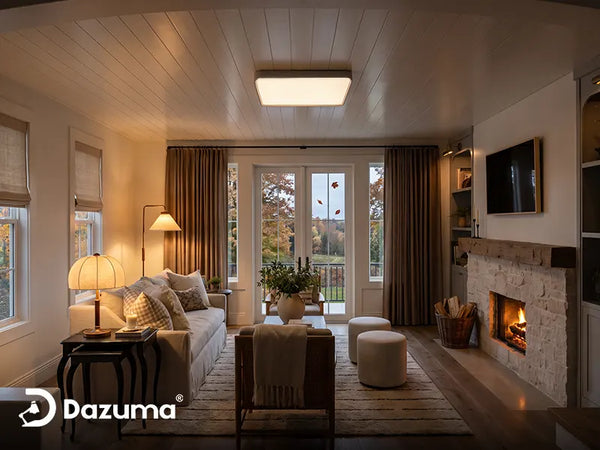
Can lights used as practical ambient lighting in a real, lived-in living room setting.
Choosing the Right Can Lights for Living Rooms
Once the layout and number of lights are decided, fixture details help fine-tune the overall result.
In terms of size, four-inch can lights are popular in modern American living rooms because they look clean and unobtrusive. Six-inch options provide wider coverage and a more traditional feel, often seen in older homes or spaces with fewer fixtures. The choice mainly affects how noticeable the lighting feels on the ceiling.
Color temperature also plays an important role. For living rooms, warm light in the 2700K to 3000K range creates a comfortable, inviting atmosphere. Cooler light may seem brighter, but it often feels too harsh for relaxing or entertaining.
Dimmable can lights are strongly recommended for living spaces. Since living rooms are used throughout the day for different activities, dimmers allow the lighting to adjust easily from bright daytime use to softer evening settings.
Final Thoughts
Using can lights in living room design is about more than installing recessed fixtures. It’s about creating a space that feels balanced, flexible, and comfortable throughout the day. With the right layout, thoughtful spacing, warm color temperature, and dimming control, can lights become a strong foundation rather than the entire lighting story.
When planned with intention, recessed lighting supports the way people actually live in their homes, which is exactly why it continues to be a popular choice in American living rooms.