If you’ve ever stood in your living room wondering why the walls look dull or your ceiling feels “off,” there’s a good chance your
living room's recessed lights are the culprit. These sleek, ceiling-mounted fixtures (also called can lights or downlights) are awesome for clean, modern illumination—but only if they’re installed correctly.
One small detail makes a huge difference: how far recessed lights are placed from the wall.
Get this wrong, and you’ll end up with harsh shadows, dark corners, or uneven lighting. Get it right, and your space instantly feels brighter, cozier, and more high-end—no extra fixtures needed.
Let’s walk through the simple rule of thumb, why it works, and how to adjust it for your home.
The Short Answer: 12 to 24 Inches From the Wall
If you’re in a hurry, here’s the bottom line:
Most recessed lights should be installed 12 to 24 inches away from the wall.
That’s it. This simple guideline works for the vast majority of homes, whether you’re lighting a living room, hallway, or kitchen.
Too close, and you’ll cast harsh shadows down the wall—especially if there’s any texture, artwork, or furniture against it. Too far, and your walls will look dim, leaving the space feeling unfinished and flat.
So that sweet spot—roughly one to two feet from the wall—is what helps your light “wash” evenly down the surface, creating soft, natural brightness without glare.
A handy rule of thumb some designers use:
Distance from wall ≈ half the distance between two recessed lights.
For example, if your lights are spaced 4 feet apart, they should be around 2 feet from the wall.
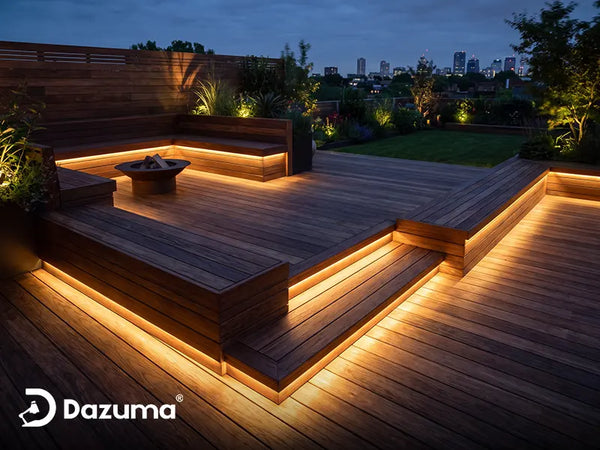
 Built-in LED step lights enhance outdoor safety and add architectural beauty.
Why This Distance Works
Lighting design is all about angles and balance. When a recessed light is positioned correctly, its beam spreads out to softly hit the upper wall area and fade down smoothly.
Here are a few key reasons this range works so well:
The Beam Spread
Most recessed lights have a beam angle of around 40 to 60 degrees. That means the light doesn’t shoot straight down—it spreads out in a cone shape. Placing the fixture about 12–24 inches from the wall allows that cone to hit both the wall and the nearby floor area evenly.
Ceiling Height Matters
The taller your ceiling, the farther from the wall your recessed lights should be.
Here’s a quick guide:
-
8-foot ceiling: 12–16 inches from wall
-
9-foot ceiling: 16–20 inches from wall
-
10-foot ceiling: 20–24 inches from wall
Basically, as the ceiling height increases, the beam has to travel farther to hit the wall effectively—so move the lights slightly outward.
Wall Color and Texture
Dark or matte walls absorb light. If your walls are painted navy, charcoal, or deep green, you might want your recessed lights closer to 12 inches away.
On the other hand, light or glossy walls reflect more, so you can push the lights out a bit further—up to 20–24 inches—and still get a bright, balanced effect.
The Lighting Purpose
Not every recessed light serves the same purpose.
-
Accent lighting: Closer to the wall (around 12 inches) to highlight artwork, shelving, or textured finishes.
-
General lighting: 16–24 inches works great for even room illumination.
-
Task lighting: Depends on the workspace—like above a kitchen counter or vanity. You’ll usually go a bit closer to avoid shadows.
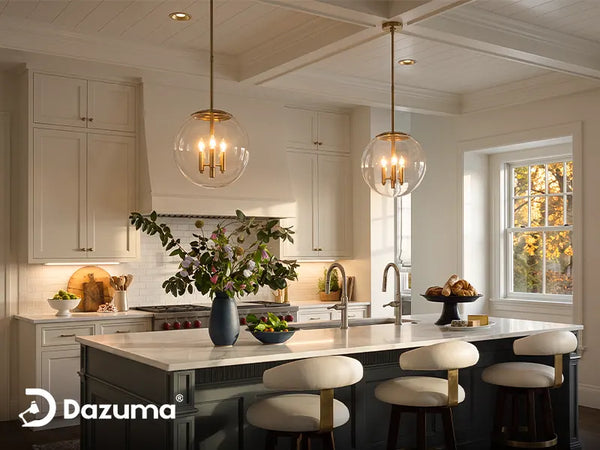
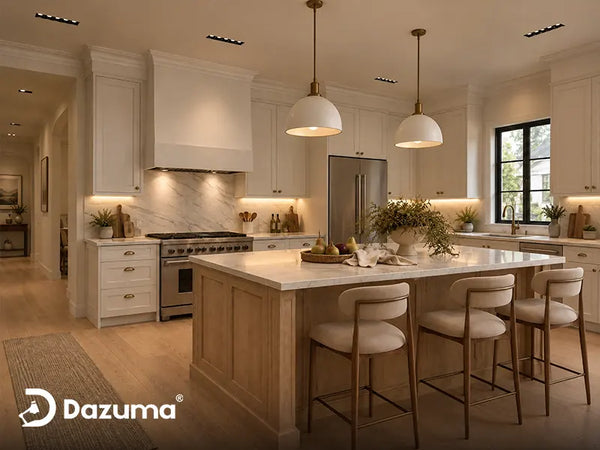
Recessed lighting brightens the kitchen while keeping a minimalist aesthetic.
Room-by-Room Placement Guide
Now that you’ve got the basics, let’s look at how this rule plays out in real spaces.
Living Room
For general ambient light, keep fixtures 16–24 inches from the wall. This creates a soft glow that brightens walls and ceilings evenly—perfect for cozy movie nights or reading.
If you’ve got wall art or accent decor, you can add a few recessed lights about 12 inches from the wall and aim them slightly downward to highlight those features.
Kitchen
Kitchens need layered lighting—ambient, task, and accent.
For recessed lights that illuminate countertops, the rule shifts slightly:
- Keep fixtures 12–15 inches away from the upper cabinets or wall so the beam hits the work surface directly, not your head or the backsplash.
- For general kitchen lighting, 16–20 inches from the wall keeps everything evenly lit without glare.
Bathroom
In bathrooms, lighting placement is all about avoiding harsh shadows on your face.
-
Overhead recessed lights should be 12–16 inches from the wall to gently wash the area without glare.
- If near a shower or bathtub, make sure to use damp- or wet-rated trims for safety.
Hallways and Entryways
Narrow hallways benefit from lights close to the wall—about 12–18 inches. That way, the light grazes the wall surface and makes the corridor feel wider and more inviting.
Plus, wall-washing lights can highlight artwork or photos along the hallway beautifully.
Bedroom
Bedrooms do best with softer, more ambient lighting. Keep recessed lights 18–24 inches from the wall for a gentle, diffused effect. If you want reading lights, place them closer (around 12 inches) and align them with your nightstands or bed edges.

Layered lighting design highlights the entertainment wall with a soft glow.
Common Mistakes to Avoid
Even if you know the “12–24 inch” rule, it’s easy to make small placement errors that cause big visual problems. Watch out for these:
Placing Lights Too Close to the Wall: This one’s super common. You think it’ll highlight the wall—but it actually creates harsh “scallop” patterns or deep shadows.
Placing Lights Too Far Away: If your lights are more than 2 feet from the wall, the room often looks darker and the corners feel flat. The light ends up concentrated in the middle of the floor instead of spreading outward.
Ignoring Furniture and Decor Layout: Don’t just measure from the bare wall—consider where your sofa, TV, or art will go. A recessed light aimed straight at a blank spot or the top of a cabinet wastes illumination.
Uneven Spacing: If one light is 15 inches from the wall and the next is 24, you’ll notice inconsistent brightness. Use consistent spacing for a clean, professional look.
Quick Tips from Lighting Designers
Want your recessed lighting to look like a pro did it? Try these simple tips before cutting any holes:
-
Map your layout with painter’s tape. Mark where each light will go and step back to visualize spacing.
-
Use adjustable (gimbal) trims for sloped ceilings or accent lighting.
-
Install dimmers. Recessed lights are powerful; a dimmer lets you fine-tune brightness for any mood.
-
Test color temperature. Warm white (2700–3000K) feels cozy for living areas; cool white (3500–4000K) suits kitchens or workspaces.
-
Plan in zones. Break large rooms into smaller “lighting zones” that can be controlled separately for flexibility.

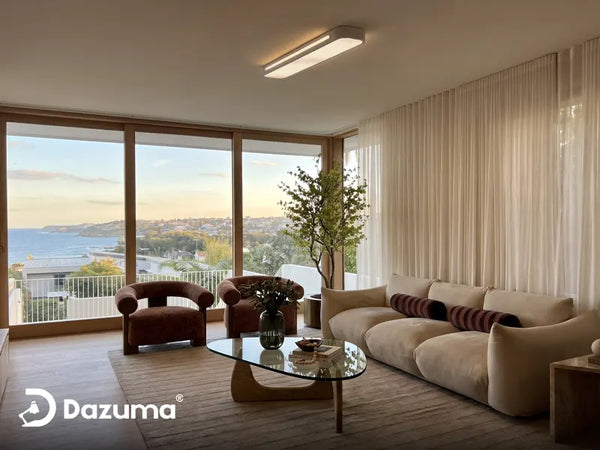
Balanced light tones create warmth and sophistication in the living space.
FAQs
Q: Can recessed lights be too close to the wall?
Yes. If they’re less than 12 inches from the wall, you’ll get harsh shadows and hot spots instead of smooth, even lighting.
Q: How far apart should recessed lights be?
Generally about 4–6 feet apart, depending on your ceiling height and desired brightness. A good starting point: the distance between lights should be roughly equal to half your ceiling height (for example, 8-foot ceiling → 4 feet apart).
Q: Do wall distance rules apply to sloped ceilings?
Yes, but measure from the vertical wall rather than the angled ceiling. You may need adjustable trims to get the correct aim.
Q: How do I plan my recessed lighting layout?
Start with your main walls, mark out the 12–24 inch zone, then evenly distribute fixtures across the ceiling—balancing both sides of the room.
Final Thoughts
Getting your
LED recessed lighting placement right isn’t just about numbers—it’s about how your home feels when the lights come on.
That 12–24 inch distance from the wall is the sweet spot that keeps light even, walls bright, and rooms inviting. It’s one of those small design details that separates a good lighting setup from a stunning one.
So before you grab the drill or call your electrician, take a minute to measure and plan. A few inches really can make all the difference.
Plan smart, light beautifully.