
Your home’s lighting can completely change how a space feels — too dark, and it’s gloomy; too bright, and it feels harsh. Recessed lighting (also called can lights) is one of the most popular ways to achieve balanced, modern illumination. But here’s the tricky part: how many recessed lights do I need to make your room feel bright and comfortable — not overlit?
In this guide, you’ll learn the easy math behind lighting layout, key spacing rules, and how to choose the right type and size of recessed lights for your space — whether you’re redoing your kitchen, living room, or even your patio.
Table of Contents
- Step 1: Understand the Basics — What Is the Rule for Recessed Lighting?
- Step 2: How to Calculate the Number of Recessed Lights
- Step 3: Choose the Right Size & Type
- Step 4: Plan a Cozy & Balanced Lighting Layout
-
FAQs About Recessed Lighting
- Conclusion

Step 1: Understand the Basics — What Is the Rule for Recessed Lighting?
When planning your ceiling lighting, there’s one golden rule: even spacing equals even light.
A reliable starting point is to space your recessed lights at about half your ceiling height (in feet).
For example:
- An 8-foot ceiling → space lights about 4 feet apart
- A 9-foot ceiling → space lights about 4.5 feet apart
- A 10-foot ceiling → space lights about 5 feet apart
This helps the light overlap smoothly across the room without dark patches or hot spots.
💡 Quick tip: Keep the first row of lights about 2–3 feet away from walls to avoid scallops and unwanted shadows. If you’re using narrow beam trims, tighten spacing slightly; wide/flood trims can stretch a bit farther.
Step 2: How to Calculate the Number of Recessed Lights
Now that you’ve got the spacing basics, let’s talk about quantity — using the right math.
Instead of guessing by bulb count, size brightness by foot-candles (fc) for the room function:
Use this simple approach:
- Room Area (sq ft) × Target Foot-Candles = Total Lumens Needed
- Then divide by the lumens per fixture (many LED recessed trims are 600–1000 lm each).
Typical target ranges (fc):
- Living room: 10–20 fc
- Kitchen (general): 30–50 fc; Kitchen task/island: 50–100 fc
- Dining: 10–30 fc
- Bedroom: 5–15 fc
- Bath vanity: 40–50 fc
- Hallway: 5–10 fc
- Office/Study: 30–50 fc
Examples:
-
12×12 room (144 sq ft), living room: 15 fc
- 144 × 15 = 2,160 lm total, 2160 ÷ 900 = 2.4 → round up to 3 fixtures (use 4 for smoother spacing and dim as needed).
- 144 × 15 = 2,160 lm total, 2160 ÷ 900 = 2.4 → round up to 3 fixtures (use 4 for smoother spacing and dim as needed).
-
12×12 room (144 sq ft), kitchen: 40 fc
- 144 × 40 = 5,760 lm total, 5760 ÷ 900 = 6.4 → round up to 7 fixtures.
-
10×10 room (100 sq ft), bedroom: 10 fc
- 100 × 10 = 1,000 lm total, 1000 ÷ 800 = 1.25 → round up to 2 fixtures (you can use 3–4 for more even coverage and better dimming range).
So if you’re wondering “How many recessed lights do I need for a 12×12 room?” — four evenly spaced fixtures is a great place to start for living rooms; six to seven often suits kitchens.
💡 Pro Tip: Online calculators can help you double-check. Match the result to your actual trim lumen output and beam angle to avoid over-lighting.

Step 3: Choose the Right Size & Type
Common Recessed Light Sizes
Recessed lights come in several sizes, but most homes use 4-inch or 6-inch fixtures. The right choice depends on your space:
-
4-inch recessed lights:
Perfect for accent or task lighting and smaller rooms. Great for kitchens (task areas), hallways, or reading corners.
-
6-inch recessed lights:
Ideal for general lighting in larger spaces like living rooms, dining areas, or basements.
If you’re debating between the two, the rule of thumb is simple — use 4-inch for focus, 6-inch for coverage (and consider your ceiling height and beam angle).
Ceiling Light of Types: Can Vs Recessed Lights
You’ll see two main build styles: can (housed) vs canless (slim, direct-mount).
-
Can lights (traditional recessed with a metal housing) sit inside the ceiling and are great for insulated or drop ceilings.
-
Canless recessed lights skip the bulky housing and offer a slimmer, modern look that’s easier to install — perfect for remodels or low-clearance ceilings.
Whichever you choose, look for IC-rated (safe against insulation), Airtight (AT) for efficiency, and the right Damp/Wet rating for bathrooms or outdoor areas. And of course, always choose LED ceiling lights — they’re energy-efficient, long-lasting, and available in adjustable color temperatures.

Step 4: Plan a Cozy & Balanced Lighting Layout
Good lighting isn’t just about brightness — it’s about feeling. If your room feels too harsh, add dimmable switches or layer your light sources. Combine recessed lights with cozy floor lamps or wall sconces to make the room feel more inviting.
Wondering how to create a cozy lighting layout? Try these quick tips:
- Use warm white LED bulbs (2700K–3000K) for a relaxing atmosphere.
- Mix task lighting (like recessed lights) with accent lights (like table lamps or wall sconces).
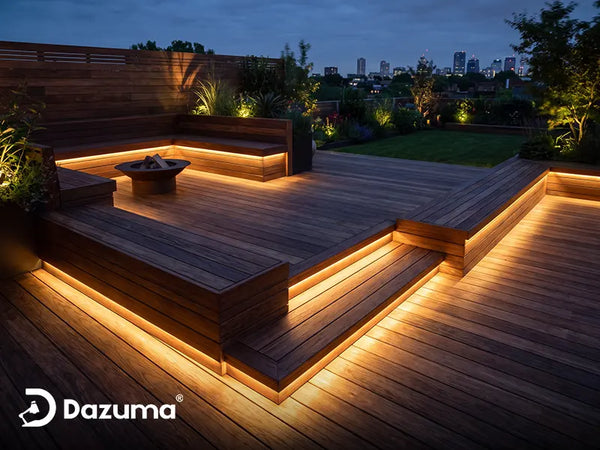
- In outdoor areas, use can lights outdoor with the proper Wet/Damp rating to highlight patios or porches.
- For TV or artwork walls, reduce glare with regressed trims and avoid aiming directly into sightlines.
FAQs About Recessed Lighting
Q1: How far apart should 4 recessed lights be spaced?
For even, natural light, space recessed lights at about half your ceiling height. On an 8-foot ceiling, that’s around 4 feet apart. Keep the first row 2–3 feet from walls.
Q2: How many recessed lights can you put on one switch?
Usually 6–10 LED fixtures per dimmer is common, but it depends on dimmer rating, driver type, and total wattage. Always consult an electrician and follow local code.
Q3: What is the most common size for recessed lighting?
4-inch and 6-inch fixtures are the most widely used in American homes.
Q4: Can you have too many recessed lights in a room?
Yes — too many can make your space feel flat and clinical. Meet your lumen target with the right beam and output, then layer decorative lighting and use dimmers.