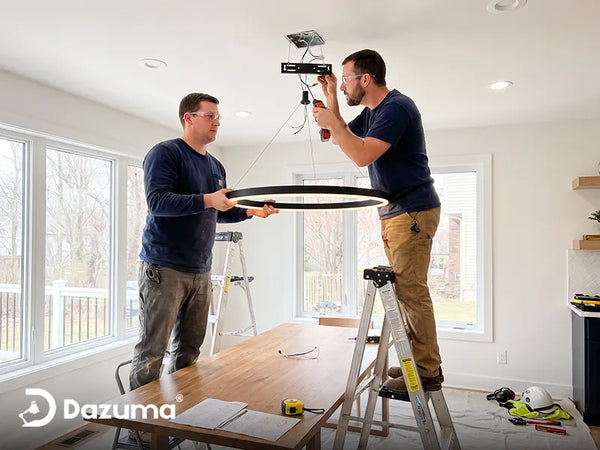

Installing a ceiling light is one of the most common home DIY projects. For many people, it’s the first time they ever touch electrical wiring. The good news? In most homes, replacing a ceiling light is simple, safe, and totally doable—as long as you follow a few basic rules.
This guide breaks down how to install a ceiling light in plain English. No jargon, no shortcuts, just clear steps you can actually follow.
Types of Ceiling Lights
Before you start, take a moment to look at the light you’re installing. Different lights hang differently, and that affects how careful you need to be.
- Flush mount lights - These sit flat against the ceiling. They’re lightweight and the easiest to install.
- Semi-flush mount lights - These hang down a few inches. Still easy, but a bit heavier.
- Pendant lights - These hang on a cord or rod. Weight and balance matter more here.
- Chandeliers - These are usually heavy and decorative. Some are not DIY-friendly unless the ceiling box is strong enough.
Why this matters: The heavier the light, the more important the ceiling support becomes.

Installing a flush mount ceiling light requires steady hands and proper ceiling box support.
Tools & Safety
You don’t need a garage full of tools, but you do need the right basics. Basic Tools: Voltage tester (to make sure power is off), Screwdrivers, Wire stripper, Pliers, Ladder. Most ceiling lights include the mounting hardware. If yours doesn’t, check before starting.
Can Your Box Hold the Light?
This is a question many homeowners never ask—but it’s a critical one. Not every ceiling box is designed to support every type of light fixture. Some boxes are only meant for very light fixtures, while others are rated to handle heavier loads.
- Small, lightweight lights usually aren’t a problem for standard ceiling boxes.
- Heavier lights, such as large pendants or chandeliers, need a box that is securely mounted to the ceiling framing.
- If the box moves, shifts, or wiggles when you touch it, that’s a clear warning sign and should be fixed before installing any light.
A ceiling light should never be supported by drywall alone. Drywall is not designed to hold weight, and relying on it can lead to loose fixtures or even falling lights over time. Before installing your ceiling light, always make sure the box feels solid, stable, and properly attached.

A modern pendant light being hung and adjusted for the correct drop height.
How to Install a Ceiling Light (Step by Step)
Follow these steps in order and don’t skip ahead. Taking your time will make the installation safer and smoother.
Step 1: Turn Off the Power
Start by going to your home’s breaker panel and turning off the circuit that controls the room where you’ll be working. Don’t rely on the wall switch alone. Once the breaker is off, use a voltage tester to check the ceiling wires and confirm that no power is running to them before you touch anything.
Step 2: Remove the Old Light
Support the existing light fixture with one hand while loosening the mounting screws so it doesn’t drop. After the screws are removed, untwist the wire nuts and carefully lower the fixture. Before moving on, inspect the ceiling electrical box. If the box looks cracked, loose, or unstable, that problem should be fixed before installing the new light.
Step 3: Identify the Wires
Look at the wires coming from the ceiling. In most U.S. homes, the black wire is the hot wire, the white wire is the neutral wire, and the green or bare copper wire is the ground. If the wire colors don’t match this pattern, slow down and take a closer look so you understand what each wire does before continuing.
Step 4: Install the Mounting Bracket
Attach the mounting bracket that came with your new ceiling light to the ceiling box. Tighten the screws firmly and make sure the bracket feels solid and sits straight. This bracket supports the weight of the light, so it’s important that it’s securely mounted.
Step 5: Connect the Wires
Match the wires from the ceiling to the wires on the light fixture. Connect black to black, white to white, and the ground wire to the grounding wire or grounding screw. Twist each connection together neatly, secure it with a wire nut, and gently pull on the wires to confirm they’re tight. Once connected, carefully tuck the wires back into the ceiling box.
Step 6: Attach the New Light
Lift the new light into place and secure it to the mounting bracket according to the manufacturer’s instructions. Make sure no wires are pinched between the fixture and the ceiling. When installed correctly, the light should sit flat and feel stable without wobbling.
Step 7: Turn the Power Back On
Return to the breaker panel and turn the power back on. Test the light using the wall switch. If the light doesn’t turn on, double-check the wire connections, try a different bulb, and make sure the breaker hasn’t tripped.

Careful installation is essential when mounting a chandelier to ensure safety and balance.
FAQ: Quick Answers to Common Questions
Q: Can I install a ceiling light myself?
Yes, most people can replace an existing ceiling light safely.
Q: Do I need a ground wire?
In most cases, yes—especially with metal fixtures or boxes.
Q: How long does it take?
Usually 30 to 60 minutes.
Q: Do I need a permit?
Replacing an existing light usually does not require a permit in the U.S.
Q: What if the ceiling box is loose?
Stop and fix the box first. A loose box is not safe.
Final Thoughts
Installing a ceiling light, like a ring chandelier ceiling light, doesn’t have to be intimidating. When the wiring is simple, the box is solid, and you take your time, it’s one of the most beginner-friendly DIY projects around.
The key is knowing what you’re working with and not cutting corners. Choose a ceiling light designed for standard U.S. ceiling boxes at Dazuma, follow the instructions carefully, and you’ll end up with a light that looks good and works safely for years.