
If you’ve ever stood at your front door late at night and wondered, “Should I leave my outdoor lights on all night?” — you’re not alone.
For many U.S. homeowners and renters, keeping outdoor lights on overnight feels like the default. It’s comforting. It feels safer. And honestly, it’s convenient. But as energy costs rise, light pollution becomes a bigger topic, and neighbors live closer than ever, more people are starting to rethink this habit.
The truth is, there isn’t a one-size-fits-all answer. This isn’t a simple yes-or-no question. Whether you should leave outdoor lights on all night really depends on why you’re using them and how they’re set up.
Let’s break it down.
Why This Question Matters More Than You Think
For decades, many American households treated outdoor lighting as an “on at dusk, off in the morning” routine. Porch lights, yard lights, floodlights — once they were on, they stayed on.
But today, a few things have changed:
- Electricity costs are more noticeable on monthly bills
- Environmental awareness is growing
- Neighborhoods are denser, and light affects more people
- Smart lighting options are widely available
Because of that, people are starting to ask smarter questions. Not “Should lights be on?” but “Do they need to be on all night?”
The key idea is simple: Leaving lights on all night only makes sense if it serves a real purpose.
Does Leaving Outdoor Lights On All Night Actually Improve Security?
Security is usually the #1 reason people keep outdoor lights on overnight. But does constant lighting really make your home safer?
What Research and Security Experts Say
The common belief is: bright house = safer house. But many security experts point out that predictability can work against you.
If a light is always on, every night, at the same brightness, it becomes background noise. It doesn’t signal activity — it signals routine. Someone with bad intentions can easily tell the difference between a lived-in home and a light that’s just… always there.
In contrast, unexpected changes — like lights turning on suddenly — tend to draw attention and feel more threatening.
That doesn’t mean outdoor lights are useless. It just means constant lighting isn’t always the most effective option.
Why Motion-Activated Lighting Often Works Better
Motion-activated lights solve several problems at once:
- They turn on suddenly, which can startle intruders
- They alert neighbors to movement
- They signal that something is happening right now
Motion lights also pair well with security cameras and video doorbells. When light and motion happen together, footage is clearer and more useful.
For many homes, this setup provides better security than leaving lights on all night — with far less energy use.

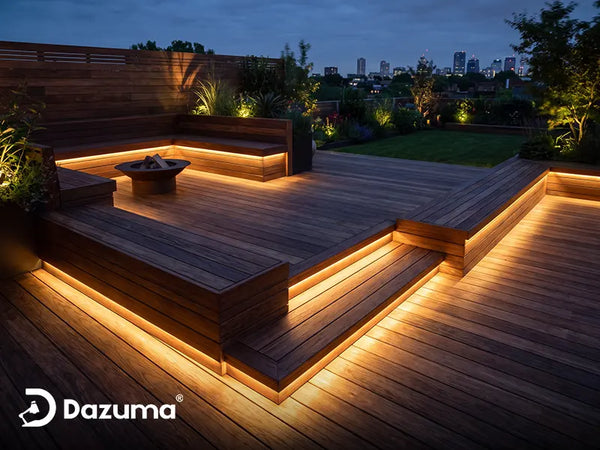
Landscape lighting enhances safety and atmosphere along backyard walkways at night.
Energy Costs and Environmental Impact
Even if security isn’t your main concern, energy use almost certainly is. Outdoor lights, like bollard landscape light, often run quietly in the background, which makes it easy to overlook how much electricity they actually consume. When lights stay on all night, night after night, the cost may seem minor at first, but over time it becomes more noticeable on your electric bill.
How Much Electricity Outdoor Lights Use Overnight
The cost of leaving outdoor lights on overnight depends largely on the type of bulb you’re using.
- Incandescent bulbs use the most electricity and produce a lot of heat, making them the most expensive option for all-night use.
- Halogen lights are slightly more efficient than incandescent bulbs, but they’re still relatively energy-hungry.
- LED outdoor lights use far less power, stay cooler, and are designed to run efficiently for longer periods.
Instead of thinking in terms of pennies per night, it helps to look at the monthly impact. A light that runs 10–12 hours every night can add up quickly, especially if you have multiple outdoor fixtures. LEDs may make overnight lighting more affordable, but “cheaper to run” doesn’t always mean “necessary to run.”
Light Pollution and Wildlife
Light pollution is no longer just a big-city issue. In many U.S. suburbs, overly bright outdoor lighting can affect:
- Night skies
- Insects and pollinators
- Birds and other nocturnal animals
This growing concern has led to the “dark sky” movement, which encourages smarter lighting choices — fixtures that point downward, stay shielded, and only turn on when needed. Leaving outdoor lights on all night, especially when they’re bright or unshielded, can work against these goals.

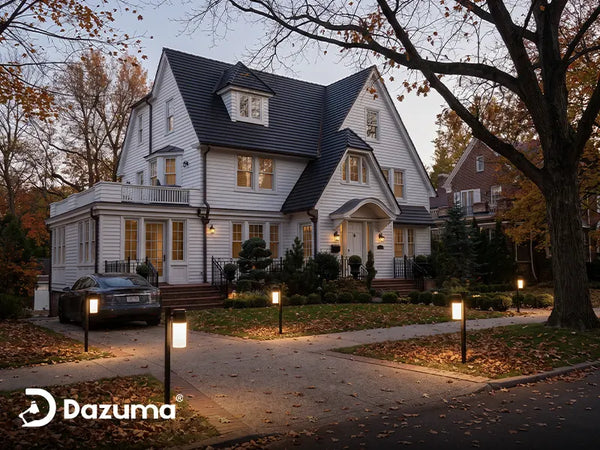
Driveway and exterior lights help improve nighttime visibility around suburban homes.
Potential Downsides of Leaving Outdoor Lights On All Night
There are also some practical downsides people don’t think about.
Light Trespass and Neighbor Complaints
Light that spills into a neighbor’s window can quickly become a problem. In many communities, especially those with HOAs, there are rules about brightness, direction, and operating hours.
Even without formal rules, American neighborhood culture puts a lot of value on being considerate. Nobody wants to be that house with the spotlight shining into the next bedroom.
Shortened Bulb Lifespan and Maintenance
Lights that run all night wear out faster. That means:
- More frequent bulb replacements
- Higher maintenance costs
- More time spent dealing with fixtures
Even LEDs, which last a long time, don’t last forever — and unnecessary runtime shortens their life.
When Leaving Outdoor Lights On All Night Does Make Sense
All that said, there are situations where overnight lighting is reasonable.
High-Risk or Remote Properties
Homes in rural areas, on large lots, or far from streetlights may benefit from consistent lighting. If visibility is poor and neighbors are far away, keeping certain lights on can improve safety and orientation.
Essential Safety Lighting
Some lights aren’t about security or looks — they’re about preventing accidents.
Examples include:
When Leaving Outdoor Lights On All Night Does Make Sense
All that said, there are situations where overnight lighting is reasonable.
High-Risk or Remote Properties
Homes in rural areas, on large lots, or far from streetlights may benefit from consistent lighting. If visibility is poor and neighbors are far away, keeping certain lights on can improve safety and orientation.
Essential Safety Lighting
Some lights aren’t about security or looks — they’re about preventing accidents.
Examples include:
- Stairways
- Walkways without railings
- Driveways with uneven surfaces
In these cases, low-level, well-directed lighting can stay on overnight without causing major issues.
The key is to focus on function, not decoration.