
First impressions don’t just matter in hospitality—they matter just as much in the workplace. For this project, the goal was to completely rethink how employees and visitors experience a courtyard arrival space, turning what used to be a purely functional area into something more intentional, welcoming, and human-centered.
In many office environments, outdoor spaces are often overlooked. They’re designed for circulation, not experience. People walk through them quickly, without really noticing anything. But that approach misses an opportunity. The arrival space is the first physical interaction someone has with a workplace, and it can say a lot about the company’s culture, attention to detail, and overall brand identity.
This project set out to change that. Instead of treating the courtyard as just a transition zone, the design focused on making it part of the experience. Lighting became the key tool—not just for visibility, but for shaping how the space feels, how people move through it, and how it’s remembered.
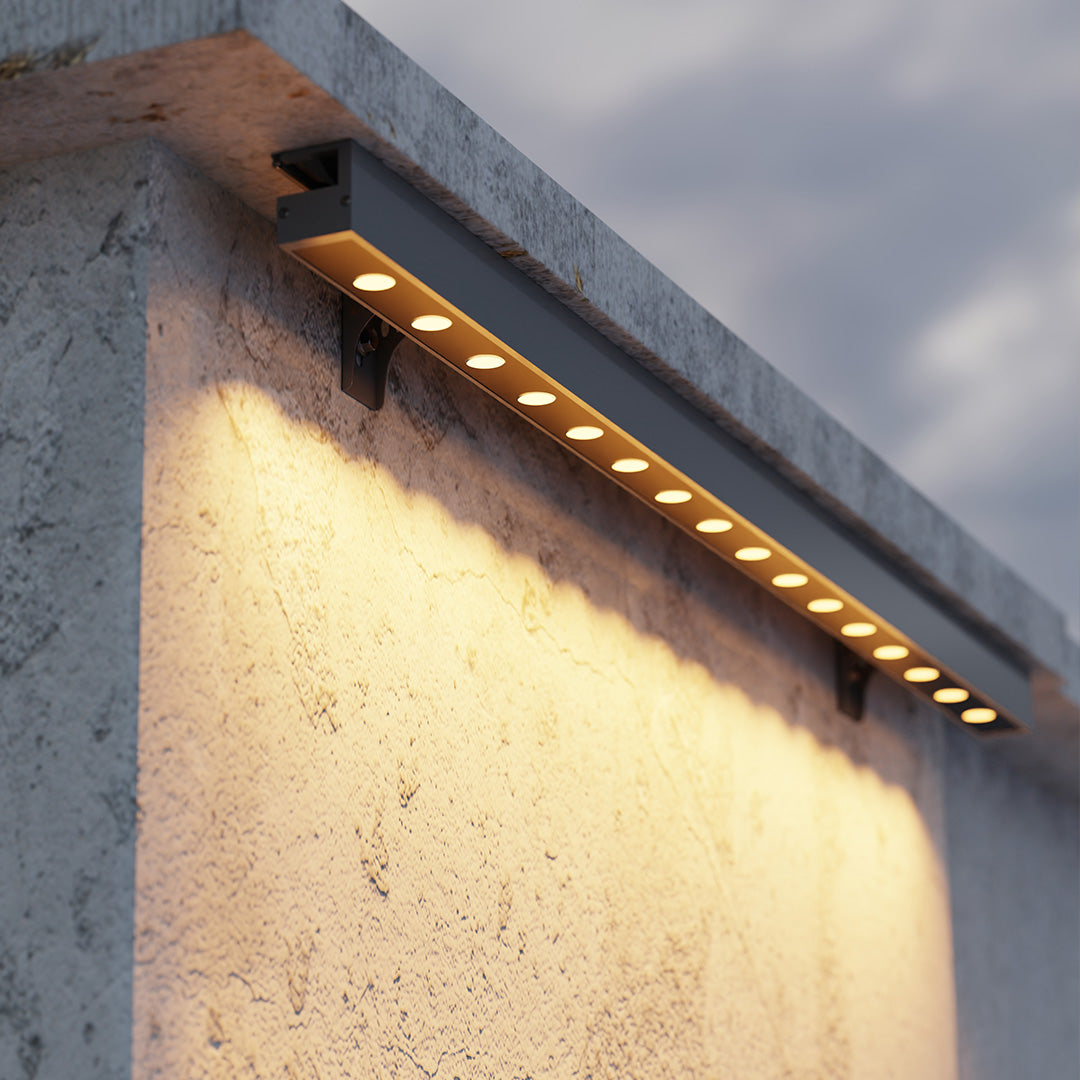
 Clean pathway lighting guides visitors through the workplace arrival area after dark.
Balancing Function and Atmosphere
One of the biggest challenges in workplace lighting is finding the right balance between functionality and atmosphere. On one hand, the space needs to be safe, well-lit, and easy to navigate. On the other, it shouldn’t feel overly bright, sterile, or uncomfortable—especially during early mornings or late evenings when natural light is limited.
In this project, a layered lighting strategy made that balance possible. Instead of relying on a single type of lighting, multiple layers were introduced to serve different purposes while working together as a whole.
Path lighting plays a major role in defining movement. By placing lights along walkways and key routes, the design naturally guides people through the courtyard without the need for signs or barriers. It’s intuitive—people simply follow the light.
At the same time, ambient lighting creates an overall sense of comfort. It fills the space just enough to make it feel safe and usable, but without flattening everything into a uniformly bright environment. Accent lighting then adds another dimension, highlighting architectural features, walls, and landscape elements to create depth and visual interest.
What makes this approach effective is the variation. Not every part of the courtyard is lit the same way, and that’s intentional. Brighter areas draw attention to entrances and key points, while softer zones create contrast and allow the space to breathe. This makes the environment feel more natural, more dynamic, and ultimately more engaging.

 Layered pathway and landscape lighting create a safe and visually engaging outdoor environment.
Creating a Seamless Indoor-Outdoor Experience
Another important aspect of this project was the relationship between indoor and outdoor spaces. In many office buildings, the transition between exterior and interior can feel abrupt—almost like stepping from one world into another.
Here, the goal was to make that transition feel smooth and connected. Lighting played a critical role in achieving that.
The outdoor lighting was carefully calibrated to complement the lighting inside the building. Warm color temperatures were used to create consistency, so the courtyard feels like a natural extension of the interior rather than a separate zone. As people move from outside to inside, the shift in lighting feels gradual and comfortable, not jarring.
This kind of continuity has a subtle but powerful effect. It makes the entire environment feel more cohesive and thoughtfully designed. It also aligns with modern workplace trends that prioritize employee well-being, comfort, and experience—not just efficiency.
Thoughtful Fixture Selection
Fixture selection in this project was driven by both performance and design intent. Every light had a specific role to play, and nothing was chosen at random.
Lower-level lighting, such as bollards and pathway lights, was used to maintain clear and safe circulation routes. These fixtures are practical, but when placed correctly, they also help structure the space visually.
Landscape and in-ground lighting were used to bring attention to greenery and textures that would otherwise disappear at night. This adds depth and helps soften the overall environment, making it feel less rigid and more inviting.
Architectural lighting, including facade uplighting, gives the building a stronger presence after dark. Instead of fading into the background, the structure becomes part of the visual experience, reinforcing the identity of the space.
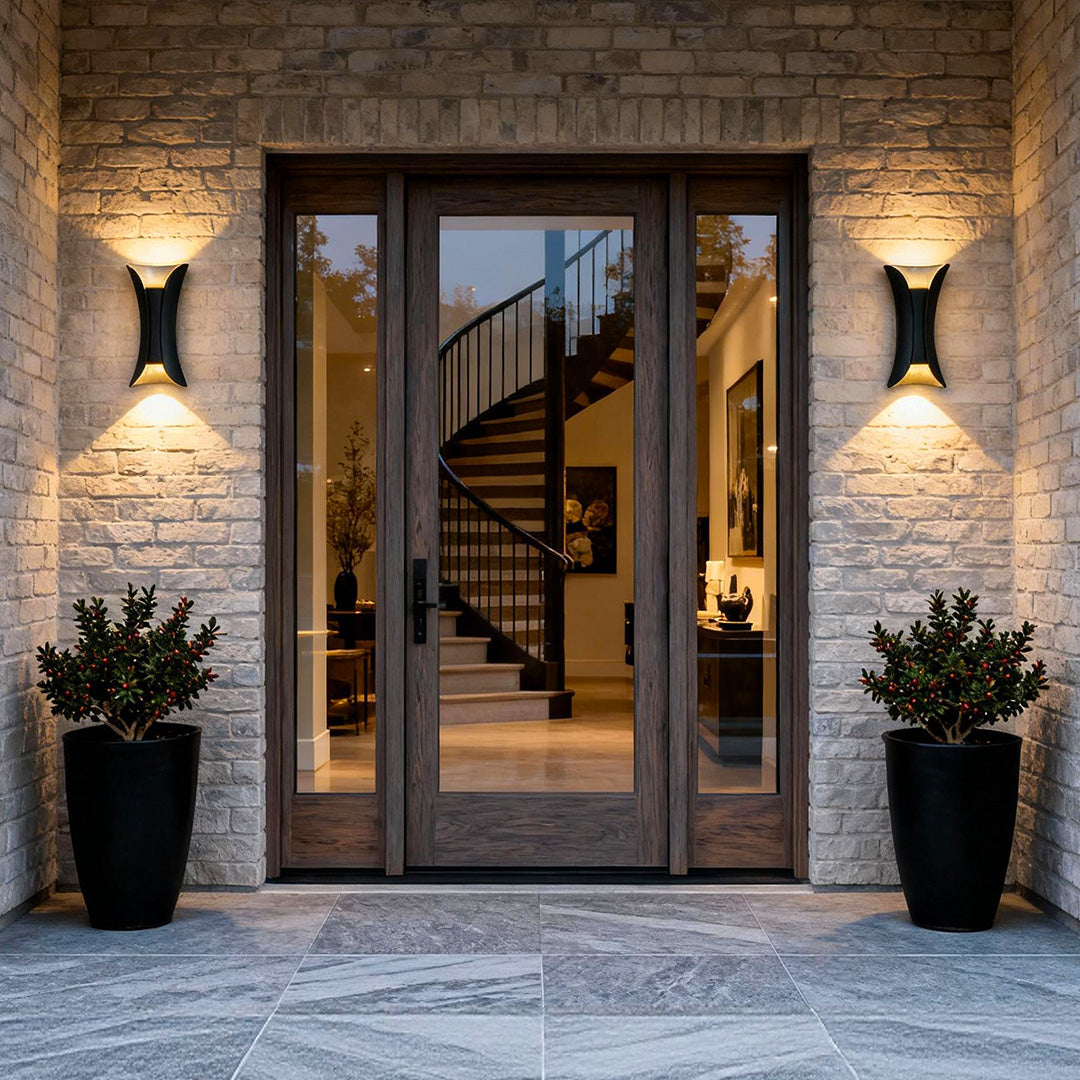
In certain areas, more decorative elements were introduced to add character and break away from a purely functional look. These details, while subtle, help elevate the overall design and make the courtyard feel more curated.
 Thoughtful lighting design makes the office courtyard feel more inviting and comfortable for employees.
Execution That Brings the Design Together
Even the best design concepts can fall short without proper execution. This project required close coordination across multiple stages to ensure everything worked as intended once installed.
Details like fixture placement, spacing, and beam angles were carefully planned to achieve the right distribution of light. Too much overlap could lead to over-lighting, while too little could create dark spots or inconsistencies.
Color temperature consistency was another key factor. Mixing different tones of light can make a space feel disjointed, so maintaining a unified look was essential. Glare control was also a priority, especially in a workplace setting where visual comfort directly impacts how people feel in the space.
On top of that, practical considerations like durability, weather resistance, and system compatibility were all addressed early in the process. This ensures that the lighting not only looks good on day one, but continues to perform reliably over time.
A Better Arrival Experience
After completion, the transformation is immediately noticeable. The courtyard is no longer just a space people pass through—it’s a place that feels intentional, comfortable, and aligned with the overall workplace environment.
Lighting now guides movement naturally, without forcing it. The atmosphere feels calm and balanced, making the space more enjoyable to move through, whether it’s the start of the workday or the end of it.
Perhaps most importantly, the space now reflects a more human-centered approach to design. It shows that even functional areas can be elevated with the right thinking and the right use of lighting.
Key Takeaways for Workplace Lighting Design
This project highlights a few practical principles that can be applied to similar workplace environments:
- Design for people first: Focus on comfort and experience, not just visibility
- Use layered lighting: Combine ambient, accent, and functional lighting
- Create smooth transitions: Make indoor and outdoor spaces feel connected
- Avoid over-lighting: Balance brightness to maintain a natural atmosphere
- Execute with precision: Small details make a big difference in the final result