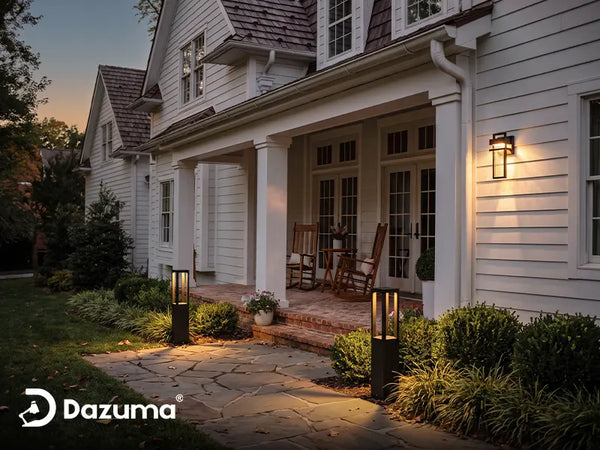

Who This Is For: This guide is for homeowners planning landscape lighting for a front yard, backyard, or small garden, especially if you want the space to feel inviting after dark without lighting every corner.
Introduction
During the day, a garden offers plenty to look at: the curve of a path, a favorite tree, a pair of chairs beside the planting bed. After sunset, those details can disappear, leaving a bright porch and a dark yard beyond it. Landscape lighting helps bring a few of them back into view.
The most useful changes are often small. A pool of light at a turn makes the route easier to follow. A lantern beside a chair makes that corner feel ready for company. An illuminated tree gives the view from the kitchen something to settle on. These five ideas help you choose where that light will make a difference.
Before You Start: Decide What Needs Light
Walk outside after dark with the lights you already use switched on. Notice the places where you slow down, reach for a handrail, or lose sight of the path. Then sit where you normally relax and look toward the garden. Finally, check the same view from inside the house.
Make two short lists: places you need to see and features you would enjoy seeing. The first might include steps and the route to a gate. The second might include a textured wall or a small tree. Deal with the route first, then choose one or two accents. A decorative glow rarely solves every practical need around it.
1. Create a Gentle Trail With Path Lighting
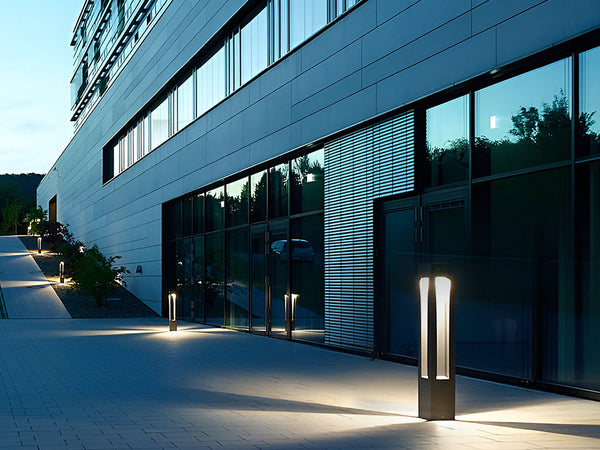
A softly lit walkway gives the garden a sense of direction. It can lead from the driveway to the door or draw attention to a side path that otherwise disappears at night. The goal is to reveal the walking surface and changes in direction, with enough continuity that visitors understand where to go next.

Light the Decisions Along the Route
Begin at the entrance, a bend, a junction, or the approach to a step. Fill gaps only where the route becomes hard to read. A straight, level section may need less attention than a short change in height. There is no universal spacing that works for every fixture and garden.
When comparing path lights, look at the beam on the ground rather than only the shape of the fitting. Shielding, mounting height, output, and nearby plants all affect the result.
Avoid the Runway Effect
Two tightly spaced rows can make a small path feel more formal than intended. Try a restrained staggered arrangement for a relaxed garden, or use pairs where the architecture calls for symmetry. Either way, keep fixtures out of the walking space and away from places where lawn equipment will strike them.
Check the route from both directions. A lamp that feels comfortable when walking toward the house may shine directly into your eyes on the way back. Adjust the position or shielding before adding another light. Clear leaves and trim encroaching plants so the intended beam still reaches the surface.
2. Give One Tree or Garden Feature a Quiet Spotlight
One visible feature beyond the patio can make the whole yard feel deeper. A tree with interesting branches, a sculptural shrub, or a stone wall offers a natural focal point. Choose something you enjoy in daylight and can see from a place you actually use after dark.
Choose the View Before the Fixture Position
Stand at the kitchen window or sit in a patio chair, then decide which part of the feature deserves attention. A narrow trunk, a broad canopy, and a textured wall need different beam coverage. Start with a temporary lighting mockup and move the source until the feature has definition without an exposed bright spot.
Adjustable outdoor spotlights can help direct the beam, but aiming matters as much as the fixture. Keep spill away from bedroom windows and neighboring property.

Keep the Light on the Feature
If you use an upward beam, contain it within the feature as far as practical instead of sending light past the canopy. Downward lighting from an appropriate structure can create a gentler effect on planting and paving. The comparison of uplighting and downlighting explains how the direction changes the appearance.
Large trees deserve a more considered plan, including access, mounting, and seasonal growth. Use the guide to lighting a large outdoor tree for further planning, and use qualified help for elevated installation. Recheck the effect when foliage changes; bare branches can let a previously contained beam escape.
3. Gather Lanterns Around the Places You Sit
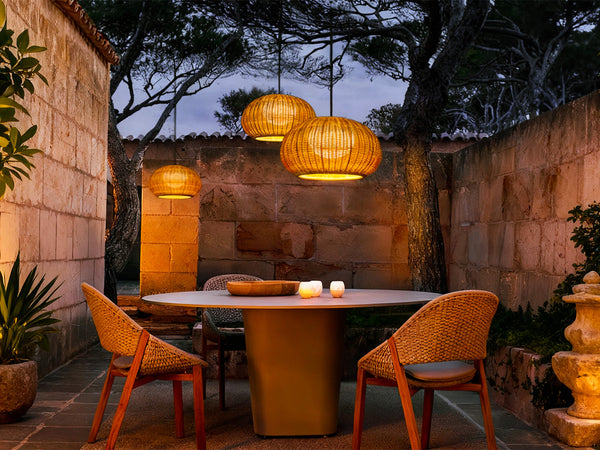
Lanterns work especially well when the yard needs a welcoming place to pause. Rather than scattering them across the entire garden, place a small group beside a bench, near a covered seating area, or along the edge of a patio. The grouping becomes a visual invitation to stay outside a little longer.

Think About the Seated View
A lantern can look lovely from across the lawn and feel harsh beside your face. Sit down during the test. Diffused shades or a lower output can make nearby light more comfortable. Place the lantern where it softly reveals a surface or planting, rather than leaving a bright bulb suspended against darkness.
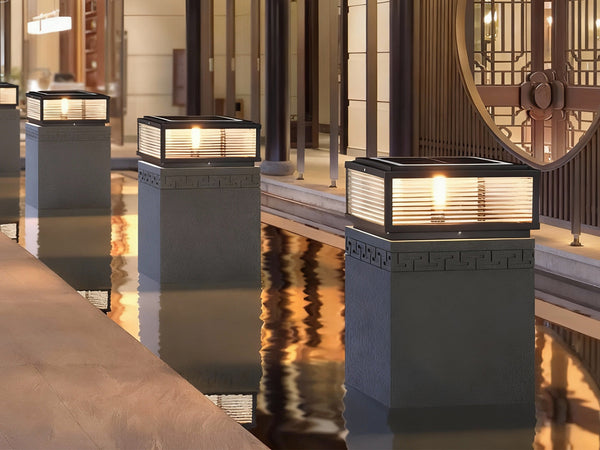
Among outdoor lanterns, choose a power method that fits the routine. Rechargeable designs suit movable arrangements; solar versions need a workable charging location. A shaded lounge corner may require the solar panel or lantern to charge elsewhere, if the design permits.
Give Decorative Light a Supporting Role
A pair of lanterns can establish atmosphere without providing enough light for dinner preparation, reading, or nearby stairs. Keep useful task lighting where those activities happen. For a tabletop, check that the lantern does not block conversation or make guests look straight into the source. Choose equipment labeled for the actual outdoor exposure.
4. Make a Water Feature Part of the Evening View
A pond, fountain, or small stream can become a quiet focal point after sunset. You do not have to illuminate all of it. A little light on falling water, the textured edge of a basin, or nearby planting can suggest the feature while leaving room for reflection and darkness.

Decide Between the Water and Its Surroundings
Lighting from outside the water is often worth exploring first. A shielded source can reveal a fountain surface or adjacent planting without introducing a submerged fixture. Check reflections from the seating area; the water can send an unwanted bright image back toward the viewer.
If the design calls for underwater lights, select equipment explicitly intended for that installation and follow its specified depth, power, and connection requirements. An ordinary outdoor fixture is not a substitute.
Keep Water Lighting Selective
Avoid washing an entire wildlife pond with light throughout the night. Consider the needs of fish and other animals before choosing placement and operating hours. For a pool, spa, or permanent electrical work near water, involve a qualified professional and follow applicable requirements.
Keep the edge and the approach understandable with separate, appropriate lighting. A glowing basin can be visually striking while the paving beside it remains difficult to see. Lighting also does not replace required barriers or supervision around water.
5. Use Glowing Globes as Garden Accents
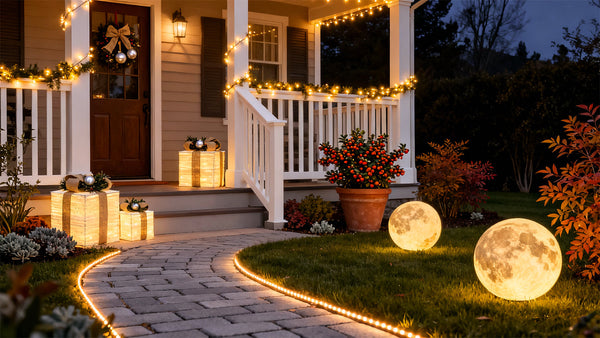
Globe or orb lights, sometimes described as bubble lights, add a softer shape among straight paving lines and upright plants. They can suit a contemporary courtyard or a playful garden corner. Treat them as decorative objects with light inside, and give each one enough space to be noticed.
Try a Small Group at the Edge of the Scene
Two or three globes in different sizes can sit beside a raised planter or beyond a seating area. Keep them outside circulation routes. In a small courtyard, a single orb may be enough, especially when the surrounding walls already reflect light from the house.
Choose a soft, restrained glow. A very bright globe can dominate everything around it, making nearby planting appear darker by comparison. Check its appearance from seated eye level and from inside the home.

Leave Room for Everyday Maintenance
Check how the globes are powered, secured, cleaned, and moved before choosing a location. Keep charging ports and connections accessible according to the instructions. Ground placement does not mean a product is suitable for standing water, and a floating effect requires a fixture specifically designed for that use.
How to Combine the Ideas Without Overlighting
You do not need all five ideas in one yard. Choose the combination that serves your routine and the features you already have. This is a starting framework rather than a fixture count.
| Outdoor Space | Start With | Add If Needed |
|---|---|---|
| Small front yard | A readable approach to the door | One tree or planting accent |
| Backyard patio | Comfortable seating and task light | Lanterns and a quiet background feature |
| Contemporary courtyard | Clear circulation and a restrained focal point | A soft globe or textured-wall accent |
| Garden with a fountain | Visibility around the approach and edge | Selective light on water or stone |
Use Color and Contrast Deliberately
A consistent warm light color can help separate fixtures feel like one composition. Around 2700K to 3000K is a common residential starting point; test it against your paving, foliage, and exterior finishes. Color temperature does not determine brightness, so compare output and shielding separately.
Leave some areas dark and set decorative lights to turn off when they are no longer needed. This approach follows the emphasis on targeted, restrained, controlled light in DarkSky and the Illuminating Engineering Society’s outdoor lighting principles.
Test a Small Scene Before Expanding
For example, in a backyard with a short path, two chairs, and a maple, first make the path legible. Add lantern light beside the chairs, then try a modest accent on the tree. View the result from the kitchen and both chairs. If the scene already feels complete, stop there rather than adding lights simply because another bed is empty.
Landscape Lighting FAQs
Where Should I Start With Landscape Lighting?
Start with the route people use after dark, including steps and turns. Then choose one feature you want to see from the house or seating area.
How Far Apart Should Path Lights Be?
Spacing depends on mounting height, beam spread, output, and the path itself. Test positions at night and fill gaps where the route becomes hard to read.
What Color Temperature Works Well in a Garden?
Warm white around 2700K to 3000K is a common starting point for residential settings. Check the actual effect on plants and surfaces, and consider warmer options where appropriate.
Are Solar Lights Enough for a Whole Yard?
It depends on charging conditions and the lighting task. Solar accents can work well in suitable locations, but critical visibility needs a plan that remains dependable when sunlight is limited.
Can Outdoor Lights Be Placed Underwater?
Only use fixtures specifically designed for the intended submerged application. Follow their installation requirements and use qualified help for electrical work near water.
How Can I Reduce Glare?
Shield the source, adjust its aim, lower output where appropriate, and check the view from normal standing and seated positions. Avoid sending light beyond the intended feature.
Make the Yard Feel Like Somewhere to Stay
Start with a comfortable route, add light near the places you use, and give one garden feature a little attention. The result can feel welcoming without turning the whole property bright. A few well-placed lights let you enjoy the landscape after sunset while preserving the quiet that makes an evening outside appealing.