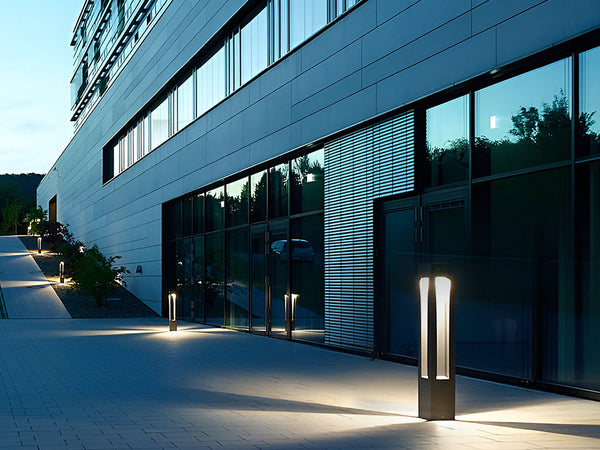

Who This Is For: This guide is for homeowners who like the clean look of long wall lights but need help choosing where they belong. Whether you are updating a front entrance, furnishing a patio, or connecting a doorway to outdoor steps, you will find practical ways to balance architectural impact with comfortable, useful light.
A long wall light can give an ordinary surface a sense of structure. Beside a front door, it draws attention to the entrance. Along a patio, a controlled line of light can make the seating area feel more settled after sunset. The appeal comes from that simple shape and how it relates to the architecture around it.
The useful distinction is between seeing a beautiful fixture and seeing what you need to do. A glowing bar may look striking from the driveway while leaving a lower step poorly illuminated. The strongest layouts give wall lights an architectural role, then add light where people walk, sit, and handle keys.

Long Wall Light Types: Look Beyond the Shape
“Long wall light” describes proportions, not a single lighting effect. Two equally long fixtures can produce very different results because their diffusers, shielding, and light directions differ. Start with the surface or activity you want to illuminate, then choose the form.
| Type | Typical Role | What to Check |
|---|---|---|
| Surface-mounted linear bar | Give an entrance or wall a clear visual anchor | Mounting orientation, projection, and exposed brightness |
| Diffused linear sconce | Create a softer luminous line indoors or outdoors | Glare from normal standing and seated positions |
| Directional linear wall light | Illuminate a wall, ceiling, or nearby surface | Beam direction and actual distribution |
| Recessed flexible LED strip | Trace a step, recess, or architectural edge | Power supply, recess dimensions, and outdoor terminations |
A recessed strip can complement a long wall fixture, but it requires a different installation plan. Likewise, a longer fixture does not automatically illuminate a wider walking area. When comparing outdoor wall lighting, look for installation drawings and nighttime photographs that show the surrounding surfaces, not just the glowing product.
Frame a Front Entrance With a Vertical Line
A narrow vertical light beside a door echoes the proportions of the opening without adding much visual bulk. It works especially well when a porch has tall siding, a plain masonry pier, or a generous section of wall beside the trim.

Leave Breathing Room Around the Fixture
Measure the clear wall area between door trim, corners, and nearby hardware. A long light should have enough space to read as its own element. Avoid squeezing it between a house number, doorbell, and downspout simply because an electrical box already sits there.
One light can make an asymmetrical entrance feel intentional. A pair suits a centered doorway when both sides offer comparable wall space. Matching heights matter more than forcing symmetry onto an uneven facade.
For this look, Dazuma's Outdoor Strip Wall Light offers a slim black form and several length options. Its daytime appearance is part of the decision: black stands out against pale stucco and blends more quietly into darker siding. Compare that contrast with other black outdoor wall lights before choosing the final shape.
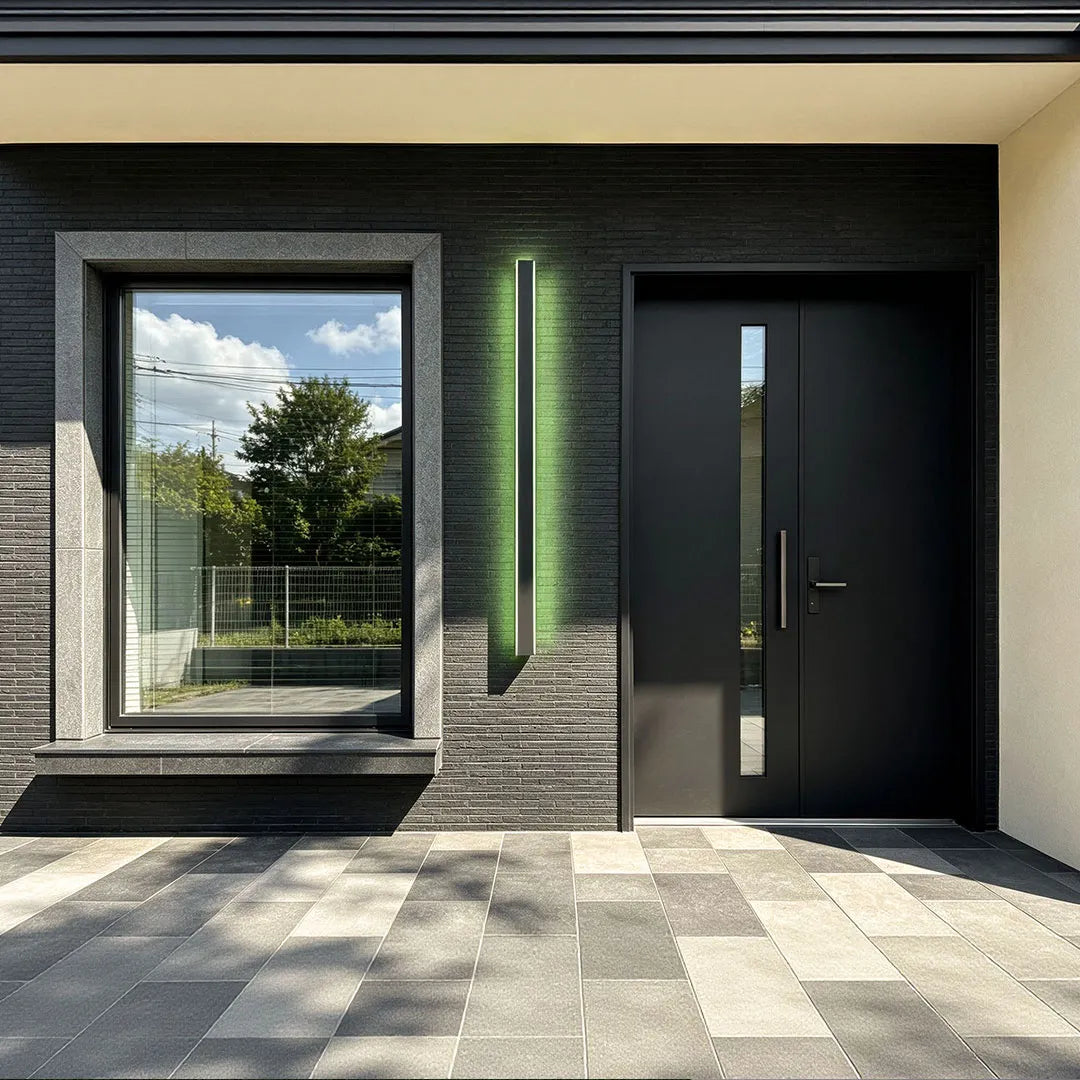
A Defined Entrance
Outdoor Strip Wall Light Black Linear LED Integrated Light
Price: From $211.99. Price varies by length, light option, and set size.
Best for giving front entrances, exterior columns, and courtyard walls a clean linear accent.
- Black iron construction with a white PMMA shade.
- Multiple lengths help coordinate the fixture with the available wall area.
- White, Warm White, 3 Step Dimming, and RGB are separate selectable light options; check the chosen variant's controls.
Bring Definition to Patio Walls Without Overlighting
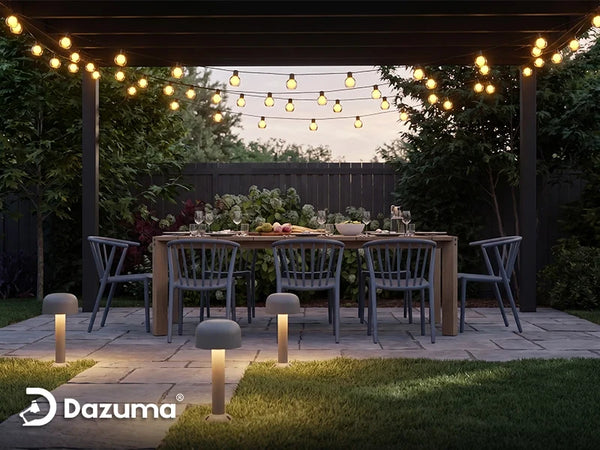
On a patio, think about the view from a chair. A fixture that feels comfortable while standing may sit directly in someone's sightline once they settle into a low sofa. Position the light in relation to furniture, windows, and the direction people face during conversation.
Use Texture With Intention
Light skimming close to brick or stone emphasizes raised edges and shadows. That can make a courtyard feel richly textured, but it also reveals uneven mortar and repairs. A smoother, more even wall-lighting effect requires a suitable distribution and placement; a long fixture alone cannot guarantee it.
A horizontal line can echo a bench or low garden wall when the fixture permits that mounting orientation. Keep the brightest part outside the main seated view, and check reflections in nearby glass.

Leave some surfaces quieter so the patio retains depth. Lighting every wall equally can make a modest seating area feel flat and exposed. If you also need light over a dining table or at a back door, our guide to planning porch and patio lighting can help assign each fixture a useful role.
Carry the Linear Look Into Hallways and Bedrooms
The same design idea works indoors, although the fixture needs to suit the room. In a narrow hallway, a shallow linear sconce can add rhythm along a blank wall. Check its projection against circulation space, open doors, and furniture before deciding how many to install.

Separate Atmosphere From Reading Light
Beside a headboard, a diffused vertical light can provide a gentle evening backdrop. For reading, check whether it actually directs enough light onto a book without shining into your partner's eyes. An adjustable reading light may still be useful.
Consider the switch location while sitting in bed. A visually simple fixture becomes much more convenient when its control is within reach and its dimming system, if offered, matches the intended switch or controller.
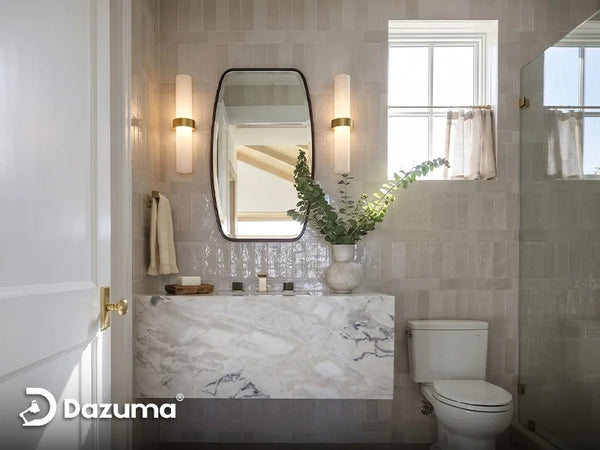
For a mirror, prioritize how faces are illuminated over how dramatic the fixture looks. Check bathroom location suitability separately; a product's appearance or outdoor marketing does not establish suitability for every indoor wet area.
Connect the Wall Lighting With Outdoor Steps
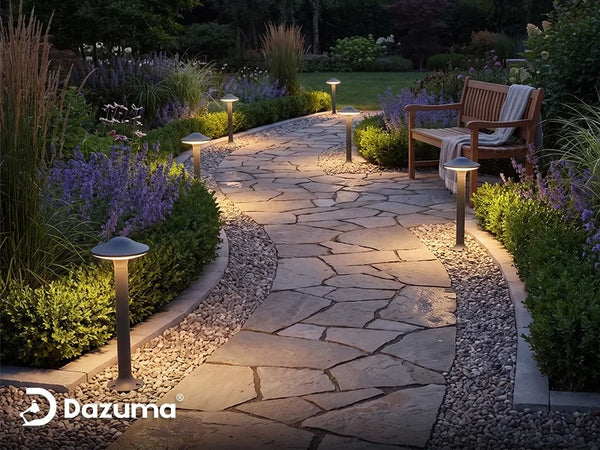
The transition from an illuminated doorway to a dark stair is where a second lighting layer earns its place. Recessed LED strips can follow the underside of a tread or a planned recess, adding a line that helps distinguish changes in level.
A visible edge and a visible walking surface are different things. A bright strip can outline a stair while leaving the tread itself hard to judge. Check the actual result from the top and bottom of the steps: you should be able to read the edges, tread surfaces, and landing without staring into exposed LEDs.

Dazuma's Outdoor Embedded LED Light Strips suit projects where a recessed detail can be planned into the steps or surrounding construction. They complement the rigid wall light above by moving attention down toward the route people follow. The installation needs its own power supply and careful planning for outdoor connections.
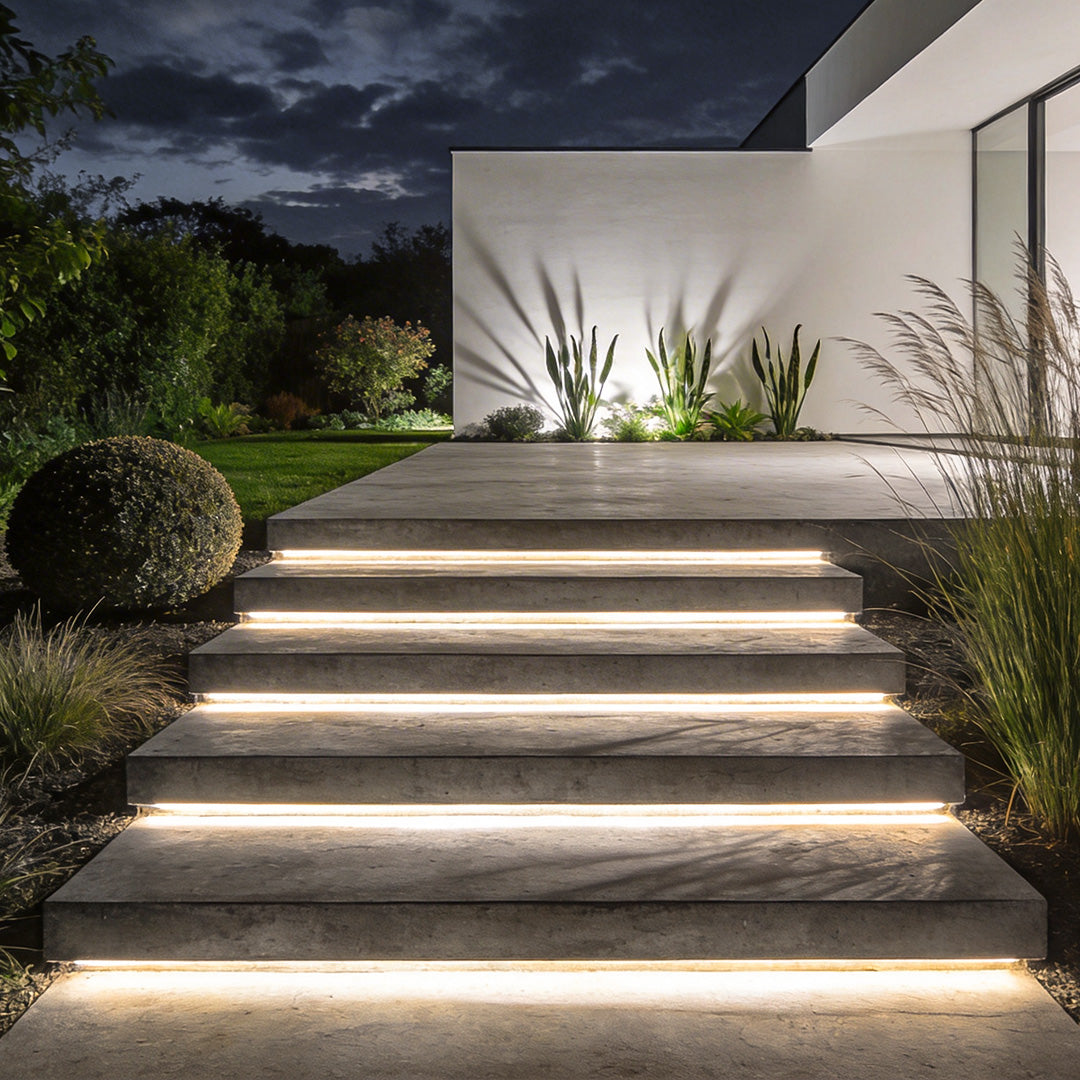
Light Along the Steps
Outdoor Embedded LED Light Strips Modern Flexible Light
Price: From $49.99. Price varies by model, length, and light option.
Best for planned recesses beneath outdoor stair treads and along architectural edges.
- Flat and 3 Sides models offer different profile choices.
- Choose 3000K Warm White, 4500K Neutral, or 6000K White.
- A compatible 24V DC power supply is required and is not included.
Before ordering outdoor LED strip lights, measure each illuminated section and identify where wires and the power supply will remain accessible. Check profile dimensions before any recess is cut. If a run needs shortening, review whether outdoor LED strip lighting can be cut, then follow the selected product's marked cutting points and approved sealing method.
Plan Size, Placement, and Power Before Ordering
A Simple Entryway Layout
Picture a front door beside a tall wall pier, with three broad steps leading down to a short path. Give the pier one vertical wall light to establish the entrance. Add recessed lighting at the steps where the construction allows it, then assess the landing and path independently. The number of lights follows the areas that need illumination.
Keep the visual hierarchy clear: the doorway is the focal point, while the step lighting supports the approach. If every line looks equally bright from the street, reduce the output through compatible controls or reconsider the selected fixtures. Test the arrangement with the door open, too. A swinging door can temporarily block light that seemed adequate while everything was closed.
For a covered porch with an existing ceiling light, evaluate that fixture before adding more wall lights. It may already handle the lock and landing, leaving the long wall fixture free to provide the architectural accent.
Mock Up the Full Length
Use removable tape to outline the proposed fixture on the wall. Look at it from the sidewalk, the doorway, and inside nearby windows. This reveals awkward relationships with trim and rooflines before installation. Check the mounting plate position separately: the electrical connection may not sit at the geometric center of the visible fixture.
For example, a porch with a tall narrow pier may suit one vertical light, while a broad low wall may suggest a horizontal arrangement. Confirm the fixture's permitted mounting orientation before using that idea. There is no single mounting height that suits every long fixture and every facade.
Check more than the front elevation. The fixture's depth affects clearance beside a screen door, shutter, or gate. On textured masonry, ask how the mounting plate will sit securely against the surface. These details influence the finished appearance as much as the advertised length.
Coordinate Light Color and Controls
Warm light is a comfortable starting point for an entrance or patio used in the evening. Matching labeled color temperatures helps, but two different products can still look slightly different. Compare samples or installed photographs where possible, and avoid assuming an unspecified “Warm White” option exactly matches a 3000K strip.
Separate controls let you use the wall accent and step lighting as needed. Confirm compatibility before adding a dimmer, timer, or smart control. Selecting a dimmable variant is different from knowing it works with the controller already in your home.
Give Each Product the Correct Supply
The featured wall fixture and recessed strip have different electrical requirements. Do not connect the 24V DC strip directly to household line voltage. Have the installer verify the selected wall fixture's voltage, size the strip's power supply for the connected load and manufacturer requirements, and account for cable length and permitted run lengths.
Keep the power supply and connections accessible for service in enclosures suited to their location. An outdoor-rated fixture does not make every cut end or connection weatherproof. For recessed runs, also check drainage, cleaning access, and whether the chosen location exposes the product to standing water or physical impact.
Build the purchase list around the completed installation: fixtures, compatible power supplies, controls, connectors, sealing accessories, and any required mounting components. Compare that total with the work needed to prepare the wall or steps. Planning a recess during construction is a different project from adding lighting to a finished stone stair.
Review the Finished Space After Dark
Stand where guests arrive, sit where you relax, and walk both directions on the stairs. Look for reflected glare, dark landings, and spill toward neighboring windows. Adjust the layout or compatible controls to put useful light where it belongs. Keeping output modest often makes the architecture easier to appreciate.
Only cut a cuttable product at its marked cutting points. Confirm permitted section lengths and connections, then restore outdoor protection using the manufacturer's approved sealing method.
Start with the area you want to improve most. A long black wall light can give the entrance definition; a recessed strip can extend that attention to the steps below. Choose the size and light option for each location, then have the mounting and power details checked before ordering. The result should feel welcoming from the street and comfortable all the way to the door.