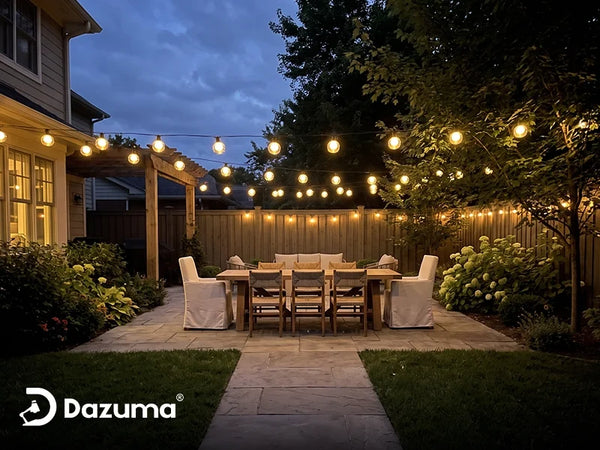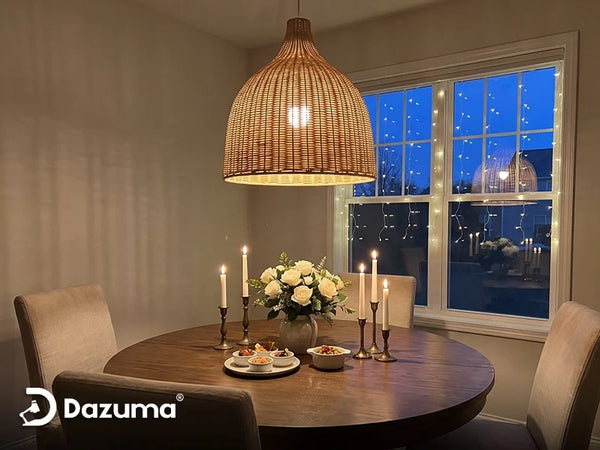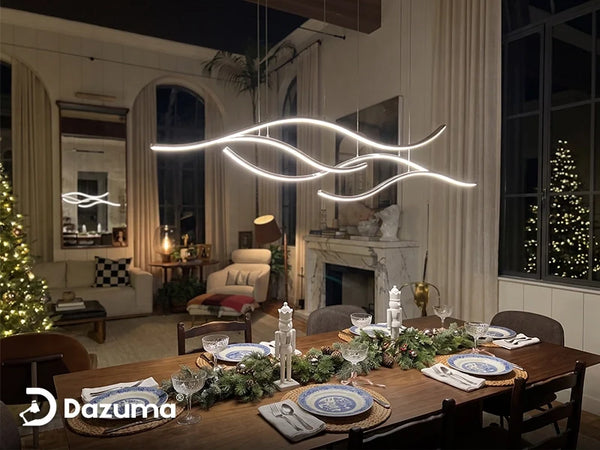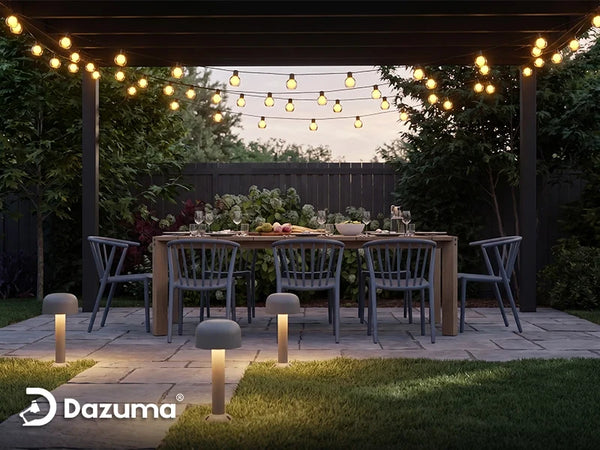

This guide is for homeowners choosing hanging solar lights for a porch, pergola, patio, or balcony, especially when the place that needs light is shaded during the day.
A lantern over a porch chair can make that corner feel inviting after dinner. The same spot may spend the entire afternoon beneath a roof. Before choosing the shade shape or finish, look at where the solar panel will sit. That small detail can determine whether the light suits the space at all.
Hanging solar lights outdoors usually involves one of two arrangements: a panel built into the fixture, or a separate panel connected to it by a cable. The first keeps everything together. The second lets you choose different places for charging and illumination. Neither arrangement is automatically brighter or longer lasting.

Start With Two Locations
Choose a built-in panel when the fixture's intended position also provides suitable solar exposure. Consider a separate panel when the light belongs under cover and a sunnier, reachable mounting position is available nearby. If neither location can provide adequate charging, change the power source or reconsider the placement.
Start by marking the spot where you want the lamp to hang. Then identify where its panel could receive unobstructed sunlight. Those two spots might overlap at an open garden hook. Under a deep porch roof, they probably will not.
This is a useful first filter when browsing outdoor solar lights. A fixture can look right above a table while its charging arrangement makes that position impractical. Check the panel in the product photos and installation instructions before deciding that a light will work there.
Built-In vs. Separate Solar Panels
With a built-in design, the panel is part of the lantern or lamp housing. With a separate design, the panel has its own position and a connecting cable. Compare the installation consequences rather than treating either layout as a quality rating.
| Decision | Built-In Panel | Separate Panel |
|---|---|---|
| Where it charges | Wherever the fixture is placed | At a separate location within the permitted cable reach |
| Covered seating | Roof shade can limit charging | The lamp can sit under cover while the panel remains exposed |
| Visible components | Panel and lamp share one housing | Panel, bracket, and cable need places of their own |
| Changing locations | Convenient if the lantern is designed to be portable | May require moving or rerouting multiple parts |
| Routine access | Reach the fixture to clean its panel | Reach both the lamp and the panel as needed |
A separate panel is not necessarily larger, and a built-in panel is not necessarily weaker. Compare the actual light output, operating modes, charging requirements, and stated runtime conditions. Panel placement solves a location problem; it does not replace those checks.
Which Design Fits Your Space?

An Open Garden Hook or Uncovered Patio
A built-in panel is a straightforward option when the lantern hangs in an exposed position. There is no separate panel cable to arrange, and a portable model can move with your seating layout.
Check the exact height of the panel, however. Sun on the paving below does not prove that the lantern's top receives it. A fence cap, umbrella, or nearby shrub may shade the panel while the surrounding garden looks bright.
A Covered Porch or Pergola
For a solar pendant light outdoors beneath a solid roof, investigate a separate-panel design first. Place the lamp where its light is useful, then find a suitable panel position outside the roof's shadow. Both locations must comply with the product's mounting and exposure requirements.
An open pergola needs closer observation. Slats can cast narrow shadows across a panel, and climbing plants may gradually cover a position that was sunny when you installed it. Check the intended panel location at different times of day rather than judging the whole pergola from a single photograph.
For the charging side of that decision, our guide to whether solar lights need direct sunlight explains the difference between open daylight and deeper shade.
A Balcony With Limited Mounting Options
On a balcony, available sun and permitted attachment points may be on opposite sides of the space. Check building rules before fastening a panel or hook to a railing or exterior wall. Keep the assembly within a secure, approved location; a sunny position beyond the railing is not useful if you cannot mount it safely.
A portable lantern designed for solar charging can be an alternative: charge it in a suitable location, then move it to the seating area. This works best when moving it is an easy part of your routine. If you want a permanently suspended light that you never relocate, choose around its fixed installation instead.
Measure the Cable Route Before You Buy
Measure Along the Structure
The distance from the lamp to the panel is not always the distance the cable must travel. It may need to follow a beam, turn a corner, and reach a mounting bracket. Measure the route you can actually use, with the connector positions included.
For example, an illustrative route might run 3 feet up a post, 5 feet along a beam, and 2 feet toward the panel. That is already 10 feet before allowing for bends and any slack required by the instructions. An 8-foot cable cannot follow that route, even if the two components look close together.

Confirm which measurement the listing provides. A hanging chain length, pendant drop, and panel cable length describe different parts of the installation. If the description gives only an overall dimension, ask for the panel-to-lamp cable length before ordering.
Do not plan around cutting, splicing, or adding an unapproved extension. Use an extension only if the manufacturer specifies a compatible option and allows the total length you need. A connector that appears to fit does not establish electrical or weather compatibility.
Keep the cable clear of closing doors, moving screens, and sharp edges. Support it using the method specified for the product, without pulling on the connectors. If the only route requires pinching the cable through a window or stretching it across a walkway, revise the layout.
Plan the Hanging Point
The charging arrangement and the suspension arrangement are separate decisions. A lamp with a remote panel still needs an appropriate hanging point. Choose a hook or bracket rated for the fixture and suitable for the supporting material, following the fixture and hardware instructions.
Do not assume decorative trim, a gutter, or a thin screen frame can carry the load. Likewise, a handle shown in a photograph may be intended for carrying rather than permanent suspension. Look for an explicit hanging method in the manual.
The electrical lead should not support the fixture's weight unless the product is specifically designed for that form of suspension. Keep the designated chain, ring, or bracket doing its intended job.
Leave Room for Movement and Everyday Use
A hanging lantern may move in a breeze. Allow clearance from glass doors, walls, and plants, and avoid a position where someone could strike it while standing up or walking past. Check door swings and the path of a moving umbrella before settling on the location.
For visual scale and placement over seating, our covered-patio pendant guide offers additional design context. Treat those layout ideas separately from the solar charging plan, since fixtures can use different power sources.
What to Check on the Product Page
Once you know which arrangement fits, compare individual products. Save these six details alongside the dimensions so an attractive photo does not hide an installation mismatch.
- Panel arrangement: Identify whether the panel is built in, separate, or detachable. A close-up photo should agree with the written description.
- Included components: Check for the panel bracket, suspension hardware, cable, and any required controller. Confirm what you must supply separately.
- Mounting options: Verify the approved orientation and mounting surface for both the lamp and panel. An adjustable bracket can help, but only within its designed range.
- Outdoor suitability: Check the permitted exposure for the complete assembly, including connectors and controls. A panel intended for rain does not establish that every connected part has the same protection.
- Controls: Find out whether the light operates at dusk, by remote, by a manual switch, or through selectable modes. Check whether the switch remains accessible after hanging.
- Maintenance access: Find the cleaning instructions and battery service information. Check whether replacement parts are available and whether the battery is user-replaceable.

If You Plan to Move the Lantern
Compare weight, grip, switch location, and how the lamp rests when it is not hanging. A stable base matters if daytime charging happens on a table. A convenient handle matters if you bring it out for occasional dinners.
Among outdoor solar lanterns, check the intended use of each design. Solar charging, portability, and permission to hang the lamp are separate features; one does not guarantee the others.
Match the Light to the Evening You Want
A small decorative lantern can make a chair or planter feel inviting without providing enough light for reading or serving dinner. Compare stated lumens and the shade's light distribution, then consider where the illuminated area will fall. A patterned shade may look beautiful while casting uneven light across a tabletop.
When comparing outdoor pendant lighting, confirm the power option for the exact variant you select. Similar housings may appear across solar, rechargeable, and wired designs. A rechargeable label alone does not mean a solar panel is included.
Test the Arrangement Before Settling In
Check From the Chair, Then From the House
After following the initial charging and setup instructions, evaluate the securely installed light in the setting where you will use it. Sit beneath it, walk past it, and look toward it from indoors. Notice glare, shadows on the table, and whether the lantern feels comfortable at eye level.
Check operation in your intended mode over several evenings, including after less favorable weather. A short demonstration after an excellent charging day cannot establish how the arrangement will suit your usual routine.

If the result disappoints, note what actually happens before moving components. A lamp that never switches on presents a different question from one that starts normally and fades early. Follow the manual's checks for mode, initial charge, connections, and nearby light affecting automatic operation.
Keep access practical after installation, too. A panel that you can inspect and clean without an awkward reach is easier to maintain. Recheck the surrounding plants and movable shade whenever you rearrange the patio.
The most useful final decision is specific: choose a built-in panel for a suitable exposed hanging position; choose a separate panel when the lamp and charging location need to be apart and the cable route works. If daily relocation is acceptable, a portable model adds another option. Let the actual space determine the design before choosing the finish.