
Who This Is For: This guide is for homeowners who are still early in the lighting-selection process and are trying to decide whether a globe pendant or a dome pendant will look more balanced over their dining table.
Why This Choice Feels Harder Than It Should
You can spend an hour comparing two pendant lights that look equally attractive online and still have no idea which one will feel right once it is hanging over your table. That is normal. A pendant is not viewed by itself after installation. It is seen next to the table, dining chairs, windows, artwork, ceiling height, and the open space around it.
The practical difference is not simply “round versus curved.” Shape changes the fixture’s visual weight, light direction, bulb visibility, and the overall mood around the table.
As a lighting consultant, I usually ask homeowners one question before discussing finishes: Do you want the pendant to soften the dining area or visually anchor it? Globe pendants tend to soften. Dome pendants tend to anchor. That one distinction solves more indecision than trying to match a fixture to a style label such as modern, farmhouse, or industrial.

Quick Answer: Which One Looks Better?
A globe pendant usually looks better when you want a soft, symmetrical fixture that feels comfortable from every direction. It works especially well over round or square tables and in open rooms where clear views matter.
A dome pendant usually looks better when you want to frame the tabletop and pull attention downward. It often suits rectangular tables, dining nooks, farmhouse tables, and rooms that need a stronger focal point.
Neither shape is automatically better. The better option is the one that supports the proportions of your table and produces the type of light you actually want during meals.
Globe vs Dome Pendant Lights: The Real Difference
A globe is visually complete from every angle. Even when the shade is partly metal or partly opaque, the overall silhouette remains balanced and centered. That makes a globe feel more like a suspended object or piece of sculpture.
A dome has a wider visual base and a clear top-to-bottom direction. Your eye reads it almost like a small roof over the table. That shape can make the dining zone feel more intentional, especially in an open kitchen and dining room where there is no wall separating the spaces.
| Decision Point | Globe Pendant | Dome Pendant |
|---|---|---|
| Visual Feeling | Soft, balanced, sculptural, airy | Grounded, directional, structured |
| Typical Light Pattern | More ambient light around the room, depending on shade opacity | More emphasis on the table, especially with an opaque shade |
| Best Table Match | Round, square, compact oval, or smaller rectangular tables | Rectangular, oval, farmhouse, or visually heavy tables |
| View Across The Table | Usually feels less obstructive when correctly sized | Can feel heavier if oversized or hung too low |
| Bulb Visibility | Often visible through clear or smoked glass | Hidden by metal shades; visible through clear glass domes |
| Design Risk | A small globe can look lost over a large table | A wide dome can visually press down on a small dining area |
Materials change the result too. A clear glass globe feels much lighter than an opaque milk-glass globe, while a clear glass dome feels less directional than a metal dome. This is why shape should be considered together with material. For a deeper look at that decision, see our guide to pendant light materials for different rooms.

Globe Pendants Keep Open Rooms Visually Connected
If your dining table sits between the kitchen and living room, a globe often feels easier on the eye. Its balanced shape does not strongly point in one direction, so the room remains visually connected from several viewpoints.
Which Pendant Shape Works With Your Dining Table?
Round Dining Tables
A single globe naturally matches a round table because both share the same center. A dome can also work, but keep its diameter controlled so the room does not feel top-heavy.
Rectangular Dining Tables
A dome creates a clear center over a rectangular table, but one small fixture may leave the ends visually empty. For a table around 72 inches or longer, consider a wider dome, two smaller domes, or a row of compact globes.
Oval Dining Tables
Oval tables are forgiving. A globe echoes the curved ends, while a dome adds contrast and center weight. A slim pedestal table often benefits from a globe; a thick wood table can support a stronger dome.
Square Dining Tables
Square tables work with either shape. A centered globe creates symmetry, while a dome feels more intimate. In a tight room with dark walls, however, a wide dome can feel crowded.
Dome Pendants Define Long Tables
A dome visually directs attention toward the tabletop. Over a long rectangular table, that can make the dining area feel separate from the surrounding kitchen or living room even when the floor plan is completely open.

How The Light Effect Changes The Dining Experience
Dining lighting should reveal food and faces clearly while remaining comfortable for a long meal. Shade shape affects both goals.
Clear Globe Pendants: Bright And Open, But Watch The Glare
Clear glass allows light to travel in nearly every direction. This helps a small dining room feel brighter, and it allows the pendant to contribute to the room’s general ambient light. The downside is that the bulb may sit directly in your line of sight.
If you choose a clear globe, use a frosted bulb, a lower-output decorative bulb, or a dimmer. A bright exposed LED filament can be uncomfortable during dinner even when the fixture looks beautiful while turned off. You can explore more transparent and translucent options in the Glass Pendant Lights collection.
Opaque Dome Pendants: Focused And Intimate
An opaque dome sends more light downward and shields the bulb from people seated around the table. That can make meals feel calm and intimate. However, the surrounding room may look darker if the dome is the only ceiling light. In that case, wall sconces, recessed lights, or a nearby floor lamp should provide the second layer of light.
Clear Glass Domes: A Useful Middle Ground
A clear glass dome keeps the downward silhouette of a traditional dome while allowing light through the sides. It is a useful compromise for homeowners who want industrial or farmhouse character without making the dining room feel dark.
Warm Light Usually Wins At The Dining Table
For most homes, 2700K to 3000K feels comfortable over a dining table. It makes wood, food, skin tones, and warm finishes look inviting. Cooler light can work in a crisp contemporary interior, but it may make an evening meal feel more like a workspace. Whatever color temperature you choose, a compatible dimmer is often more valuable than chasing a specific lumen number.

The Bulb Is Part Of The Design
With clear glass, the bulb is not hidden hardware. It is one of the first things people notice. A frosted bulb or gentle warm filament usually feels more comfortable than a high-output clear bulb placed directly at eye level.
How To Choose The Right Size And Hanging Height
A beautiful pendant can still feel wrong if it is too small, too wide, or hung at the wrong height. Start with the table, not the room.
Use The Table Width As Your Main Reference
For one centered pendant, a useful starting point is a fixture approximately one-third to one-half the width of the table. That is not a strict rule. A clear glass globe can be slightly larger because it carries less visual weight, while a dark metal dome may need to be smaller to avoid dominating the table.
From the most common viewing angle, the pendant should not appear almost as wide as the table. Leave visible tabletop beyond the shade on both sides.
Start Around 30 To 36 Inches Above The Table
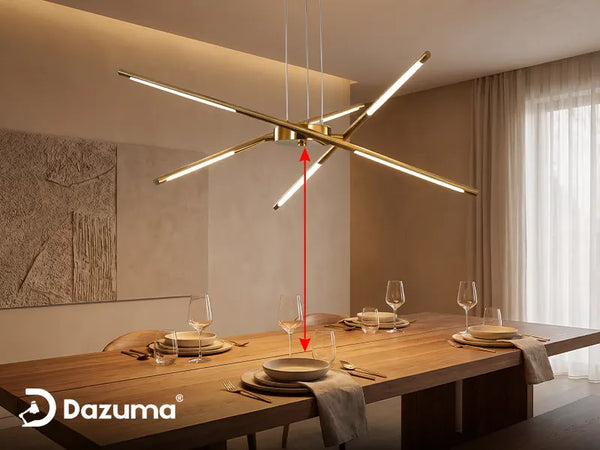
Measure from the tabletop to the bottom of the pendant. Around 30 to 36 inches is a dependable starting range in many homes. Move the fixture slightly higher if it blocks faces or views across the room. Lower it slightly if the table feels disconnected from the light.
Do not raise the pendant several extra inches just because the ceiling is tall. It should relate to the table, not float near the ceiling. Review the pendant sizing and placement guide before the final cord or chain length is set.
Consider The View From The Doorway
Stand at the room entrance and look toward the table. A globe should feel intentional rather than tiny, while a dome should frame the table without hiding too much artwork or window area. This view quickly reveals scale problems.
Test The Silhouette Before Installation
Use painter’s tape, a cardboard circle, or an open umbrella to approximate the fixture’s width. Hang it temporarily at the planned height. This low-cost test shows whether a dome feels too heavy or a globe feels too small before wiring begins.

A Globe Pendant For Soft, Balanced Dining Spaces
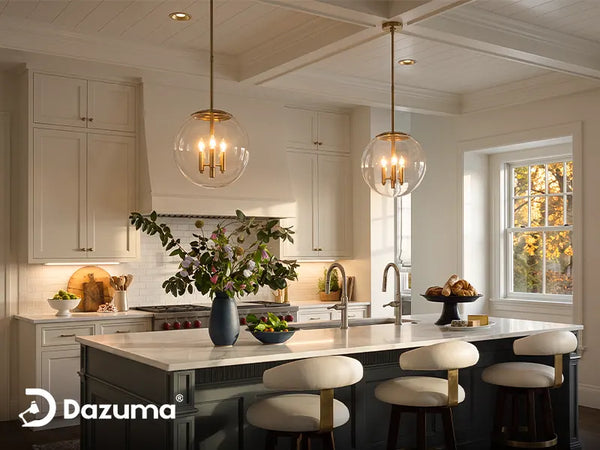
If your dining area needs a fixture that can be seen comfortably from the kitchen, hallway, and living room, a globe is often the easier shape to place. Its symmetry works especially well over a round table or a compact dining table positioned in an open floor plan. Browse the broader Globe Pendant Light collection when you want to compare clear, smoked, metal-accented, and opaque variations.
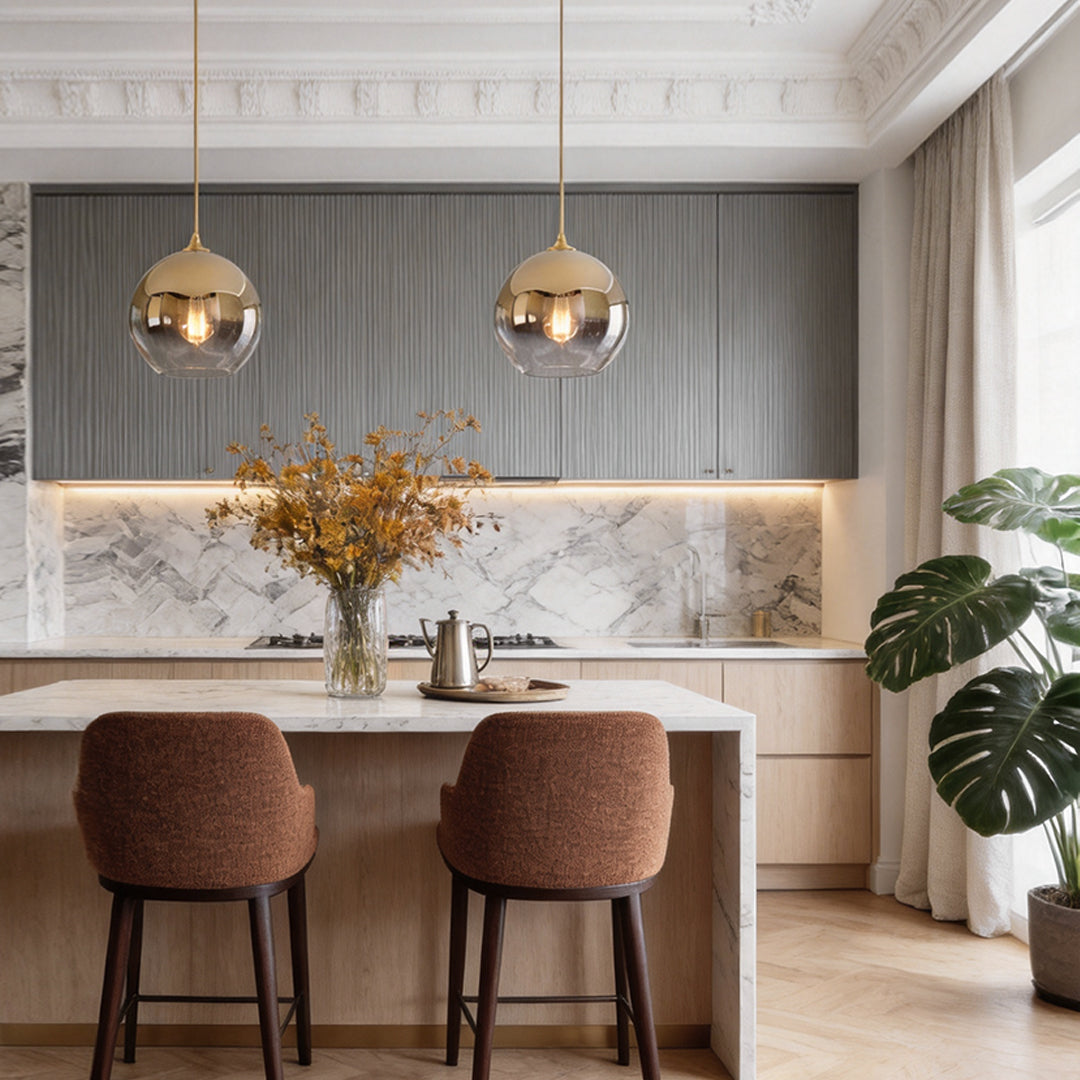
Glass Round Pendant Light Modern Single-Ball Ceiling Light
Price: $119.99
This clear globe design is a practical fit for dining rooms that need a visually light fixture with a simple, symmetrical shape. Gold and silver finish options make it easier to coordinate with nearby cabinet hardware, chair frames, or table details.
- Available in multiple globe diameters for different table sizes.
- Adjustable hanging length helps the fixture relate properly to the tabletop.
- Clear glass keeps the dining area visually open, especially in shared spaces.
Let The Room Tell You How Much Visual Weight It Needs
A pale room with slim furniture may need a darker or wider pendant for definition. A room with dark cabinetry and a thick wood table may already have enough visual weight, making a transparent globe the calmer choice.
Finish does not need to match every metal. A black pendant can repeat a window frame or chair leg, while a gold globe can warm a neutral room. The Black Pendant Light collection shows how shade shape changes the weight of a dark finish.

Contrast Often Looks Better Than Exact Matching
The pendant should balance the furniture rather than copy it. A dark dome can give a pale room structure, while a clear globe can lighten a room that already contains heavy wood, dark finishes, or large upholstered chairs.
A Dome Pendant For A More Defined Dining Zone
A dome is useful when your dining table needs a stronger ceiling presence. It can visually gather the chairs and table into one zone, which is especially helpful in open layouts. The example below uses clear glass rather than opaque metal, so it provides the recognizable bowl-shaped silhouette without blocking as much ambient light.

Clear Glass Pendant Lighting Retro Industrial Ceiling Light
Price: $159.99
The bowl-shaped transparent glass shade gives this pendant the visual direction of a dome while allowing light to pass through the sides. Its black iron frame adds definition over wood, stone, or neutral dining tables.
- The dome silhouette creates a stronger visual center above the table.
- Clear glass helps preserve ambient light and open sightlines.
- The replaceable E27 bulb allows more control over brightness and warmth.
Common Mistakes That Make Either Shape Look Wrong
Choosing The Fixture Before Measuring The Table
Record the table width, length, and ceiling height before comparing fixtures. A 12-inch pendant may look substantial online but appear small over a 78-inch table.
Ignoring The Bulb In A Clear Shade
A clear globe or dome can expose the bulb from almost every seated angle. Check the bulb shape, color, output, and dimming compatibility. The wrong bulb can turn an elegant glass pendant into a source of glare.
Hanging A Wide Dome Too Low
A low dome can interrupt conversation and block artwork or windows. Raise it until seated faces remain visible without disconnecting the fixture from the table.
Using One Tiny Globe Over A Long Table
A small globe may look fine from directly below but disappear when viewed from across the room. For a long table, increase the globe diameter, use two or three globes, or choose a broader fixture. The general Pendant Lighting collection can help you compare single-light and multi-light proportions.
Relying On The Pendant As The Only Light Source
Even a bright pendant may leave corners, a buffet, or artwork dark. Add recessed lights, wall sconces, or a nearby lamp so the pendant can be dimmed without making the room unusable.
Final Advice: Choose The Light Effect Before The Shape
Choose a globe pendant when you want the dining area to feel open, balanced, and softly connected to the rest of the room. It is often the safer choice for round tables, small dining spaces, and clear sightlines.
Choose a dome pendant when you want to visually anchor the table and create a more defined pool of light. It is often the stronger choice for rectangular tables, open dining zones, and rooms that need a clear focal point.
Then refine the decision with material. Clear glass keeps either shape lighter. Opaque glass softens brightness. Metal makes a dome more directional and visually substantial. The best fixture is not the one that looks most dramatic in a close-up product photo. It is the one that still feels comfortable while you are seated, talking, serving food, and looking across the room.