
Who This Is For: This guide is for homeowners who like the comfort of steady airflow, sleep with a fan on, use a ceiling fan with light as a main room fixture, or wonder whether running a ceiling fan all day is safe, wasteful, or bad for the motor.
Quick Answer: Is It OK To Leave A Ceiling Fan On All The Time?
Yes, it is usually OK to leave a ceiling fan on for long periods if the fan is properly installed, in good condition, rated for normal household use, and running without wobbling, grinding, burning smells, unusual heat, or electrical issues. Many people safely sleep with a ceiling fan on every night, and a low or medium fan speed can make a bedroom feel more comfortable without making the air feel harsh.
That said, leaving a ceiling fan on 24/7 is not always the smartest habit. A fan does not actually lower the room temperature the way air conditioning does. It moves air across your skin, which makes you feel cooler. That means a fan is most useful when someone is in the room. When the room is empty, the fan may be using electricity, collecting dust, and adding motor hours without improving comfort for anyone.
The practical answer is this: use your ceiling fan continuously when it is serving a real purpose, such as sleeping, air circulation in a busy living room, or gentle winter reverse circulation. Turn it off when the room is empty for long stretches, when the light is not needed, or when the fan shows any sign of imbalance or electrical trouble.

What 24/7 Ceiling Fan Use Really Means
Before deciding whether a ceiling fan should stay on all the time, separate three things that often get mixed together: the fan motor, the integrated light, and the room condition. A simple fan-only fixture uses power for the motor. A ceiling fan with an LED light uses power for both airflow and lighting when both functions are on. A room with poor ventilation, high humidity, pet odor, or direct afternoon sun may also need a different solution beyond a ceiling fan.
This matters because homeowners often say “the fan is on,” when they really mean the whole fan light fixture is on. If the LED light is also running all night or all day, the energy picture changes. For bedroom comfort, use the fan function without unnecessary lighting. For living rooms, separate lighting scenes from airflow whenever the fixture allows it.
If you are comparing fixture types, start with the room. Standard Ceiling Fans make sense when airflow is the main goal. Ceiling Fans With Lights are better when you want one ceiling fixture to handle both illumination and comfort. For low ceilings or compact bedrooms, flush or bladeless profiles can look cleaner and feel less visually heavy.

Fan Time Is Not Always Light Time
A good daily-use setup lets you keep air moving while turning the light off when it is not needed. This is especially important in bedrooms, nurseries, media rooms, and home offices, where airflow may be helpful for hours but overhead light may only be needed part of the time.
When It Is Safe And When You Should Turn It Off
A ceiling fan can usually run for extended periods when it is stable, quiet, clean, and installed on a fan-rated ceiling box. The warning signs are more important than the number of hours. A fan that wobbles, clicks, hums louder than usual, smells hot, stops responding correctly, or shakes the light kit should be turned off and inspected before continued use.
The biggest 24/7 risk is not that a healthy fan suddenly fails after one long night. It is that a small problem goes unnoticed because the fixture is always running. Dust builds up on blade edges, a loose screw gets looser, a slight wobble becomes stronger, or a remote receiver issue becomes an everyday annoyance. If the fan is in a bedroom, the noise may also start affecting sleep quality even if you do not notice it at first.
| Situation | Is 24/7 Use A Good Idea? | Better Habit |
|---|---|---|
| Sleeping at night | Usually fine if the fan is quiet and stable | Use low or medium speed and turn off unused lights |
| Empty room during the workday | Usually not useful | Turn it off or use a timer schedule |
| Living room with people home | Helpful for comfort | Run the fan while occupied and adjust speed by season |
| Fan is wobbling or noisy | No | Turn it off and check mounting, blade balance, and hardware |
| Vacation or several days away | No, unless there is a specific ventilation reason | Turn it off before leaving |
If wobble is your concern, do not ignore it just because the fan still runs. A helpful follow-up is Why Your Ceiling Fan Wobbles and How to Fix It for Smooth, Safe Performance, especially before you make all-night use a habit.
Energy Cost: The Part Many People Underestimate
The energy cost of leaving a ceiling fan on 24/7 depends on the wattage, speed setting, and whether the light is also on. A fan running by itself on a lower speed may use far less than an air conditioner, but a fan light fixture with integrated LEDs can use more when the light is left on continuously. The simplest estimate is:
Watts × hours used ÷ 1,000 = kilowatt-hours used.
For example, a 60-watt load running 24 hours uses 1.44 kWh per day. Over 30 days, that is 43.2 kWh before multiplying by your local electricity rate. If the fixture uses more power with the light on, or if it is a higher-output fan light, the monthly cost rises. If you want the comfort but not the waste, run the fan on the lowest comfortable speed, turn off the light when not needed, and avoid leaving it on in empty rooms.
One of the best uses of a ceiling fan is pairing it with air conditioning. The moving air can make you feel comfortable at a slightly higher thermostat setting, especially in bedrooms and living rooms. That is where a fan can save energy: not by running forever, but by helping your cooling system do less work while people are actually in the room.
Use Continuous Airflow Intentionally
If you love steady airflow, make it intentional rather than automatic. Set a nightly routine, choose a lower speed, and keep the light function separate. This gives you the comfort benefit without turning the ceiling fixture into background energy use all day.

Room-By-Room Guide To Leaving A Ceiling Fan On
Bedrooms
Bedrooms are the most reasonable place to run a ceiling fan for long periods. A gentle breeze can make the room feel fresher, reduce stuffiness, and help some people sleep more comfortably. The key is low-speed consistency. A fan that is too strong can dry out eyes, bother sinuses, or make lightweight bedding feel drafty. If your bedroom ceiling is not high, Flush Mount Ceiling Fans are often a better direction than a long downrod fixture.
Living Rooms And Family Rooms
In a living room, the fan is usually useful when people are there: watching TV, reading, gathering after dinner, or cooling down after cooking. It does not need to run all night in an empty living room. Choose a style that feels intentional as part of the decor, because the fan is always visible even when it is off. For broader selection ideas, see Best Ceiling Fans With Lights for Every Room & Style.
Home Offices
A fan can make a home office feel less stale, but avoid direct strong airflow at the desk. Paper movement, microphone noise, and dry eyes become annoying over a full workday. Use the lowest speed that changes the feel of the room. If the fixture has a dimmable LED, choose a light level that supports screen work without glare.
Kitchens And Dining Areas
Fans near cooking areas can move warmth away, but they can also spread cooking odor or disturb pendant lighting over a table. In dining rooms, use low speed during meals and turn it off afterward. If the fixture combines light and fan, make sure the light quality still flatters food and faces instead of creating a flat, utility-room feeling.

Occupied Rooms Get The Most Benefit
A ceiling fan is most useful where people spend time. Treat it like comfort equipment, not a room-cooling machine that must run in every space around the clock.
Recommended Fan Light Directions For Different 24/7 Habits
Because the question is about long runtime, the right fixture direction depends on how the room is used. A bedroom needs quiet, low-profile airflow and soft light control. A larger living room may need a stronger visual statement and wider coverage. A small room may benefit from a bladeless style that keeps the ceiling clean and compact. The goal is not to buy the biggest fan; it is to choose a fixture that you can comfortably live with every day.
For Statement Rooms That Need Airflow And Decorative Light
If the fan will be visible in a main bedroom, living room, or dining room, a decorative fandelier style can make the ceiling feel designed instead of purely functional. This direction is useful when you want daily airflow but do not want a traditional blade-heavy look.
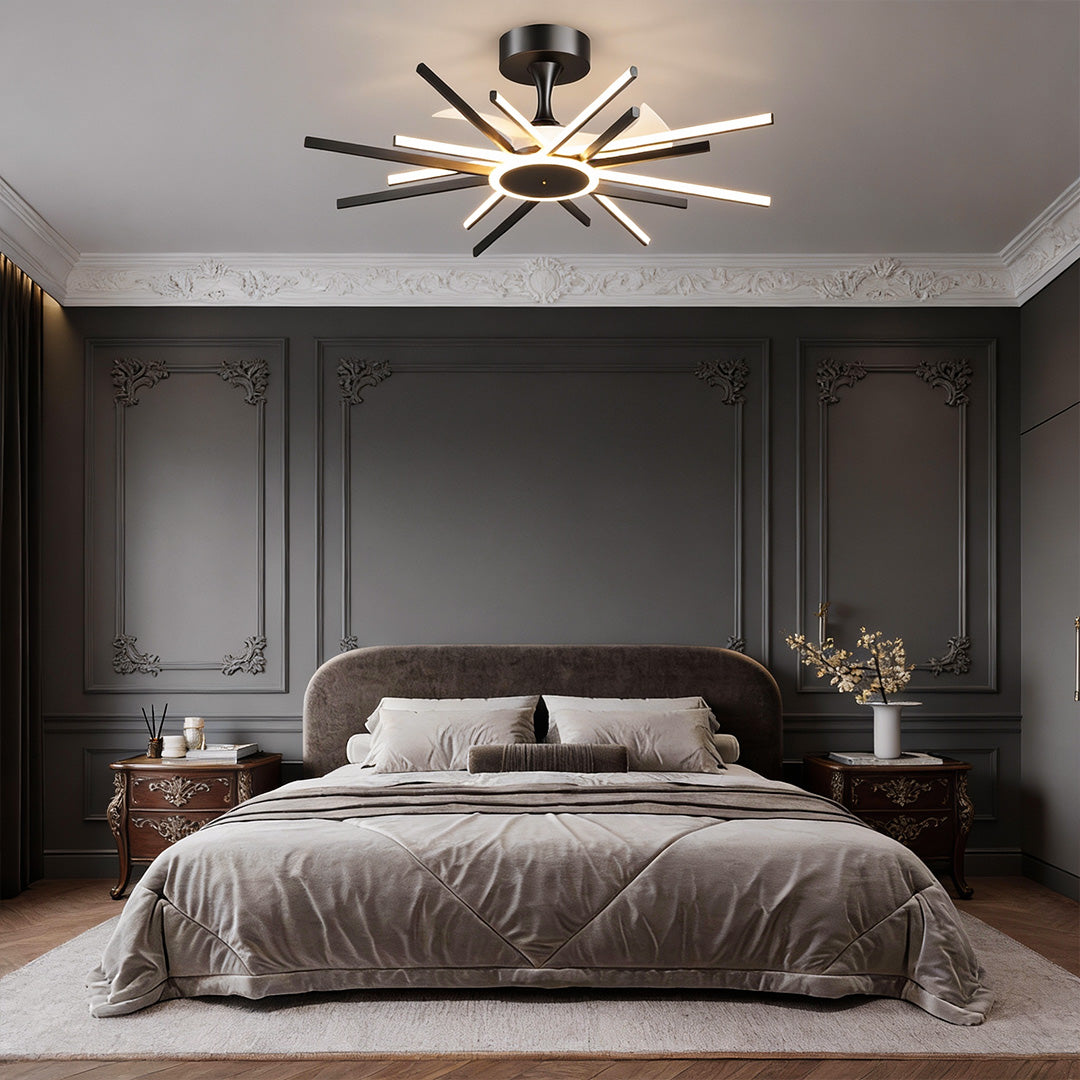
Creative Ceiling Fan Light Modern LED Starburst Light
Price: $507.99
Suited to bedrooms, living rooms, and dining rooms where you want a ceiling fan with a sculptural LED look, hidden blades, and year-round airflow control.
- Hidden blade design keeps the ceiling profile cleaner than a traditional fan.
- Three color temperature settings support warm evening light, neutral daily light, and cooler task-style light.
- Reverse circulation can help gently move warm air during cooler seasons.
For homes where the main worry is exposed blades, small bedrooms, or a visually busy ceiling, Bladeless Ceiling Fans With Light can be a more compact-looking direction. They are especially appealing when the room already has curtains, wall art, or furniture details and you want the ceiling fixture to stay neat.
For Compact Bedrooms, Guest Rooms, And Low-Ceiling Spaces
A low-profile bladeless fan light is a practical choice when you want regular airflow without the visual sweep of large blades. This style works well for bedrooms where the fan may run many nights a week and the light needs to adjust for different routines.
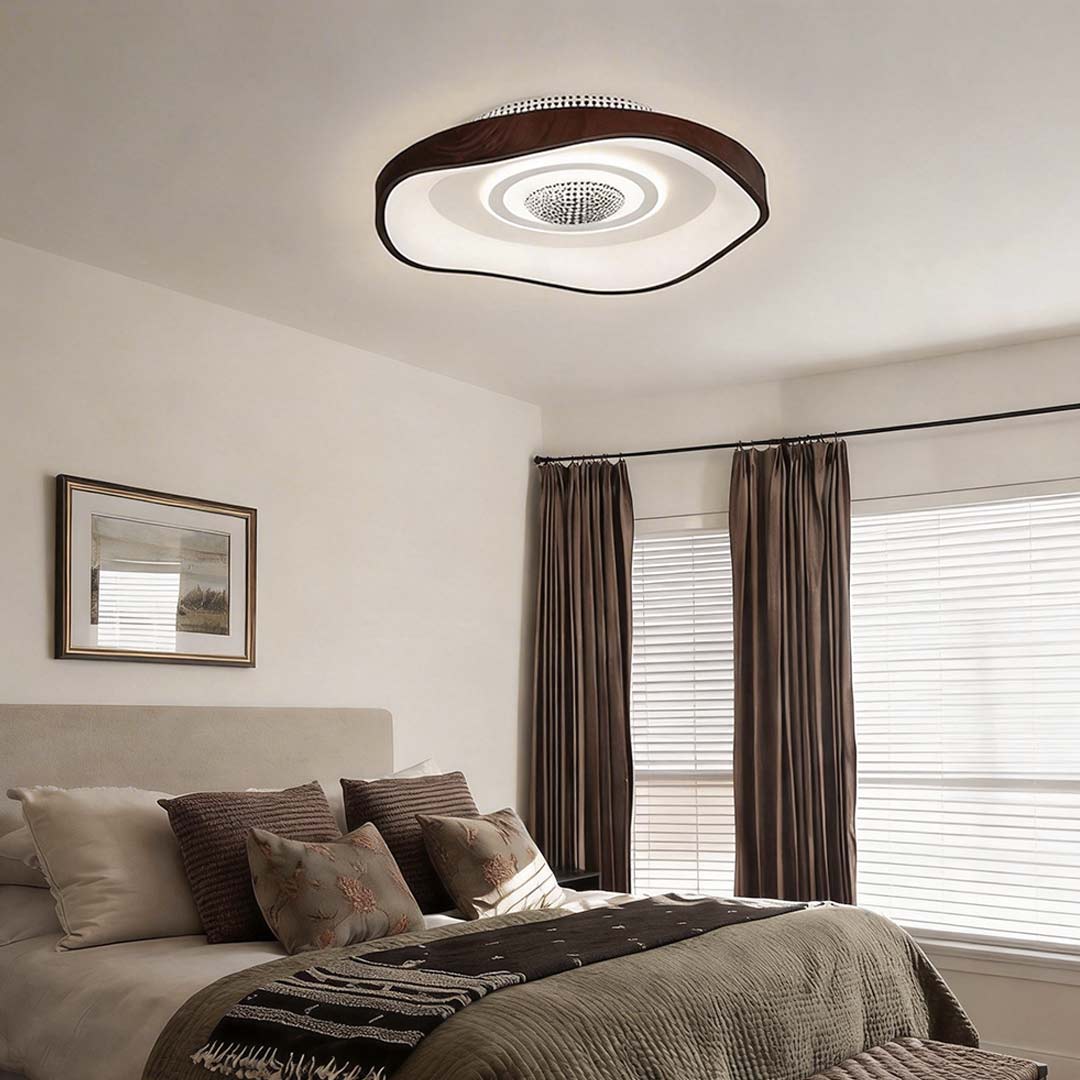
Bladeless Fan with Light Modern Round Dimmable LED Light
Price: $362.99
Suited to modern bedrooms, guest rooms, and compact living areas where you want a ceiling-mounted fan light with remote control, quiet operation, and adjustable light mood.
- Remote control helps adjust fan speed, brightness, and color temperature from bed or sofa.
- Low-noise operation is useful for rooms where the fan may run overnight.
- Compact drum shape keeps the ceiling visually simple in smaller spaces.
Maintenance Checklist Before You Run A Ceiling Fan Every Day
If you plan to run a ceiling fan every night or most of the day, treat it like a fixture that deserves routine care. A few simple checks make long runtime safer, quieter, and more comfortable.
- Clean dust from blades and vents. Dust adds imbalance and can make airflow feel less fresh.
- Listen for changes. A new click, scrape, buzz, or grinding sound is a sign to stop and inspect.
- Check visible wobble. Even a small wobble can become annoying over hours of use.
- Keep the light function intentional. Do not leave integrated LEDs on 24/7 unless the room truly needs light.
- Use the right switch or remote setup. Fan motors and light dimming should be controlled according to the fixture design. For switch questions, read What Kind of Light Switch Do I Need for a Ceiling Fan?.
- Review installation after a season. If the fixture was recently installed, check that the canopy is still secure and nothing has shifted.

Final Advice: Run It For Comfort, Not Out Of Habit
Leaving a ceiling fan on all the time is usually not dangerous when the fixture is well installed and working properly, but 24/7 use should be a choice, not a default. The fan earns its keep when it makes a person feel cooler, moves air in an occupied room, supports better sleep, or helps distribute warm air on a low winter setting. It becomes wasteful when it runs in an empty room just because nobody turned it off.
The best daily routine is simple: run the fan when you are using the room, choose the lowest comfortable speed, keep the light off when you do not need it, and pay attention to changes in sound, balance, or smell. If your current fixture is noisy, dated, or visually too heavy, upgrading to a modern fan light can make everyday use feel much more natural. For general options, browse fan categories first, then narrow by room height, light control, airflow needs, and style.

For more ceiling fan ideas, compare style and function in The Benefits of Installing a Ceiling Fan with Lights. If you are shopping specifically for blade-light combinations, also compare fan size, control type, and mounting height before choosing a fixture.