
Who This Is For: This guide is for homeowners who want a memorable Halloween display without turning the porch into a tangle of cords, covering every surface with competing colors, or discovering on October 31 that the solar lights stop after dinner. It is especially useful if you are planning your first outdoor display, decorating a small front yard, or trying to make existing Halloween string lights look more intentional.
Introduction: The Best Displays Are Easy to Read
Halloween lighting can go wrong in two opposite ways. Too little light leaves the decorations looking like dark shapes from the sidewalk. Too much creates a bright jumble in which the pumpkins, doorway, steps, and props all compete for attention. The goal is not to make every square foot glow. It is to guide the eye through a short visual story.
For most homes, that story has three parts: a visible approach, a strong focal point at the porch or front door, and one secondary surprise such as a glowing tree, fence, or seating corner. String lights are useful because they can outline, wrap, drape, and connect those areas. Their flexibility is also the reason they often end up messy. A successful layout gives each strand one job.

Start With One Simple Halloween Story
Before shopping, decide what a visitor should notice first. Is your house a playful pumpkin patch, a shadowy old inn, a witch’s garden, or a clean modern display with orange light tracing the architecture? Pick one theme sentence and use it to reject decorations that do not belong.
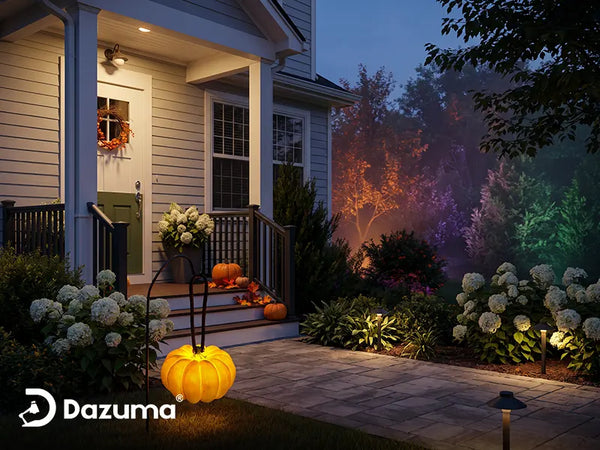
A family-friendly porch might use warm amber lights around the door, soft purple lights in nearby shrubs, and lit pumpkins at ground level. A haunted-garden display could use low green accents, warm rope texture on tree trunks, and a darker porch with one illuminated figure. Keeping the color palette to two main colors plus warm white prevents the display from feeling like several holidays at once.
Build the Display in Three Brightness Levels
- Brightest: the door, main prop, or porch opening that should attract attention.
- Medium: the path, railing, or tree that leads the eye toward the focal point.
- Softest: background shrubs, fences, and texture that add depth without stealing focus.
This hierarchy matters more than buying the newest novelty shape. If everything flashes at maximum brightness, guests stop seeing individual ideas. If one area leads and the others support it, even simple outdoor string lights can make the house feel deliberately designed.
Trendy Halloween String-Light Styles That Work at Home
1. Warm Amber and Black: The New Classic
Warm amber light against black ribbon, dark foliage, or matte-black props creates a polished Halloween look without relying on cartoon shapes. Use it around a front-door garland, across a mantel visible from outside, or loosely draped beneath a porch roof. This palette transitions easily into November because the warm strand can remain after the bats and skeletons come down.
2. Orange and Purple: Playful but Controlled
Orange and purple still read instantly as Halloween. The trick is to separate their jobs. Let orange define the entrance and pumpkins while purple sits deeper in shrubs or under a tree canopy. Alternating both colors on every surface creates visual noise; distinct color zones create depth.
3. Rustic Rope Glow
Hemp or jute-wrapped lights suit farmhouse porches, wooded lots, natural pumpkins, hay bales, and weathered wood. During the day, the rope is part of the decor rather than a thin plastic wire. At night, its warm glow works well for a witch’s cottage, abandoned barn, or vintage harvest story. Use it to wrap a porch post or tree trunk rather than stretching it taut like a utility cable.
4. Floating Points of Light
Small globe or fairy-style lights can disappear into dark branches so the illuminated points seem to float. They work especially well behind gauze, inside a bare shrub, or along a fence partly hidden by vines. Keep blinking effects slow or steady near the entrance; rapid animation can distract people as they climb steps.
5. One Animated Zone
If you love color changes or motion, limit animation to one location—a garage backdrop, party patio, or large tree. Let the route to the door remain calmer and easier to read. For a larger synchronized display, the planning process is different; the guide to creating a Halloween light show in the garden covers that approach in more detail.
| Style | Best Location | Mood | Common Mistake |
|---|---|---|---|
| Warm amber | Door, porch roof, garland | Cozy, classic, slightly eerie | Using so much that props disappear |
| Orange and purple | Shrubs, porch, fence | Playful and recognizable | Mixing both colors everywhere |
| Hemp rope | Posts, trunks, railings | Rustic, vintage, natural | Bending it around very tight corners |
| Small glowing points | Branches, gauze, background layers | Magical and mysterious | Expecting decorative light to illuminate steps |
Where Halloween String Lights Make the Biggest Difference

Outline Openings, Not Every Edge
Choose the front door, one window, or the porch opening as the architectural frame. Outlining the roofline, every window, every railing, and every planter can flatten the house into one glowing rectangle. Leaving some dark space makes the lit shapes feel stronger.
Porch Railings and Columns
On railings, use a relaxed drape or an even spiral rather than irregular loops. Keep bulbs and wire on the outside of the handrail so guests can grip it. On columns, begin and end on the least visible side and maintain consistent spacing. Removable outdoor-rated clips are usually neater than tape, which can loosen in damp or cold weather.
Trees and Shrubs
Wrap the trunk and one or two primary branches instead of trying to cover the whole canopy. For shrubs, push some lights slightly inside the foliage to create depth, but keep solar panels outside the shadow. Do not cinch wire tightly around growing branches. Leave gentle slack and remove seasonal lights promptly.
Fences and Garden Edges
A fence is useful as a background layer. Run one strand in a consistent wave, then place a few silhouettes or gauze figures in front. If the fence continues far beyond the decorated zone, end the light at a logical point such as a gate or post. A random stop halfway between posts looks unfinished.
Pathways and Steps
String lights can guide the eye toward a path, but they should not be the only safety lighting. Keep dependable step, porch, or outdoor lighting in service. Position decorative strands away from feet, wheels, costumes, and low branches. A glowing path is successful only if visitors can clearly see changes in level.
How Much String-Light Length Do You Need?
The fastest way to overspend is to estimate by looking at the house. Measure the actual route with a flexible tape or a piece of string, then add 10% to 15% for drape, wrapping, connection points, and the distance to the solar panel or battery box. A five-foot railing can require much more than five feet of light if you want several soft swags.
For a tree trunk, measure the trunk circumference and decide the vertical spacing between wraps. Tighter spacing uses more length. For a porch post, test the planned spiral with inexpensive twine before ordering. For a fence, measure from post to post and add the depth of each desired curve.
A Compact Solar Accent for Shrubs and Small Zones
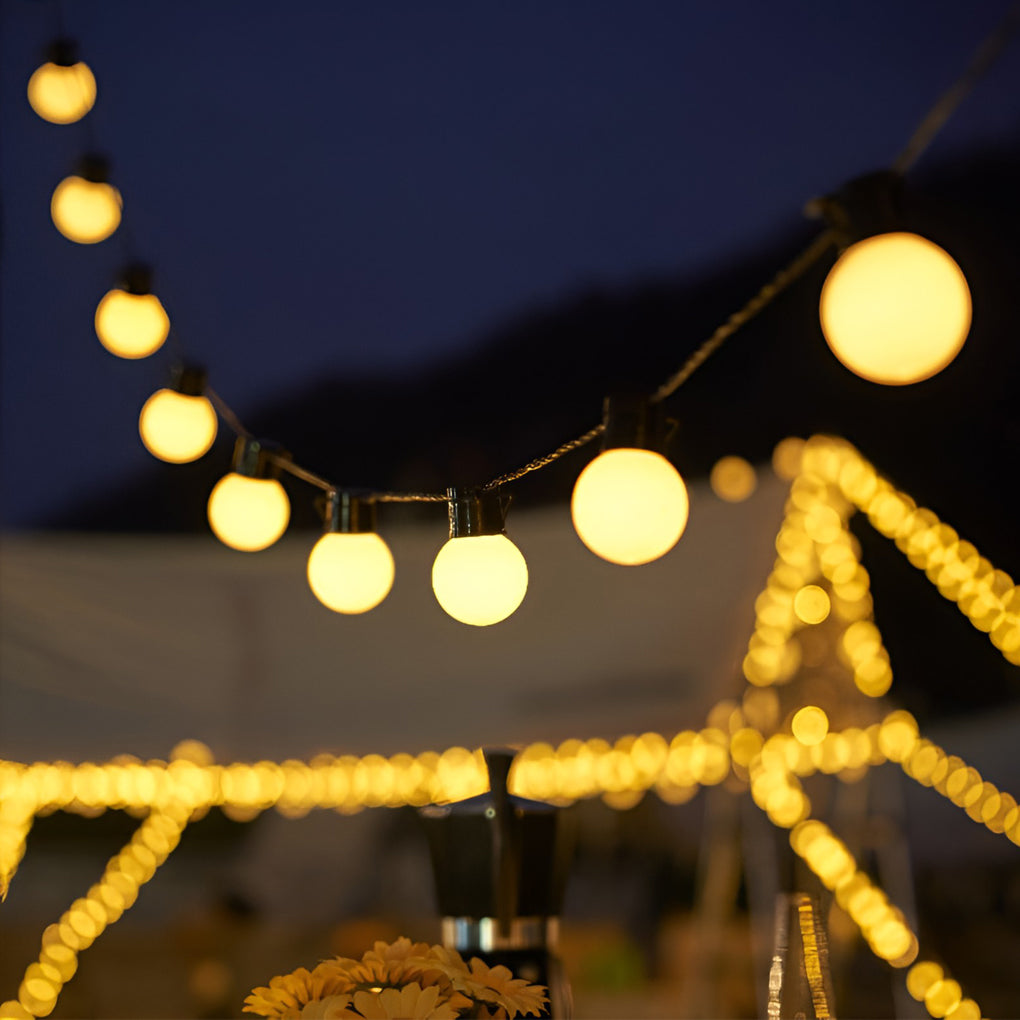
For a dark shrub, low fence section, camping-style scene, or small garden vignette, a low-output solar strand can provide decorative points without running a cord across the yard. It should be treated as accent light—not as the source responsible for safe walking.
For Small Cord-Free Accent Zones
Waterproof LED Solar Powered Outdoor String Camping Decor Lights
Price: $63.99
Best for shrubs, low fences, garden props, and small outdoor Halloween scenes where a warm decorative glow is more important than task-level brightness.
- A 600mAh battery supports a page-listed working time of about 3–5 hours after approximately 6 hours of charging.
- Warm-white LED points suit cozy or softly spooky scenes.
- IP44 means splash resistance; keep the control and solar components out of standing water and severe exposure.
Plan Solar and Battery Power Before Decorating
Solar lighting is convenient only when the panel gets useful daylight. The best place for the lights may be under a covered porch or dense tree—the worst place for the panel. Treat the light strand and solar panel as two separate placement decisions. Put the lights where the scene needs them and place the panel where it can face open sky and receive several hours of direct sun, using only the lead length the product provides.
Test solar lights for two or three ordinary days before the event. October shadows are longer than summer shadows, and a panel that charged well in July may sit behind the house or a tree in fall. If reliable late-evening light is essential, use a battery version or an outdoor-rated plug-in system as the primary source. Browse solar string lights when the display location has dependable sunlight, not simply because an outlet is inconvenient.
Battery Lights Solve a Different Problem
Battery-powered strands work well under porch roofs, around indoor windows, on a covered mantel, or in shaded installations. They allow flexible placement but require a realistic maintenance plan. Use fresh batteries, keep the battery box accessible, and do not bury it beneath leaves, fabric, or props. Confirm outdoor suitability for the exact product and protect any component that is not rated for exposure.
A Textured Option for Trees, Posts, and Railings
If the strand will remain visible during the day, hemp rope adds material texture that ordinary wire does not. It pairs naturally with weathered wood, dried corn, branches, and neutral pumpkins. The option below offers solar power for sunny yards and battery power for shaded porches, plus two lengths for different wrapping jobs.

For Rustic Day-and-Night Texture
Hemp Rope Light Retro Decorative LED String Lights
Price: $54.99
Best for wrapping porch posts, tree trunks, railings, pergolas, and wooden structures in cottage, farmhouse, harvest, or witch’s-garden displays.
- Two lengths make it easier to fit a single post or a longer railing.
- Solar and battery versions support both sunny and shaded decorating locations.
- The natural rope remains visually decorative during daylight hours.
Keep the Display Spooky, Not Hazardous
Halloween adds unusual movement around the house: children in long costumes, masks that limit peripheral vision, adults carrying bags, and groups unfamiliar with the steps. Decorative lighting should never obscure the safe route.
- Keep cords, strands, and battery boxes out of walkways, stairs, and handrails.
- Use fixtures, connectors, and extension equipment rated for the location and exposure.
- Keep plug-in outdoor displays on appropriate GFCI-protected circuits and follow the product instructions.
- Do not staple through wires or pinch them in doors and windows.
- Avoid rapid flashing near steps, driveways, and the main entrance.
- Do not rely on decorative strands to reveal stair edges or obstacles.
- Turn off, remove, or protect lights during severe weather if the product is not rated for those conditions.
If you are unsure how to support and route a strand without damaging it, review the guide to hanging outdoor string lights before installing clips or support wire.
A One-Evening Halloween String-Light Checklist
- Choose one theme sentence and limit the palette to two main colors plus warm white.
- Select the focal point before outlining secondary trees, fences, or windows.
- Measure the full route and add 10%–15% for drape and connection distance.
- Test every strand on the ground before climbing or wrapping.
- Charge solar lights for several days in their planned panel location.
- Protect the walking route and preserve access to the handrail, bell, lock, and house number.
- View the display from the sidewalk and turn down or remove anything that competes with the focal point.
- Check it again in rain or wind because loose clips and sagging strands may create new hazards.
Do a Trick-or-Treater Walk-Through
Approach the house while carrying a bag and looking through a slightly restricted field of view. If you cannot identify the first step, grip the railing, or find the bell without crossing a cord, adjust the display. A family member unfamiliar with the setup is an even better tester.

Final Advice: Edit the Display After You Light It
Halloween decorations are usually installed during the day, when it is hard to judge brightness, reflections, and dark gaps. Turn everything on after sunset, take one photograph from the street, and remove one element that feels unnecessary. Editing is often what makes a display look intentional.
Use string lights to frame the story, not to fill every empty space. Keep the main entrance readable, give solar panels real sun, measure before buying, and let dependable safety lighting do its job. If you want to compare broader seasonal options, begin with outdoor solar lights for sunny cord-free zones while keeping the Halloween palette and placement plan consistent.