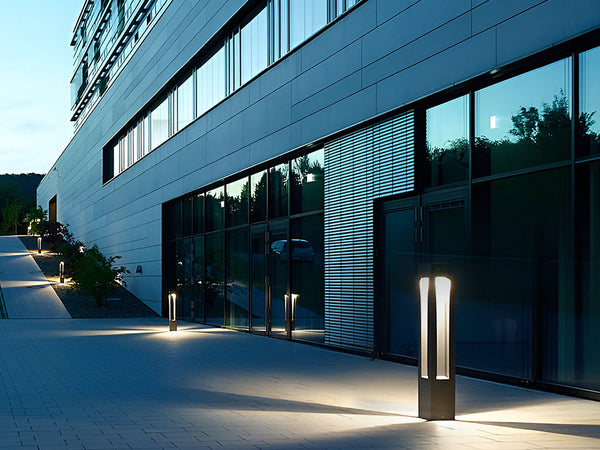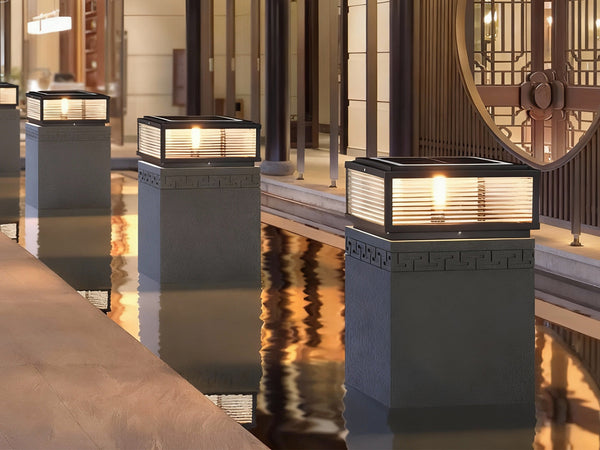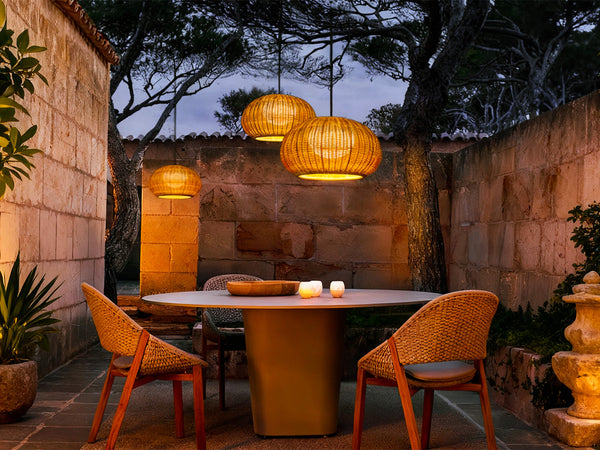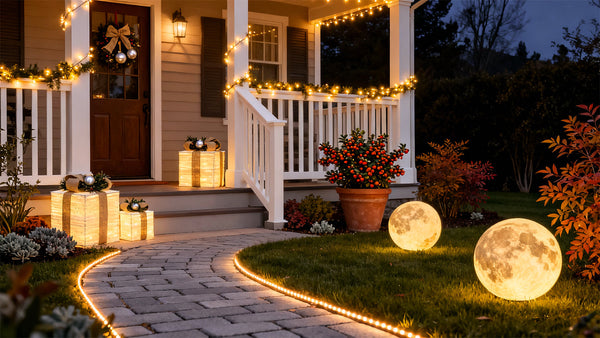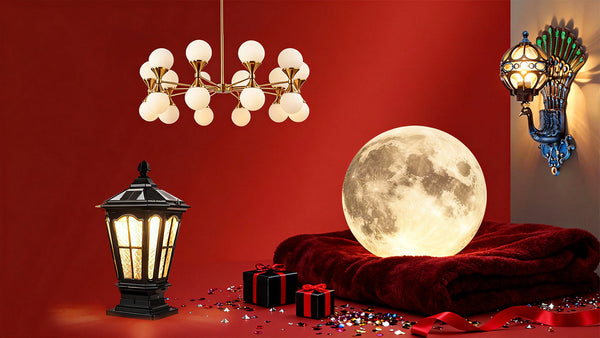

Who This Is For: This guide is for homeowners comparing outdoor lighting companies for an entry, patio, garden, driveway, or whole-property project. It is especially useful if you need to decide whether to shop a fixture catalog, build a low-voltage system, work with a contractor, or buy a replacement locally.
A porch lantern, a six-light path kit, and a programmable landscape system are all “outdoor lighting,” but they are very different purchases. A useful shortlist starts with the job you need done and the route you want to take: choose a specific fixture, assemble and install a system, or have a professional design one.
Here are seven places to compare in 2026. They are not interchangeable, and their order is not a measured performance ranking. Start with the table, then read the tradeoffs for the two or three that fit your project.

Seven Outdoor Lighting Companies at a Glance
| Company | Buying route | Best starting point | Check before ordering |
|---|---|---|---|
| Dazuma | Online fixture catalog | Style-led wall, post, and accent lighting | Exact variant, dimensions, power, exposure rating |
| VOLT Lighting | Direct low-voltage components and kits | DIY paths, trees, and garden beds | Transformer capacity, cable route, kit contents |
| Kichler | Brand catalog and sellers | Coordinating exterior and landscape fixtures | Seller, fixture family, lamp or integrated LED |
| Hinkley | Brand catalog and sellers | Decorative entries and layered outdoor living | Scale, finish, mounting, lead time |
| FX Luminaire | Landscape system and professional channel | Zoned, dimmable, color-capable landscapes | Controller and fixture compatibility, installer scope |
| Lamps Plus | Multi-brand retailer | Comparing many wall and post designs | Manufacturer, specifications, return terms |
| The Home Depot | Multi-brand retailer and stores | Local pickup and straightforward replacements | Store stock, variant, accessory compatibility |
Quick answer: For a single decorative fixture, compare Dazuma, Kichler, Hinkley, and the multi-brand selection at Lamps Plus. For a DIY low-voltage yard, begin with VOLT. For advanced landscape scenes, discuss FX Luminaire with a qualified designer or installer. For a fixture or supply you need soon, check The Home Depot's local availability. The table describes use cases, not a universal winner or a price ranking.
How This Comparison Was Made
We reviewed the companies' public outdoor catalogs and documented shopping or system capabilities in October 2026. The comparison focuses on project fit, breadth of relevant fixture types, buying route, and the installation decisions each shopper must make. We did not buy, install, or independently test a representative sample from all seven companies, so phrases such as “best for” are editorial starting points, not laboratory awards or durability findings. Prices, stock, finishes, and policies change; verify the exact listing and seller before paying.
Disclosure: Dazuma publishes this guide and is one of the seven companies discussed. Its entry is subject to the same project-fit and tradeoff questions as the others. A retailer such as Lamps Plus or The Home Depot carries products from multiple makers; it should not be compared with a manufacturer as though every fixture shared one construction standard or warranty.
Which Company Fits Your Project?
1. Dazuma — Start With the Exterior Style
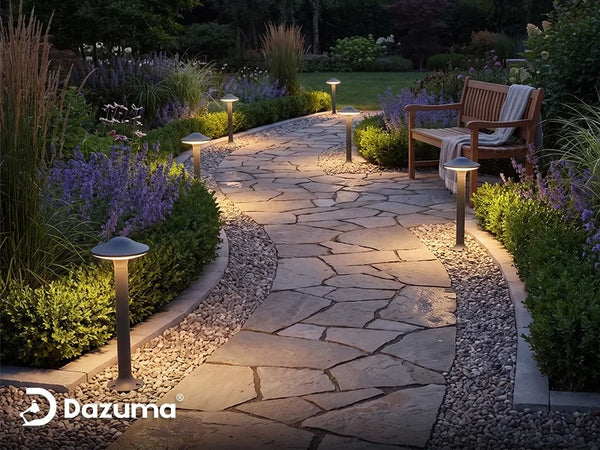
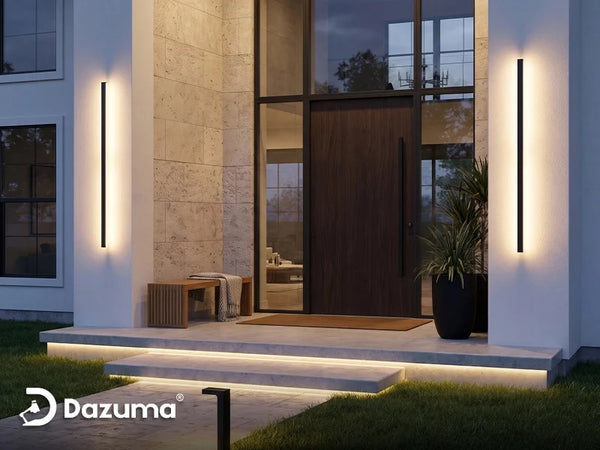
Dazuma's outdoor lighting catalog spans wall, porch, path, post, and accent categories. It makes sense for a homeowner planning the visible face of a property: perhaps a pair of entry sconces, a light at the garage, and a gate or pillar fixture whose shapes should feel related. Browsing outdoor wall lighting first helps establish the scale and finish before adding secondary lights.
Choose it when: You have a specific architectural look in mind and want to compare residential fixture styles in one online catalog. Tradeoff: Styles within a catalog do not automatically share power requirements, color temperature, or mounting details. A solar post option and a wired wall fixture are separate installation decisions. Open each chosen variant and record its dimensions, outdoor suitability, bulb or LED arrangement, power source, and return terms. Do not infer a specification from a neighboring product.

Use the Door as a Scale Reference
A light that fills a product photo may look tiny beside a tall door. Tape its published height and width to the wall, then step back to the curb and view it from the approach.
2. VOLT Lighting — Plan a DIY Low-Voltage Yard
VOLT sells landscape fixtures, transformers, cable, accessories, and complete kits. One published starter kit combines brass spotlights, path lights, bulbs, wire, connectors, and a 100-watt transformer. That all-in-one approach gives a DIY shopper a concrete bill of materials for a short path plus a few trees or architectural accents. Its installation guides also help explain the difference between a low-voltage landscape run and a line-voltage fixture.
Choose it when: You want to place and aim a modest landscape system yourself and can plan a cable route. Tradeoff: A kit is a starting quantity, not a design for your yard. Sketch actual cable distances around pavement and planting, total the fixture load, check transformer capacity and compatible voltage, and confirm whether the included lights produce the beam and color you want. If you need to illuminate an entry wall, a separate wall-mounted fixture may still be necessary.
3. Kichler — Coordinate Outdoor and Landscape Categories
Kichler's catalog covers outdoor fixtures and low-voltage landscape categories such as paths, hardscape, deck, patio, and accent lighting. This is useful when a renovation includes both house-mounted fixtures and planting beds, and you want to explore a familiar brand's product families through sellers or showrooms. The breadth of the range makes it easier to compare related designs, but a matching appearance does not guarantee matching electrical systems.
Choose it when: You are specifying several fixture types and want to compare a broad brand catalog. Tradeoff: Narrow your choices by the actual fixture family and product sheet. Check whether an LED is integrated or uses a replaceable lamp, whether the listing includes a transformer or requires one, and which seller handles a return or warranty claim. A familiar name alone does not answer those details for a particular model.
4. Hinkley — Give the Entry and Outdoor Room a Defined Look
Hinkley's outdoor catalog includes wall-mounted, hanging, and other exterior designs, alongside landscape lighting. Its outdoor planning material emphasizes layering entries, walkways, and gathering areas. Consider it if your main concern is the daytime appearance of porch lanterns or the atmosphere of a covered dining area, while still leaving room for restrained landscape accents.
Choose it when: Fixture silhouette, finish, and proportion are central to your curb-appeal project. Tradeoff: Decorative scale and finish should be checked in the exact space. Note the backplate and mounting height, measure clearance beside a door or garage trim, and check the location rating of a pendant under a roof versus an exposed wall light. For a large wired landscape system, also compare system-focused suppliers before settling on house fixtures alone.
One Catalog Does Not Set the Whole Mood
Use a warmer, shielded beam to make a patio comfortable from a seated position; aim landscape accents so the source is not visible from the dining table or bedroom window.

5. FX Luminaire — Build a Controlled Landscape System
FX Luminaire's Luxor controller documents zoning, dimming, and color-capable configurations. Zoning can let the front approach remain lit while a tree accent turns off later; dimming lets a patio scene change without treating every fixture as one switch. Color control requires compatible components, so it should be specified as a system rather than assumed from the presence of a controller.
Choose it when: You have several outdoor zones, want programmed scenes, or are already working with a landscape professional. Tradeoff: Controls add design, programming, and future service questions. Ask for a fixture schedule that states which lights can zone, dim, or change color, where the controller goes, who programs it, and what happens if a component needs replacement. For two porch lights and a short path, that level of system design may be unnecessary.
6. Lamps Plus — Compare Designs Across Makers
Lamps Plus is a multi-brand retailer with outdoor wall, post, landscape, hanging, and flood-light categories. It can help when you know the mounting location but have not settled on a style. Filter by size, finish, fixture type, and exposure before browsing images; otherwise a large selection makes it easy to compare attractive lights that do not solve the same installation problem.
Choose it when: You want to compare several makers' designs and prices in one shopping session. Tradeoff: A retailer's broad selection is not a single manufacturing standard. For each finalist, read the actual maker and model, wet or damp rating, lamp type, installation sheet, delivery date, and return conditions. If you are pairing two wall lights, verify that the same finish and size are available for both, rather than trusting a photo thumbnail.
7. The Home Depot — Solve a Time-Sensitive Replacement
The Home Depot's outdoor categories include wall lights, landscape kits, path lights, floodlights, and installation accessories. Its site can show local store availability and pickup options, a practical advantage when a broken fixture has left an entry dark or you need wire and connectors during an ongoing project. It is also a useful place to compare basic form factors in person.
Choose it when: You need local availability or a common replacement form. Tradeoff: A listing may cover several sizes, power types, or bundles. Confirm the exact selected variant and store stock, and take the old fixture's mounting measurements or transformer information with you. A “similar” path light may not match an existing low-voltage system's voltage, connector, color, or light distribution.
The Outdoor Lighting Buying Checklist
Use one short worksheet for every finalist, regardless of company. This prevents a polished rendering or a low upfront price from hiding a mismatch. Begin with the mounting point, then fill in the fields below for the exact model and variant, not just the series name.
- Location and exposure: Is the light exposed to direct rain, under a protected roof, near irrigation, or in a coastal environment? Look for the product's stated wet or damp location suitability and any maker-specific care limits. “Outdoor” by itself is too broad.
- Power and installation: Record whether it is line voltage, low voltage, solar, or battery powered. Confirm the required transformer, driver, junction box, mounting hardware, and compatible controls. Have a qualified electrician handle line-voltage work as appropriate.
- Size and fit: Write down overall dimensions, backplate or base size, mounting height, clearance for an opening door, and access for cleaning. For post and pillar fixtures, measure the surface where the base actually attaches.
- Light effect: Compare stated lumens, beam angle or distribution, color temperature, diffusion, and dimming compatibility when provided. A bright bare source at eye level can be less useful than a shielded light with lower output.
- Ownership: Check bulb replacement or integrated LED service, finish care, warranty terms, parts availability, seller return policy, shipping, and installation cost. Compare the complete project total, not just the fixture price.
For landscape work, sketch where each cable must travel and where every beam points. The Dazuma guide to designing a landscape lighting layout walks through routes, zones, and night testing. It is especially useful before you choose the number of lights in a kit.

Check the Base, Not Just the Fixture Height
For pillar lights, the mounting footprint and cap dimensions determine whether a design can be installed cleanly. A generous-looking column may have a much smaller flat top.
Three Real-World Shortlists
Front Door and Garage Wall
Start with Dazuma, Kichler, Hinkley, and Lamps Plus. Measure the wall beside each opening and choose a target fixture size and finish. Compare exact wall-light listings for exposure rating, mounting, lamp or integrated LED, and how the glass handles glare. If the two locations are far apart, view the proposed size from the street before ordering a matching pair. The guide to choosing outdoor wall lighting can help with proportion and placement.
Walkway, Two Trees, and a Small Patio
Start with VOLT for a DIY low-voltage parts list. Compare Kichler's landscape categories if you want additional fixture forms. If the yard needs separately timed scenes or a contractor is involved, add FX Luminaire. Put the path and tree accents on a sketch, test a few beams after dark, and plan the transformer and wire route before buying a full set. A wall-mounted patio light may come from a different shortlist; just coordinate its color and control schedule.
Broken Light Before a Weekend Gathering
Check local availability at The Home Depot, then compare the exact replacement with the existing box, voltage, mounting surface, and exposure. If the replacement can wait, the other catalogs open up more finish and scale options. Do not turn a time-sensitive repair into an incompatible mixed system simply because the product photo looks close.
Photograph the Space at Night
Take a photo from the sidewalk and another from a seating position. These views reveal glare, missing light at steps, and areas that are already bright enough. They also make a conversation with a seller or installer more productive.

Final Advice: Choose the Buying Route First
The most useful “best outdoor lighting company” is the one that fits your actual project and gives you enough information to specify the right fixture or system. For visible house fixtures, compare dimensions and light quality across Dazuma, Kichler, Hinkley, and Lamps Plus. For a self-planned low-voltage yard, consider VOLT. For multi-zone landscape control, discuss FX Luminaire and its compatible components with an installer. For an urgent replacement, check The Home Depot's local inventory.
Make a two-company shortlist, then request or download the exact product sheets. If a key fact is absent—exposure rating, power supply, base size, dimming compatibility, or replacement path—ask before ordering. The best nighttime result often comes from fewer well-positioned fixtures, with enough light to find the door and enjoy the patio, and enough shadow to let the garden still feel like a garden.