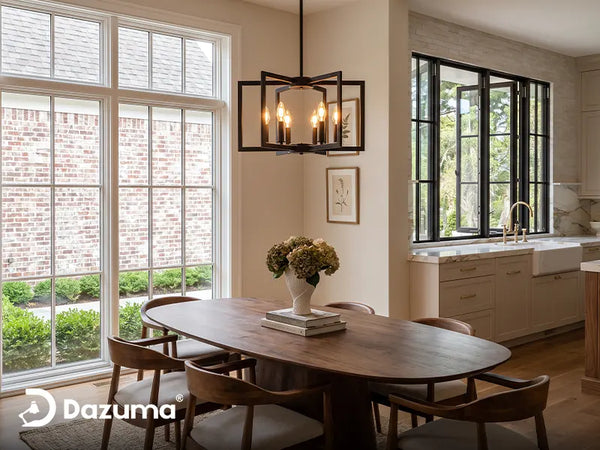

Who This Is For: This guide is for homeowners drawn to geometric lighting, glowing glass, and polished metal who want to introduce Art Deco character without redecorating every room. It is especially useful if you like a dramatic fixture but worry it will clash with your existing sofa, wood furniture, or everyday lighting needs.
What Makes Lighting Art Deco?
Art Deco lighting combines decorative presence with a strong sense of order. Think stepped outlines, balanced arrangements, repeated vertical elements, geometric shades, and contrasts between luminous glass and metal. A fixture can feel glamorous without being covered in ornament, and it can suggest Deco without being gold.
The style is associated especially with the 1920s and 1930s. The V&A's introduction to Art Deco identifies the 1925 Paris decorative arts exhibition as a pivotal event. That history helps explain why the style accommodates both luxurious craftsmanship and a fascination with modern form.
For your home, the useful distinction is between a recognizable design language and a shopping label. Not every brass globe is Art Deco. Not every crystal chandelier is Art Deco. Look for a deliberate relationship between shape, repetition, proportion, and materials rather than relying on a product name.
Original period pieces, later reproductions, and contemporary Deco-inspired fixtures are different purchases. A new fixture can reference the era without being an antique. If authenticity matters, request provenance. If everyday usability matters most, focus on construction, light quality, serviceability, and installation requirements.

Art Deco Lighting Shapes to Recognize
Stepped and Tiered Forms
Layers that increase or decrease in width create an architectural silhouette. In a chandelier, stacked glass tiers can make the fixture feel structured instead of loosely ornamental. In a compact ceiling light, a stepped rim can provide the same suggestion with less visual weight.
Check the fixture's total drop before falling for the photograph. A tiered light that looks balanced in a tall room may crowd an eight-foot ceiling. When vertical space is limited, choose a shallower interpretation rather than shrinking every detail into a tiny decorative object.
Fans, Sunbursts, and Radiating Patterns
Radiating forms create an immediate focal point. A fan-shaped wall light can give a plain wall identity, while a sunburst design can bring energy to an entry. These motifs are expressive, so leave some nearby wall space quiet.
A sunburst alone does not establish a fixture's historical style. Similar motifs appear in other periods and contemporary designs. For styling purposes, judge the whole composition: does it have the controlled geometry and material contrast you want?
Vertical Rods, Fluting, and Repetition
Repeated glass rods or fluted surfaces create rhythm without requiring a complicated outline. Vertical sconces can frame a mirror or emphasize a taller wall. A ring or linear arrangement can adapt that repeated detail to a dining table.
Too much repetition becomes busy. If the room already includes striped wallpaper, fluted cabinetry, and closely spaced shelving, a simpler glass shade may provide a better balance than another set of narrow vertical lines.
Geometric Curves and Symmetry
Deco is not limited to sharp corners. Circles, semicircles, arches, and rounded tiers can be arranged with precision. The difference from a purely organic fixture often lies in the measured repetition or balanced composition. A curved light can soften a room while retaining a clear geometric identity.
Choose Materials for the Light They Produce
Material changes both the fixture's daytime appearance and its nighttime behavior. Before deciding between polished metal, frosted glass, and crystal, ask whether the light should glow softly, sparkle, or highlight the surrounding wall.
| Material or Finish | Visual Effect | Useful Setting | Practical Check |
|---|---|---|---|
| Frosted or opal glass | Diffuse, luminous surfaces | Bedrooms and comfortable living spaces | Visible hot spots and access for cleaning |
| Clear, ribbed, or cut glass | Reflections, texture, and sharper highlights | Dining rooms and statement entries | Glare from normal viewing positions |
| Brass or warm metallic finish | Warm contrast and definition | Wood, cream, green, and warm stone palettes | Solid metal versus plating and finish care |
| Chrome or polished nickel | Crisp, reflective contrast | Black-and-white and cooler palettes | Fingerprints and reflected light sources |
| Stone or stone-look components | Visual weight and surface variation | Table lamps and grounded compositions | Actual material, weight, and support requirements |
Glass Can Be Decorative and Functional
Opal and frosted glass can soften the view of the source, while clear rods and faceted pieces create more pronounced highlights. Texture does not guarantee glare control. A ribbed clear shade may still reveal a bright bulb from the sofa or dining chair.
Inspect the fixture switched on, ideally from a similar viewing height to your room. If you only see a daytime image, ask for an illuminated photograph. Also check whether replacement glass is available; one damaged custom-shaped piece can be difficult to substitute later.
Gold Is a Finish, Not a Material Specification
A gold-colored fixture might be solid brass, plated steel, or another material with a decorative coating. Those constructions have different weight and care requirements. Read the material and finish separately. Avoid abrasive cleaning products unless the maker explicitly approves them.
Chrome is equally valid in a Deco-inspired room. A pair of chrome wall sconces can relate to existing cool-toned hardware without introducing another metal. The fixture's geometry can carry the style even when its finish stays understated.

Try a Cooler Interpretation
If your home already has nickel hardware and pale gray finishes, you do not need to replace them with brass. Repeat the existing metal and introduce Deco through stepped glass, symmetrical placement, or a controlled fan silhouette.
How to Mix Art Deco With Furniture You Own
Begin with one dominant lighting gesture. That might be a tiered chandelier over the dining table, two geometric sconces around a mirror, or a sculptural table lamp beside a plain sofa. Let the supporting fixtures be quieter rather than making every light compete.
Repeat one small connection elsewhere: a warm metallic picture frame, a curved chair back, or a simple geometric cushion. This is a styling suggestion, not a requirement to buy matching accessories. Often the existing room already contains something that connects to the new light.
With Modern Furniture
Clean-lined sofas and cabinets create a useful background for one detailed fixture. Keep upholstery and large rugs relatively calm if the light has many rods or facets. A simple black frame can connect the fixture to window trim or furniture legs.
With Traditional Wood Furniture
Choose a shared warmth or proportion rather than matching periods exactly. Warm metal and frosted glass can sit comfortably beside walnut, painted cabinets, and upholstered chairs. If the furniture has elaborate carving, a streamlined light may be more successful than a second ornate centerpiece.
With Patterned Wallpaper
Allow either the wallpaper or the fixture to have the strongest pattern. A broad opal shade usually reads more clearly against a busy wall than fine glass rods. Stand back and check the fixture's outline: if it disappears into the print, the wall may need a simpler silhouette or greater tonal contrast.
Room-by-Room Art Deco Lighting Ideas
Living Room: One Focal Point, Several Useful Lights
A ceiling fixture can establish the style, but it should not be responsible for every activity. Add reading light beside seating and a softer source across the room. In a hypothetical living room with a beige sofa and oak console, a geometric opal chandelier could be enough; matching sunburst lamps, patterned sconces, and mirrored tables would make a much stronger commitment.
When comparing chandeliers, assess visual density as well as width. Open metalwork and several solid glass tiers can occupy the same dimensions but feel very different. Mock up the width and total drop before ordering.

Dining Room: Relate the Light to the Table
Center the fixture on the dining arrangement rather than automatically on the room. Check sightlines across the table and the view from adjoining rooms. A broad fixture may suit a round table, while a linear arrangement can follow a rectangular surface.
Test reflections in glass tabletops and polished stone. Sparkle can be attractive above dinner, but a visible bright source reflected directly toward a seat is uncomfortable. Compatible dimming helps, though it cannot fully fix poor shielding.
Bedroom: Softer Glass and Accessible Controls
Use diffuse glass or a shaded lamp when the light is close to eye level. Check it from the pillow, not just while standing. Decorative vertical sconces can frame a headboard, but they may need separate directional reading lights if you read regularly.
A pair of table lamps offers a reversible way to introduce the style without new wiring. Coordinate their overall proportions, and make sure the switch is reachable without leaning awkwardly around the nightstand.
Entry and Hallway: Watch Projection
A sculptural wall light can make a small entry memorable. Measure how far it projects into the walking route, especially beside coats, doors, and narrow stairs. Tape a side-profile outline as well as a front outline to understand the space it occupies.
For more wall-specific examples, the Art Deco wall sconce guide explores geometric fixture types and placement considerations. Use the room's actual sightlines to make the final decision rather than applying one mounting height everywhere.
Bathroom: Style Cannot Replace Suitability
Fluted or opal-glass sconces can complement geometric tile and framed mirrors. Confirm suitability for the exact moisture exposure and installation location, and have a qualified electrician verify requirements. Decorative glass is not a damp- or wet-location rating. Keep facial illumination and mirror reflections part of the plan.
Make the Light Comfortable After Dark
A fixture can look wonderfully restrained while switched off and surprisingly harsh at night. Ask for actual lumens, color temperature, dimming details, and whether the source is replaceable. For warm living areas, around 2700K to 3000K is a useful starting range, then evaluate the light against your finishes.
If several bulbs are visible, multiply their output to understand the total. Also check where that light goes: a fixture that mainly sends light upward may leave a reading surface dark. Combine decorative lighting with practical task sources rather than relying on style to solve distribution.
Check the Room From Its Seats
View an illuminated sample from sofa, dining, and bed heights where possible. Look for exposed emitters, mirror reflections, and bright spots in the glass. These observations are more useful than judging comfort from a polished product photograph.

A Practical Art Deco Lighting Checklist
- Choose the strongest feature: stepped form, radiating motif, or repeated geometry.
- Decide which fixture leads and which sources remain visually quiet.
- Check body material separately from decorative finish.
- Measure width, installed drop, wall projection, and support requirements.
- Review the fixture illuminated, not only switched off.
- Verify output, controls, replacement parts, and installation suitability.
- Connect the fixture to one existing color, shape, or metal in the room.

Final Advice
You do not need a period interior to enjoy Art Deco lighting. Start with a shape you can clearly describe, choose glass and metal for their nighttime effect, and give the fixture space within the room. Preserve useful furniture and familiar routines. The most convincing result is a home that feels more considered and expressive, with lighting you still enjoy when the novelty of a new fixture has passed.