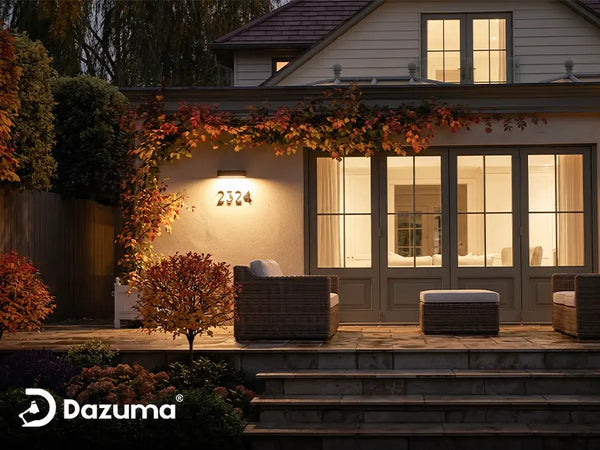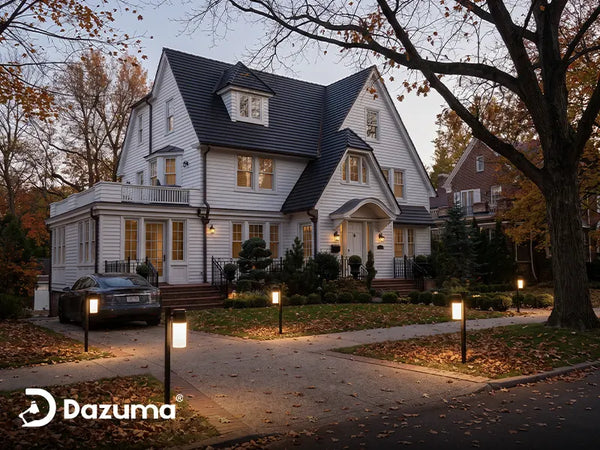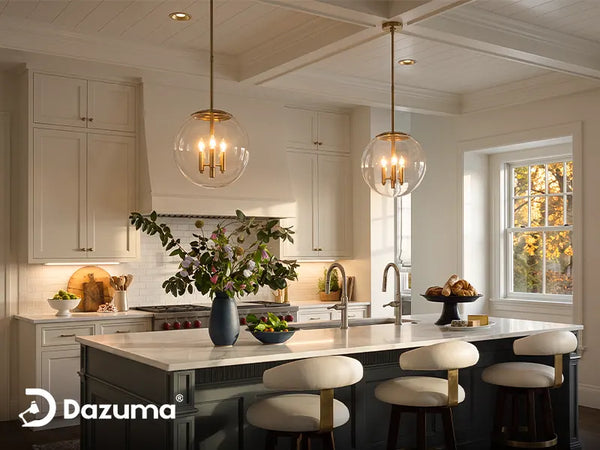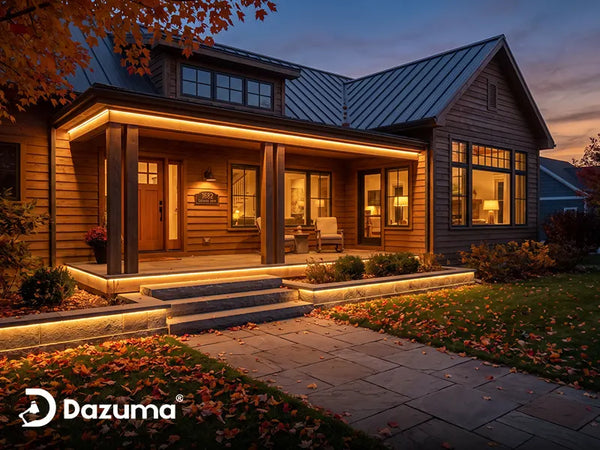

Who This Is For: This guide is for homeowners designing a covered patio dining area and trying to make it feel warm, comfortable, and usable after sunset without turning the space into a harsh outdoor cafeteria.
Introduction
A covered patio dining area has a different lighting challenge than an open backyard. You are not only lighting a table; you are shaping the way people enter, sit, eat, talk, and move around the space. The roof or pergola gives you structure, but it also creates shadows. The dining table needs enough light for food and faces, but too much direct brightness makes people squint, flattens the mood, and attracts attention to the fixture instead of the gathering.
The best outdoor lighting ideas for a covered patio dining area start with restraint. Instead of one bright fixture, think in layers: a soft overhead glow, low wall or perimeter lighting, a little sparkle in the landscape, and safe light on the path back to the house. If you already browsed broad Outdoor Lighting collections, the next step is deciding what each light needs to do.

Quick Answer: What Lighting Works Best For A Covered Patio Dining Area?
For most covered patio dining areas, the best setup is a warm, layered plan: one main ceiling or hanging fixture over the table, wall lights for depth, low-level path or step lighting for safe movement, and small decorative accents placed away from direct eye level. A color temperature around 2700K to 3000K usually feels more comfortable for dinner than cool white light, especially near wood, stone, brick, greenery, or warm-toned outdoor furniture.
For a covered space, always check whether the fixture is rated for the location. A roof does not automatically make the area “indoors.” Wind-driven rain, humidity, condensation, insects, and dust can still affect the fixture.
Start With The Dining Table, Not The Fixture
The table is the center of the experience. People need to see the food, read a menu or label, notice expressions, and still feel relaxed. That means the light over the table should be broad enough to cover the surface but soft enough that it does not create a spotlight on one plate and leave the rest in shadow.
A common mistake is choosing a dramatic fixture that looks great in a product photo but throws light in the wrong direction. For dining, the bottom of the light should not shine straight into guests’ eyes. Frosted glass, shaded pendants, downward-softened ceiling lights, or indirect light work better than bare high-output bulbs. The same spacing logic used in Best Outdoor Pendant Lights for Covered Patios can help you connect fixture scale to table size.

Use The Table As The Visual Anchor
For rectangular tables, the light should feel centered over the dining surface, not merely centered in the roof bay. For round tables, a single centered fixture often feels natural. For long farmhouse-style patio tables, two smaller fixtures or a linear fixture can feel more balanced than one large pendant.
Build A Layered Outdoor Lighting Plan
Outdoor dining feels polished when the light has depth. Inside a home, nearby walls, artwork, rugs, and lamps help soften the room. Outside, if the only light is over the table, everything beyond the chairs can fall into blackness. That strong contrast makes the patio feel smaller and less comfortable. Layering solves that problem.
Think of the patio in four zones: the table, the faces around the table, the route to and from the patio, and the background. The background might be a garden bed, a low wall, a privacy screen, or a few planters. Lighting only the first zone gives you function. Lighting all four zones gives you atmosphere.
| Lighting Layer | Best Fixture Type | What It Does | Common Mistake |
|---|---|---|---|
| Table Light | Outdoor pendant, ceiling light, or shaded fixture | Helps guests see food, drinks, and each other | Using a bulb that is too bright or too exposed |
| Wall Light | Sconce, up-down wall light, or wall washer | Adds depth and makes the covered area feel finished | Mounting it where it shines directly into seated eyes |
| Path And Step Light | Low path lights, deck lights, or stair lights | Guides movement safely without flooding the patio | Using high glare fixtures near the ground |
| Accent Light | Solar garden light, planter light, or string light | Creates background sparkle and a more festive mood | Placing decorative lights too close to the table |
For a covered patio connected to a backyard, your main fixture may come from the ceiling, while the supporting layers come from walls and landscape edges. This is why a dining area often benefits from mixing Outdoor Ceiling Lights with wall and low-level accent fixtures instead of relying on one fixture type.
Choose Ceiling And Overhead Lighting Carefully
A covered patio gives you the option to use overhead lighting, but it also makes placement more important. If the ceiling is low, a large hanging fixture may feel crowded above the table. If the ceiling is high or vaulted, a small flush mount may disappear visually and leave the table underlit. The goal is to create a soft pool of light that feels intentional from several angles.
For a standard covered patio, ask three questions: How high is the ceiling, how large is the table, and is the fixture exposed to wind or moisture at the open edges? A narrow covered patio often wants a flush or semi-flush fixture. A taller roofline can handle an outdoor pendant that makes the space feel more like a room.
Make The Overhead Light Feel Like Part Of The Architecture
Instead of choosing the largest statement light, match the fixture to the ceiling height and table width. A low ceiling usually wants a slimmer fixture. A high roofline can handle more visual weight, but the light should still feel comfortable when guests are seated.

Use Wall Lighting To Frame The Patio
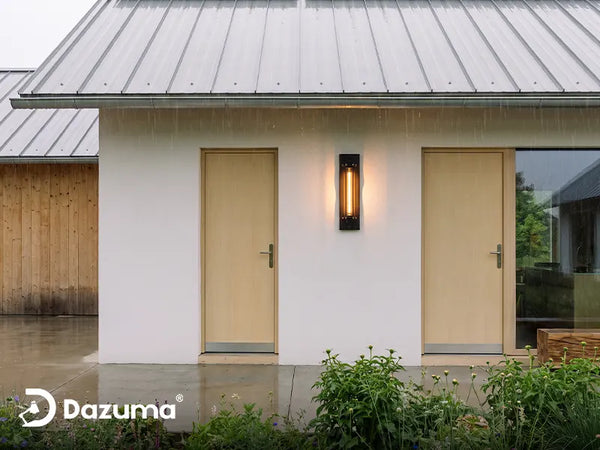
Wall lighting is one of the easiest ways to make a covered patio feel more designed. It helps define the edge of the dining area, adds shape to blank exterior walls, and creates a softer background behind guests. This is especially useful when the patio sits against siding, stucco, brick, stone, or a privacy wall. A pair of sconces can make the space feel like an outdoor room instead of a table placed outside.
For modern patios, Outdoor Wall Lighting works best when it supports the dining mood rather than competing with it. Mount sconces slightly outside the main dining sightline if possible. On textured walls, a grazing beam can turn brick, stone, or wood siding into part of the design.
Recommended Wall Lighting For A Modern Covered Patio
If the dining area has a nearby wall, a sculptural up-and-down sconce can add depth without taking space from the table. This type of fixture works especially well when the roof structure is simple and the patio needs a little architectural movement at night.

Wave Wall Sconce Outdoor Creative Up-Down LED Light
$124.99
Best for covered patio dining walls, garden walls, balconies, and porch-adjacent spaces where you want a decorative wall pattern instead of a flat utility light.
- The three-light up-down design adds layered wall glow that helps a dining area feel more finished at night.
- The 14.76-inch depth creates visual presence without needing floor or table space.
- The black or white finish makes it easier to coordinate with patio frames, railings, or exterior trim.
Add Accent Lighting Around The Edges
The edge of the patio matters. If the table is bright and the yard behind it is completely dark, the space feels exposed. A few low accents near planters, a walkway, or the garden border make dinner feel more relaxed and connected to the backyard.
Accent lighting should not fight with the dining table. Keep decorative pieces to the side, behind the seating area, or along the path from the patio to the lawn. If you want a low-maintenance approach, Outdoor Solar Lights can be useful around planting beds or areas where hardwiring would be overkill. Just remember that solar lights depend on sun exposure during the day, so they work best where the panel can charge without being blocked by the patio roof.

Keep Decorative Light Off The Dining Surface
Small sparkle lights can be charming, but they should sit in the background. Around dinner guests, decorative light feels best when it adds depth, not distraction. Place it where people see the glow, not the bare LED point.
Recommended Accent Lighting For Patio Edges And Garden Beds
For a covered patio that opens toward a lawn, planter bed, or garden path, a solar decorative stake light can add a celebratory glow without asking for new wiring. It is not a replacement for task lighting over the table, but it can make the surrounding view feel more alive.

Starburst Garden Lights Solar LED Waterproof Firework Landscape Light
$90.99
Best for garden beds, lawn edges, party settings, and patio borders where you want background sparkle without adding electrical work.
- The firework-style LED layout creates a festive background effect for evening meals and casual gatherings.
- The 5.5W polysilicon solar panel allows automatic daytime charging and nighttime lighting.
- The ground-insertion design makes it easy to reposition as your patio furniture or plantings change.
Pick The Right Color Temperature For Outdoor Dining
Color temperature can make or break a covered patio dining area. Cool white light may look crisp in a garage or security zone, but it can make food, wood furniture, skin tones, and warm exterior finishes look flat. For dinner, most homes feel better with warm white light in the 2700K to 3000K range. It gives the setting a candlelike direction without making the patio too dim to use.
There is also a comfort reason to stay warm and controlled outdoors. Responsible outdoor lighting principles favor light that is useful, targeted, low-level, controlled, and warm-colored. For a dining patio, that translates into a simple rule: light the places people actually use, keep brightness modest, and avoid blasting light sideways into neighbors’ yards or upward into the night sky.
| Color Temperature | How It Feels Outdoors | Best Use Around A Covered Patio |
|---|---|---|
| 2200K-2700K | Very warm, amber, intimate | Accent lighting, garden edges, decorative mood lighting |
| 2700K-3000K | Warm, comfortable, flattering | Main dining light, sconces, patio ceiling lights |
| 3500K | Balanced but less cozy | Modern patios where the home interior also uses neutral white |
| 4000K and above | Crisp, brighter-looking, more utilitarian | Service areas, security zones, or task-heavy outdoor work areas |
Warm Light Helps Food And Faces Look Better
Outdoor dining is not just about visibility. Warm light makes wood, stone, brick, woven chairs, greenery, and plated food feel richer. It also reduces the hard, clinical feeling that can happen when a patio is lit with cool white security-style light.

Placement Tips That Make The Patio Feel Larger
Covered patios can feel crowded when every light is close to the table. To avoid that, spread the glow outward. Put the strongest light over the dining surface, then use lower-output fixtures along the wall, rail, steps, or planting edge. The space will feel wider because the eye can read the surroundings instead of stopping at the table.
If your covered patio has a grill, bar cart, or prep counter, do not ask the dining light to do all the work. A small task light near the prep area keeps cooking practical while letting the table stay softer. If the patio opens into a pool, lawn, or courtyard, consider lighting one vertical surface in the distance. A lit wall or tree beyond the dining area makes the view feel deeper and more resort-like.
This is where comparing fixture families can help. A covered table may call for one overhead fixture, while a side wall may need a sconce, and the outer edge may only need a few low accents or Outdoor String Lights. For a deeper planning process around meals, seating, and circulation, the older guide How to Plan Outdoor Dining Room Lighting for Every Occasion is a useful companion.
Plan Safety, Controls, And Maintenance
Because a covered patio is only partly protected, moisture can still collect around sockets, wiring connections, fixture seams, and mounting plates. Use outdoor-rated fixtures in appropriate locations, keep plugs away from standing water, and do not treat indoor extension cords as permanent patio wiring. For hardwired fixtures, a licensed electrician is usually the safest choice.
Controls matter too. A dimmer lets the table shift from dinner to conversation. A timer helps decorative accents turn off after the evening. Separate switches for wall lights and overhead lights give you more flexibility than one shared circuit.

Use Separate Controls When Possible
Put the table light, wall lights, and accent lights on separate switches or smart controls. This gives you a bright setup for serving dinner, a softer setup for drinks, and a low-level setup for late-night cleanup.
Common Covered Patio Dining Lighting Mistakes
The first mistake is using one bright ceiling light for everything. It may make the table visible, but it also creates harsh shadows under faces and leaves the rest of the patio feeling flat. The second mistake is hanging decorative lights too low or too close to seated guests. A light that looks charming in a photo can become annoying if it shines at eye level.
The third mistake is ignoring the view from indoors. If the patio sits outside a kitchen, dining room, or living room, the lights should look good through the glass doors. The fourth mistake is choosing outdoor fixtures only by finish. Beam direction, glare control, damp or wet rating, and control options matter more once people actually use the space.
Finally, avoid matching every single fixture too perfectly. A covered patio often looks more natural when the fixture styles are related rather than identical. For example, a clean overhead light, sculptural wall lights, and subtle garden accents can share a warm color temperature and dark finish without looking like a boxed set.
Final Advice
The best covered patio dining lighting should feel easy. Guests should notice the comfort of the space before they notice the fixtures. Start with the table, add wall light for depth, guide movement with low-level lighting, and use decorative accents only where they improve the view. Warm light, separate controls, and careful fixture ratings will do more for the final result than simply choosing the brightest option.
If you are still comparing styles, look at your patio in the evening before buying anything. Stand where guests enter, sit where they will sit, and look back toward the house. The right plan will make the dining area feel welcoming from every angle.