
Who This Is For: This guide is for homeowners who love the look of a chandelier but are thinking one step beyond the showroom photo: Which type will still feel like a good decision six months after installation? If you are comparing a glass chandelier with a crystal chandelier and worrying about dust, fingerprints, cleaning time, fragile parts, glare, or how formal the room will feel, this is the practical comparison I would make before buying.
Quick Answer
For most homeowners who want the easier fixture to live with, a simple glass chandelier usually has the advantage. Fewer decorative pieces, smoother surfaces, and easier access generally mean faster dusting and less careful handling. A crystal chandelier can absolutely be practical, but multi-layer designs with many drops or prisms usually demand more patience if you want them to keep their sparkle.
That does not mean glass is maintenance-free. Clear glass shows fingerprints, cooking film, water spots, and dust very clearly. Crystal can be surprisingly forgiving from across the room until the light is turned on, when residue begins to dull the refraction. The real question is therefore not “glass or crystal?” by itself. It is how complicated is the fixture?
A glass chandelier with ten smooth shades may be easier to clean than a crystal chandelier with dozens of small pieces. But a simple crystal ring could beat an elaborate glass design. When browsing Glass Chandelier and Crystal Chandeliers, count the surfaces you will actually have to touch.

What Actually Makes One Easier to Live With?
When clients ask me this question, I do not start with style. I start with access. Can you reach the fixture from a normal step ladder? Can each shade be wiped without removing ten other pieces? Are there dozens of dangling elements that move every time you touch them? Is the chandelier near an open kitchen where airborne grease will settle on reflective surfaces?
Count the Pieces
The more individual shades, drops, prisms, chains, and small metal joints a chandelier has, the longer routine cleaning tends to take. Dust does not only settle on the visible front surface. It collects on upper edges, sockets, arms, suspension parts, and the tops of decorative pieces.
Look at Surface Shape
A broad smooth glass shade can often be wiped in one motion. Faceted crystal has more edges, which is exactly why it creates beautiful sparkle—but those edges also create more places for dust to sit. The visual benefit and the maintenance cost come from the same geometry.
Think About Your Ceiling Height
An easy-to-clean chandelier becomes difficult if it hangs 14 feet above the floor. If your dining or living room has a tall ceiling, ease of access should be part of the purchase decision. A fixture that needs frequent polishing may not be the best fit for a location you can barely reach.

Ask Yourself: Would I Clean This on a Tuesday Night?
That question sounds silly, but it is useful. If the fixture only stays beautiful when you are willing to turn cleaning into a special event, make sure the visual payoff is worth it to you.
Glass vs Crystal Chandeliers at a Glance
| Daily-Life Factor | Glass Chandelier | Crystal Chandelier |
|---|---|---|
| Routine Dusting | Usually easier with larger smooth surfaces | Can take longer with many faceted pieces |
| Fingerprints and Smudges | Very visible on clear glass | Also visible, especially when illuminated |
| Light Effect | Cleaner, softer, more direct | More sparkle, refraction, and visual movement |
| Visual Formality | Easy to use in casual and modern rooms | Often feels dressier or more glamorous |
| Handling | Large shades still require care | Multiple small pieces may need more careful handling |
| Best for Low-Maintenance Homes | Usually the easier choice when construction is simple | Best if you value sparkle enough to accept extra upkeep |
Why Glass Often Wins for Everyday Ease
Glass chandeliers fit easily into modern, transitional, mid-century, and casual dining rooms because they can add visual interest without automatically making the room feel formal. That flexibility is part of what makes them easy to live with. You can change the rug, dining chairs, or wall color later without feeling that the chandelier controls the entire style direction.
The maintenance advantage is strongest when the glass is used in larger pieces. Ten glass shades are still ten things to clean, but they are easier to understand than dozens of hanging droplets. You can see where the dust is, wipe the surface, and move on.
The Downside: Clear Glass Tells on You
If you touch a clear glass shade while changing a bulb, the fingerprint may be visible immediately. In a home with an open kitchen, a faint film can also build up over time. That does not make glass hard to maintain; it just means quick spot-cleaning is more noticeable and more rewarding.
Glass Is Better for Homeowners Who Like a Cleaner Visual Field
Crystal creates visual activity even when the room is quiet. Glass can feel calmer, especially with a simple metal frame. In a room with patterned stone, bold art, or a busy open-plan kitchen, that quieter reflection may be easier to live with.
A Glass Chandelier for a Cleaner Modern Look
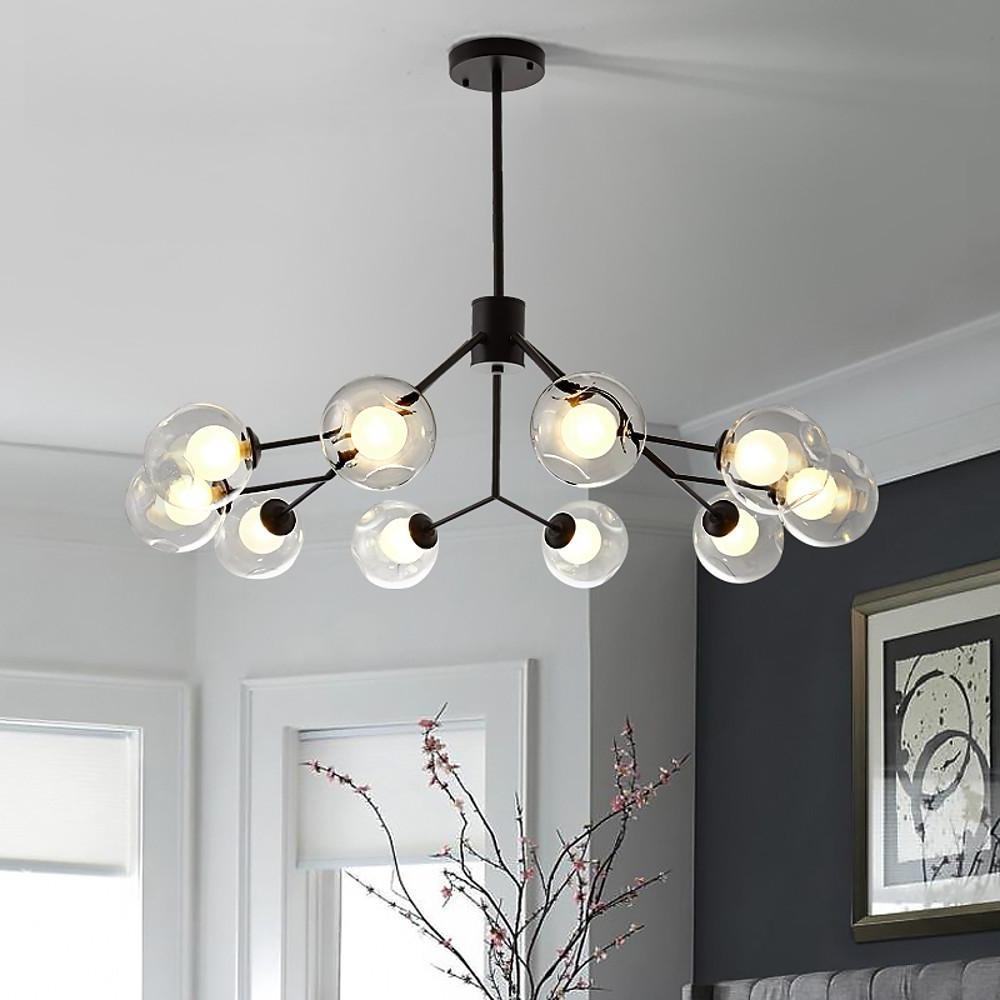
The Geometric LED Nordic Glass Sputnik Chandelier is a useful example because the construction is visually open. It uses ten glass shades on a metal frame rather than layers of small hanging decorative pieces. That makes it a more straightforward choice for someone who wants a statement chandelier without committing to a highly detailed maintenance routine.
Best for Lower-Fuss Modern Styling
Geometric LED Nordic Glass Sputnik Chandeliers Pendant Light Hanging Lamp
Price: $448.99
Availability: The product page is currently marked out of stock.
Best for living rooms and dining rooms where you want clear glass, an open silhouette, and fewer small decorative components to maintain.
- The fixture uses a metal frame with ten glass lampshades and a clean Sputnik-style layout.
- The page lists a 39-inch diameter, 8-inch fixture height, and an adjustable 20-inch suspension length.
- It uses included G9 LED bulbs, with 110–120V operation and a maximum of 5W per bulb.
For daily life, what I like about this type of design is that you can understand the cleaning job at a glance. There are ten shades, so it is not maintenance-free, but there are not multiple tiers of small pendants hanging below the frame. If you dust regularly, you are less likely to reach the point where cleaning feels intimidating.
Glass Works Well When You Want the Room to Change Around It
A clean glass-and-metal fixture can survive several decorating phases and is less likely to feel tied to one formal style.

When Crystal Is Worth the Extra Maintenance
Crystal chandeliers earn their place when you want the light itself to become an event. The faceted surfaces catch and redirect light, creating sparkle and movement that smooth glass cannot fully duplicate. In a dining room used for entertaining, a formal living room, or a home where the chandelier is meant to be the central decorative investment, that effect can be worth the extra upkeep.
What I would not do is buy crystal because you think it is automatically “better.” If you prefer calm interiors and rarely polish decorative objects, you may spend more time noticing dust than enjoying the sparkle. A chandelier should fit your habits, not the version of yourself you imagine becoming after the remodel.
Crystal Shows Neglect Differently
Clear glass often shows one obvious smudge. Crystal tends to lose brilliance gradually. A thin layer of dust may not scream “dirty” from across the room, but the light stops breaking across the surfaces as dramatically. Homeowners sometimes think the bulbs have become dull when the real problem is simply that the decorative pieces need cleaning.
More Pieces Mean More Care Around Movement
Any glass or crystal fixture can break if handled roughly. With multi-layer crystal, there are simply more components to protect while cleaning, changing bulbs, or working on the ceiling. That is especially relevant in a high-ceiling location where safe access is already complicated.
A Crystal Chandelier for More Sparkle and Drama
The Round Drum Crystal Chandelier is a good example of the tradeoff. Its multi-layer smoky-gray and clear crystal accents create much richer refraction than the simpler glass Sputnik fixture. The gold iron frame and tiered construction also give it a more formal presence. The payoff is obvious visually; the maintenance job is also larger.

Best for Maximum Decorative Impact
Round Drum Crystal Chandelier Modern Metal Ceiling Light
Price: $324.99
Best for dining and living rooms where sparkle, layered refraction, and a more formal focal point matter more than minimizing cleaning time.
- The fixture uses a gold electroplated iron frame with multi-layer clear and smoky-gray crystal accents.
- The page lists hardwired 110V installation, E14 sockets, included bulbs, and warm 3000K illumination.
- Round and oval configurations give you more ways to match the chandelier to a dining table or room shape.
If you are drawn to this look, the broader Chandeliers category is useful for comparing how much ornament you actually want. Some homeowners discover that they love crystal sparkle but prefer a simpler silhouette with fewer individual pieces.
Which One Fits Your Household Better?
Choose Glass if You Have a Busy Household
If children, pets, frequent guests, and everyday clutter already keep you busy, I would lean toward a simpler glass chandelier. Not because crystal is unsafe, but because complicated decorative maintenance is easier to postpone in a house where there is always something else to do.
Choose Glass Near an Open Kitchen
Dining chandeliers near open kitchens collect more than dust. Fine cooking residue can settle on reflective surfaces. Large glass shades still need cleaning, but wiping ten accessible pieces is usually less frustrating than cleaning many small crystal elements one by one.
Choose Crystal if the Dining Room Is a Destination
If you host dinners and use the dining room for holidays, crystal may deliver more emotional value. The extra cleaning is easier to justify when the fixture changes the atmosphere of the room.
Choose Crystal if You Enjoy Polished, Layered Interiors
Some homeowners genuinely enjoy maintaining beautiful objects. If you already polish brass, care for fine furniture, and treat lighting as part of the room's decorative collection, the upkeep may not feel burdensome at all.

Your Cleaning Personality Matters
Do not buy for the house you wish you maintained. Buy for the house you actually live in. The right chandelier is one you can enjoy without feeling guilty every time you look up.
Cleaning Without Making It a Weekend Project
Whichever material you choose, frequent light dusting is easier than waiting for a deep clean. Turn the power off, allow bulbs to cool, and use a dry soft cloth or appropriate duster for routine maintenance. Follow the fixture manufacturer's care guidance before using cleaners or liquids.
For Glass Shades
Work one shade at a time and support it with your free hand if the construction allows. Avoid twisting shades or applying pressure to mounting hardware. Fingerprints are easiest to deal with immediately instead of letting them become a layer of dust plus skin oil.
For Crystal Elements
Move slowly and avoid grabbing several pieces at once. If elements are removable, photograph the arrangement before disassembly so you know exactly how they return. For a large or high fixture, professional chandelier cleaning may be worth considering simply because ladder work is the bigger risk than the cleaning itself.
Dazuma's existing How to Clean a Crystal Chandelier: The Complete Step-by-Step Guide goes deeper into the process. If you are still learning the material and style options before buying, Crystal Chandelier Guide: Answers to 15 FAQs and Expert Advice is also useful.
Maintenance Starts With Placement
A chandelier over a normal dining table is easier to reach than one centered over a double-height living room. If two fixtures are equally beautiful, choose the one you can realistically access and maintain in your actual space.

Common Buying Mistakes
Assuming Crystal Is Automatically Higher Quality
Material names do not tell you everything about construction, finish, hardware, or light quality. Evaluate the whole fixture. A well-designed glass chandelier can feel more refined than a crystal chandelier that is poorly proportioned for the room.
Ignoring the Fixture When It Is Turned Off
Crystal is famous for what it does with light, but you will also see it during the day. Make sure you like the shape, finish, and density when the bulbs are off. The same is true for clear glass, which can nearly disappear in some rooms and look busy in others depending on the frame.
Choosing for Sparkle Without Thinking About Glare
Crystal creates more small highlights and reflected points. Some people love that liveliness; others find it distracting in a television-centered living room. Consider where you sit and what you look toward at night.
Underestimating Cleaning Access
The most elaborate chandelier is not hard to maintain when it hangs within easy reach. A relatively simple fixture becomes difficult when it is installed over a staircase or high ceiling. Location and access belong in the buying decision.
Buying a Formal Chandelier for a Casual Lifestyle
If the room is used for homework, takeout dinners, crafts, and everyday family traffic, a highly formal fixture may feel like something you have to protect. That may be fine if you love the contrast, but do not assume a more expensive-looking chandelier automatically improves daily life.
Final Advice
If your priority is easy ownership, I would usually choose a simpler glass chandelier. Smooth surfaces, fewer individual decorative pieces, and a more flexible visual style make it easier to clean and easier to redecorate around. You will still wipe fingerprints and dust, but the maintenance job is more predictable.
If your priority is atmosphere, sparkle, and a sense of occasion, crystal can be worth the extra work. The Round Drum Crystal Chandelier creates a richer light effect and stronger focal point than the simpler glass Sputnik design. You are trading some everyday convenience for more visual drama.
The most useful takeaway is that construction matters more than the category label. Count the pieces. Look at how accessible they are. Think about cooking residue, ceiling height, children, pets, and how often you realistically clean. Then choose the chandelier that fits your household—not just the one that looks best for five seconds on a product page.