
Who This Is For: This guide is for homeowners choosing a statement chandelier for a dining room, living room, bedroom, or entry and wondering whether alabaster or glass will feel gentler at night—not merely which material looks more luxurious when the light is off.
Introduction
Two chandeliers can use the same warm-white light source and still feel completely different. One may glow like a softly lit stone lantern; the other may sparkle, reveal the bulbs, and cast brighter highlights across a table. That difference is often blamed on color temperature, but the shade material and fixture geometry can be just as influential.
Alabaster and alabaster-like natural stone are valued for their milky translucence and visible veining. Glass is more varied: it may be clear, seeded, ribbed, smoked, frosted, or opal. That means “glass chandelier” describes a material family, not one predictable lighting effect. To make a confident choice, you need to look beyond the product label and ask how much of the light source is visible, how broadly the shade diffuses it, and where people will view the fixture.

The Quick Answer: Alabaster Usually Creates Softer Light
In most comparable designs, an alabaster chandelier creates softer, more even light than a clear-glass chandelier. The translucent stone acts as a diffuser, spreading the source across a larger glowing surface. This reduces the sharp contrast between the bright LED or bulb and the surrounding room, so the fixture feels calmer to look at.
Glass can create equally gentle light when it is opal, frosted, thickly textured, or fully enclosing the bulb. Clear glass usually prioritizes sparkle, visibility, and brightness instead. It lets more direct light pass through and can create crisp highlights or glare when the bulbs sit near eye level. Therefore, the most accurate comparison is not “stone versus glass” in isolation. It is diffusing stone versus the specific type of glass and bulb exposure used in the fixture.
If your first priority is a quiet glow for long dinners, a bedroom, or a low-light living room, begin with alabaster chandeliers. If you want brighter visual energy, visible globes, and reflected sparkle, explore the broader range of glass chandeliers while checking each shade finish individually.
What Does “Softer Light” Actually Mean?

Softness Is Mostly About Luminance Contrast
A light feels harsh when a very bright source sits against a much darker background. Diffusion spreads that brightness over a larger area. The total light output may still be substantial, but your eye no longer has to adapt to one tiny, intense point. This is why a glowing stone panel can feel softer than a visible bulb even when the room is equally bright.
Homeowners often mix up four different qualities:
- Softness: how smoothly light is distributed and how gentle the source feels to view.
- Brightness: how much useful light reaches the room and surfaces.
- Warmth: the color appearance, such as 3000K warm white versus 6000K cool white.
- Dimming: whether output can be reduced electronically without changing the fixture.
A 3000K bulb can still glare through clear glass, and a 4000K LED can still look evenly diffused behind stone. Likewise, a soft-looking fixture is not automatically dim. If color temperature is part of your decision, How to Choose the Right LED Lighting Product Color Temperature? explains how warmth changes perception without replacing the need for good glare control.
Alabaster Chandelier vs. Glass Chandelier
| Decision Factor | Alabaster or Translucent Stone | Glass |
|---|---|---|
| Typical light effect | Continuous, diffused glow with gentle transitions | Ranges from sparkling and direct to softly diffused |
| Glare risk | Usually lower when the source is fully concealed | Higher with clear glass or visible bulbs; lower with opal or frosted glass |
| Visual character | Organic veining, quiet luxury, sculptural presence | Airy, crisp, reflective, and available in many styles |
| Apparent brightness | May look calmer because the source is spread out | Often appears brighter when bulbs and highlights are visible |
| Best fit | Restful rooms, intimate dining, neutral interiors | Lively dining rooms, open living areas, decorative focal points |
| What to verify | Stone thickness, source coverage, output, weight | Clear versus frosted finish, bulb visibility, bulb shape, dimmer compatibility |
Shade Geometry Can Override the Material
Even within the same material, the distance between the light source and the shade changes what you see. If an LED sits too close to a thin stone panel, a bright band may show through. When the source is set deeper inside the frame and the diffuser has enough depth, the panel glows more uniformly. Glass behaves similarly: a bulb pressed close to a globe wall can create a concentrated bright center, while a larger globe gives the light more room to spread before it reaches the surface.
The number of shades also matters. Ten modest glass globes distribute light across a wider area than one exposed central bulb, even if each globe remains visibly bright. A continuous alabaster ring spreads light still further, but its downward illumination depends on whether the bottom is open, shielded, or luminous. This is why product photos should be studied from several angles. A front elevation may look perfectly soft while a photo from below reveals direct LEDs or bulbs.
When shopping online, ask for one evening photo with the chandelier as the primary light and another taken from seated eye level. Phone cameras often darken the room to preserve a bright fixture, making hot spots look stronger than they feel in person, but they still reveal whether the source is visible. Also request lumen output and dimmer compatibility when they are not listed. A beautiful diffuser cannot compensate for a fixture that is too bright for the room and cannot be controlled.
Why Alabaster Light Feels Calmer
The Shade Becomes the Light Source
When an LED shines through translucent stone, you see the illuminated panel rather than a bare diode. The shade’s pale body and natural variation scatter light in several directions. Veining may appear slightly darker or warmer, creating depth without the sharp glitter associated with exposed bulbs.

This effect is especially helpful when the chandelier hangs close to seated eye level. Over a dining table, guests may view the fixture for hours. In a bedroom, the chandelier may be visible from a low bed angle. Concealing the source makes both situations more comfortable. It also complements plaster, marble, linen, wood, and matte painted walls because the light reveals texture without producing many hard reflections.
There are tradeoffs. Diffusion absorbs or redirects some light, so you should not assume that a large glowing shade will deliver enough task light to a table. Check lumens when available and plan wall sconces, lamps, or recessed lights as supporting layers. Natural stone can also vary in color and vein pattern; that variation is part of the appeal, but buyers expecting identical panels should ask for clarification before ordering.
An Alabaster-Style Ring for Continuous Diffusion
The first product uses a ring of white cloud-stone panels around an integrated LED source. Its product page describes the shade as natural white cloud stone and lists the shade material as marble. That construction is relevant to this comparison because the panels form a broad luminous surface instead of exposing a row of small light points.
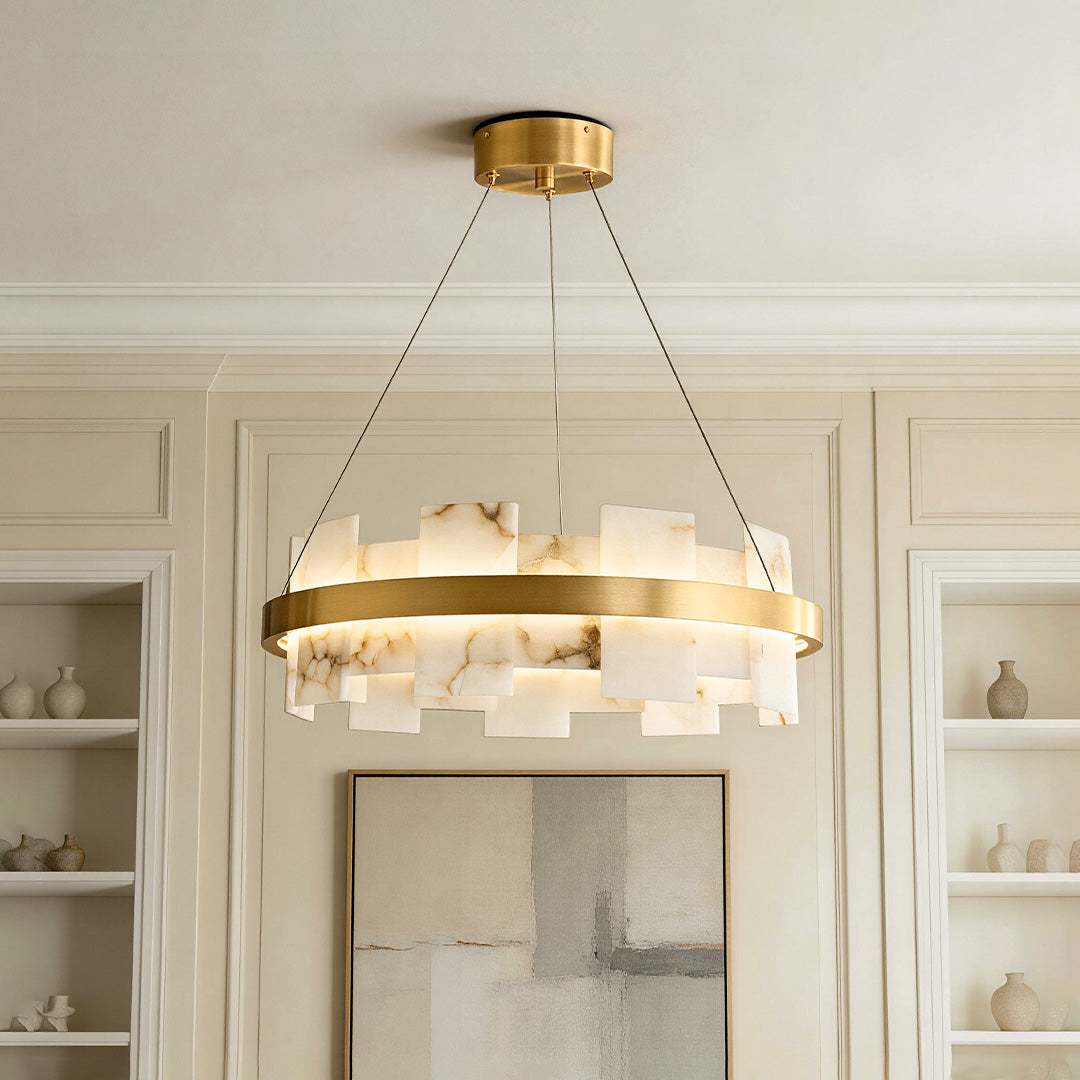
Copper Modern Chandelier Luxury Creative Ceiling Light
Current price: $1,152.99
The low-profile luminous ring suits dining rooms and living rooms where a statement chandelier should feel polished but visually calm.
- White cloud-stone panels spread light around the circular frame.
- Copper, nickel, and black finishes support different interior palettes.
- The hardwired fixture includes its integrated LED source.
Glass Can Be Soft, Sparkling, or Both

The Finish Matters More Than the Word “Glass”
Clear glass preserves the outline of the bulb and creates crisp reflections. Frosted glass blurs the source but may still reveal a brighter center. Opal glass usually provides the most complete diffusion because its milky appearance spreads light across the globe. Seeded and ribbed glass create decorative distortion, yet they do not necessarily eliminate glare.
A multi-globe chandelier can still feel comfortable if the bulbs are low-lumen, warm, shielded, or dimmed. It can feel intense when ten bright G9 capsules are visible from across the room. Viewing angle matters too. A chandelier mounted high in an entry may sparkle beautifully without discomfort, while the same source hanging low over a table may sit directly in everyone’s sightline.
Glass has an advantage when the room needs energy and broad light. Reflections add dimensionality, especially in darker interiors, and the transparent volume can feel lighter than a solid stone ring. It also offers more shape options across chandeliers, from globes to branching Sputnik forms. The buying decision should therefore be based on the shade’s actual opacity and the bulb position, not on an assumption that every glass fixture is harsh.
A Ten-Globe Glass Chandelier for Brighter Visual Energy
The second product uses ten glass shades across a 39-inch Sputnik-style frame. The product page offers 3000K warm white or 6000K white and lists G9 LED bulbs up to 5W each. Because the page does not specify a frosted or opal finish, do not assume the shades provide the same full-source concealment as cloud stone. This style is better understood as a broad ambient chandelier with more visible points of light.
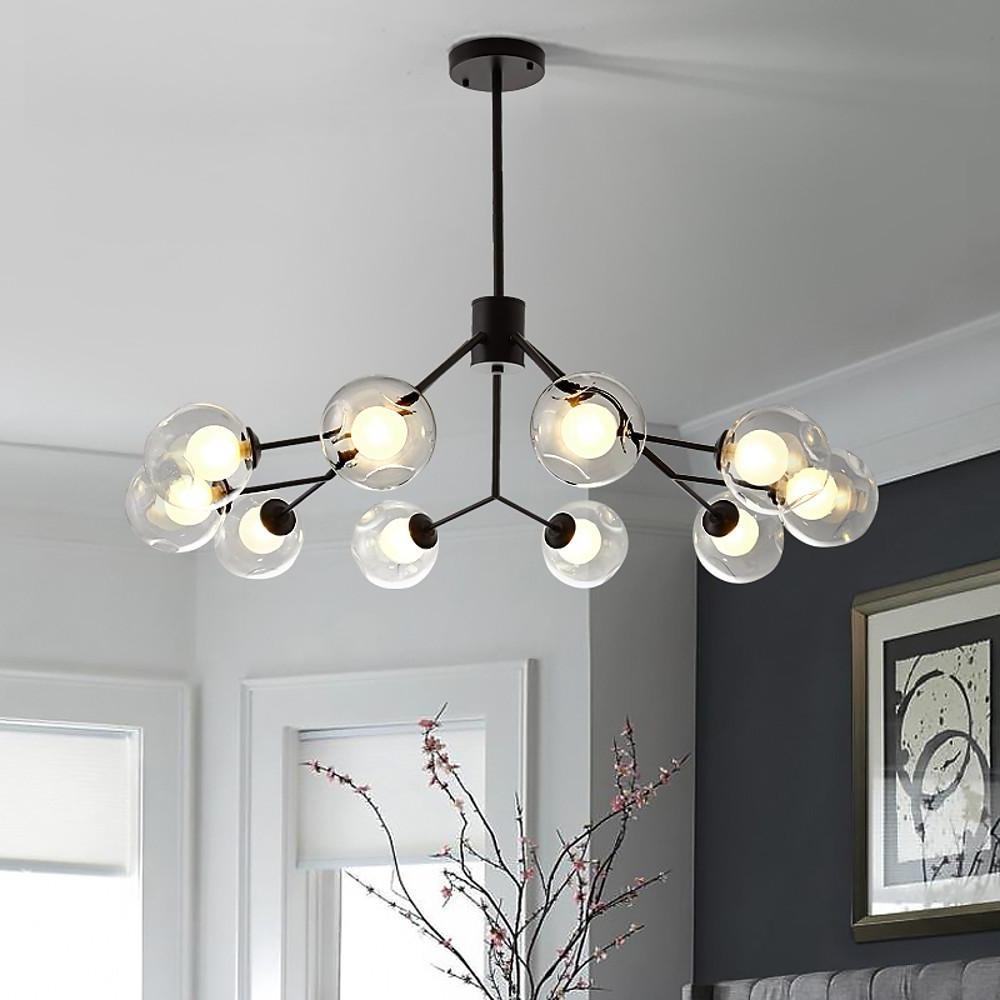
Geometric LED Nordic Glass Sputnik Chandelier
Current price: $448.99
The wide branching profile suits a dining or living area that needs an airy focal point and multiple sources distributed across the room.
- Black and gold finish options change the fixture’s visual weight.
- The adjustable 20-inch cord helps refine the hanging height.
- Ten shades distribute ambient light across a broad silhouette.
Which Material Creates the Better Mood by Room?
Dining Rooms Need Comfort and Table Visibility
Choose alabaster when long dinners, relaxed conversation, and a refined glow matter most. Choose glass when the room needs livelier light and the chandelier should visually expand across a long table. In either case, hang it high enough that the lower shades do not become bright points directly in seated sightlines.

In a living room, alabaster works beautifully with quiet, layered interiors and reflective television screens because it reduces obvious hot spots. Glass can be the better choice in a large open room where the chandelier needs more sparkle and visual reach. Pair either one with table lamps or sconces so the chandelier does not carry the entire room. The layered approach in How to Light a Living Room the Right Way is useful when glare and mood are competing priorities.
In a bedroom, concealed alabaster light is generally the safer starting point because the fixture is often viewed while reclining. If you prefer glass, look for opal or frosted shades, warm bulbs, and compatible dimming. A clear-glass chandelier can work as jewelry for the room, but avoid placing exposed bright bulbs directly above the bed.
In an entry or two-story space, glass often gains an advantage. Greater viewing distance reduces the intensity of individual bulbs, while sparkle helps the fixture register from the upper floor. Alabaster creates a quieter architectural lantern effect. Browse modern chandeliers with the room’s viewing distance and ceiling height in mind rather than choosing solely from a close-up product photo.
A Softer-Light Buying Checklist
- Look at the fixture when illuminated: An unlit material photo cannot show hot spots or bulb visibility.
- Confirm the shade description: For glass, ask whether it is clear, frosted, opal, smoked, seeded, or ribbed.
- Check source concealment: View the chandelier from seated and standing eye levels, not only from below.
- Separate watts from light quality: Wattage indicates power use, not perceived softness or exact brightness.
- Ask for lumens when task light matters: Diffusing material can feel gentle while still providing useful output, but the specification should confirm it.
- Verify dimmer compatibility: Neither featured page clearly promises brightness dimming, so do not assume either fixture can dim.
- Choose color temperature intentionally: Around 2700K to 3000K usually supports a warmer evening mood; cooler settings feel crisper.
- Measure the viewing distance: A glass bulb that feels sharp over a dining table may feel comfortable in a tall foyer.
- Plan supporting light: Use lamps, sconces, or recessed fixtures rather than over-brightening the chandelier.
- Account for weight and installation: Stone and large metal frames require appropriate ceiling support and professional installation where needed.
Final Advice
If your definition of softer light is a calm, continuous glow with fewer visible hot spots, alabaster or translucent cloud stone is the more reliable choice. It turns the shade itself into a luminous surface and is especially comfortable over dining tables, in bedrooms, and in living rooms designed for relaxed evenings.
Glass is not automatically harsh. Frosted and opal glass can diffuse beautifully, while clear glass intentionally adds brilliance and sparkle. The deciding question is therefore not simply “alabaster or glass?” Ask whether the source is concealed, how opaque the shade is, what color temperature is available, whether brightness can be controlled, and where the chandelier will sit in your line of sight. Those details will predict comfort far better than the material name alone.