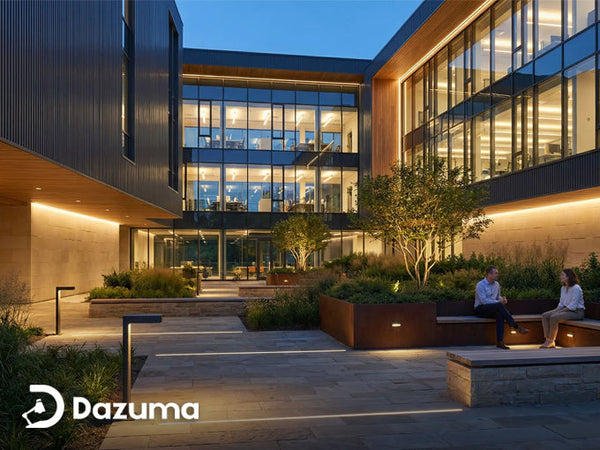

Modern offices are changing fast. Today’s workplace is no longer just rows of desks under bright ceiling panels—it’s expected to support collaboration, focused work, casual meetings, and moments of pause throughout the day. That shift is exactly what shaped the lighting design for the Technolounge Workplace project in Austin, Texas.
Instead of treating lighting as a purely functional system, this project approached it as part of the workplace experience itself. The goal was to create an office that feels comfortable, visually calm, and adaptable while still maintaining the clarity and performance required for everyday work.
The result is a workplace that feels noticeably softer and more welcoming than a traditional corporate office—without losing the structure and efficiency modern teams need.
Moving Beyond Traditional Office Lighting
One of the defining ideas behind this project was reducing the harshness often associated with standard office environments. In many workplaces, lighting can feel flat, overly bright, and disconnected from the architecture. Here, the lighting was designed to work with the space instead of simply illuminating it.
Integrated linear ceiling lighting creates a consistent visual rhythm across the office, while decorative fixtures introduce moments of warmth and personality in key areas. Rather than flooding the entire office with the same brightness level, the design carefully adjusts the lighting character depending on how each zone is used.
This layered approach helps the office feel more natural and less institutional. It also creates smoother transitions between focused work areas, meeting spaces, lounges, and circulation paths.

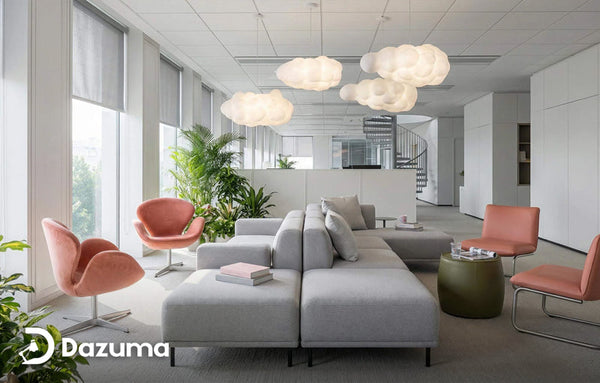
Soft ambient lighting enhances comfort and collaboration within the lounge areas of Technolounge Workplace.
Designing Around Different Work Modes
The workplace was designed to support multiple ways of working throughout the day. Some employees need quiet concentration, others move constantly between meetings and collaboration, while shared lounge areas encourage more informal interaction. Lighting needed to respond to all of these behaviors without making the office feel fragmented.
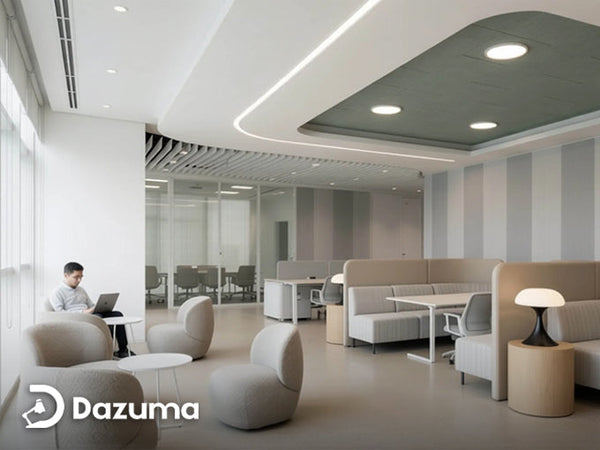
In the open workspace, the lighting focuses on visual comfort and long-term usability. Linear lighting runs align with the slatted ceiling system, reinforcing the architectural order of the space while maintaining even, low-glare illumination above desks. Combined with strong daylight access, the result is a bright but comfortable work environment that avoids visual fatigue during screen-heavy tasks.
The collaboration lounge shifts the mood noticeably. Here, sculptural pendant fixtures soften the environment and help distinguish the area from the desk zones without relying on walls or barriers. The lighting intentionally feels warmer and more relaxed, encouraging conversation, short meetings, or casual breaks during the workday.
This subtle change in atmosphere is important. It signals to employees that the space supports different types of interaction—not just focused desk work.

Layered lighting solutions provide balance, productivity, and visual comfort throughout the open workspace.
Creating Meeting Spaces That Feel More Refined
Meeting rooms are often overlooked in office lighting design. Many rely on overly bright ceiling fixtures that make the space feel generic and uncomfortable. In this project, the meeting spaces were treated differently.
Decorative pendant clusters above the conference tables create a clear focal point while introducing a softer lighting layer for discussions and presentations. Supporting ambient lighting keeps the room functional and visually balanced without overwhelming the space.
Because the meeting rooms use glass enclosures, they remain visually connected to the surrounding office. The lighting helps maintain this transparency while still giving the rooms their own identity. This balance between openness and distinction makes the office feel collaborative without losing privacy where it matters.
Turning Circulation Into Part of the Experience
One of the more understated strengths of the project is how circulation spaces were handled. In many offices, hallways are treated as leftover areas with overly bright lighting and little design consideration. Here, the corridor becomes part of the overall atmosphere.
Continuous linear lighting guides movement through the space while maintaining a calm, quiet rhythm. Softened wall planes and restrained brightness levels prevent the area from feeling harsh or purely utilitarian.
This approach improves wayfinding naturally. Employees and visitors can intuitively move through the workplace without needing excessive signage or visual clutter. More importantly, the circulation spaces remain consistent with the premium tone established throughout the rest of the office.
The Importance of Technical Coordination
Projects like this depend heavily on coordination behind the scenes. A clean lighting environment only works when fixture selection, mounting conditions, controls, and installation details are aligned from the beginning.
Throughout the project, fixture specifications, finishes, light output, and dimming compatibility were carefully reviewed against the actual site conditions. This helped reduce common installation issues and ensured the final result stayed consistent with the original design direction.
The installation phase also included on-site adjustments to maintain visual balance and fixture alignment across different zones. Once everything was in place, final refinements helped optimize brightness levels and overall atmosphere for everyday use.
These details may not be immediately visible, but they have a major impact on how the workplace ultimately feels and functions.
What the Final Workplace Achieved
By the time the project was completed, the Technolounge Workplace achieved something many offices struggle with: balance.
The space feels professional without becoming cold. It feels comfortable without losing structure. And it supports productivity while still giving employees places to pause, collaborate, and reset throughout the day.
During daylight hours, natural light and integrated ceiling lighting work together to maintain clarity across the office. In the evening, warmer decorative lighting helps the environment feel calmer and more inviting. This adaptability makes the office feel usable and comfortable throughout the entire workday.
Most importantly, the lighting never feels disconnected from the architecture. Everything works together as one cohesive system.
Key Takeaways for Modern Workplace Lighting
This project reflects a broader shift in workplace design. Offices today are expected to support comfort, flexibility, and employee experience—not just functionality.
A few ideas stand out clearly:
- Layered lighting creates more adaptable work environments
- Decorative fixtures can soften office spaces without reducing professionalism
- Visual comfort matters just as much as brightness levels
- Circulation and lounge areas deserve the same design attention as workstations
When lighting is treated as part of the workplace strategy rather than an afterthought, the entire office experience improves.
Conclusion: Lighting as Part of Workplace Culture
The Technolounge Workplace project shows how lighting can shape the personality of a modern office. By combining low-glare task lighting, warm ambient layers, and carefully coordinated architectural fixtures, the project creates a workplace that feels both efficient and human-centered.
In today’s offices, that balance matters more than ever.
Because great workplace lighting doesn’t just help people work—it helps them feel better while doing it.