
In today’s beauty industry, lighting isn’t just about visibility—it’s about trust, comfort, and perception. When clients walk into a beauty studio, the lighting immediately influences how they feel about the space, the service, and even the results they expect. That was exactly the focus behind the lighting design for Aura Beauty Studio, a boutique skincare and beauty destination in Chicago.
This project required more than a standard commercial lighting setup. The space had to function as both a retail environment and a treatment-focused studio, each with completely different lighting needs. The challenge was to create a seamless transition between these two experiences without making the space feel disconnected.
Designing a Space That Balances Retail and Relaxation
One of the most interesting aspects of this project is how it blends two identities into one cohesive environment. On one side, you have a bright, open, product-driven retail space where visibility and clarity are key. On the other, there are private treatment rooms where lighting needs to feel calm, soft, and controlled.
Instead of treating these areas separately, the lighting strategy focused on creating a gradual transition. As clients move through the space, the lighting subtly shifts—from brighter and more defined at the front, to softer and more relaxing toward the back. This kind of progression helps guide the customer journey naturally, without needing signage or physical barriers.
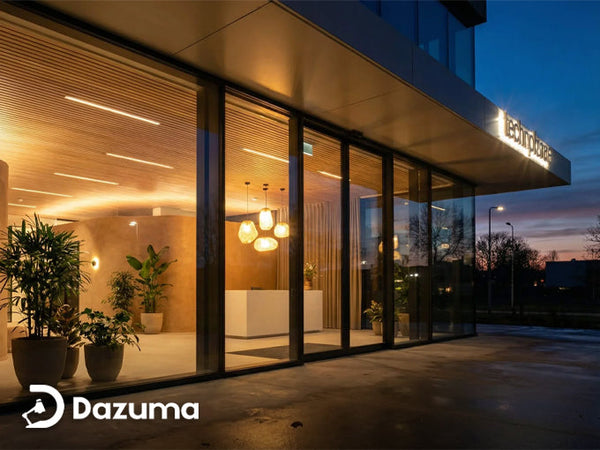
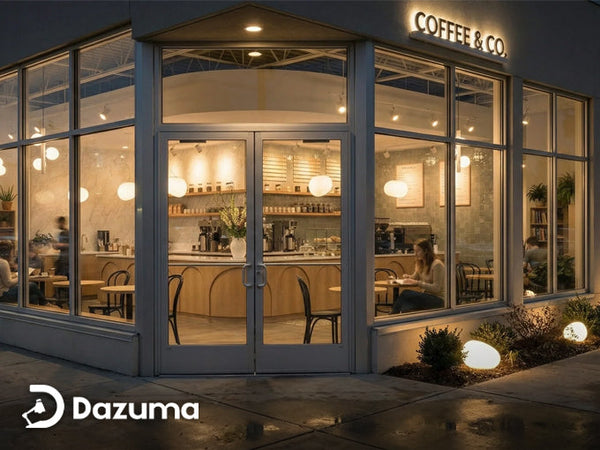
At the storefront, lighting plays a major role in attracting attention. Full-height glass allows the interior lighting to become part of the exterior identity. Rather than relying on bold signage, the studio uses warm, controlled lighting to create a refined and welcoming presence from the street.

The reception area combines diffused ceiling lighting with backlit shelving to create a clean, calming, and luxurious first impression.
Front-of-House: Where First Impressions Are Built
The reception and retail display area is one of the most critical zones in any U.S. beauty studio. It’s where clients form their first impression, and often where purchasing decisions begin.
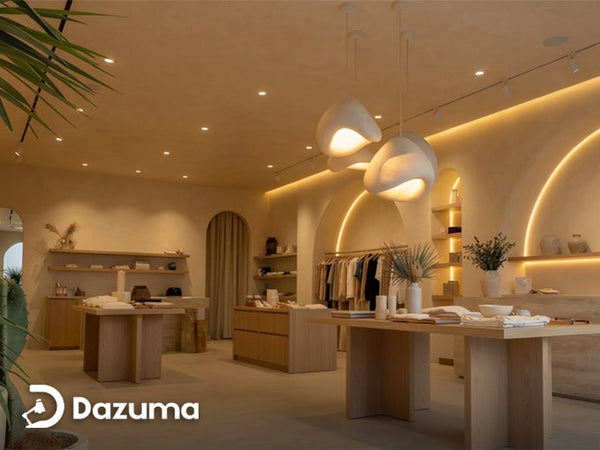
Here, lighting was designed to feel clean, bright, and intentional without becoming overwhelming. Integrated LED shelf lighting highlights products clearly, making labels easy to read and creating a sense of organization. At the same time, a decorative pendant adds a softer, more human touch, preventing the space from feeling too clinical.
This balance is important. In the beauty industry, overly harsh lighting can feel uninviting, while overly dim lighting can reduce trust. The goal is to create a space that feels both professional and approachable—and lighting plays a key role in achieving that.
Task Lighting Where Precision Matters Most
Moving deeper into the studio, the styling and consultation areas require a completely different lighting approach. These are spaces where clients and professionals interact closely, often involving detailed, face-focused work.
Lighting here needs to be bright enough to support accuracy, but still flattering. Track lighting and recessed fixtures provide focused illumination, while mirrors and light-colored surfaces help distribute light evenly across the face. This reduces shadows and creates a more natural, confidence-boosting reflection.
At the same time, the lighting avoids becoming too harsh or clinical. This balance ensures that both the client and the professional feel comfortable during consultations and treatments.
 In the treatment room, warm indirect lighting enhances relaxation, providing a soothing environment tailored for comfort and privacy.
Creating Calm in Private Treatment Spaces
As the experience shifts into private treatment rooms, the lighting changes again—this time prioritizing relaxation and comfort.
These spaces use softer ambient lighting, integrated shelf illumination, and subtle decorative fixtures to create a more intimate atmosphere. The brightness levels are intentionally reduced, helping clients feel at ease during longer treatments.
But even in these calmer environments, functionality isn’t sacrificed. The lighting still provides enough clarity for professionals to perform treatments effectively. It’s a careful balance between visibility and comfort—one that defines the overall quality of the experience.
From Planning to Execution: Making the Design Work
A project like this isn’t just about choosing the right fixtures—it’s about making sure everything works together in real-world conditions.
From the early stages, the lighting plan was developed alongside architectural drawings and site conditions. Fixture types, finishes, and mounting details were carefully coordinated to match the design intent while remaining practical for installation.
During the installation phase, adjustments were made to ensure consistency across different zones. This included fine-tuning fixture placement and verifying compatibility with dimming systems and controls. These technical details might not be visible to clients, but they play a huge role in how the final space performs.
Once installation was complete, the lighting was reviewed as a whole environment. Small adjustments to brightness and balance helped refine the final result, ensuring that each area felt cohesive and aligned with its intended function.
 Integrated LED lighting highlights product displays, adding depth and elegance while subtly guiding customer attention.
The Final Result: A Seamless Customer Journey
What makes this project stand out isn’t any single fixture—it’s how everything works together.
From the moment a client approaches the storefront to the time they leave a treatment room, the lighting supports every step of the experience. It guides movement, enhances comfort, and reinforces the studio’s premium positioning without ever feeling forced.
During the day, the space feels clean and professional. In the evening, it becomes warmer and more inviting, maintaining its identity while adapting to different conditions. This flexibility is what makes the lighting truly effective.
Key Takeaways for Beauty and Wellness Spaces
This project highlights an important shift in how lighting is used in modern beauty environments. It’s no longer just about illumination—it’s about experience design.
A few ideas stand out clearly. Lighting should follow the customer journey, not just the floor plan. Different zones require different lighting strategies, but they still need to feel connected. And perhaps most importantly, lighting should support both business goals and emotional comfort at the same time.
Conclusion: Lighting as Part of the Brand Experience
The Aura Beauty Studio project shows how thoughtful lighting can elevate an entire space. By balancing retail clarity with treatment-room comfort, the design creates a seamless and memorable experience for every client.
In spaces like this, lighting isn’t just functional—it becomes part of the brand itself. And when done right, it quietly shapes how people feel, interact, and remember the space long after they leave.