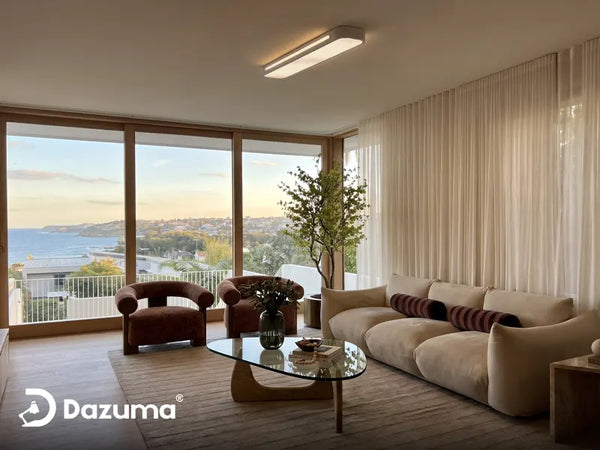

Who This Is For: This guide is for homeowners who like airy, ocean-inspired lighting but do not want their dining room, living room, bedroom, or entry to look like a beach rental filled with shells, anchors, rope, and blue-and-white accessories.
Coastal Style Becomes Elegant When You Stop Decorating the Theme
Most homeowners who want an elegant coastal room are really asking for the feeling of the coast: open air, moving water, pale natural materials, and reflective light—not more beach decor.
A flowing chandelier can suggest a wave; clear acrylic can catch light like water; warm metal can echo late-afternoon sun. When the fixture already carries that idea, the rug, artwork, and accessories do not need to repeat it.

Quick Answer: How Do You Make a Coastal Chandelier Look Elegant, Not Themed?
Choose a chandelier that references the coast through shape, transparency, texture, or color rather than literal shells, rope knots, anchors, or nautical icons. Then keep the surrounding room quieter than the fixture.
- Choose abstract ocean forms: waves, ripples, flowing loops, rounded rings, or translucent layers.
- Use refined materials: clear acrylic, glass, polished or brushed metal, pale wood, linen, and natural stone.
- Keep the palette restrained: warm white, sand, taupe, pale oak, muted blue-green, and small amounts of gold or black.
- Limit literal coastal decor: if the chandelier already references waves, let other objects stay neutral.
- Use warm light: around 2700K–3000K usually makes coastal materials feel residential and relaxed.
- Get the scale right: elegant fixtures look intentional because they relate correctly to the table, room, and ceiling height.
If you can remove the ocean-inspired story and still admire the chandelier as a sculptural object, it is usually easier to use in a sophisticated home.
What Makes Coastal Lighting Feel Elegant?
Restraint Matters More Than Luxury Materials
Elegance comes from editing. One wave-shaped light, natural wood, a blue-gray textile, and one warm metal finish can do more than a room full of coastal symbols.
Use Contrast Between Organic and Tailored Elements
Flowing chandeliers look more sophisticated beside cleaner furniture. A wave-shaped fixture over a simple rectangular oak table creates useful contrast.
Leave Negative Space Around the Fixture
Leave breathing room around a sculptural fixture. Busy drapery, patterned wallpaper, or crowded ceiling details can weaken its silhouette.
Start with the broad Coastal Chandelier category, but judge each fixture by how abstract or literal its coastal reference feels.

Edit the Room After Choosing the Chandelier
The more clearly the chandelier references water or waves, the less the surrounding decor needs to repeat that idea.
Literal vs. Abstract Coastal Design
Literal Coastal Tells You Exactly What to Think
Shells, rope, driftwood boats, fish, anchors, and starfish communicate the coast immediately, but they are harder to blend into a polished year-round interior.
Abstract Coastal Suggests Movement and Light
Curved lines, irregular loops, rippled glass, clear acrylic, and translucent layers suggest water without becoming beach objects, so they pair more easily with modern and transitional furniture.
Think “Ocean-Inspired,” Not “Ocean-Decorated”
If the chandelier would still make sense in a city apartment, it is probably abstract enough to avoid feeling themed.
Elegant Coastal Chandelier Style Guide
| Design Choice | More Elegant | More Themed | Why It Matters |
|---|---|---|---|
| Shape | Abstract wave, ring, ripple, flowing line | Shell, anchor, boat, fish | Abstract forms age more easily with the room |
| Material | Glass, acrylic, refined metal, pale wood | Rope and driftwood used everywhere | Refined surfaces add lightness without costume |
| Color | Warm white, sand, muted blue-green, soft gold | Bright nautical blue and stark white repeated heavily | Muted palettes feel more residential |
| Finish | Brushed gold, silver, champagne, matte black | Too many distressed finishes | Cleaner finishes make organic forms look intentional |
| Supporting Decor | Linen, stone, oak, abstract art | Shell bowls, signs, nets, anchors | The room should support the mood, not repeat the theme |
Choose Refined Coastal Materials
Clear Acrylic and Glass Suggest Water Without Copying It
Clear acrylic and glass catch highlights while keeping the ceiling visible, creating a watery effect without requiring blue.
Warm Metal Prevents Coastal Rooms From Feeling Washed Out
White, beige, pale oak, and clear glass can become flat without contrast. A restrained gold, champagne, bronze, or black frame adds definition.
Natural Materials Belong Around the Fixture, Not Necessarily Inside It
Oak, linen, woven rugs, and limestone can supply coastal texture while the chandelier stays clean and sculptural.
For broader material tradeoffs, Pendant Light Materials Compared For Every Room is useful when comparing transparent, metallic, and natural finishes.
A Coastal Reference That Is Almost Completely Abstract
The LED infinity chandelier below is not covered in shells or blue glass. Its coastal connection comes from motion: long irregular loops read like currents or overlapping waves. This is the kind of fixture that can suggest the coast in a modern home without announcing a beach theme.

Abstract Movement Without Nautical Symbols
LED Infinity Chandelier Modern Irregular Wave Line Ceiling Light
Current Page Price: $342.99
Best for a modern coastal kitchen, dining room, or living area where flowing lines should reference water while polished metal and a slim profile keep the room contemporary.
- The wave-like loop design gives the fixture movement without literal coastal imagery.
- The dimmable version adjusts both brightness and color temperature from 3000K to 6000K.
- Its 11.81-inch width keeps the long 39.37-inch form visually narrow over an island or table.
Use a Softer Coastal Color Palette
Warm White Usually Works Better Than Stark White
Warm white, ivory, oyster, and cream keep the room light without feeling bleached and help clear acrylic and metal look dimensional.
Blue Should Be a Supporting Color, Not Proof of the Theme
Blue walls are optional. Smoky blue, blue-gray, muted teal, or sea-glass tones work better as controlled accents.
Sand and Taupe Keep the Room Grounded
Beige, mushroom, taupe, and limestone add grounding warmth beneath clear or silver fixtures.
Use Black in Small Architectural Lines
Small black architectural details keep pale coastal rooms from washing out and help transparent fixtures read against white ceilings.
When the chandelier is gold, keep the finish proportional by repeating it only once or twice in small details rather than across every visible metal.
Use Color Like a Coastal Landscape, Not a Flag
Think sand, cloud, weathered wood, deep water, and warm sunlight—not repeated navy-and-white stripes in every visible zone.

Let Shape Suggest the Ocean
Waves Are More Versatile Than Shells
A curved wave is also a geometric idea, so it can live with modern cabinetry, traditional molding, or transitional furniture more easily than a literal shell form.
Round Forms Feel Like Ripples and Horizon Lines
Round chandeliers can suggest ripples, pair naturally with round tables, and soften rooms dominated by straight lines.
Irregularity Makes the Fixture Feel Organic
Slightly irregular waves, overlapping lines, or varied acrylic panels create more natural movement than perfectly repeated curves.
You can compare abstract silhouettes in Modern Chandeliers. Many modern fixtures can become coastal simply through the materials and room palette around them.
A More Visible Ocean Reference That Can Still Feel Refined
This round gold chandelier uses clear acrylic panels shaped like overlapping waves. The ocean reference is more obvious than the infinity fixture, so the surrounding room should be quieter. Skip literal beach accessories and let the chandelier carry the movement by itself.

Sculptural Wave Detail for a More Decorative Coastal Room
Sea-Inspired Elegant Wave Round Acrylic Chandelier
Current Selected Price: $638.99 for the 27-inch option
Best for a dining room, living room, bedroom, or entry where clear wave-shaped panels should become the primary coastal statement and the rest of the room can remain restrained.
- The clear acrylic wave panels create movement while keeping visual weight relatively light.
- The chandelier is 8 inches high with a 39-inch adjustable hanging cord.
- The integrated LED is fixed at 3000K and is not brightness-dimmable.
If warm metal is part of your coastal palette, Gold Chandelier provides useful comparisons for deciding whether the finish should be a subtle frame or a stronger focal element.
Get the Scale and Hanging Height Right
Elegance Often Looks Like Correct Proportion
Even a refined fixture looks awkward at the wrong scale. Over a table, keep the chandelier comfortably narrower than the tabletop.
Use Ceiling Height to Control the Drop
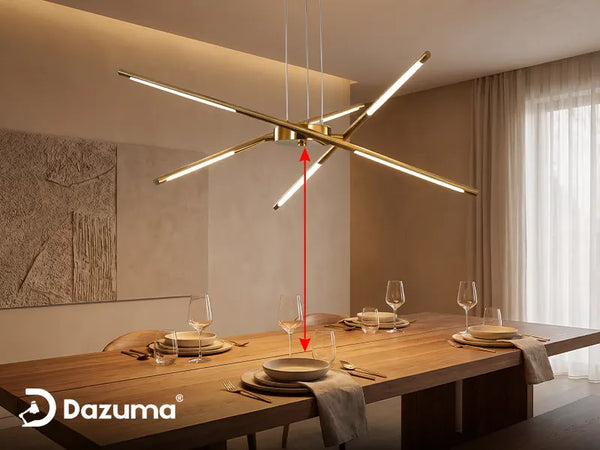
Over a dining table, start around 30 to 36 inches above the tabletop and avoid raising the fixture so high that it disconnects from the furniture.
Open Walking Areas Need More Clearance
In open walking areas, keep about 7 feet of clearance beneath the lowest point and include the full suspension in your measurement.
Transparent Fixtures Can Be Larger—Within Reason
Transparent wave structures can feel lighter than solid shades, but they still occupy real width and should not crowd nearby surfaces.
For dining-specific calculations, use How High Should a Chandelier Be Over a Dining Table? before finalizing the electrical box and cable length.

What Should You Put Around a Coastal Chandelier?
Choose Furniture With Cleaner Lines
Simple oak, walnut, limestone, or plaster furniture lets a sculptural chandelier carry more movement without making the room busy.
Use Linen Instead of Nautical Pattern
Linen, cotton, boucle, and wool add softness without declaring a theme. Keep patterns subtle and abstract.
Use Art to Suggest Place, Not Decorate the Theme
Abstract art, an atmospheric landscape, or one large coastal photograph connects the mood more elegantly than small beach signs.
Repeat Metal Once or Twice
Repeat gold once or twice in small details rather than across faucets, chairs, mirrors, and accessories.

Let Texture Do the Coastal Work
Stone, linen, pale wood, transparent surfaces, and soft metal finishes create atmosphere without requiring obvious beach accessories.
How to Use an Elegant Coastal Chandelier in Different Rooms
Dining Room
In a dining room, let the chandelier supply movement while a pale oak or stone table and upholstered chairs create a calm base.
Living Room
In a living room, center a wave or ring chandelier over the seating group and add lower lamps so all the light is not overhead.
Bedroom
In a bedroom, pair a smaller warm coastal chandelier with ivory linen, pale oak, and perhaps one muted blue textile rather than a full themed bedding set.
Entry or Foyer
A foyer can support a more decorative ocean-inspired fixture because it is viewed from several angles; keep the console and walls simple.
A Realistic Dining Room Makeover: From “Beachy” to Coastal-Elegant
Imagine a 12-by-15-foot dining room with a 9-foot ceiling, light oak table, beige tile, navy striped curtains, a rope mirror, shell art, woven placemats, and driftwood decor. The homeowners want a wave chandelier but worry the room will become too coastal.
The chandelier is not the problem—the repetition is. Remove the shell art and rope mirror, replace the curtains with warm off-white linen, keep the woven placemats, and introduce smoky blue only through one abstract painting. A low ceramic bowl replaces the driftwood centerpiece.
Now the gold-and-clear wave chandelier can carry the movement while oak, linen, ceramic, and blue-gray art support the coastal feeling quietly.
Common Mistakes That Make Coastal Chandeliers Look Themed
Repeating the Ocean Motif Everywhere
A wave chandelier does not need wave art, wave rugs, and shell accessories. Choose one strong reference.
Using Only White and Blue
Blue and white can feel overly nautical without wood, stone, sand, taupe, or warm metal.
Choosing a Rustic Chandelier for a Refined Room
Heavy rope and distressed wood suit casual cottages more than rooms with polished stone, tailored upholstery, or modern cabinetry.
Using Too Much Gold
Too many reflective gold objects can shift coastal into glam. Let the chandelier carry most of the shine.
Ignoring Daytime Appearance
Evaluate transparent fixtures in daylight and switched off, not only in illuminated product photos.
Hanging the Chandelier Too High
Do not let a dining chandelier float near the ceiling; keep it visually connected to the table.
Trying to Make Every Room in the House Coastal
Adjacent rooms can share materials without repeating wave chandeliers or coastal accessories everywhere.
Elegant Coastal Chandelier Buying Checklist
- Choose abstract ocean movement over literal nautical symbols.
- Decide whether the chandelier or the surrounding decor will carry the coastal reference.
- Use transparent or light-reflective materials to preserve visual openness.
- Pair cool coastal cues with warm wood, stone, linen, or metal.
- Keep blue muted or limited when the chandelier itself is highly sculptural.
- Check the chandelier unlit in daylight as well as illuminated at night.
- Measure the full diameter against the table and room.
- Confirm the adjustable cord or suspension can achieve the desired height.
- Check whether integrated LED color temperature and brightness are adjustable.
- Remove competing themed accessories after the chandelier is installed.
Final Advice: Suggest the Coast Instead of Explaining It
An elegant coastal chandelier can simply move like water, reflect light like glass, or bring warm metallic contrast beside pale wood and stone.
Choose one coastal idea and express it well. When the room still looks beautiful after the shells, anchors, and nautical signs are removed, you have moved from a coastal theme to coastal design.