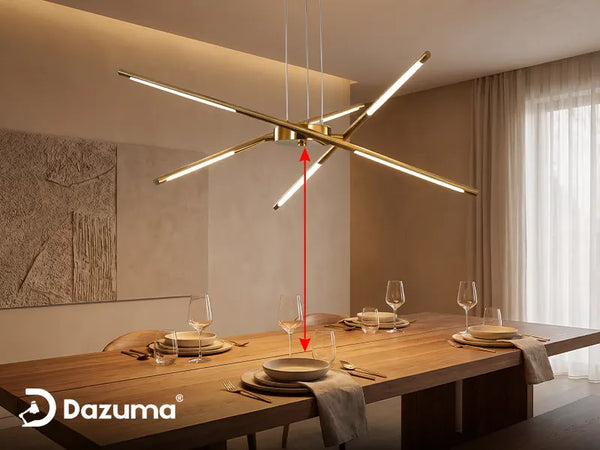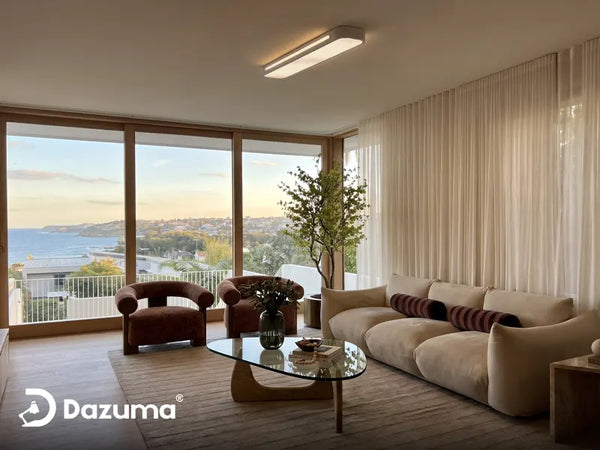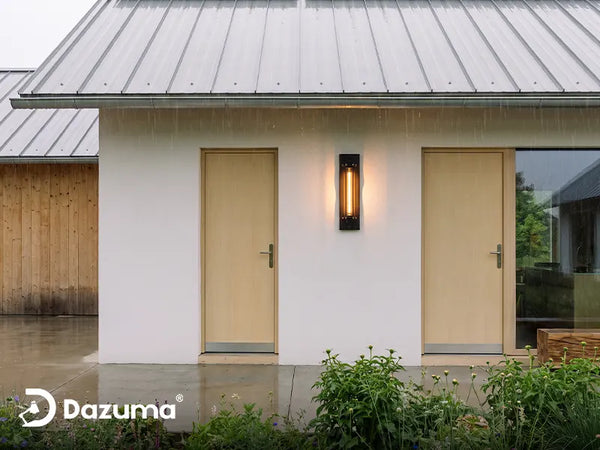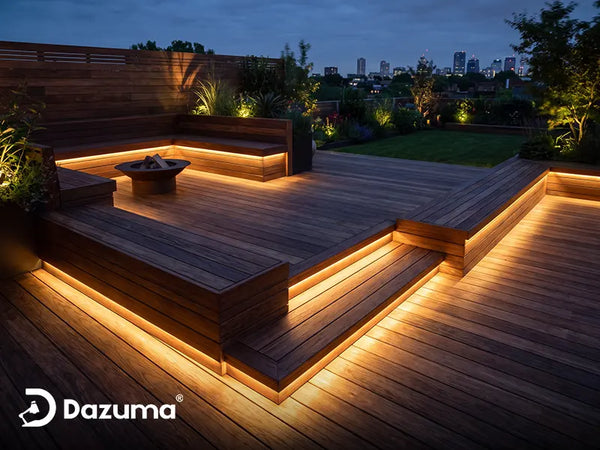

Who This Is For: This guide is for homeowners furnishing an open kitchen, dining room, and living area who want the lighting to feel connected without buying a perfectly matched fixture set—or ending up with three statement lights competing for attention.
The Goal Is Coordination, Not a Matching Set
Open floor plans are harder to light because several fixtures are visible at once. If every fixture is dramatic, the ceiling feels crowded; if everything matches, the room can feel like a showroom set.
Treat the space as one visual field with different jobs. Let the dining chandelier lead, use kitchen pendants to define the island, and let wall lights add lower-level warmth. Repeat a few design cues while giving each zone its own scale and purpose.

Quick Answer: How Should You Mix Chandeliers, Pendants, and Wall Lights?
Choose one primary statement fixture, then make the other visible fixtures simpler. Repeat two or three elements across the space—such as finish temperature, shape family, or material—but do not make every light identical.
- Dining chandelier: usually the main decorative focal point.
- Kitchen pendants: smaller or simpler so they define the island without competing.
- Wall lights: lower-contrast fixtures that add vertical light and connect zones.
- Recessed or ceiling lights: functional background lighting rather than decorative competition.
- Lamps: a softer evening layer that can introduce texture without adding more ceiling clutter.
If two fixtures are visible together, give them at least one relationship—finish, shape family, material, or light color—without making them identical.
Start With a Lighting Hierarchy
Choose the Hero Before the Supporting Cast
In many open layouts, the dining chandelier is the easiest statement piece because it hangs over fixed furniture and visually centers the dining zone.
Give the Kitchen a Clear Second Place
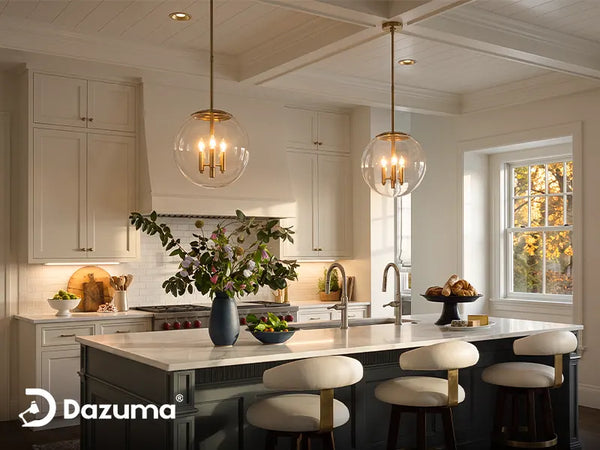
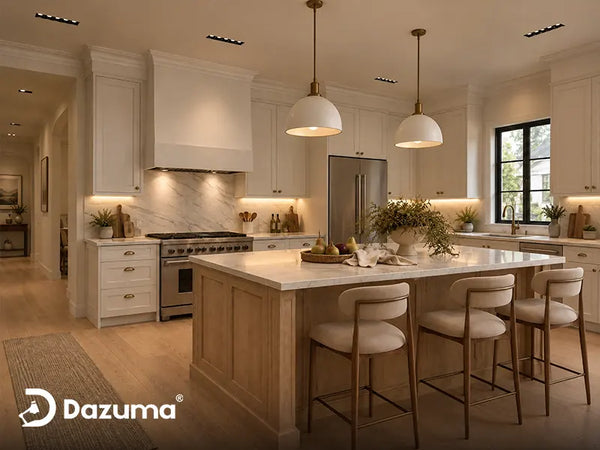
Island pendants can be attractive without being equally sculptural. When the dining light has loops, crystals, or layered geometry, simple cones, globes, cylinders, or glass drops create a clearer hierarchy.
Let Wall Lights Work Quietly
Wall sconces occupy a different visual plane, adding warmth at a fireplace, artwork, or reading corner without putting another object on the ceiling.
Use the Three-Layer Idea as a Planning Check
Ambient, task, and accent light should work together. The existing guide What Is The 3 Lighting Rule? A Designer's Guide To Layered Lighting explains why a room becomes more comfortable when one decorative fixture is not expected to perform every lighting job.

One Fixture Should Win the First Glance
If your eye does not know where to land, simplify the island pendants or wall lights before adding more decoration.
What Should Match—and What Should Not?
| Design Element | Should Coordinate? | Practical Approach | Avoid |
|---|---|---|---|
| Metal Finish | Usually | Repeat warm or cool metal families | Three unrelated polished finishes |
| Exact Fixture Shape | No | Mix related curves, lines, or proportions | Identical fixtures in every zone |
| Color Temperature | Yes | Keep visible evening layers close in Kelvin | Warm dining light beside icy kitchen light |
| Visual Weight | Needs hierarchy | One strong fixture, quieter companions | Three equally dramatic ceiling fixtures |
| Material | Optional | Repeat one material once, such as glass or black metal | Trying to repeat every material everywhere |
| Scale | No | Size each fixture for its own furniture zone | Using one size family across different rooms |
When you are selecting the decorative centerpiece first, compare the visual weight of Chandeliers rather than deciding from finish alone.
Mix Shapes Without Creating Visual Noise
Repeat a Shape Family, Not the Exact Shape
If the chandelier uses irregular loops, choose simpler curved pendants. If it is a rectangular crystal fixture, slim cylindrical sconces can echo its verticality without copying it.
Use Contrast When the Furniture Already Repeats Geometry
Too many repeated curves can feel predictable, while a kitchen full of straight cabinet lines may benefit from globes or rings that soften the architecture.
Keep One Zone Visually Quiet
Give the eye somewhere to rest. A sculptural chandelier plus a dramatic backsplash usually calls for very simple island pendants.
Two Statement Fixtures Can Work When They Are Far Apart
A large kitchen pendant group and a dining chandelier can both have personality when there is enough physical and visual separation between them. One might be strong because of color while the other is strong because of scale. Problems usually begin when both fixtures use complex shapes, reflective materials, and large dimensions within the same tight sightline.
Use the Ceiling as Negative Space
Do not feel obligated to fill every open zone with a decorative fixture. Recessed lights can quietly handle circulation areas between the island, dining table, and sofa. That open ceiling space helps the statement fixtures feel intentional instead of crowded.
A Sculptural Chandelier That Should Be the Hero
This irregular gold chainlink chandelier does not need an equally expressive companion. Its broad looping form already creates enough movement for one open-plan sightline.

A Strong Dining Anchor for Open-Plan Rooms
Irregular Circular Chainlink Dimmable LED Plating Modern Chandelier
Current Selected Price: $543.99 for the 47.2-inch option
Best for a large dining table or open dining zone where one sculptural fixture should establish the room’s strongest decorative identity.
- The broad looping shape can visually define a dining zone without walls.
- Dimmable versions adjust both brightness and color temperature by remote control.
- Fixed 3000K and 6000K versions are also listed on the product page.
If this type of fixture is the focal point, browse Modern Chandeliers first, then choose simpler pendants after the main shape is established.
Coordinate Finishes Without Matching Everything
Think in Finish Families
Brushed brass, champagne gold, and aged brass can work together when they share similar warmth and sheen. The same applies to matte black, bronze, and blackened steel.
Use Black as a Useful Neutral
Black can connect a gold chandelier to windows, stools, pulls, or a fireplace without forcing the island pendants to be gold.
Do Not Match Every Faucet and Knob
Stainless and nickel can remain functional neutrals. Two repeated decorative finishes are usually enough for continuity.
Make Kitchen Pendants Support the Main Fixture
Simplify the Silhouette
When the dining chandelier is complex, island pendants should usually use one clear shape such as a cone, globe, cylinder, or simple glass drop.
Repeat One Detail From the Dining Light
Repeat one small detail: a brass cap with a gold chandelier, clear glass with crystal, or a black canopy beside a black fixture.
Keep the Pendant Group Narrower Than the Island
Anchor each fixture group to its furniture: island pendants stay inside the island footprint, and the dining chandelier stays visually tied to the table.
The Pendant Lighting category is useful after the dining fixture is chosen, because you can deliberately select a quieter shape instead of shopping for another statement piece.
Repeat a Detail, Not the Whole Fixture
A gold dining chandelier can connect to kitchen pendants through a small brass cap or warm metal stem rather than another large gold sculpture.

Use Wall Lights as the Visual Bridge Between Zones
Wall Lights Should Usually Be Quieter Than Ceiling Fixtures
Because sconces sit near furniture and artwork, simple cylinders, shaded arms, or compact glass forms are often enough.
Repeat the Light Quality
If the chandelier feels warm and soft, an icy wall light can disconnect the living zone. Keep visible evening sources within a similar color-temperature family.
Let Wall Lights Connect Materials
A small wall sconce can combine the kitchen’s black finish and dining room’s warm metal without competing with the main fixture.
Place Sconces Where They Add Depth
Use sconces at a fireplace, bookcase, console, or artwork to create a lower visual layer even when ceiling lights are off.
Browse Wall Sconces by shape and light direction rather than searching for an exact match to the chandelier.
Scale Each Fixture to Its Own Zone
Do Not Use One Size Logic Everywhere
A 40- or 50-inch dining chandelier can comfortably coexist with 8- to 14-inch island pendants because each fixture group serves different furniture.
Give Statement Fixtures Breathing Room
Leave negative space between large fixture groups so dining and kitchen zones remain distinct without walls.
Consider Sightlines From the Sofa
Check hanging heights from the sofa; a chandelier that looks right at the table may block artwork, a television, or the kitchen view from a seated angle.
Open Plans Make Oversizing More Noticeable
Oversizing is more noticeable in an open plan because one fixture shares visual space with every other light.
A Crystal Chandelier for a More Formal Open Plan
This champagne-gold crystal chandelier creates a more formal focal point. Pair its layered sparkle with clean glass or metal pendants and restrained wall lights.

A More Formal Anchor With Reflective Detail
Crystal Pendant Chandelier Luxury Carbon Steel Ceiling Light
Current Selected Price: $859.99 for the 19.7-inch round option
Best for a refined dining zone where crystal should be the strongest decorative material and the kitchen and living-room lights can stay visually simpler.
- The champagne-gold frame and clear crystal create strong reflective visual texture.
- Integrated LED switches among 3000K, 4000K, and 6000K color temperatures.
- The page notes that the three-step setting changes color temperature, not brightness.
If crystal is the main design language, repeat its transparency lightly through simpler glass elements rather than adding more ornate fixtures.
Keep Light Color and Brightness Consistent
Color Temperature Is the Invisible Connector
A room can mix brass, black, glass, and crystal yet still feel disjointed if one zone is warm and another is stark cool white. Around 2700K to 3000K is a useful evening baseline for many homes.
Different Tasks Can Still Use Different Output
Let undercabinet and recessed lighting provide stronger kitchen task light so decorative pendants can remain comfortable.
Use Dimming to Change the Hierarchy at Night
Dimming lets the hierarchy change: dining can lead during dinner, while the kitchen becomes brighter during food preparation.

A Realistic Open-Plan Lighting Example
Imagine a 28-by-18-foot open room with a white-oak kitchen, 9-foot island, walnut dining table, and limestone fireplace. The first plan uses sculptural gold island pendants, a crystal dining chandelier, and large brass globe sconces. Each fixture looks good alone, but together they compete.
The revised plan makes the dining chandelier the hero. Smaller clear-glass pendants use black stems and one warm-metal detail, while shallow black-and-brass sconces repeat both finishes at a quieter scale. Warm-white decorative light connects the zones, and recessed plus undercabinet lighting handles stronger kitchen tasks.
From the sofa, the spaces now feel related without looking matched: enough repetition for continuity, enough contrast to define each zone.
For a room-wide planning perspective, Best Lighting For Open Concept Living Room offers additional ideas for combining ambient, task, and decorative sources.

Reduce Competition Before Buying More Fixtures
If the room feels busy, the solution is usually not a better matching set. It is a clearer hierarchy.
Common Mistakes When Mixing Lighting in an Open Floor Plan
Choosing Every Fixture as a Statement Piece
One dramatic chandelier plus quieter pendants and sconces usually feels better than three equally decorative fixtures.
Buying Matching Collections for Every Zone
Matching collections can feel overdesigned. Repeat only the details you actually need.
Mixing Warm and Cool Light Randomly
Conflicting color temperatures can disconnect otherwise compatible fixtures.
Ignoring Seated Sightlines
Check the sofa and dining-chair views because fixtures are seen from lower angles in daily life.
Matching Every Metal Exactly
Coordinate finish warmth and sheen instead of chasing exact matches.
Using Scale From the Whole Room Instead of Each Zone
Size fixtures to the island, table, or wall zone—not to the entire open room.
Making Decorative Lights Carry All the Task Lighting
Use recessed, undercabinet, and lamp layers so decorative fixtures can stay comfortable.
Open-Plan Lighting Checklist
- Choose one primary statement fixture before shopping for the rest.
- Give kitchen pendants a simpler silhouette when the dining light is dramatic.
- Use wall lights as a lower visual layer and material bridge.
- Repeat only two or three design cues across visible zones.
- Coordinate metal warmth and sheen rather than exact finish names.
- Keep decorative evening lights within a similar color-temperature family.
- Size every fixture to the furniture directly below or beside it.
- Check sightlines from the sofa, dining chairs, entry, and kitchen.
- Leave visual space between island and dining fixture groups.
- Use separate task lighting so decorative fixtures do not need excessive output.
- Plan dimmers or separate controls for different zones.
- Photograph or mock up all visible fixtures together before ordering.
Final Advice: Repeat the Language, Not the Fixture
The best open-plan lighting looks related, not matched. A sculptural gold chandelier can coexist with simple glass pendants and black-and-brass sconces when the visual language is consistent.
Choose the hero first, coordinate color temperature and finish families, then size each fixture for its own zone. That gives chandeliers, pendants, and wall lights personality without turning the ceiling into a competition.