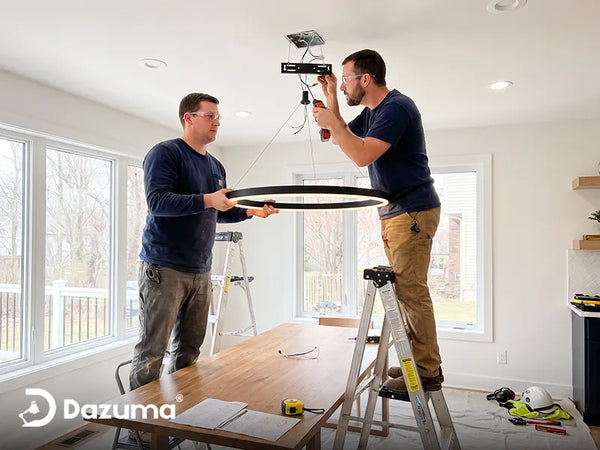

If your ceiling light is flickering, dim, outdated, or just not your style anymore, you’re probably wondering how to replace LED ceiling light fixtures yourself—without calling an electrician or turning it into an all-day project.
Good news: in most American homes, replacing a standard LED ceiling light is a very manageable DIY job. If you’re comfortable using a screwdriver and flipping a breaker, you can likely handle it in under an hour.
Let’s walk through it the smart (and safe) way.
Can You Replace an LED Ceiling Light Yourself?
In most cases, yes.
If your home has standard copper wiring, a proper ceiling electrical box, and you’re simply swapping one fixture for another, this is considered a beginner-to-intermediate level DIY task in the U.S.
However, you may want to call a licensed electrician if:
-
Your home was built before the 1970s and may have aluminum wiring
-
There’s no grounding wire in the ceiling box
-
The electrical box feels loose or unstable
-
You’re installing a very heavy fixture
For a basic flush mount or integrated LED fixture, though, most homeowners can safely do it themselves.
What Type of LED Ceiling Light Are You Replacing?
Before you start unscrewing anything, it helps to know what you’re working with.
There are two common types:
Integrated LED fixture – The LEDs are built into the unit. When it fails, you replace the entire fixture.
LED bulb inside a standard fixture – In this case, you may only need to change the bulb. But if you’re upgrading the whole look, you’ll still remove the full fixture.
Most modern homes use flush mount or semi-flush mount ceiling lights, and the replacement process is nearly identical for both.
Tools You’ll Need
Keep it simple. Here’s what most projects require:
-
Screwdriver (Phillips or flathead)
-
Voltage tester (non-contact preferred)
-
Wire connectors (wire nuts)
-
Electrical tape (optional but recommended)
-
Ladder
-
Your new LED ceiling light fixture
That’s it. No fancy equipment required.
Safety First: Turn Off the Power (Seriously)
This is not optional.
Go to your breaker panel and turn off the circuit connected to the ceiling light. Don’t rely on just flipping the wall switch—it does not fully cut power.
Once the breaker is off, use your voltage tester on the wires before touching anything. If it lights up or beeps, stop and recheck the breaker.
In American homes, safety is priority number one when dealing with electrical wiring. Take your time here.

Step-by-Step: How to Replace LED Ceiling Light
Now for the actual process.
First, remove the old fixture. Support it with one hand while unscrewing the mounting screws. Once it loosens, gently lower it to expose the wiring.
You’ll typically see three wires:
-
Black (hot)
-
White (neutral)
-
Green or bare copper (ground)
Unscrew the wire nuts and disconnect the wires carefully.

Next, inspect the ceiling electrical box. It should be firmly attached to a ceiling joist or brace. If it moves easily, that needs to be fixed before installing your new light.
Install the new mounting bracket that comes with your fixture. Most LED ceiling lights include a crossbar bracket that attaches directly to the electrical box.
Now connect the wiring:
-
Black to black
-
White to white
-
Ground to ground
Twist the wires together clockwise and secure them with wire nuts. Give each one a gentle tug to make sure it’s tight. If you want extra security, wrap a bit of electrical tape around the connectors.
Carefully tuck the wires back into the electrical box.
Attach the new fixture base to the mounting bracket using the provided screws. Make sure it sits flush against the ceiling.
Finally, restore power at the breaker and flip the wall switch. If everything was wired correctly, your new LED ceiling light should turn on instantly.

Common Mistakes to Avoid
Replacing an LED ceiling light is straightforward, but a few common errors can cause problems.
One of the biggest mistakes is not turning off the breaker. Even experienced DIYers sometimes skip this step. Don’t.
Another issue is ignoring the ground wire. Grounding protects your home from electrical faults and should always be connected.
Over-tightening wire nuts can also damage wires, while under-tightening can cause flickering lights.
And finally, make sure your new fixture isn’t heavier than what the ceiling box is rated to hold. Standard boxes support most flush mounts, but heavy decorative fixtures may require a fan-rated box.