
Open concept living rooms have become one of the most desirable home layouts in modern interior design. By combining the living room, dining area, and kitchen into one continuous space, homeowners can create a brighter, more spacious environment that feels welcoming and connected. However, lighting an open concept layout properly can be surprisingly challenging.
Without the right lighting strategy, large open spaces can feel flat, uneven, or overly harsh. Understanding the best lighting for open concept living room layouts is essential for creating balance, comfort, functionality, and visual flow throughout the home.
Why Lighting Matters In Open Concept Spaces
Unlike traditional closed rooms, open concept layouts require lighting that can define multiple functional zones while maintaining a cohesive overall design. The goal is to create layers of illumination that make each area feel intentional without visually separating the space too aggressively.
Well-designed lighting can help:
- Create visual depth
- Improve comfort and functionality
- Highlight architectural features
- Establish mood and ambiance
- Make large spaces feel more inviting
Modern ceiling lights and layered decorative fixtures play a major role in achieving this balance.
| Lighting Layer | Purpose | Common Fixtures |
|---|---|---|
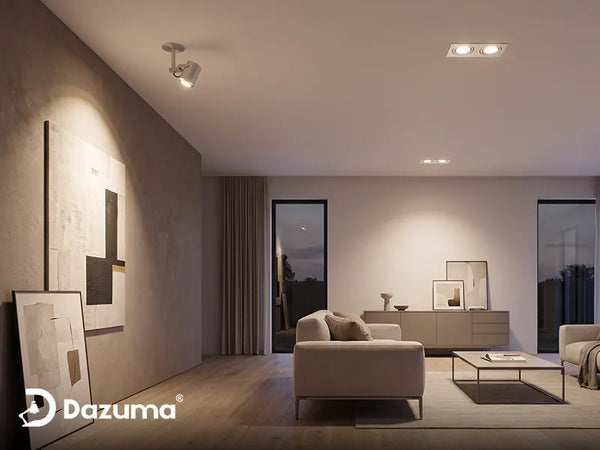
| Ambient Lighting | Overall room illumination | Ceiling lights, recessed lights |
| Task Lighting | Focused functionality | Pendant lights, floor lamps |
| Accent Lighting | Visual depth and atmosphere | Wall sconces, LED accents |

Use Layered Lighting Instead Of A Single Fixture
One of the biggest mistakes homeowners make in open concept spaces is relying on a single ceiling fixture to illuminate the entire room. Large spaces require multiple light sources working together to create balance and dimension.
A layered lighting approach typically combines:
- Recessed ceiling lights
- Statement chandeliers
- Pendant lighting
- Floor lamps
- Wall sconces
Layered lighting prevents harsh shadows while making the space feel more comfortable and visually dynamic.
Many designers use decorative modern chandeliers above the living area to establish a strong focal point while maintaining elegance and visual scale.
Define Functional Zones With Lighting
Lighting is one of the most effective ways to visually organize an open concept room. Instead of physically separating spaces with walls, carefully selected fixtures can subtly define each functional zone.
For example:
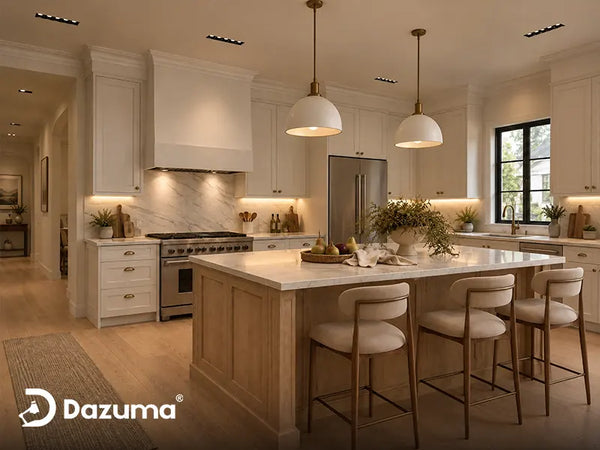
- Pendant lights above a kitchen island
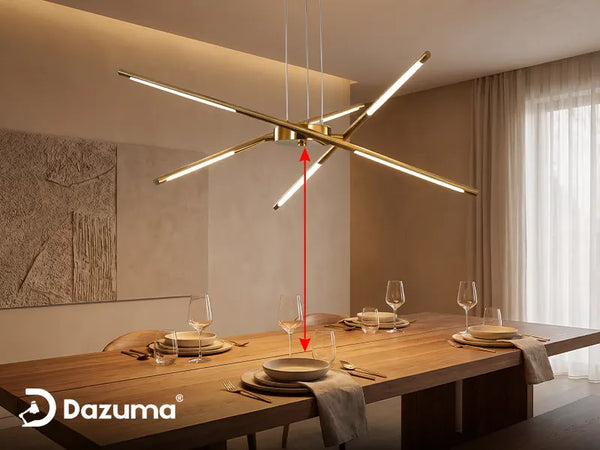
- A chandelier centered above the dining table
- Floor lamps beside seating areas
- Wall sconces framing entertainment spaces
Using different fixture styles while maintaining consistent finishes and color temperatures helps preserve visual harmony across the entire room.
Choose The Right Color Temperature
Color temperature dramatically affects the mood of an open concept living room. Cooler lighting can feel sterile in residential spaces, while excessively warm lighting may appear dim or yellow.
For most modern homes, designers recommend:
| Area | Recommended Color Temperature |
|---|---|
| Living Room | 2700K–3000K |
| Kitchen | 3000K–3500K |
| Dining Area | 2700K–3000K |
Warm white lighting generally creates the most inviting atmosphere for open living spaces.
Stylish pendant lighting can help soften transitional spaces between the kitchen and living room while providing excellent task illumination.
Balance Natural And Artificial Light
Many open concept homes feature large windows and abundant natural light. During the daytime, sunlight can make spaces feel airy and expansive. However, nighttime lighting should complement rather than overpower natural architectural openness.
Dimmers are especially valuable in open layouts because they allow homeowners to adjust brightness throughout the day. Bright task lighting may be useful while cooking, while softer ambient lighting creates a more relaxing evening atmosphere.
Adding decorative wall sconces can also help reduce harsh overhead lighting while creating a more layered and luxurious environment.
Avoid Common Open Concept Lighting Mistakes
Even expensive fixtures can underperform if the lighting plan lacks balance. Avoid these common mistakes:
- Using only recessed lighting
- Installing fixtures that are too small
- Mixing inconsistent color temperatures
- Overlighting the room
- Ignoring dimmer controls
- Using identical lighting everywhere
Open concept spaces work best when lighting feels intentional, layered, and connected without appearing repetitive.

Final Thoughts
Choosing the best lighting for open concept living room layouts requires more than simply adding brighter fixtures. A successful lighting plan combines ambient, task, and accent lighting to create depth, functionality, and visual harmony throughout the space.
At Dazuma, we offer premium lighting collections designed for modern open concept homes. Explore our curated selection of chandeliers, pendant lighting, wall sconces, and ceiling lights to create a warm, elegant, and beautifully layered living environment.
```