
Who This Is For: Homeowners creating a comfortable American classic bedroom who want wall lighting that complements wood furniture, upholstered headboards, and familiar fabrics while making reading and winding down easier.
Bring Familiar Character Beyond the Kitchen
The kitchen often gets the most attention when a home takes on a classic American character. Warm metal, painted cabinetry, and familiar silhouettes create a place that feels welcoming without much explanation. The bedroom can use that same sense of belonging, expressed through softer light and quieter details.
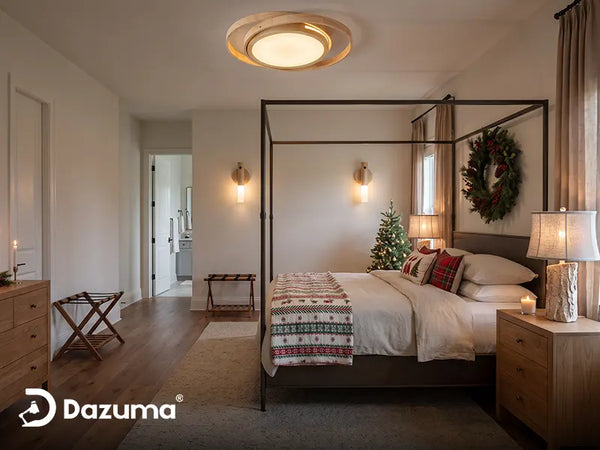
Imagine a walnut nightstand, a cream upholstered headboard, and a small shaded wall light beside each pillow. In daylight, the fixtures give the bed a finished frame. In the evening, they create two comfortable pools of light and leave room on the nightstands for a book, a glass of water, or a favorite photograph.
The most effective approach combines a recognizable shape, warm light, and controls that work from bed. Choose the fixture's job before its finish. A decorative sconce that makes the wall glow may be lovely for relaxing, but a reader may need a more directed source.

Define Your Version of American Classic
For this guide, American classic means a livable mix of balanced arrangements, familiar furniture forms, warm materials, and personal pieces. It can lean traditional, coastal, or lightly transitional. You do not need a period-perfect room or a matched furniture suite to create the feeling.
Pick two or three anchors you already like. Those might be a wood bed, striped bedding, and a landscape painting. The wall lights should help those pieces belong together. A curved arm can soften square furniture, while a simple tapered shade can bring order to a room with several patterns.
When browsing wall sconces, look at the entire silhouette: the backplate, arm, shade, and how far the fixture projects. A little ornament can feel charming. Several elaborate details competing beside a carved headboard may feel crowded.
Use Symmetry as a Starting Point
A matching pair of lights gives the bed a calm, organized presence. That structure also leaves room for variation elsewhere: different bedside books, a vintage chest on one side, or a small vase on the other. The sconces provide the repeated element that holds the composition together.
Symmetry works best when it supports use. If one person reads every night and the other prefers a low glow, consider matching fixtures with independently adjustable light or controls. The room can look balanced while each side behaves differently.
Choose Wall Lights Around the Way You Rest
Ask what happens during the last hour before bed. Reading a paperback, watching a movie, finding a charging cable, and relaxing with music place different demands on a light. Make that short list before choosing between a shaded decorative sconce and an adjustable task fixture.
| Wall Light Type | Best Bedroom Role | What to Check |
|---|---|---|
| Fabric-Shaded Sconce | A soft bedside presence and familiar classic shape | Shade opening, bulb visibility, and useful light on the book |
| Swing-Arm Sconce | Bringing light closer for reading | Reach, adjustment range, and extended projection |
| Frosted Glass Sconce | A rounded glow with a clean outline | Diffuser brightness from a reclined position |
| Directional Reading Light | A focused reading zone beside a sleeping partner | Beam control, aiming range, and switch access |
Choose a Shade for the Effect You Want
A light-colored fabric shade can lend a room an inviting glow, but fabric type, lining, and shape affect how much light reaches the page. A metal shade can keep more light directed toward the reading area, although the surrounding wall may remain darker. Neither effect is automatically better; choose for the activity.
If you often shift between sitting upright and reclining, compare swing-arm wall sconces. Check whether the arm and shade move in the directions you need. An adjustable arm with limited shade movement may still leave the light pointing past your book.

Keep the Useful Light Close
Bring the light toward the reading position rather than lighting the whole bedroom more brightly. The goal is a clearly visible page with a comfortable surrounding glow. Check where the beam lands when the book rests naturally, not only when held directly beneath the fixture.
Plan Bedside Placement From the Bed Outward
Install the bed, mattress, and usual pillows before finalizing wall light locations whenever possible. Mattress thickness and the way you sit can change the useful position substantially. A measurement copied from another bedroom may put your switch out of reach or expose the bulb above your pillow.
Start With Your Actual Seated Position
Sit in bed as you normally would. Ask someone to hold a paper outline of the fixture against the wall while you check its position. Include the shade and extended arm, not just the small mounting plate. Then lie back and repeat the check.
Mark the mounting point only after confirming three things: the light reaches the page, the source is comfortable to look toward, and the switch can be operated without stretching. There is no single floor-to-backplate measurement that guarantees all three across different beds and fixtures.
Check Width and Projection Separately
A fixture can look perfectly sized from the doorway and still extend into the space where you sit up. Check the side view, especially with a winged headboard or a narrow gap between the bed and wall. Open drawers, move the pillows, and test the swing arm through its full intended range.
If the fixtures frame the nightstands, begin with those centerlines as a visual reference, then assess the reading position. The best arrangement gives each lamp a believable relationship to the bed and furniture. Do not sacrifice comfortable reach simply to fill an empty section of wall.
A Comfortable Pair Starts With Everyday Movements
Getting into bed, reaching for water, and sitting against the headboard should all feel natural. Test those movements with the fixture outlines in place. Small location changes are easy during planning and much more disruptive after wallpaper or fresh paint is finished.

Create Warm Light Without Making Reading Difficult
For a warm American classic bedroom, 2700K is a useful first option to compare with your finishes. A 3000K source offers another warm appearance that may suit cream walls and cleaner transitional details. Test the actual lamp rather than choosing solely from a screen image.
Kelvin describes the appearance of the light. Lumens describe its output. A warm bulb can still be bright, and a dim cool bulb can still look cool. Choose a light color you like, then adjust the quantity and distribution of light for the activity.
Use Separate Reading and Relaxing Settings
The output that works for reading small print may feel excessive when you are settling down. Compatible dimming gives you a way to change that setting. Confirm that the fixture, bulb or LED driver, and dimmer are intended to work together; “LED” alone does not establish dimming capability.
Also distinguish brightness adjustment from color switching. A fixture may offer several white-light colors without dimming in brightness. If an integrated LED is not adjustable, make sure its fixed output suits your intended use before purchase.
Test Both Sides of the Bed
Have one person read while the other reclines in their normal position. Check whether light crosses the pillows or reflects from a glossy headboard. A more controlled beam, different shade, or small aiming adjustment may help. Increasing brightness is rarely the first thing to try when the problem is direction.
For visitors, clear controls are part of comfort. The guest room lighting checklist is useful when planning a bedroom that someone unfamiliar with the room will use.
Connect Finishes, Fabrics, and Wall Color
Choose the finish in the context of a few large surfaces. Warm wood, ivory upholstery, and muted blue bedding can support aged brass, soft bronze, or polished nickel in different ways. Put finish samples beside the headboard fabric and paint color, then look again under the intended light after dark.
If you like brass wall sconces, read the material and finish descriptions separately. A brass-colored finish does not establish solid brass construction. Both can serve a decorating purpose, but knowing the difference helps you judge price and care requirements.
Let Fabric Add the Softness
Use a modest shade shape when the bedding already has a floral, plaid, or ticking stripe. Let the fabric pattern carry the movement while the wall lights supply a repeatable outline. With plain bedding, a gently pleated shade or curved arm can provide more character.
If wallpaper is part of the plan, position the fixture in relation to the whole bedside arrangement before selecting the final pattern repeat. The guide to choosing wall sconces for patterned wallpaper explores that pairing in more detail.

Adapt the Plan to Your Bedroom
A Small Bedroom With Narrow Nightstands
Wall lights free the tabletop from a lamp base, but they still occupy space above and beside it. Choose modest shade width and projection, and check the route around the bed. Keep the nightstand useful for the items you actually reach for. A large decorative arm can undo the practical benefit in a tight room.
A Primary Bedroom With a Reading Corner
Let the bedside lights serve the bed and give the chair its own appropriate light. This avoids asking one bright pair of sconces to carry the entire room. Retain general lighting for dressing, cleaning, and locating things inside drawers or wardrobes.
A dresser lamp can provide a pleasant background layer when the overhead light is off. Look at the whole bedroom lighting plan from the doorway and from the pillows. Light that feels welcoming when you enter should remain comfortable once you settle in.
A Room You Want to Update Gradually
Plug-in wall lights can be worth considering when new wiring would disrupt a finished wall. Confirm that the fixture is actually designed for plug-in use, with a suitable outlet and a neat cord route. Do not assume a hardwired model can be converted simply by adding a cord.
Plan cords away from moving furniture and follow the product's mounting instructions. For hardwired fixtures or new electrical locations, have a qualified electrician handle the work. Include wall repair and redecorating in the budget before choosing a permanent location.

Finish With a Practical Lighting Checklist
- Decide whether each wall light primarily supports reading, ambience, or both.
- Compare fixture width, projection, adjustment range, and shade dimensions.
- Test the placement with the actual mattress, pillows, and headboard.
- Check glare and controls from both seated and reclined positions.
- Confirm voltage, power source, bulb requirements, and any dimming compatibility.
- Evaluate the finish and light color beside the room's real fabrics.
- Keep appropriate general lighting for dressing and cleaning.
A warm American classic bedroom takes shape through useful, familiar details. A comfortable reading position, a balanced pair of shades, and light that brings out the wood and fabric can transform the evening experience. Choose wall lighting around those small daily moments, and the room will feel settled long after the decorating is finished.