
Who This Is For: This guide is for homeowners choosing a main ceiling fixture for a bedroom, hallway, entryway, kitchen, or living area—and wondering whether a flush mount or semi-flush mount will look better without hanging too low.
Introduction: Two Similar Fixtures That Behave Differently
Flush mount and semi-flush mount lights both attach close to the ceiling, so they are often grouped together. In a product photo, the difference can even look minor. Once installed, however, a few extra inches of drop can change how spacious a room feels, how the light reaches the ceiling, and whether a tall person can walk comfortably beneath the fixture.
A flush mount sits directly against or very near the ceiling. A semi-flush mount uses a short stem or frame to create space between the canopy and shade. That gap adds visual presence and may let light wash upward, but it also consumes more headroom.

The Quick Answer
Use a flush mount ceiling light when the ceiling is 8 feet or lower, the fixture sits in a walking path, the room is compact, or you want the ceiling to look clean and uninterrupted. It is usually the safer visual choice for hallways, small entryways, laundry rooms, closets where the fixture is approved for that location, and bedrooms with limited overhead space.
Use a semi-flush mount light when you have enough clearance—often on a 9- or 10-foot ceiling—and want the fixture to contribute more shape, shadow, and decorative character. It tends to suit living rooms, larger bedrooms, foyers, dining nooks without a table-centered pendant, and other spaces where a totally flat fixture might feel undersized.
If your ceiling is exactly 8 feet, do not decide from the product category name. Check the listed overall height. A shallow semi-flush fixture may work, while a dramatic model with a 14-inch drop may not be comfortable over an open walkway. Browse flush mount ceiling lights when protecting headroom is the first priority.
What Is the Main Difference Between Flush and Semi-Flush Mount Lights?
The physical distinction is the gap below the ceiling. A flush mount has little to no visible gap. A semi-flush mount suspends its body slightly below the canopy. That simple structural change affects four things:
- Clearance: Flush mounts leave more usable height below the fixture.
- Ceiling light: Semi-flush designs can allow more uplight and reflected glow, depending on the shade and LED placement.
- Visual weight: A semi-flush mount reads more like a decorative object, while a flush mount can blend into the architecture.
If you want a deeper explanation of the low-profile format itself, this guide to what a flush mount light is covers its construction and common uses.

Measure the Installed Profile, Not Just the Shade
Product photos can hide the canopy, mounting hardware, or curved frame. Use the listed total height from ceiling to the lowest point. That is the number that determines clearance, not the diameter and not the height of the shade by itself.
Flush Mount vs. Semi-Flush Mount Comparison
| Decision Factor | Flush Mount | Semi-Flush Mount |
|---|---|---|
| Typical visual effect | Neat, compact, architectural | Layered, decorative, more dimensional |
| Best ceiling conditions | Low ceilings and tight clearance | Moderate or taller ceilings |
| Walking areas | Usually the easier choice | Requires careful drop measurement |
| Light near the ceiling | Depends heavily on diffuser and edge design | Often creates more ceiling bounce or halo |
| Decorative impact | Subtle to statement-making through material | More noticeable through silhouette and depth |
| Good starting rooms | Hallway, laundry, small bedroom, low entry | Living room, larger bedroom, foyer, sitting area |
These are starting points, not rigid rules. Diffuser quality, lumen output, ceiling color, and furniture placement also matter.
How Ceiling Height Changes the Choice
Here is the fastest practical test: subtract the fixture’s total installed height from the ceiling height. The result is the clearance below the lowest point.
For example, an 8-foot ceiling is 96 inches high. A fixture that extends 14 inches down leaves about 82 inches, or 6 feet 10 inches, below it. That may feel too low in a central walking path. The same fixture on a 9-foot ceiling leaves about 94 inches, or 7 feet 10 inches, which feels much more relaxed.
Around 7 feet of open clearance is a sensible design target in many general walk-through areas, but it is not a substitute for local building requirements or the manufacturer’s instructions. Door swings, tall cabinet doors, bunk beds, exercise equipment, and ceiling fans can demand additional space. Have a qualified electrician confirm the mounting location when the fit is close or local rules are unclear.
For 7- to 8-Foot Ceilings
Favor a true low-profile flush mount. Look for the total height, not marketing terms such as “compact” or “close to ceiling.” A fixture under roughly 4 to 6 inches deep is much easier to place over an open floor than a sculptural semi-flush design. Wider, softly diffused fixtures can still provide visual presence without hanging down.
A material-forward flush mount is useful when you want low clearance without making the room feel generic. The following fixture builds its character through stone texture and wood detail rather than a long drop.

Low-Profile Warmth
Vintage Flush Mount Light Fixtures Travertine Ceiling Light
Price: $176.99
Best for entryways, hallways, corridors, and compact rooms that need a decorative natural-material accent without sacrificing headroom.
- Natural yellow travertine and wood create visual depth while the profile stays close to the ceiling.
- Available in 7.87-inch and 11.81-inch widths, both with a listed height of 1.57 inches.
- Layered side and main lighting provides a warm effect suited to circulation spaces and small foyers.
For 9-Foot Ceilings
This is the flexible middle ground. Most flush mounts work comfortably, and many semi-flush fixtures have enough breathing room to look intentional. Let the room’s scale guide you: a narrow hallway may still benefit from a flush profile, while a living room or primary bedroom can support a more sculptural drop.
For 10-Foot Ceilings and Above
In a large room, a very thin flush mount can appear visually disconnected from the furniture below. A semi-flush light brings the luminous surface lower. In a double-height room, however, a pendant or chandelier may create better scale.
Which Type Works Best in Each Room?
Hallways and Entryways
Flush mounts are usually easier in long circulation paths and near swinging doors. In a foyer with a taller ceiling, a semi-flush mount can create a welcoming focal point without dropping as far as a pendant. Always check the lowest point against the actual walking line.

Bedrooms
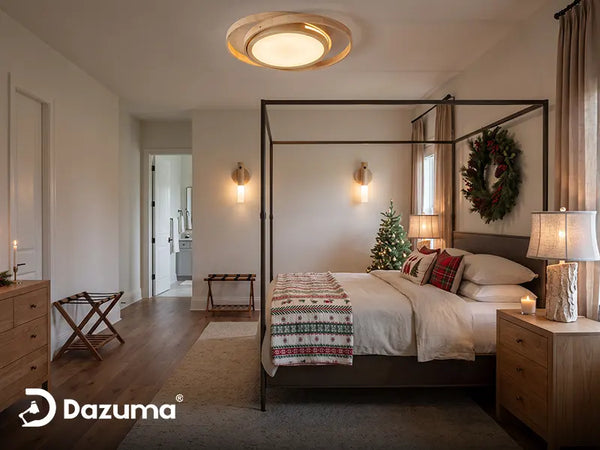
In a bedroom with an 8-foot ceiling, a flush mount keeps the ceiling calm and feels less intrusive above the bed. With 9 feet or more, a semi-flush fixture can add softness and decorative shape near the room’s center.
Living Rooms
Semi-flush mounts often work well in living rooms because their depth helps define the seating area. But a large-diameter flush mount can be equally effective in a modern room, especially when the ceiling is low or the furniture already has strong sculptural forms. Explore the broader ceiling lights range before deciding that mounting type matters more than proportion, diffuser design, and finish.
For a room that can accept a deeper fixture, the next semi-flush model uses its curved frame as a visible design feature. Its 14.17-inch overall height makes it better suited to a taller ceiling or a carefully chosen non-traffic zone than to the center of a low hallway.

Sculptural Adjustable Light
Modern Semi Flush Mount Ceiling Light Twisted Full-Spectrum Light
Price: $309.99
Best for living rooms, larger bedrooms, and modern foyers with enough ceiling height for a 14.17-inch profile.
- The integrated LED supports both brightness and color-temperature adjustment by remote control.
- Four diameter options help the fixture scale from a bedroom to a larger social space.
- Aluminum and iron framing with an acrylic diffuser creates a defined silhouette and soft light surface.
Kitchens and Breakfast Areas
A flush mount is practical in a compact kitchen because it stays clear of cabinet doors and sightlines. A semi-flush fixture can work over a breakfast table where nobody walks beneath it. Neither format automatically provides enough counter light, so add under-cabinet lighting or well-placed can lights where your body would otherwise cast a shadow.
Dining Rooms
A pendant usually relates best to a table centered below it. Choose a semi-flush mount when the table may move or the ceiling cannot support a longer drop. A flush mount suits a low shared kitchen-and-dining ceiling.
Laundry Rooms and Small Utility Spaces
Choose a flush mount with a broad diffuser and an easy-to-clean surface. Check door, cabinet, and drying-rack movement before selecting the diameter.
Light Spread, Brightness, and Color Matter More Than the Label
A semi-flush mount is not automatically brighter. Brightness depends on lumen output, LED efficiency, shade opacity, beam direction, and room finishes. A dark downward-facing shade may illuminate the ceiling less than a flush fixture with a wide translucent diffuser.
What semi-flush designs often do better is create vertical separation. Light can escape around the frame, touch the ceiling, and reveal the fixture’s silhouette. This makes a room feel layered. A flush mount can achieve a similar halo when it includes edge lighting or when the diffuser extends beyond the body.

Do Not Ask One Fixture to Do Everything
If the room still feels flat, changing from flush to semi-flush may not solve the problem. Add lower light sources, such as wall sconces or lamps, so faces, artwork, and corners receive light from more than one height.
Choose Color Temperature by Use
Warm white around 2700K to 3000K is comfortable for bedrooms, living rooms, and entries. A balanced 3000K to 3500K can suit kitchens, hallways, and multipurpose rooms. Cooler settings may help with detailed tasks but can make wood and warm paint feel less cozy at night.
Check the Dimming Method Before You Buy
“Dimmable” can mean wall-dimmer compatibility, remote-controlled brightness, app control, or selectable color temperature. Those systems are not interchangeable. Confirm whether the fixture needs a specific wall control, whether a remote is included, and whether the last setting is remembered after the wall switch is turned off.
How to Choose the Right Diameter and Visual Scale
Clearance tells you whether a fixture fits; diameter determines whether it looks convincing. A tiny light can disappear in a broad living room, while an oversized fixture may crowd a narrow hall.
Measure the room, nearby doors and cabinets, and the ceiling-box location. Then compare fixture diameter with the furniture below. In a living room, relate the light to the seating zone rather than the entire open plan.
Rules of thumb can narrow the search, but the fixture’s actual proportions are more reliable. A thin 24-inch LED disc reads lighter than a 24-inch stone or metal fixture. Before ordering, mark the diameter on the ceiling with painter’s tape or hold a paper template in place. For more room-specific starting points, use this ceiling light size guide.
Try a Ceiling Template
A paper or painter’s-tape outline reveals whether the fixture will compete with doors, vents, smoke alarms, cabinets, or trim. Then hang a string cut to the listed fixture height from the lowest point. This simple mockup is more informative than judging scale from a close-up product photo.

Common Mistakes to Avoid
1. Assuming Every Semi-Flush Fixture Is Shallow
Some semi-flush models extend more than a foot below the ceiling. Always read the total height. The word “semi” describes the mounting family, not a guaranteed drop.
2. Choosing by Ceiling Height Alone
An 8-foot ceiling over a dining table is different from an 8-foot ceiling in a hallway. Furniture can protect the space below a fixture, while a walking path needs more open clearance. Judge the activity directly beneath the light.
3. Ignoring the Ceiling Surface
Semi-flush uplight can emphasize texture, uneven drywall, or a poorly patched electrical box. On the other hand, it can make a smooth white ceiling glow beautifully. Look upward before choosing a fixture designed to throw light onto that surface.
4. Treating Wattage as Brightness
With LEDs, wattage mainly describes energy use. Compare listed lumens when available, along with diffuser coverage and beam direction. If a product page does not provide lumens, ask the seller instead of assuming two fixtures with similar wattage will light the room equally.
5. Forgetting Installation and Replacement Access
Confirm the electrical box supports the fixture, follow the installation instructions, and turn off power at the breaker before electrical work. Heavy fixtures may need additional support. For integrated LEDs, ask whether the driver or light module can be serviced.
6. Mixing Uncoordinated Color Temperatures
A 3000K ceiling light beside very cool recessed lights can divide the room visually. Keep permanent fixtures in connected spaces reasonably close in color temperature.
Final Advice: Which One Should You Use?
Choose a flush mount when headroom, circulation, and a clean ceiling line come first. It is the dependable answer for low ceilings and compact rooms, but it does not have to look basic—stone, wood, glass, edge lighting, and an intentional diffuser can give a shallow fixture real personality.
Choose a semi-flush mount when the room has enough height and needs more visual depth. The gap below the ceiling can create a softer halo and a more furniture-like presence, making it particularly useful in living rooms, larger bedrooms, and foyers.
If you are still undecided, compare two numbers before style: the total installed height and the remaining clearance below it. Then consider the diameter, light direction, color temperature, and what happens directly under the fixture. Those checks will give you a better answer than the category label alone—and help the finished room feel balanced rather than merely illuminated.