
Who This Is For: This guide is for homeowners whose living room feels either too dim or painfully bright, with no comfortable middle setting. It is especially useful if one ceiling light currently does most of the work, if lamps create uneven pools of light, or if you want a layered room that still feels calm at night.
Quick Answer
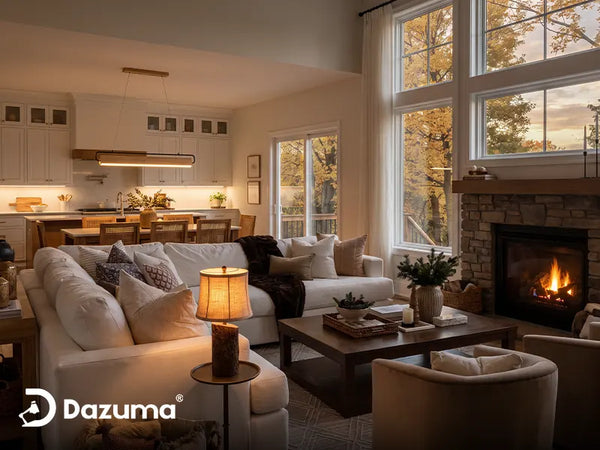
To layer lighting in a living room without making it too bright, give each light one clear job. Use a soft ambient layer to make the room readable, a focused task layer near activities such as reading, and a small accent layer to add depth around art, shelves, plants, or architectural details.
The mistake is turning on every fixture at full output. A comfortable room usually has several lower-intensity sources at different heights rather than one powerful ceiling light. Put the layers on separate switches or dimmers so you can use only the combination needed for television, conversation, reading, cleaning, or entertaining.
Begin with the room's main activity and the darkest surfaces, not with fixture quantity. A living room with pale walls may feel bright with modest output because the surfaces reflect light. A room with dark paint, heavy curtains, and deep upholstery may need more directed light even when the total lumen count is similar.

The Three Layers of Living Room Lighting
Layered lighting is often described as ambient, task, and accent light. That framework is useful, but the layers should not be treated as three equally bright systems. Ambient light establishes the background. Task light briefly becomes brighter where an activity happens. Accent light creates contrast, but it should occupy only selected areas.
The article What Is The 3 Lighting Rule? A Designer's Guide To Layered Lighting explains the overall three-layer approach. The practical challenge in a living room is deciding how much of each layer should be active at one time.
| Layer | Main Job | Useful Sources | How to Keep It Comfortable |
|---|---|---|---|
| Ambient | Make the room and circulation areas readable | Ceiling light, chandelier, recessed light, wall wash, indirect lamp | Diffuse it, dim it, and avoid one exposed source dominating the room |
| Task | Support reading, games, crafts, or detailed work | Reading floor lamp, table lamp, swing-arm sconce | Aim it at the activity instead of raising the brightness of the whole room |
| Accent | Reveal art, texture, shelving, plants, or architecture | Picture light, directional spotlight, shelf light, decorative lamp | Choose a few focal points and leave visual rest between them |
Create a Brightness Budget Before Adding More Fixtures
Think of the room as having a limited brightness budget. When one layer becomes stronger, another should usually become quieter. If the reading lamp is on beside the sofa, the ceiling light can be dimmed. If picture lights are creating depth around the walls, you may need less central ambient light. During cleaning, the balance can reverse and the ceiling layer can temporarily become brighter.
This approach prevents the common problem of adding a lamp to solve one dark area and then leaving every existing light on as well. The result is technically brighter but visually flatter. Bright ceilings, bright walls, bright lampshades, and bright screens all compete for attention.

More Fixtures Should Create More Control, Not More Brightness
The value of layering is that different activities can use different combinations. When every light is tied to one switch or routinely left at full output, the room loses the main benefit of having layers.
A useful test is to turn off every light and add sources back one at a time. Start with the dimmest ambient source. Add a task light where someone is actually sitting. Add one accent source. Stop when the room feels complete. This test often reveals fixtures that contribute glare but very little useful visibility.
Build a Soft Ambient Base
Ambient light should allow people to enter, move around, talk, and recognize the room without feeling that they are sitting under work lights. Central Ceiling Lights can provide this base, but they work better when the diffuser hides the brightest source and the output can be adjusted.
If recessed lights are already installed, avoid turning on every can by default. Use perimeter or wall-facing lights to reveal vertical surfaces, then leave some ceiling positions off. Light on walls often improves perceived brightness more comfortably than intense downlight on the coffee table and floor.
Use Reflected Light
A floor lamp that sends some light toward a pale ceiling can soften the room by increasing the apparent size of the source. A shaded table lamp can illuminate both the tabletop and nearby wall. Reflected light is usually more comfortable than an exposed bulb because it spreads brightness across a larger surface.
Keep the Television Wall Quieter
A bright ceiling light reflected in the screen can create visual fatigue. For television viewing, lower the central light and add soft light behind or beside the screen rather than pointing a lamp directly at it. The goal is to reduce the contrast between the bright screen and a completely dark room without creating reflections.
Light the Walls, Not Only the Floor
When the walls remain black, the room can feel dim even under strong downlights. Gentle light on curtains, shelving, or a textured wall expands the visual field and lets the ceiling layer stay lower.

Add Task Light Only Where It Is Needed
Task lighting is the easiest way to make a living room more useful without making the entire room brighter. A reading chair needs light near the book. A game table needs light over the playing surface. A desk corner needs directional illumination. The rest of the room can remain softer.
A Floor Reading Lamp is useful beside a sofa or chair because the light can approach from the side and slightly behind the shoulder. That position reduces shadows from the reader's head and keeps the bulb out of the direct line of sight.
Table Lamps work well on consoles and end tables, but the shade height matters. When seated, the bright bulb and socket should not be visible beneath the shade. If they are, use a taller shade, lower the lamp, reposition it, or choose a more diffused source.
Match the Task Light to the Activity
- Reading: use directional light close to the page.
- Conversation: use soft lamps at several heights with no intense focal beam.
- Board games: illuminate the table evenly while keeping glare out of players' eyes.
- Crafts: use a brighter adjustable task light and reduce surrounding decorative light.
- Television: use low-level indirect light and avoid reflections on the screen.
Use Accent Light With Restraint
Accent light creates depth by making one surface brighter than its surroundings. That contrast can make a room feel more layered even when the overall output stays modest. The key is selection. Highlight one artwork, one shelf section, a fireplace texture, or a large plant rather than illuminating every decorative object.
Wall Sconces can combine accent and ambient functions. A shaded sconce adds soft side light, while an up-and-down or directional form can emphasize wall texture. Keep sconces on a separate circuit when possible so they can remain active during relaxed evenings after the brighter ceiling layer is turned down.

Accent Light Needs Darkness Around It
A focal point cannot stand out when every nearby surface is equally bright. Leave visual space between accent areas so the eye understands what matters and the room retains depth.
Control Glare and Reflections
A room can have a moderate amount of light and still feel too bright when the sources are visible. Glare comes from exposed bulbs, intense downlights, shiny tables, mirrored cabinets, television screens, and pale surfaces receiving a concentrated beam.
Check From Seated Eye Level
Walk around the room while standing, then repeat the check from every sofa and chair. A lamp that looks fine from the doorway may expose its bulb to someone sitting across the room. Reposition shades and adjustable heads until the bright source disappears from normal views.
Watch Reflective Surfaces
Glass coffee tables, polished stone, framed art, televisions, and dark glossy cabinets can reflect ceiling lights. Move or aim the light rather than simply reducing output. A slight change in beam direction can improve comfort without making the room dimmer.
Use Consistent Color Temperature
A mixture of orange, neutral, and blue-white sources can make a room feel visually busy even when no individual lamp is very bright. For most living rooms, keeping the main evening sources within a warm family creates a calmer result. Cooler task light can be used temporarily for detailed work, but it should not fight with every other lamp in the room.
Plan Switches, Dimmers, and Scenes
Layering works only when the layers are easy to control. At minimum, separate the main ceiling light from lamps or wall lights. Better systems divide the room into ambient, task, and accent circuits. Smart plugs can help with portable lamps, but they should not replace proper electrical planning for hardwired fixtures.
| Living Room Scene | Ambient Layer | Task Layer | Accent Layer |
|---|---|---|---|
| Conversation | Low to medium | Usually off | One or two soft focal points |
| Reading | Low | Focused beside the reader | Optional and subtle |
| Television | Very low and indirect | Off | Soft wall or shelf light away from the screen |
| Cleaning | High | As needed | Usually off |
| Entertaining | Medium | Near food, games, or serving areas | Selected art or architectural details |
Use dimmers only with compatible bulbs, drivers, transformers, and controls. Incompatible components can cause flicker, limited dimming range, delayed response, or noise. When changing hardwired controls or circuits, use a qualified electrician.
Layering Ideas for Common Living Room Layouts
Small Living Room
Use one dimmable ambient source, one reading or table lamp, and one subtle accent source. Avoid filling every corner with a lamp. Lighting one wall or curtain can make the room feel larger than adding another bright ceiling fixture.
Large Living Room
Divide the room into zones. A conversation area may need a ceiling or chandelier layer plus two low lamps. A reading chair can have its own task light. A fireplace or shelving wall can receive accent light. Each zone should work independently so unused areas can remain quieter.
Open-Concept Living Room
Coordinate the living-room light with kitchen and dining fixtures, but do not place all three areas on the same brightness level. The living area usually feels more comfortable when it is slightly softer than the kitchen task zone. The guide How to Light a Living Room the Right Way provides additional placement ideas for different layouts.
Let Each Zone Have Its Own Brightness
In an open plan, the kitchen can remain practical while the living room becomes softer. Separate controls stop the entire space from operating at the brightness required by the most demanding task.

Final Checklist
- Turn everything off: identify which surfaces and activities actually need light.
- Add a soft ambient base: make circulation and faces visible without relying on maximum output.
- Add task light locally: place it beside reading, games, crafts, or work instead of brightening the entire room.
- Choose one or two accents: highlight art, texture, shelving, or a plant and leave darkness around them.
- Check every seat: hide exposed bulbs and redirect reflections.
- Coordinate color temperature: keep the evening layers within a comfortable warm family.
- Separate the controls: use switches, dimmers, or scenes so the room can change with the activity.
- Stop before every corner is bright: contrast and shadow are part of a comfortable living room.
A well-layered living room does not look brighter everywhere. It looks clearer where people sit, move, read, and gather. The ceiling establishes a gentle base, task lights support specific activities, and accent lights give the room depth. When each layer has its own control, you can create a calm evening room without sacrificing the brighter settings needed for cleaning or detailed work.
The simplest rule is to brighten the activity, not the entire room. That one shift usually reduces glare, lowers unnecessary output, and makes the living room feel more comfortable at every time of day.