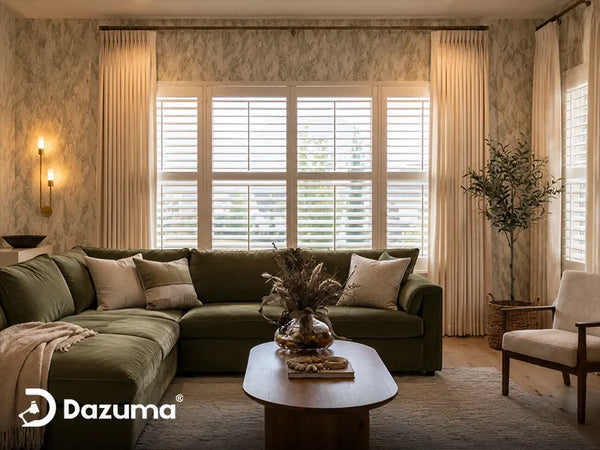

Who This Is For: This guide is for homeowners who like the warmth and architectural look of wall sconces but worry that adding them to a living room will make the walls feel crowded. If you already have artwork, a television, windows, shelving, a fireplace, or decorative wall treatments competing for attention, the goal is not to squeeze in more decoration. It is to use sconces to create calm, depth, and better evening light.
Quick Answer
To use wall sconces in a living room without making the walls feel busy, treat them as part of the architecture rather than extra decor. Choose one or two walls that actually need light, keep generous empty space around the fixtures, and repeat a clear idea instead of filling every available surface.
One pair beside a fireplace or artwork may be enough. One sculptural sconce near a reading corner may be enough. If the room already has a statement chandelier, a large television, bold artwork, and built-in shelving, the wall lights should usually become quieter rather than more decorative.
Before shopping, decide what the wall needs to do. Then browse Wall Sconces with that job in mind. Planning by wall first is one of the easiest ways to avoid overdecorating.

Why Sconces Can Make Walls Feel Busy
The problem is usually not the sconces themselves. The wall already has too many jobs. A living-room wall may hold art, furniture, a television, speakers, shelves, switches, curtains, trim, and decorative texture. Adding another strong object can be the element that makes the eye stop resting.
I often see this during remodels because every choice was made separately. The homeowner likes the artwork, likes the floating shelves, likes the wall paneling, and likes the sconces. Each item is attractive. Together, they compete.
The solution is to choose a lead element. If the artwork is bold, keep the sconces simple. If the sconces are sculptural, reduce nearby frames and accessories. If a fireplace already has strong stone texture, use quieter light rather than another ornate object.

Ask What the Wall Is Supposed to Be
A television wall, gallery wall, fireplace wall, and reading wall have different priorities. Once you name the wall's main job, it becomes much easier to decide whether a sconce belongs there.
Give Each Wall a Visual Budget
Think of every wall as having a visual budget. Large artwork spends some of it. So do stone, millwork, shelves, a dark paint color, and a sculptural light. When too many elements are equally strong, the wall feels crowded even when each individual object is beautiful.
A well-chosen sconce can actually simplify a room. It may replace a table lamp and free the side table. A pair can give one large artwork enough structure that you no longer need a gallery of smaller frames. Indirect wall light can reduce the need for several decorative lamps around the perimeter.
Before adding a sconce, ask what it allows you to remove or simplify. If the answer is “nothing,” make sure the wall truly needs another feature.
One Strong Lighting Wall Is Often Enough
In many living rooms, one primary wall can carry the architectural lighting. The fireplace wall might have sconces while the sofa wall holds art without lighting. Or the sofa wall may use long linear sconces while the television wall remains almost bare. This hierarchy is especially useful in open-concept homes where the living room already competes visually with the kitchen and dining area.
Where Sconces Work Best
| Living Room Area | Sconce Strategy | How to Keep It Calm |
|---|---|---|
| Fireplace wall | One matching pair | Keep mantel decor restrained |
| Large sofa wall | One or two slim sconces | Use fewer, larger art pieces |
| Reading corner | One sculptural sconce | Do not add a second fixture without a purpose |
| TV wall | Soft side or indirect light | Avoid glare and screen reflections |
| Narrow wall | One vertical sconce | Let the fixture replace artwork |
If a wall is already complete but the seating area still needs light, a Floor Lamp may be the cleaner choice. A movable light is better than hardwiring another decorative element into a wall that does not need it.
Use One Sculptural Sconce as a Focal Point
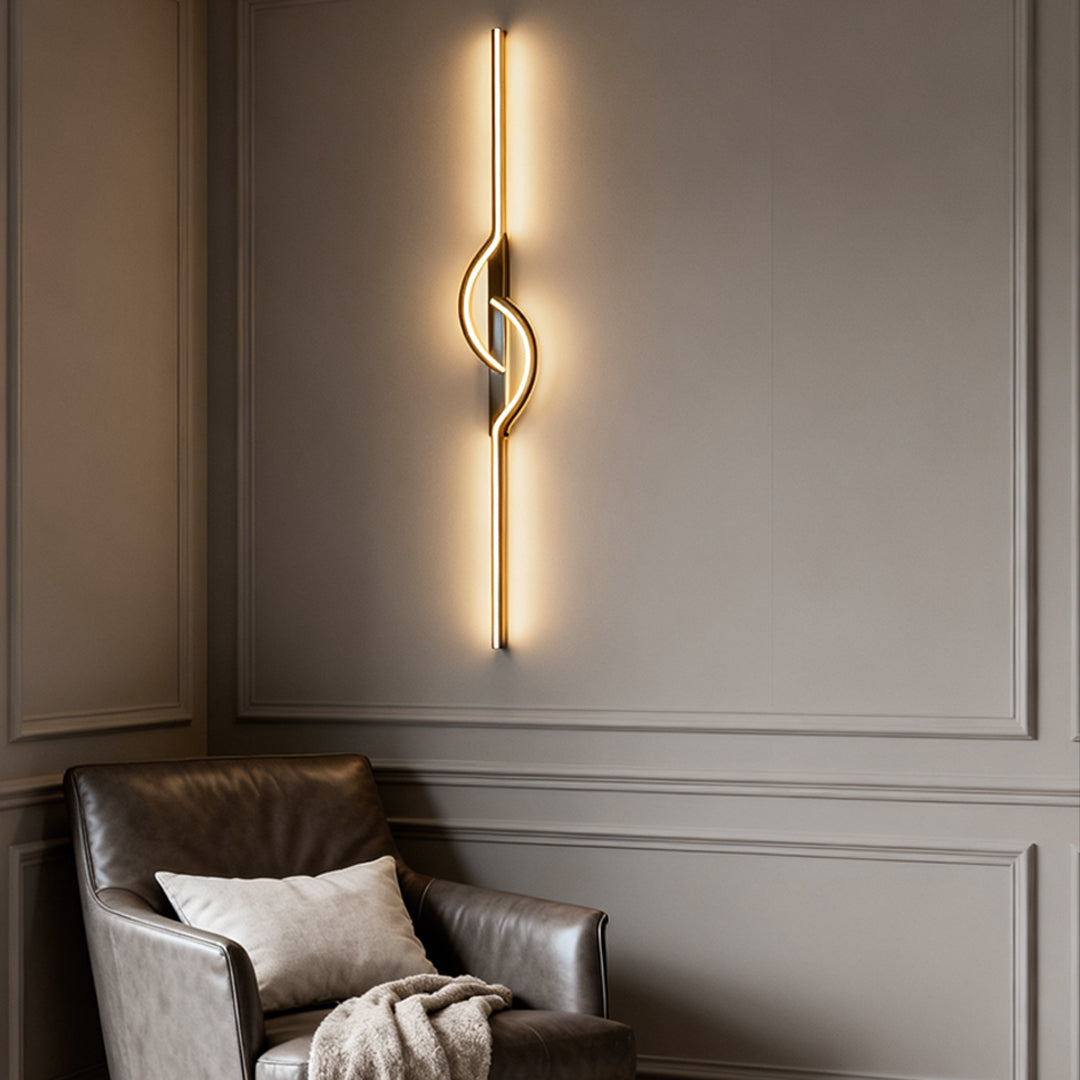
A sculptural sconce works best when you let the fixture itself behave like wall art. The Modern Curved Wall Sconce is useful for this approach because the long wave shape creates movement while the black aluminum body and slim silicone diffuser keep the palette controlled.
I would use one beside a reading chair or on a narrow feature wall. On a larger wall, the left- and right-leaning versions can form a mirrored composition. I would not place them beside a dense gallery arrangement, decorative shelving, and strong paneling all at once. The fixture already has enough visual movement.

Best for One Controlled Feature Wall
Modern Curved Wall Sconce Minimalist Black Aluminum Light
Price: $78.99
Best for a reading corner, narrow feature wall, or quiet symmetrical composition where the light itself provides the decorative movement.
- Four height options make it easier to match the fixture to the wall instead of filling space with multiple small lights.
- Left- and right-leaning versions can create one mirrored idea rather than two unrelated focal points.
- The integrated LED is hardwired at 110V; the three color-temperature setting changes color only, not brightness.
Let the Shape Replace Extra Art
If a sconce already has a strong curve, leave empty wall around it. Negative space makes the fixture easier to read and usually looks more intentional than adding another picture just because the wall still has room.

Use Linear Sconces for Quiet Repetition
Linear sconces solve a different problem. They can behave more like architectural lines than decorative objects. That makes them useful on larger sofa walls, fireplace walls, and simple paneling where you want rhythm without another complicated shape.
The Modern Linear Wall Sconce comes in five lengths and can be purchased as one fixture or in multi-piece sets. The important lesson is not to use more simply because more are available. Two longer fixtures aligned carefully with a sofa or artwork often look calmer than four small lights scattered across the wall.
Best for Calm Repetition on Larger Walls
Modern Linear Wall Sconce Creative Black Aluminum Lamp
Price: $100.99
Best for a sofa wall, feature wall, or symmetrical arrangement where longer lines can organize the composition rather than add visual clutter.
- Five lengths let you use fewer, better-scaled fixtures rather than filling the wall with many small lights.
- The integrated LED is offered in warm-white, three-step, and dimmable configurations.
- The product page lists hardwired 110V installation and living-room use.
If two longer sconces give the wall enough structure, stop there. The empty space between the fixtures is part of the composition. Filling every gap with small pictures or shelves usually weakens the clean architectural effect.
Art, TV, and Fireplace Walls
Beside Artwork
Choose whether the art or the light is the focal point. Bold or detailed artwork usually benefits from simple sconces. Sculptural sconces work better with one calmer piece of art or no artwork at all. Keep enough space between the fixtures and frame so nothing looks squeezed.
Near a Television
A television is already visually strong during the day and bright at night. Avoid intense beams or highly decorative sconces directly beside the screen. Soft side light can reduce the contrast between the screen and a dark room, but glare and reflection should stay out of the viewing area.
Around a Fireplace
A fireplace naturally creates a center, so a pair of sconces can work well. If the fireplace has dramatic stone, tile, or paneling, use simpler fixtures and lighter mantel styling. The sconces should frame the focal point, not compete with it.

Frame the Focal Point
A good pair of sconces makes the fireplace or artwork feel more important. If the first thing you notice is a collection of unrelated objects, the wall needs editing.
Spacing and Scale Without Guesswork
There is no single spacing number that works for every living-room sconce. Start with the object the fixtures are supporting. For a sofa wall, measure the sofa and artwork first. Beside a fireplace, use the fireplace opening, mantel, and surrounding architecture. On a narrow wall, one appropriately scaled fixture often looks better than two small ones.
The guide How to Light a Living Room the Right Way is useful if you want to think about sconces as one layer of the whole room rather than a separate decorating project.
Mock Up the Fixture Before Wiring
Use painter's tape or paper to mark the actual fixture size. Then look from the doorway and sit on the sofa. This quickly shows whether the lights are too close together, whether they crowd the artwork, and whether the wall has gained too many vertical lines.
Remember Projection
Width and height are not the only dimensions that affect visual clutter. A deep shade or swing arm projects into the room, while a shallow linear fixture stays closer to the wall. In tighter living rooms, that physical depth can make a noticeable difference.
Common Mistakes
Putting Sconces on Every Available Wall
Repeated wall lights around the whole perimeter can make a living room feel more like a corridor or hospitality space. Choose the walls that actually benefit from fixed lighting and let the others remain quiet.
Mixing Too Many Shapes
A curved sconce, ornate mirror, gallery wall, textured paneling, and floating shelves can all be attractive, but they do not all need to share one surface. Choose one or two strong ideas.
Using Many Small Fixtures on a Large Wall
Scale up before you multiply. One or two longer sconces often solve a large wall more calmly than a row of small fixtures.
Ignoring the Daytime View
Sconces are visible when they are off. Judge the backplates, black lines, shadows, and overall composition during the day. If the wall already feels full at noon, lighting it at night will not make it simpler.
Using Wall Sconces as the Only Living-Room Light
Wall lighting is usually most comfortable as one layer. A Table Lamp near the sofa can handle reading while the sconces remain softer in the background. Dividing the jobs lets every fixture stay less visually aggressive.
Do Not Highlight Everything
Pick one or two areas that deserve emphasis and let the rest stay quieter. Shadow is not a lighting failure. It is what gives illuminated walls, artwork, and seating areas depth.

For more examples of elongated fixtures and how they change wall proportions, see Long Wall Light Ideas, Types and Inspirations.
Final Advice
The best way to use wall sconces in a living room without making the walls feel busy is to stop treating them like accessories. Give each fixture a clear job, leave empty space around it, and let only one or two walls carry the strongest lighting idea.
The Modern Curved Wall Sconce works well when you want the fixture itself to become a controlled sculptural feature, especially as one light or a mirrored left-right pair. The Modern Linear Wall Sconce is better when you want quieter repetition and longer architectural lines on a larger sofa or feature wall.
Most importantly, do not be afraid of blank wall space. A calm living room is not one where every surface has been solved with another object. It is one where the important things have room to be seen. Wall sconces can create that calm beautifully—but only when you know when to stop.