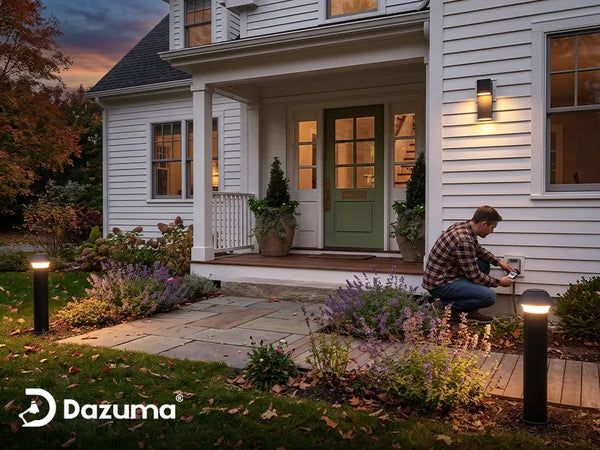

This guide is for homeowners who are planning front porch lighting, driveway columns, garden pillars, or a full exterior refresh and are wondering whether outdoor pillar lights must match the wall lights exactly. The honest answer is no: they do not need to be identical. But they should look related enough that the outside of your home feels intentional after dark.

Quick Answer: They Should Coordinate, Not Necessarily Match
Outdoor pillar lights do not have to be the exact same design as your outdoor wall lights. In fact, using the same fixture shape everywhere can sometimes make the exterior look flat, especially if your home has a front door, garage, fence posts, driveway columns, and patio walls all visible from the street. What matters more is that the lights share a clear design language.
A good pairing usually repeats at least two of these elements: finish, color temperature, shape, material, scale, or light direction. For example, black square pillar lights can pair beautifully with slim black linear wall lights because both feel modern, architectural, and restrained. They are not identical, but the eye understands them as part of the same exterior plan.
The safest rule is this: match the mood, not the model number. If your Outdoor Wall Lighting is sleek, low-glare, and modern, choose pillar lights with a similar clean finish and controlled beam. If your wall lights are traditional lanterns, choose post or pillar fixtures with a lantern profile. If your wall lights are warm and subtle, do not place cold, bright pillar lights nearby.
Matching vs Coordinating: What Is The Difference?
Matching means the lights are from the same family or have nearly identical shapes. This can work well on symmetrical homes where the front door, garage sconces, and gate posts all follow one strong style. Matching also makes shopping easier because you do not have to judge every finish and proportion separately.
Coordinating is more flexible. It lets you use different fixture types while keeping the exterior visually calm. A wall light might be narrow and vertical because it sits beside the garage door. A pillar light may need to be wider and lower because it sits on a masonry column. Those are different jobs. They should not always be forced into the exact same shape.
This is especially important when comparing Pillar Lights with wall-mounted fixtures. A wall light is read against a vertical surface. A pillar light is read as an object sitting on top of a post, pier, fence column, or deck corner. The viewing angle, glare risk, and scale are different. That is why a coordinated pairing often looks more mature than a perfectly matched one.

Coordinated Fixtures Feel More Designed
When the finish and color temperature are shared, different shapes can still feel related. This gives you more freedom to choose the right fixture for each location instead of forcing a wall sconce to behave like a post light or a post light to behave like a wall fixture.
Four Design Rules That Make Exterior Lights Work Together
Think of your exterior lighting like hardware for the outside of your home. Door handles, house numbers, garage hardware, railings, and lights do not all have to be identical, but they need a shared direction. These four rules are the easiest way to keep pillar lights and wall lights from fighting each other.
1. Keep The Finish Family Consistent
Black with black is the easiest modern pairing. It works with white stucco, brick, stone, wood siding, charcoal doors, and many garage colors. Bronze can also work beautifully, especially on warmer exteriors, but avoid mixing matte black, glossy black, oil-rubbed bronze, and polished chrome all in one small entry zone. Too many finishes make the home look updated in pieces rather than planned as a whole.
2. Match Color Temperature Before You Match Shape
Color temperature is one of the most overlooked exterior details. A warm 3000K pillar light next to a cool 6000K wall light can make the entry feel visually split. The fixtures may both be black and modern, but the light itself will tell a different story. For most residential entries, warm white feels more welcoming. Cool white can work for commercial facades, security-heavy gates, or very crisp contemporary homes, but it should be used intentionally.
3. Repeat The Line Language
If your wall lights are slim and linear, choose pillar lights with a clean square, rectangular, or flat cube profile. If your wall lights are curved lanterns, choose pillar or post lights with a softer lantern shape. This is where Modern Outdoor Wall Lighting can pair well with architectural pillar lights: both are simple, geometric, and less decorative.
4. Watch The Beam Direction
Wall lights often wash up, down, or both. Pillar lights usually cast light downward or outward around a post. If your wall light throws a bright vertical beam and your pillar light glows softly downward, that can still work. The problem starts when one fixture is decorative and subtle while the other blasts light across the driveway. If glare is a concern near windows, seating areas, or a neighbor's property, the guide How to Avoid Glare from Outdoor Wall Lights is worth reading before you finalize placement.
Best Pairings For Different Home Styles
The right relationship between pillar lights and wall lights depends on the architecture. A modern box-style home can handle sharper geometric fixtures. A craftsman porch usually needs warmer, more substantial forms. A Mediterranean or transitional home may look best when the fixtures share finish and warmth but not necessarily identical shape.
Modern Homes: Use Clean Geometry
Modern exteriors usually look strongest when the fixtures are simple. Pair slim linear wall lights with square pillar lights, cube post lights, or low-profile pier mount lanterns. The result feels architectural rather than decorative, which is ideal for black-framed windows, flat rooflines, smooth stucco, and minimalist garage doors.

Traditional Homes: Use A Shared Lantern Feeling
Traditional homes do not always need old-fashioned fixtures, but they usually benefit from a little more visual weight. If your wall lights look like outdoor lanterns, use pillar lights or pier mount fixtures that also feel lantern-like. The silhouette can be simpler, but the overall language should still feel familiar and grounded.
Farmhouse And Transitional Homes: Mix Warmth With Structure
Modern farmhouse exteriors often combine black metal, white siding, wood doors, and stone columns. This style gives you room to pair black wall sconces with black pillar lights, as long as the lights do not become too cold or commercial. Warm bulbs, matte finishes, and simple silhouettes usually work best.
Coastal Homes: Keep It Light, Warm, And Low-Glare
For coastal homes, the material and finish matter as much as the shape. Salt air, moisture, and wind can be tough on exterior fixtures. Look for outdoor-rated construction and avoid harsh glare near porches or decks. A simple black or dark bronze fixture can still work, but the light should feel soft and relaxed.
Pillar Lights And Wall Lights Comparison Table
Use this table as a quick planning tool when you are deciding whether to match, coordinate, or contrast your exterior fixtures.
| Design Question | Best Choice | Why It Works |
|---|---|---|
| Should the finish match? | Usually yes | Matching black, bronze, or dark metal finishes creates instant unity from the street. |
| Should the shape match? | Not always | Wall lights and pillar lights serve different mounting locations, so coordinated shapes often look better. |
| Should the color temperature match? | Yes | Warm and cool lights mixed together can make the exterior feel uneven at night. |
| Should brightness match? | Coordinate by zone | Driveway columns may need more visibility, while entry wall lights should feel welcoming and low-glare. |
| Best modern pairing | Linear wall light + square pillar light | Both forms are clean, geometric, and architectural without being too decorative. |
Recommended Outdoor Light Pairings
For a modern home, one of the easiest pairings is a slim black wall washer near the entry or garage and a square black pillar light on driveway columns, fence posts, or garden piers. The two fixtures do different jobs, but they speak the same visual language: black finish, geometric shape, outdoor durability, and controlled light.
For the wall-mounted side of the pairing, a slim linear fixture works well when you want the wall itself to become part of the lighting effect. This is useful around front doors, garages, gate walls, corridors, and address signs, where the light should help define the architecture without sticking out too far.

Best For Modern Wall Lighting
Exterior Porch Light Fixtures Modern Waterproof Door Number LED Light
Price: $62.99
Best for front doors, garage walls, side gates, courtyards, corridors, and house number lighting when you want a clean black fixture that can coordinate with modern pillar lights.
- Available in 7.9'', 11.8'', 19.7'', and 31.5'' lengths for different wall widths.
- Warm white and cool white options help you match the mood of nearby exterior fixtures.
- The slim black bar shape pairs naturally with square pillar lights and modern facade details.
Once the wall light is established, the pillar light should carry the same feeling into the landscape. A square black fixture is a strong choice for modern homes because it repeats the clean geometry of black window frames, metal gates, railings, and minimalist wall lights without looking too busy.

Use Pillar Lights To Extend The Entry Story
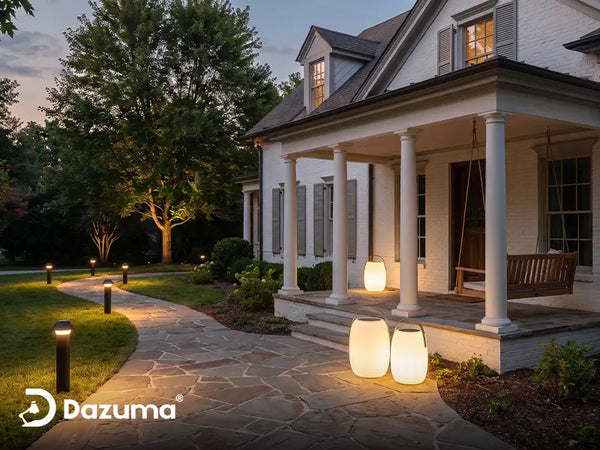
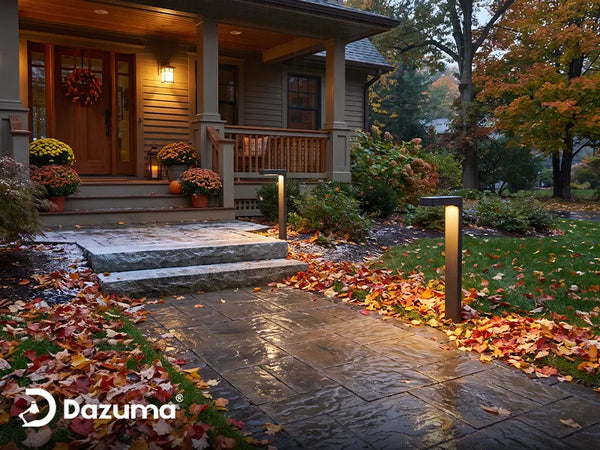
Wall lights make the house feel welcoming. Pillar lights guide the approach. When both use the same finish and similar color temperature, the home feels connected from the driveway to the front door.

Best For Driveway And Garden Pillars
Square Solar Deck Lights Industrial Black LED Outdoor Landscape Light
Price: $329.99
Best for modern fence posts, driveway columns, deck corners, terrace edges, garden piers, and outdoor pillars where you want a bold square fixture that still feels clean and architectural.
- Five size options help match narrow fence posts, wide masonry columns, and larger pier platforms.
- The black cube design coordinates easily with linear outdoor wall lights and modern exterior hardware.
- Tempered glass shade and outdoor IP65 rating support long-term exterior use.
This kind of pairing works especially well when you are shopping across Outdoor Lighting categories instead of choosing one fixture in isolation. A wall light may solve the entry. A pillar light may solve the driveway. A path light may solve the walkway. The final result depends on how all of them work together.
Common Mistakes To Avoid
The biggest mistake is thinking every fixture needs to be a perfect match. That often leads to awkward sizing. A small wall sconce shape may look undersized on a wide stone column, while a large pillar fixture may look bulky if copied onto a narrow porch wall. Let each location determine the scale.
Mistake 1: Mixing Too Many Styles
A farmhouse lantern at the porch, a futuristic wall washer by the garage, and a solar mushroom light on the column will not feel cohesive. You can mix fixture types, but the design direction should be clear. For most homes, choose either modern, traditional, transitional, or rustic as the main direction.
Mistake 2: Ignoring Mounting Height And Viewing Angle
Pillar lights sit lower than many wall lights, which means people may look directly at them from a driveway or walkway. Choose fixtures that control glare and direct light downward where possible. Wall lights should usually frame the entry or garage without shining into eyes, windows, or neighboring homes.
Mistake 3: Using Brightness As Decoration
More light does not always mean a better-looking home. A softly lit pillar can feel expensive and calm, while an over-bright fixture can make the yard look harsh. The goal is not to flood the whole exterior. The goal is to reveal the route, the entrance, and the architecture. For driveway-specific comparisons, Bollard vs Post Lights: Which Is Better for Driveways? can help you decide whether pillar, post, or ground-level fixtures make more sense.
Mistake 4: Forgetting Daytime Appearance
Outdoor lights are visible during the day too. A black linear wall light can look like a clean architectural detail, while a black square pillar light can echo gate hardware, railings, or window frames. That daytime relationship is just as important as the nighttime glow.
Test The View From The Street
Before choosing final sizes, step back to the sidewalk or driveway entrance. The wall lights, pillar lights, house numbers, front door, and landscaping should read as one composition. If one fixture grabs all the attention, it may be too bright, too large, or too different in style.

Final Advice
So, should outdoor pillar lights match your wall lights? They should match in intention, not necessarily in exact design. The exterior will look better when the fixtures share finish, warmth, and style direction while still being chosen for their specific jobs.
For a modern home, black linear wall lights and square black pillar lights are one of the cleanest combinations. The wall light sharpens the facade. The pillar light marks the approach. Together, they create a layered exterior that feels safe, polished, and quietly upscale.
Before you buy, stand outside at night and think through the journey: street, driveway, gate, walkway, porch, front door. Use wall lights for vertical surfaces, pillar lights for columns and boundaries, and Post Cap Lights or related post fixtures where smaller posts need a finished top. When each fixture has a clear role and a shared visual language, your home will feel more welcoming before guests even reach the door.