
Who This Is For: This guide is for homeowners who are early in an outdoor renovation and are unsure whether the convenience of solar lights is worth possible performance limits—or whether hardwired lighting is worth the added planning, wiring, and installation cost.
Why This Choice Feels More Complicated Than It Should
Solar lights seem like the easy answer: no trenching, transformer, electrician, or new circuit. Hardwired lights promise steadier output and better control, but require more planning and installation cost. The problem is comparing both systems as if they perform the same job. A flower-bed marker and a stair light solve very different problems.
The better question is not, “Which technology is best?” It is, “How important is dependable light in this location?” When a light helps someone see a lock, step, driveway edge, gate, or approaching visitor, reliability matters more. When the light is creating a soft garden outline or temporary seasonal atmosphere, flexibility may matter more.

Quick Answer: Solar or Hardwired Outdoor Lights?
Choose solar outdoor lights when installation flexibility, no new wiring, and easy repositioning are more important than perfectly consistent brightness. They are practical for sunny garden beds, decorative path markers, fence accents, and areas far from electrical service.
Choose hardwired outdoor lights when the light supports safety, security, regular entertaining, or the main architecture of the home. They are usually the stronger choice for front doors, exterior stairs, driveways, garage areas, large patios, retaining walls, and locations that must remain reliably illuminated through long nights or poor weather.
Choose both when you want a realistic balance. Many homes benefit from hardwired lighting at critical circulation and entry points, then solar fixtures in planting beds or less important areas where wiring would be disruptive.
How Solar and Hardwired Outdoor Lighting Work
Solar Outdoor Lights
A solar fixture uses a photovoltaic panel to convert sunlight into electricity and stores that energy in a rechargeable battery. A light sensor typically turns the LED on after dark. Performance depends on the available sunlight, panel position, battery condition, temperature, dirt, snow, shade, and how long the fixture is expected to operate each night.
The same solar light may work well in an open yard and disappoint beneath trees beside a north-facing home. Study the location throughout the day rather than assuming “outdoors” means “sunny.”
Hardwired Outdoor Lights
Hardwired fixtures receive electricity through permanent wiring. Depending on the system, they may operate at household line voltage or through a low-voltage transformer. They can be controlled by wall switches, photocells, timers, motion sensors, or smart controls.
The main advantage is predictable energy availability. A cloudy week does not reduce the stored charge. The tradeoff is installation: wiring routes, junction boxes, transformers, voltage drop, local code, weather protection, and future access all need to be planned correctly.

Check the Site Before Comparing Fixtures
A solar light is only as reliable as its charging location. Watch the yard in the morning, at midday, and in late afternoon—especially when nearby trees are fully leafed out.
Solar vs. Hardwired Outdoor Lights: Practical Comparison
| Decision Factor | Solar Outdoor Lights | Hardwired Outdoor Lights |
|---|---|---|
| Installation | Usually quick, with no new electrical wiring | Requires planned wiring and often professional installation |
| Nightly Reliability | Varies with sun, shade, weather, battery, and season | Consistent when the electrical system is properly installed and powered |
| Brightness and Coverage | Often better for marker, accent, and localized decorative light | Better suited to higher output and broader task coverage |
| Controls | Commonly automatic dusk-to-dawn; options vary by product | Supports switches, timers, photocells, motion sensors, zones, and smart controls |
| Maintenance | Clean panels, manage shade, and eventually replace batteries or fixtures | Inspect fixtures and connections; repair wiring or drivers when needed |
| Best Use | Sunny decorative areas, movable accents, remote garden locations | Entries, steps, driveways, patios, security zones, architectural lighting |
Neither system is automatically cheaper over its full life. Solar lowers the installation barrier, but batteries and weak fixtures may need replacement. Hardwired lighting costs more upfront but can provide dependable long-term service.
When Solar Outdoor Lights Are the Better Choice
You Are Not Ready to Dig or Run Wiring
Solar is valuable when the landscaping is already complete, the patio is finished, or you are renting and cannot make permanent changes. It allows you to test how light affects the yard before committing to a full electrical plan.
The Area Receives Reliable Direct Sun
An open garden edge, sunny fence line, or exposed path can support better charging than a covered porch or tree-lined side yard. The panel must receive useful light, not merely a view of the sky.
The Light Is Decorative Rather Than Critical
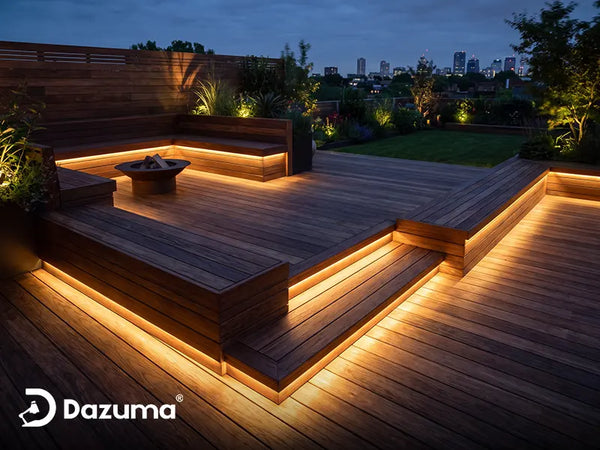
Solar fixtures are well suited to outlining a flower bed, adding a soft glow around a fire-pit area, or marking the direction of a path that is already visible from nearby house lighting.
You Want to Move the Lights
As plants grow and furniture changes, solar lights can be repositioned without altering buried cable. This is especially useful during the first year of landscaping.
The Outdoor Solar Lights collection is useful for comparing wall, path, lantern, and landscape formats. For walkways, review Solar Path Lights while remembering that marker light and task light are not the same thing.
Solar Works Best Where Failure Is Inconvenient, Not Dangerous
A dim flower-bed light is disappointing. A dark stair tread can cause a fall. Match the power source to the consequence of reduced light.

When Hardwired Outdoor Lights Are the Better Choice
The Light Supports Safe Movement
Use dependable permanent lighting where people navigate elevation changes, unlock doors, reverse vehicles, carry groceries, or walk beside a pool or retaining wall. You should not have to wonder whether yesterday provided enough sun to illuminate tonight’s steps.
The Location Is Shaded or Covered
North-facing entries, deep porches, tree canopies, and narrow side yards often provide poor solar charging conditions. A separate remote panel may solve the problem for some products, but permanent wiring is usually more predictable when the location matters every night.
You Need Consistent Brightness and Beam Control
Architectural wall washing, facade lighting, larger patios, driveway coverage, and outdoor kitchens generally benefit from predictable output and carefully selected optics. Hardwired systems also make it easier to combine different fixtures into a coordinated lighting plan.
You Want Multiple Control Zones
A hardwired plan can separate entry, patio, path, accent, and security zones, keeping soft evening lights on while motion fixtures cover the gate or garage.
You Are Already Remodeling
If walls are open, paving is being replaced, or irrigation trenches are already planned, this may be the least disruptive time to install conduit, cable, boxes, and transformers. Waiting until every surface is complete often increases labor and restoration cost.
Use the broader Outdoor Lighting collection to compare wall, ceiling, path, bollard, spotlight, and step-light categories by task rather than selecting one fixture style for the whole property.

Which System Fits These Common Homeowner Situations?
“I Only Want a Softer Walkway at Night”
If the path is flat, receives good sun, and is already visible from the porch or house, solar markers may be enough. If the path includes steps, uneven pavers, sharp turns, or a drop beside the walkway, use hardwired lights for dependable coverage.
“My Front Door Is Dark, but I Do Not Want an Electrician”
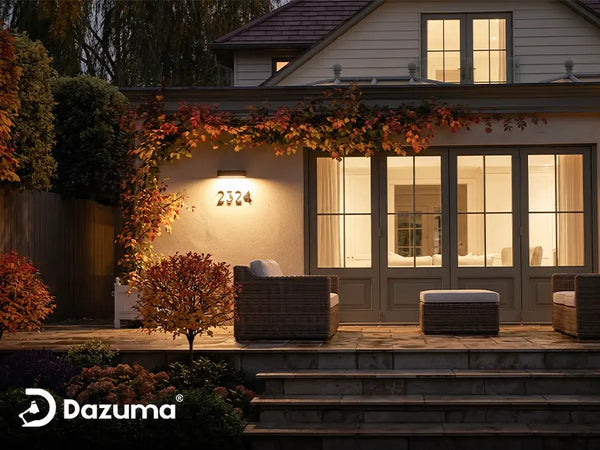
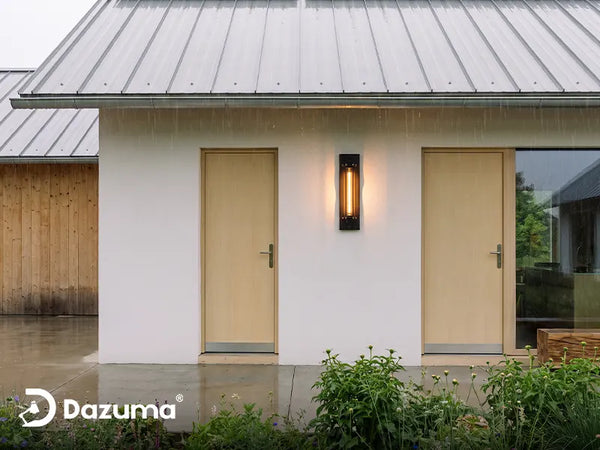
This is where convenience can conflict with the real need. A solar wall light may work on a sunny, uncovered facade, but a shaded porch is one of the hardest charging locations. Because entry light supports keys, deliveries, cameras, and visitor identification, permanent power is usually worth considering.
“The Back Fence Is Far From the House”
Solar may be practical for decorative fence accents or occasional orientation. Running cable across an established yard may not be justified unless the area supports a gate, alley access, seating zone, or security concern that needs consistent illumination.
“I Live Where Winters Are Cloudy”
Shorter days, lower solar angles, cloud cover, snow, and cold temperatures can reduce real-world solar performance. Select products designed for the climate, keep panels clear, and avoid relying exclusively on solar for essential circulation. The detailed guide Do Solar Lights Work in Winter for Outdoor Use? explains the seasonal tradeoffs.
“My Solar Lights Look Good for a Few Months, Then Fade”
The issue may be panel dirt, new plant shade, water intrusion, battery aging, or a product that was never sized for the requested runtime. Before replacing the entire system, work through the causes in Why Do Solar Garden Lights Not Last Long?.

Judge Solar Performance in the Difficult Season
A fixture that works perfectly during long summer days may struggle when the nights are longest. Plan for the winter condition, not only the day you install it.
A Realistic Example: The House That Needed Both
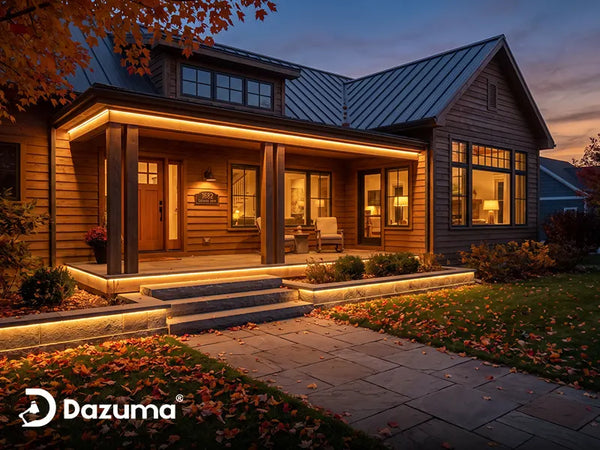
Consider a family renovating a front yard with a covered entry, three walkway steps, a sunny planting bed, and a mature maple tree near the driveway. Their original plan was to use solar lights everywhere because they wanted to avoid wiring.
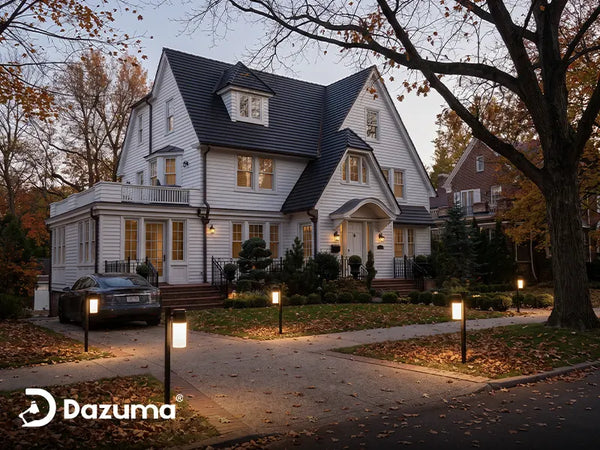
During a nighttime walkthrough, the priorities became clearer. The steps needed dependable edge visibility. The covered entry needed enough light for the lock and video doorbell. The maple shaded part of the driveway for much of the day, making solar charging uncertain. Those locations moved to a hardwired plan.
The open planting bed still received strong sun and did not affect safe movement. Solar lights remained a sensible choice there. They could be moved as plants matured, and occasional lower output would not create a dangerous condition.
The final result was not an expensive all-or-nothing system. Permanent lighting handled the jobs that had to work. Solar handled the decorative layer where flexibility was more valuable than certainty.
Why a Hybrid Outdoor Lighting Plan Often Works Best
Mixing systems does not make a yard inconsistent. Color temperature, fixture finish, brightness, beam direction, and spacing create the visual relationship—not the power source.
Use Hardwired Lighting for the Backbone
- Front and side doors
- Exterior stairs and level changes
- Driveway and garage circulation
- Frequently used patios and outdoor kitchens
- Security and camera-supporting locations
Use Solar Lighting for the Flexible Layer
- Sunny planting beds
- Decorative fence and garden accents
- Temporary furniture layouts
- Remote areas where permanent wiring is not justified
- Seasonal or experimental lighting positions
Try to keep the color temperature reasonably consistent. A row of cool blue solar lights beside warm hardwired sconces can look disconnected even when each fixture works correctly. Warm white often creates a more comfortable residential result, though the best choice should still suit the home’s materials.
Coordinate the Light, Not the Power Source
Matching color temperature, glare control, brightness, and spacing will make solar and hardwired fixtures feel like one plan.

Common Mistakes to Avoid
Choosing Solar Only to Avoid Installation Cost
Low upfront cost is not a good bargain when the light fails to perform in a location you use every night. Start with the job, then choose the system.
Assuming Every Solar Product Has Similar Output
Panel size, battery capacity, LED efficiency, optics, runtime settings, and build quality vary widely. Compare the actual intended use instead of shopping by appearance alone.
Installing Solar Panels in Shade
Tree canopy, fencing, roof overhangs, and even a newly grown shrub can reduce charging. Recheck the location as the seasons and landscape change.
Using Extension Cords as Permanent Outdoor Wiring
Extension cords are temporary equipment, not a substitute for permanent wiring. Outdoor electrical installations need suitable weather protection, connections, and safety devices.
Making Every Fixture Equally Bright
A bright yard is not automatically a comfortable yard. Entries and steps may need clear task light, while gardens usually benefit from softer accents. Establish a visual hierarchy.
Forgetting Maintenance Access
Solar panels need cleaning and batteries age. Hardwired fixtures, transformers, drivers, and junctions also need access. Do not bury or permanently conceal service points.
Decision Checklist Before You Buy
- Identify whether the location is decorative, task-oriented, or safety-critical.
- Observe direct sun and shade throughout the day.
- Consider winter daylight, snow, leaves, dust, and mature plant growth.
- Decide how consistent the brightness must be every night.
- Measure the required beam coverage, not only the fixture spacing.
- Compare installation cost with battery and replacement maintenance.
- Plan switches, timers, photocells, motion sensors, or smart zones.
- Match fixture ratings to rain, irrigation, and actual exposure.
- Use GFCI protection and weather-resistant electrical components where required.
- Have permanent hardwired work designed or reviewed by a qualified electrician.
Final Advice: Choose Reliability Where It Matters
Solar lights are valuable because they are flexible, wire-free, and easy to test. Hardwired lighting provides predictable power, stronger control, and dependable performance where it matters most.
Start by marking every place where reduced light could create a real problem: doors, steps, driveway edges, gates, and frequently used entertaining areas. Give those locations the most reliable power source your project allows. Then use solar lighting where lower output or an occasional short night would be an inconvenience rather than a safety issue.
For many homes, the smartest answer is a layered system: permanent lighting for the backbone and solar lighting for the flexible decorative layer. That approach respects both the budget and the way the outdoor space is actually used.