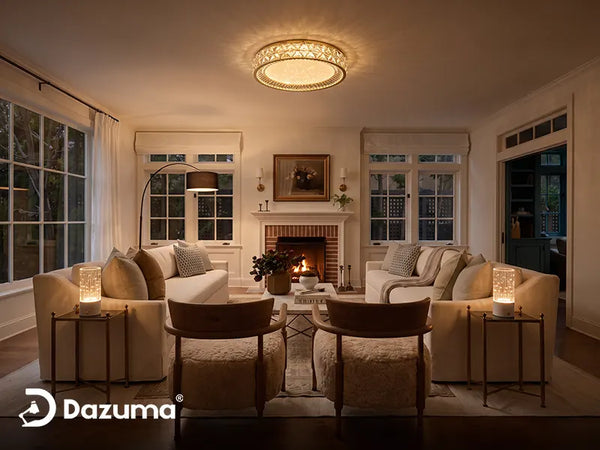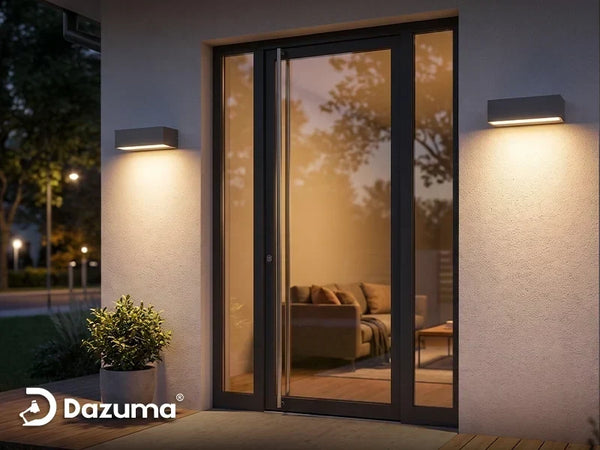

Who This Is For: This guide is for homeowners planning outdoor stair lights for a front entry, deck, garden path, poolside steps, courtyard, or backyard renovation and wondering whether warm white, soft white, neutral white, or cool white will look and feel best at night.

Quick Answer: What Color Temperature Is Best For Outdoor Stair Lights?
For most homes, the best color temperature for outdoor stair lights is 2700K to 3000K warm white. It is warm enough to make brick, stone, wood, stucco, and landscaping feel welcoming, but still clear enough to show step edges safely. If you want one simple recommendation for residential stairs, choose 3000K. It looks slightly cleaner than 2700K but does not feel as sharp as 4000K.
That said, the right answer depends on where the stairs are, what material surrounds them, and how the rest of your exterior lighting already looks. A front porch with traditional lanterns may look best closer to 2700K. A minimalist concrete courtyard may look more balanced at 3000K. A service stair, side yard, or commercial-style exterior may tolerate 4000K, but many homeowners find it too crisp for relaxed outdoor living areas.
The goal is not to make the stairs bright in a showroom way. The goal is to make every tread, riser, landing, and turn easy to understand. For broader exterior planning, coordinate stair lighting with the rest of your Outdoor Lighting so the color temperature feels intentional from the driveway to the front door.
Why Color Temperature Matters More On Stairs Than People Expect
Outdoor stairs are small surfaces with a big job. They need to guide feet, show elevation changes, and help people move comfortably without forcing them to stare down at every step. Color temperature affects that experience because it changes how clearly the eye reads contrast between the tread, riser, wall, railing, and shadows.
Warm light can make an outdoor stairway feel calm and residential. It softens hardscape materials and keeps the eye from feeling strained. Cooler light can make edges appear sharper, but it may also make the same stairway feel more utilitarian. On a cozy backyard deck or front entry, that can make the space feel less inviting than intended.

Stair Lights Are Mostly About Orientation
A stair light should tell the eye where the next surface begins. It should not become the brightest object in the yard. If the fixture is too cool or too intense, people may see the source first and the step second, which is the opposite of good stair lighting.
There is also an emotional side. A front stairway is one of the first nighttime impressions of the home. A back deck stair often sits near dining, lounging, or pool areas. In those places, people usually respond better to a warm, low, shielded glow than to a bright white beam. The light should help the home feel lived-in, not like a parking lot.
If you already use warm porch sconces, warm path lights, or low landscape lighting, stair lights should usually stay in the same family. For path transitions leading to steps, Path Lights and stair lights should not fight each other. A 2700K path light next to a 5000K stair light can make the entry feel patched together, even if each fixture looks fine on its own.
2700K Vs 3000K Vs 4000K Outdoor Stair Lights
Most residential outdoor stair lights fall into three useful ranges: 2700K, 3000K, and 4000K. The numbers describe color appearance, not brightness. A 3W 3000K step light can be gentler than a high-output 2700K fixture if it is better shielded. Still, color temperature gives you the emotional direction of the light.
| Color Temperature | How It Feels | Best Use | Watch Out For |
|---|---|---|---|
| 2700K Warm White | Soft, cozy, traditional | Front porches, wood decks, brick steps, classic homes | May feel too amber on gray concrete or very modern exteriors |
| 3000K Warm White | Warm but clean | Most residential stairs, decks, patios, courtyards, paths | Can look slightly crisp if surrounding lights are very amber |
| 4000K Neutral White | Clear, sharper, more functional | Side entries, service stairs, contemporary concrete spaces | Can feel cold near seating areas and landscaped entries |
In real homes, 3000K is often the safest middle ground. It keeps the stone, wood, and planting beds looking natural while giving enough visual clarity for steps. If you already have outdoor fixtures in the 2700K range, use 2700K or warm white step lights so the stair zone blends in. If your property has a sharper architectural style with gray pavers, black metal, and clean stucco walls, 3000K usually feels more current than 2700K.
If you are trying to decide between 2700K, 3000K, and 4000K across a full exterior plan, the older guide 2700K Vs 3000K Vs 4000K Outdoor Lighting is a useful reference point before you commit to a whole group of fixtures.
How Stair Materials Change The Color Temperature You See
The same bulb temperature can look different on different surfaces. This is why stair lighting should be tested against the actual material, not just chosen from a product photo. Concrete, brick, wood, stone, composite decking, and painted risers all reflect light in different ways.
Brick and warm stone usually look better with 2700K or 3000K because the light reinforces their natural red, beige, tan, or honey tones. Wood decks also tend to look comfortable under warm light, especially if the stairs connect to outdoor dining or seating. Gray concrete, black metal railings, and modern white stucco can handle 3000K well because it keeps the look clean without becoming icy.
Use The Surface As A Color Filter
A dark stone stair absorbs more light than a pale concrete stair. A glossy tile riser reflects more glare than rough brick. The fixture color temperature is only one part of the look; the surface decides how much warmth, brightness, and contrast you actually see.

Dark surfaces need special attention. Homeowners sometimes choose a cooler temperature because a black, charcoal, or slate stair seems too dim under warm light. That may help the edge read more clearly, but it can also make the stairway feel stark. Before going cooler, consider improving placement, adding one more low fixture, or choosing a better-shielded lens. Good light distribution often matters more than a cooler color.
For modern exteriors, nearby wall surfaces matter too. A stair light installed in a white stucco wall may look brighter and warmer than the same light installed in dark masonry. If your step lighting runs near a retaining wall or exterior facade, coordinate it with Outdoor Wall Lighting so the wall glow and tread lighting feel like one planned layer.
Placement, Beam Angle, And Glare Can Change The Result
Color temperature gets most of the attention, but placement determines whether stair lighting feels useful. A warm 3000K light can still be uncomfortable if it shines directly into the eye. A 4000K light can feel acceptable if it is recessed, shielded, and aimed across the tread rather than outward into the viewer.
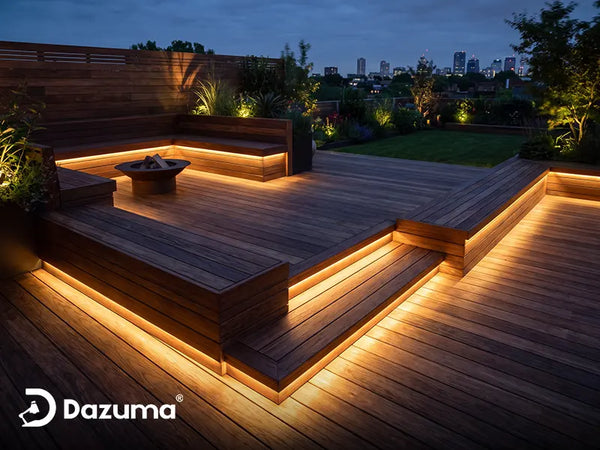
The best stair lights are often mounted low: in the riser, on the side wall, below the tread lip, or along a nearby retaining wall. This keeps the light close to the walking surface. It also reduces the chance that people see the bare LED source as they approach the stairs. For open deck stairs, under-tread or side-mounted lighting can give a more continuous line of guidance.

Spacing also affects perceived color. A few overly bright lights can create hot spots that feel harsher than their color temperature suggests. More evenly spaced low-output fixtures can look calmer, even at the same Kelvin rating. That is why a softly repeated 3000K stair light often feels more expensive than one high-output light trying to cover the entire flight.
For deck steps or under-tread applications, outdoor-rated Outdoor Led Strip Lights can create a clean line of light when they are installed in the right outdoor channel, pointed away from direct view, and protected from water exposure.
A Recessed Option For Flexible Warm Or White Step Lighting
If you want a stair light that sits cleanly in the side of a wall or step face, a recessed brick-style fixture is often a good fit. It keeps the housing low profile, directs attention to the tread, and works especially well on masonry, concrete, courtyard stairs, and modern porch approaches.

Outdoor Brick Light LED Embedded Stair Wall Ladder Lights
Price: $43.99
Best for recessed stair-wall installation where you want the light to read as part of the architecture rather than as a decorative fixture attached to the surface.
- Available in rectangle and grille styles for either a wider soft spread or a more controlled anti-glare look.
- Stainless steel, tempered glass, and plastic construction suits outdoor step and passage use.
- Recessed installation helps the fixture sit flush with the wall or step face for a cleaner exterior detail.
For most residential projects using this kind of recessed light, choose the warm white option unless you are matching a very crisp existing exterior scheme. Warm white is easier on the eyes and usually better near front doors, courtyards, decks, and patios. The whiter option can be useful for service stairs or areas where visibility is the main concern, but it should be tested at night to make sure it does not feel too sharp.
Common Color Temperature Mistakes To Avoid
Choosing The Brightest Or Coolest Light By Default
A stair does not need to be flooded with light to be safe. In fact, harsh stair lighting can create glare, hard shadows, and an uncomfortable contrast between the bright fixture and the dark yard. Choose a temperature and output that reveal edges instead of shouting for attention.
Mixing Too Many White Tones In One View
If your porch light is amber, your path lights are warm white, and your stair lights are cool white, the exterior can look accidental. Try to keep fixtures within the same general family. They do not have to match perfectly, but they should feel related.
Ignoring Neighbor And Street Visibility
Outdoor stair lights are often close to property lines, driveways, or shared pathways. A cooler temperature can feel more noticeable from a distance. Shielded warm light usually feels more residential and less intrusive.

Warm Does Not Mean Dim
A good 3000K step light can still make each tread easy to read. The difference is that it feels less clinical than a cooler white. For homes, that balance of safety and comfort is usually the sweet spot.
Another mistake is choosing a color temperature before deciding on the fixture type. A recessed louvered light, an under-tread strip, a surface-mounted square step light, and a nearby path light all distribute light differently. One may look perfect at 3000K while another feels too bright in the same temperature because the beam is more direct.
If your stairway connects to a longer landscape route, look at the whole route rather than the steps alone. A path that begins with 2700K path lights, moves into 3000K stair lights, and ends at a cool white wall light may feel uneven. Consistency is especially important on a front approach where the eye reads the whole sequence at once. For deeper stair planning beyond color alone, see How to Put a Light on Outdoor Stairs: A Complete Step-by-Step Guide.
A Compact Square Option For Modern Outdoor Stairs
For homeowners who prefer a simpler black fixture shape, a square step light can be easier to coordinate with modern railings, black-framed doors, dark hardware, and clean courtyard walls. This type of light is especially useful when you want visible guidance without a long rectangular slot.

Square Stair Lights Minimalist Waterproof Outdoor Light
Price: $50.99
Best for modern stairways, garden walls, porch steps, and villa-style outdoor areas where a compact black wall-mounted step light fits the architecture.
- Warm white 3000K light is well suited to residential stairs where comfort matters as much as visibility.
- Aluminum body and glass shade give the fixture a clean, modern look for outdoor walls and steps.
- Compact square size works well when the stair area needs guidance without visual clutter.
How To Test Outdoor Stair Light Color Before Installing
Because stairs are safety-critical, do a nighttime mockup before final installation whenever possible. You do not need a perfect temporary wiring setup. Even a portable work light with a similar color temperature can show whether the stair material feels warm, cold, flat, or glare-prone. Stand at the top, the bottom, and the side. Walk the stairs while looking forward, not down. That is how guests will use the stairs.
Pay attention to landings and turns. The first and last steps matter most because they tell the body that elevation is changing. If a staircase bends, the turn should be readable before someone reaches it. If the step material changes from deck board to stone, or from paver to concrete, that transition may need a slightly stronger cue.
| Question To Ask At Night | What A Good Result Looks Like |
|---|---|
| Can I see the first and last step clearly? | The elevation change is obvious before you reach it. |
| Does the fixture shine into my eyes? | The walking surface is visible, but the source stays mostly hidden. |
| Does the color match nearby fixtures? | The porch, path, and stair lighting feel like one family. |
| Do materials look natural? | Stone, wood, brick, and plants keep their warmth and texture. |
| Are there dark gaps between fixtures? | Each key tread or landing has enough guidance without hot spots. |
Test From Real Viewing Angles
Do not judge stair lights only from a product close-up. Stand where someone enters the path, opens the gate, steps out from the patio, or walks down from the deck. The best color temperature is the one that feels natural from those real angles.
Final Advice: Choose Warm Clarity, Not Cold Brightness
The best color temperature for outdoor stair lights is usually 2700K to 3000K, with 3000K being the most flexible choice for modern residential stairs. It gives enough clarity to show edges while keeping the entrance, deck, or backyard comfortable. Choose 2700K when the home is traditional, rustic, brick-heavy, or very cozy. Choose 3000K for most modern homes, concrete steps, courtyard walls, and mixed-material exteriors. Use 4000K carefully, mainly for practical service areas where function matters more than atmosphere.
Color temperature should never be chosen alone. Look at beam control, fixture shielding, placement, spacing, brightness, surface material, and the color of nearby outdoor fixtures. A soft, well-placed warm light will usually serve stairs better than a bright cool fixture that creates glare. If the light helps people move naturally without thinking about it, you have chosen well.