
Who This Is For: This guide is for homeowners who have a 6-foot kitchen island and are trying to decide whether two pendant lights or three pendant lights will look better, feel balanced, and provide enough usable light for cooking, serving, homework, coffee, and everyday gathering.

Quick Answer: Most 6-Foot Kitchen Islands Need Two Pendants
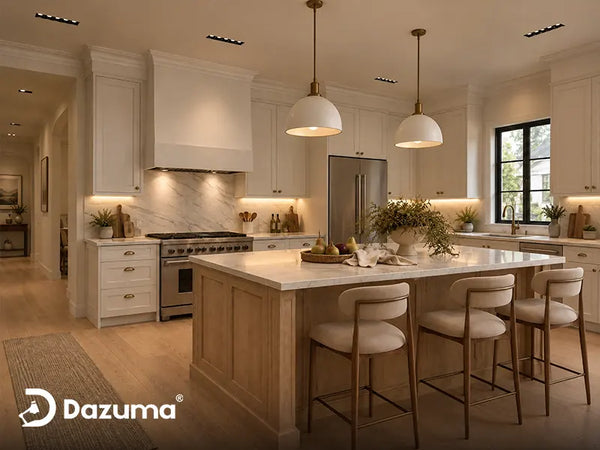
For most 6-foot kitchen islands, two pendant lights are the safest and most balanced choice. A 72-inch island is long enough to carry two fixtures without feeling sparse, but not always long enough for three larger shades. Two pendants give you clean symmetry, easier spacing, and fewer sightline problems when someone is standing on the opposite side of the island.
Three pendant lights can also work beautifully, but only when the pendants are slim, compact, or visually light. Think mini teardrops, narrow cylinders, small glass shades, or delicate crystal pendants. Three bulky pendants over a 6-foot island often feel crowded, especially in kitchens with upper cabinets, statement backsplashes, or a range hood nearby.
A good everyday rule is this: choose two pendants if each fixture is about 9 to 14 inches wide, and choose three pendants if each fixture is about 3 to 8 inches wide. If the fixtures are very sculptural, dark, or visually heavy, lean toward two. If they are slim, transparent, or reflective, three can create a more designer-looking rhythm.
For broader browsing, start with Pendant Lighting first, then narrow down by scale, material, and finish. A kitchen island is not just a place for light; it is also a horizontal stage, so the pendant count changes how the whole kitchen feels from the dining area or living room.
Two Pendants Or Three Pendants Over A 6-Foot Island?
The decision is less about the island length alone and more about visual weight. A 6-foot island is 72 inches long. That sounds generous, but once you leave breathing room near each end, your usable hanging zone is usually closer to 48 to 60 inches. That is why two medium pendants often look natural: they fill the island without overcomplicating the ceiling line.

Two Pendants Feel Calm And Architectural
Two pendants work especially well when your kitchen is modern, transitional, farmhouse, or minimal. The look is calmer. It gives you two clean vertical lines over the island and leaves more open air between the fixtures. That open air matters in a real kitchen because people look across the island while cooking, eating, and talking.
Two pendants are also more forgiving if your island includes a sink, cooktop, or seating overhang. You can place one pendant over the prep side and the other over the serving side without creating a cluttered row of fixtures. If you already have recessed lights or under-cabinet lights doing the heavy task lighting, two pendants can focus more on mood and style.
Three pendants give a more rhythmic look. They can make a plain island feel designed, especially in an open kitchen where the island is visible from the living room. The trick is choosing pendants that are small enough to read as a series. This is where mini pendants, slim glass pendants, and narrow metal forms shine. If you are comparing small kitchen-friendly styles, Kitchen Lighting options can help you think about the island together with recessed lights, ceiling lights, and accent lighting instead of treating the pendants as the only source of brightness.
When Two Pendants Are Better
- Your pendants are 9 inches wide or larger.
- The kitchen has a low or average 8-foot ceiling.
- You want a clean, relaxed look rather than a busy ceiling.
- The island has a sink or cooktop that already breaks up the counter visually.
- The pendants use dark metal, large glass shades, thick frames, or strong decorative details.
When Three Pendants Are Better
- Your pendants are very small, usually under 8 inches wide.
- You want a lively, boutique-bar feeling over the island.
- The island is visually simple and needs a little rhythm.
- The fixtures are transparent, slim, reflective, or compact.
- The kitchen opens into a larger room where three repeated lights help define the island zone.
The Simple Spacing Method For A 72-Inch Island
Here is the most useful way to think about spacing: do not start by asking, "How many pendants can I fit?" Start by asking, "How much empty space will be left between the fixture edges?" That empty space is what makes the layout feel intentional instead of squeezed.
For two pendants, take the island length, subtract the total width of both pendants, then divide the remaining space into three equal gaps: left end gap, middle gap, and right end gap. For example, if your island is 72 inches long and each pendant is 10 inches wide, the total pendant width is 20 inches. That leaves 52 inches of open space. Divide that into three gaps and you get a little over 17 inches of open space on each side and between the pendants. Visually, that feels balanced and not too tight.
For three pendants, subtract the total width of all three pendants, then divide the remaining space into four gaps. This method works better than forcing a fixed number like 24 inches between every pendant because it accounts for the actual shade diameter. A 4-inch mini pendant and a 12-inch glass globe should not be spaced the same way.
The "Air Gap" Matters More Than The Fixture Count
A pendant layout feels expensive when the empty space is even and relaxed. If the pendants are too close together, the island can feel like a lighting showroom display. If they are too far apart, the center of the island may feel under-lit. Equal visual breathing room solves both problems.

If you want a deeper placement guide, the older article How Many Pendant Lights Over An Island: A Designer's Guide is helpful for comparing longer and shorter island lengths. For this article, we are keeping the focus tight: a 6-foot island, two realistic layout options, and fixtures that will not overpower the counter.
Pendant Size Guide For A 6-Foot Kitchen Island
| Pendant Width | Best Count | Best Look | Watch Out For |
|---|---|---|---|
| 3-5 inches | Three | Slim, modern, decorative rhythm | May need supporting recessed light for task brightness |
| 6-8 inches | Two or three | Flexible choice depending on shade transparency | Three dark shades can feel busy |
| 9-14 inches | Two | Balanced, calm, designer-friendly | Avoid placing fixtures too close to the island ends |
| 15 inches or larger | Usually one or two | Statement lighting | Can block sightlines over a 6-foot island |
The table gives you a practical starting point, but style changes the answer. A clear glass 10-inch pendant can feel lighter than a solid black 8-inch metal shade. A crystal pendant may look small when off, but it can feel brighter and more decorative when lit. That is why many homeowners compare Glass Pendant Lights, crystal styles, and compact metal pendants before deciding on the final count.
Recommended Pendant Lights For A 6-Foot Kitchen Island
For a 6-foot island, the two product directions below solve different layout problems. One is very compact and works beautifully as a three-light rhythm. The other adds more sparkle and works well when you want the island to feel a little more polished at night.
A Three-Mini-Pendant Layout For A Slim, Modern Island
If your goal is clean rhythm without bulky shades, a very narrow pendant lets you use three lights without making the island feel crowded. This is especially nice over a marble, quartz, or wood island where you want the fixtures to look graceful rather than heavy.

Slim Mini Pendant Layout
Contemporary Mini Pendant Lights Teardrop Metal Ceiling Light
Price: $96.99
Best for homeowners who want three small pendants over a 6-foot island without blocking the view across the kitchen. The compact teardrop shape adds a polished vertical accent while keeping the ceiling line light.
- Small 3.35-inch width helps three pendants feel intentional instead of crowded.
- Black, gold, and chrome finish options make it easier to match faucets, cabinet pulls, or appliance accents.
- Three selectable color temperatures let the island shift from warm evening ambience to brighter daytime clarity.
For this type of pendant, a three-light layout often feels right because the shade is narrow enough to leave plenty of negative space. Place the three centers roughly along the island's centerline, then adjust slightly if there is a sink, faucet, or sightline you want to avoid.

Three Mini Pendants Create Rhythm
Three small pendants feel a bit more energetic than two. They make the island look styled, almost like a café counter or boutique breakfast bar. The effect is strongest when the fixtures are narrow, reflective, or transparent rather than wide and heavy.
A Crystal Accent Layout For A More Decorative Island
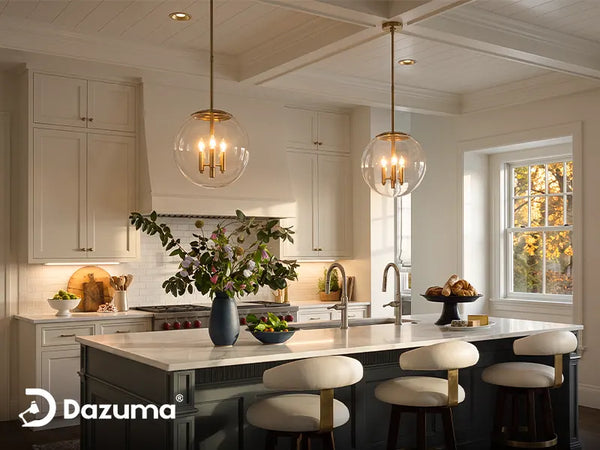
If your kitchen feels too plain with simple metal or glass pendants, a compact crystal pendant can add a little sparkle without turning the island into a formal dining room. This works well in black-and-white kitchens, dark cabinet kitchens, bar-style islands, and open layouts where the island becomes part of the living space after sunset.

Decorative Crystal Island Accent
Mini Crystal Pendant Light Creative Art Crystal Island Ceiling Light
Price: $98.99
Best for a 6-foot island that needs a more decorative focal point. Use two for a calmer look, or consider the multi-light option when the kitchen has enough visual breathing room.
- Crystal glass shade creates a brighter, more layered evening glow over the island.
- Black, gold, and chrome finishes make it easy to style with industrial, modern, or light-luxury kitchens.
- Works best when paired with dimmable or warm LED bulbs chosen separately for the E27 socket.
Because crystal reflects light more actively than a matte shade, keep the surrounding finishes in mind. If your backsplash is already glossy, two crystal pendants may feel more refined than three. If the kitchen is simple and matte, a three-light arrangement can make the island feel more finished and welcoming.
Height, Centering, And Sightlines
Most kitchen island pendants are hung about 30 to 36 inches above the countertop, measured from the counter surface to the bottom of the fixture. For a 6-foot island, that height range usually protects sightlines while still putting the light close enough to feel warm and useful. Taller people, tall fixtures, and open-concept kitchens may need a small adjustment upward.
The more important detail is not the exact inch number; it is whether you can comfortably look across the island. Stand where you normally cook, then stand where someone would sit or talk. The pendant should frame the space, not hang directly in the conversation line. For a more detailed height discussion, see Pendant Lighting Height Over Kitchen Island: The Ultimate Guide.
Center The Layout, Not Always Each Activity Zone
Centering pendants over the island length creates the cleanest view from the room. But if your faucet or range hood is visually dominant, shift the layout slightly so the pendant does not line up awkwardly with another vertical element.

If you are still early in the design process, explore Modern Pendant Lights and compare fixture width before falling in love with a finish. A pendant can look perfect in a product photo and still be too large for a 72-inch island once you multiply it by two or three.
Common Mistakes To Avoid
Mistake 1: Choosing Three Pendants Because Three Looks Symmetrical Online
Three lights often photograph well, but real kitchens are messier than product photos. There may be cabinet doors, bar stools, a hood, a sink, a faucet, open shelves, and recessed lights all competing for attention. If the pendants are not small, three can make the kitchen feel busier than expected.
Mistake 2: Ignoring The Shade Material
A frosted or opaque pendant pushes light differently than a clear or crystal shade. Clear and crystal fixtures often feel lighter during the day but brighter at night. Solid metal shades can be excellent for task lighting, but they create a stronger visual block. That is why transparent shades and Crystal Pendant Light styles need to be judged both on and off.
Mistake 3: Forgetting Other Kitchen Lighting
Pendants should not be forced to do every lighting job. A good kitchen usually layers island pendants with recessed lighting, under-cabinet lighting, or ceiling fixtures. The pendants create mood, define the island, and bring light closer to the counter. They do not need to carry the whole room by themselves.
Mistake 4: Hanging Pendants Too Low
Low pendants may look cozy in a staged photo, but they can become annoying in daily life. If someone has to duck, lean, or move around the fixture while passing food across the island, it is too low. The room should feel easier to use after installation, not more delicate.

Final Advice: Start With Two, Choose Three Only When The Pendant Is Small
If you want the cleanest answer for a 6-foot kitchen island, start with two pendant lights. Two works in more homes, with more fixture styles, and with fewer spacing headaches. It also leaves the kitchen feeling open, which matters a lot in a room where people move, cook, sit, and talk all day.
Choose three pendants when the fixture is genuinely small or visually light. A slim teardrop, narrow cylinder, small crystal pendant, or clear glass mini can make three lights feel graceful instead of crowded. The goal is not to fill every inch above the island. The goal is to make the island feel balanced, inviting, and easy to use.
My neighbor-style advice is simple: tape the pendant positions on the countertop before ordering. Mark two layouts first, then three. Stand back from the kitchen entrance and from the living room side. The better option usually becomes obvious once you see the rhythm from real walking paths, not just from a top-down measurement.