
Who This Is For: This guide is for homeowners who like the warmth of farmhouse pendant lights but do not want a kitchen, dining room, entry, or living space to look rustic, vintage-themed, or overly decorated.
Introduction
Farmhouse pendant lights do not have to mean mason jars, distressed paint, heavy black cages, or a room full of reclaimed wood. The modern version keeps the welcoming materials—wood, rope, linen, simple metal, and warm light—but edits the shapes, colors, and surrounding decor. The result can feel calm and architectural rather than nostalgic.
The most useful way to think about the style is this: modern farmhouse is a contemporary room with a small amount of rural warmth, not a rustic room with a few new appliances. A woven shade above a streamlined island can feel current. Put the same shade beside knotty cabinets, an antique-look faucet, distressed stools, and a barn-door feature wall, and the combined effect becomes much more rustic. Context changes the fixture.
The Quick Answer: How Do You Keep Farmhouse Pendant Lights Modern?
Choose a pendant with a clear silhouette, one honest natural texture, minimal ornament, and a simple canopy. Then place it in a restrained palette with smooth surfaces and contemporary hardware. Warm white light usually supports the inviting side of farmhouse style, while clean sightlines and appropriate scale keep it from looking old-fashioned.
A practical rule is to limit the number of obvious rustic cues in one sightline. One woven shade, a wood table, and otherwise clean finishes can feel balanced. Add distressed beams, vintage signs, rough brick, multiple brown woods, and antique-look hardware, and the same pendant starts to look themed. This is not a formal design law; it is an easy editing tool when a room feels “too farmhouse.”

Why Some Farmhouse Pendant Lights Look Modern and Others Look Rustic
The label on the product page matters less than the fixture’s visual language. A pendant reads modern when the eye notices proportion, geometry, and material before decorative references. It reads rustic when aging effects, heavy hardware, rough surfaces, and familiar country motifs dominate.
Modern Farmhouse Uses Contrast
Modern rooms need contrast between tactile and smooth surfaces. A woven pendant looks sharper above quartz or honed stone than above another strongly textured surface. A wood pendant feels more sculptural against white plaster or flat-front cabinets than beneath a ceiling covered in rough boards. The surrounding simplicity gives the natural material room to be noticed.
This is why browsing both farmhouse pendant lights and modern pendant lights can be helpful. Look for the overlap: warm material, clean outline, limited color, and hardware that does not pretend to be antique.
Rustic Style Stacks Similar Signals
Rustic style often layers rough wood, visible fasteners, aged finishes, amber bulbs, heavy chains, and dark brown or black metal. Any one of those can work in a modern home. The problem is accumulation. If the fixture includes several of them and the room repeats the same language, the look becomes intentionally old-world.

Use One Strong Texture at a Time
If the pendant has an expressive rope weave, let the cabinets, backsplash, and counter stay quieter. If the room already has pronounced wood grain, choose a smoother metal, glass, or lightly textured shade. The fixture should add a missing layer rather than repeat every farmhouse material already present.
A Simple Modern Farmhouse Pendant Formula
The following framework is useful when comparing products online. It separates the fixture from the styling around it, which makes it easier to see why a design that looks rustic in one photo may work beautifully in a cleaner home.
| Design Element | Modern Direction | Rustic Risk | Easy Adjustment |
|---|---|---|---|
| Silhouette | Simple dome, cone, drum, globe, or sculptural form | Busy cage or heavily decorative frame | Choose fewer lines and cleaner edges |
| Material | One natural texture with honest variation | Several rough materials competing | Pair texture with smooth stone, paint, or glass |
| Finish | Matte black, soft brass, natural wood, muted fiber | Artificial distressing or heavy faux patina | Use a cleaner canopy and coordinating hardware |
| Light quality | Warm, comfortable light without visible glare | Very amber exposed bulbs used as a theme | Try frosted lamps or an integrated diffuser |
| Placement | Centered, well-spaced, scaled to the surface | Too many small fixtures or one undersized pendant | Mock up the diameter and spacing before ordering |
Start With Shape, Not the Farmhouse Label
A clean outline is the fastest way to make a natural-material pendant feel contemporary. Domes and shallow umbrella shades create a wide horizontal line that relates well to long islands and tables. Cylinders and narrow cones look more tailored in compact kitchens. Layered wood forms can feel modern when their pattern is regular and their hanging hardware is visually quiet.
Look at the fixture as a dark silhouette in the product image. If you can understand its shape immediately, it will usually read more cleanly in the room. If the outline depends on scrolls, crossbars, faux hinges, or decorative chains, it is more likely to lean rustic. This shape-first approach also opens up the broader pendant lighting category rather than limiting you to fixtures carrying one style label.
Let Natural Material Become Sculpture
Wood does not need distressing to feel warm. Repeated slats, curved panels, and layered profiles can turn grain into a contemporary focal point. In a minimal room, that kind of controlled repetition feels closer to modern craft than country decor.

A layered wood pendant works especially well when the room needs warmth but not another black metal fixture. The following design uses a natural form without relying on distressed surfaces or vintage-style hardware.

Organic Shape With a Contemporary Rhythm
Pinecone Pendant Light Multi-Layer Wooden Ceiling Light
Price: $225.99
Best for modern farmhouse dining rooms, breakfast nooks, and living spaces that need a warm wood focal point without an antique or distressed finish.
- Layered curved panels give natural wood a consistent, sculptural pattern.
- The gaps between the wood pieces create soft shadows and an ambient glow.
- The 110V hardwired fixture includes its integrated LED light source.
Use Natural Texture as an Accent, Not a Theme
Rope, paper fiber, wood, wicker, and linen can all soften a modern room. They are especially useful in kitchens dominated by hard surfaces. The important step is checking the actual material field instead of relying only on the style name. “Farmhouse,” “hemp,” “rattan,” “wicker,” and “rope” are sometimes used loosely in titles, while the specifications may identify a different shade material.
The weave also changes the light. An open structure sends highlights and shadows onto nearby surfaces; a tight weave directs more light through the bottom. Neither is automatically better. Over a work island, a generous bottom opening is useful, especially if the room lacks strong task lighting. In a dining area, a patterned glow can be part of the atmosphere. For a wider material comparison, see Pendant Light Materials Compared For Every Room.
A shallow woven shade with a black frame can bridge farmhouse texture and modern geometry. The black line gives the soft fiber a defined edge, while the broad, low profile avoids the visual heaviness of a traditional cage.

Soft Weave, Defined Black Outline
1-Light Double Layer Rope Weaving Umbrella Pendant Light
Price: $169.99
Best for a breakfast nook, dining table, tea space, or kitchen island where woven warmth needs a cleaner, flatter silhouette.
- Three diameters—15.7, 19.7, and 23.6 inches—support different table and room scales.
- The 5.9-inch-high shade keeps the form broad without becoming bulky.
- The 110V hardwired fixture uses one replaceable bulb, which is not included.
Keep the Color Palette Controlled
Most farmhouse pendants use some combination of brown, cream, black, brass, or wood. A modern room does not need to remove those colors; it needs to organize them. Choose one dominant neutral, one natural tone, and one metal accent. For example: warm white cabinets, a light tan shade, and matte black hardware. Or pale oak cabinetry, an off-white shade, and muted brass.
Avoid trying to match every wood or brown tone exactly. Slight variation looks more natural than a near-match that is visibly off. Coordinate undertones instead. Honey wood belongs comfortably with warm whites and oatmeal textiles; pale ash works with soft gray, taupe, and black; deeper walnut can sit against cream or stone without turning the room rustic.

Repeat a Finish Only Two or Three Times
A matte black canopy feels intentional when it relates to a faucet and slim stool frame. It can feel heavy when every handle, shelf bracket, chair, window frame, and appliance is also black. Small repeats create rhythm; excessive repeats turn the accent into a theme.
How to Style Farmhouse Pendant Lights by Room
Kitchen Island: Prioritize Downlight and Sightlines
Above an island, the pendant is both decoration and working light. Check the lower opening, bulb glare, and shadow pattern before falling in love with the material. A woven shade can look beautiful, but food preparation still needs dependable task light from the pendant, recessed lighting, or under-cabinet fixtures.
For a modern look, align pendants carefully and leave generous negative space between them. Two well-scaled shades often feel more current than three or four undersized fixtures. Flat-front cabinetry, a plain backsplash, and simple stools will make the natural texture look intentional. The guide Modern Farmhouse Kitchen Lighting Ideas: Styles & Inspiration offers more ways to coordinate island lighting with the rest of the kitchen.
Dining Room: Use the Fixture as the Warmest Layer
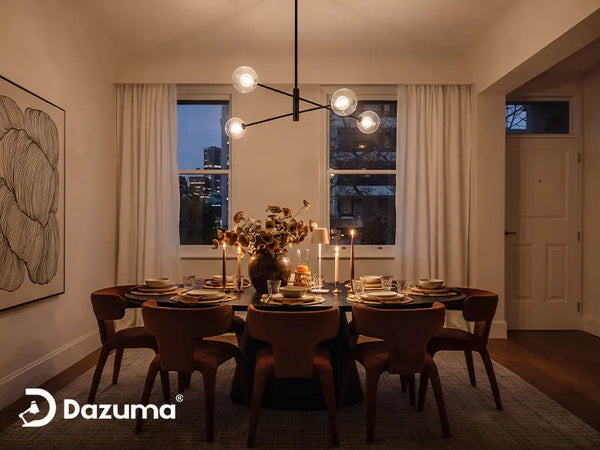
A dining room can support a more expressive pendant because the light helps establish mood. If the shade is woven or wood, keep the table shape simple and avoid surrounding it with too many vintage accessories. A contemporary table, quiet wall color, and one piece of large-scale art are often enough. Add dimmable ambient light elsewhere if the decorative pendant alone does not illuminate the whole room comfortably.
Entry: Choose One Memorable Silhouette
An entry pendant is seen from several directions. A sculptural wood form or shallow woven dome can add character without consuming floor space. Check the view from the front door and adjoining room; the fixture should not overlap visually with every frame, shelf, and doorway. Cleaner surroundings let the natural material make a stronger first impression.
Bedroom: Reduce Contrast and Glare
In a bedroom, use softer material contrast than you would in a kitchen. Natural wood, paper rope, warm white paint, and linen can feel relaxed without reading rustic when the furniture has simple lines. Shield the light source from someone lying in bed, and avoid a shade that throws strong moving patterns across the ceiling if visual calm is the goal.
Modern Results Depend on Size, Height, and Spacing
Scale often separates a polished room from a decorative one. A pendant that is too small can look like an accessory rather than part of the architecture. A fixture that is too large or low can block conversation and make an airy weave feel unexpectedly heavy.
Over a kitchen island or dining table, 30 to 36 inches from the surface to the bottom of the pendant is a common starting point. Adjust for ceiling height, fixture diameter, seated and standing sightlines, and the width of the surface below. A broad shallow shade may need slightly more clearance at its edge, while a narrow pendant can often hang lower without blocking the view.
Mock Up the Actual Diameter
Tape together paper or cardboard to match the listed shade diameter, then suspend it at the planned height. Look from the doorway, the sink, seated positions, and the neighboring room. This reveals whether two large pendants feel calm and architectural or whether the edges crowd the sightline.

For wood-centered options, compare diameters and visual density in the wood pendant lights collection. Open slats and layered panels can support a larger diameter without looking as solid as a closed wood shade.
Common Mistakes That Make Farmhouse Lighting Look Too Rustic
- Using too many distressed finishes: One aged element can add character; several make the room feel intentionally old.
- Choosing amber light for style alone: Very warm exposed bulbs can distort surfaces and reduce useful task light. Choose comfort and color quality, not just a nostalgic glow.
- Repeating black metal everywhere: Black is a strong outline. Use it to connect a few elements rather than cover every detail.
- Matching every wood tone: Coordinated undertones look collected; exact matching often looks like a furniture set.
- Ignoring shade openness: A beautiful weave may create glare or insufficient downlight if the bulb and bottom opening are not considered.
- Buying by style name only: Read the dimensions, material, light source, mounting, and care information. Product labels are broader than actual design performance.
- Adding more decor to “complete” the look: Modern farmhouse usually improves when you remove one themed accessory and leave more open wall or counter space.
A Quick Buying Checklist
- Can you understand the silhouette before noticing the decorative details?
- Does the fixture add one missing texture rather than duplicate several existing ones?
- Is the actual shade material clearly identified in the specifications?
- Will the lower opening and light source provide the illumination you need?
- Does the diameter suit the table, island, or open area below?
- Can the hanging height be adjusted for your ceiling and sightlines?
- Does the canopy coordinate with a few room details without requiring every finish to match?
- Can you clean the weave, slats, or layered panels in the intended location?
Final Advice: Keep the Warmth, Edit the Theme
The best modern farmhouse pendant lights preserve what people enjoy about farmhouse interiors—warm light, honest materials, and an approachable atmosphere—while removing unnecessary nostalgia. Start with a clear form. Choose one natural surface. Pair it with smooth contemporary finishes. Then test the real size and hanging height before ordering.
If the room still feels too rustic, do not automatically replace the pendant. First remove one or two competing cues: distressed accessories, extra black hardware, a heavily patterned rug, or repeated brown wood. A well-chosen woven or wood fixture can look surprisingly modern when it has enough visual space around it.
The goal is not to make the natural material disappear. Let it provide warmth and texture, but allow geometry, proportion, and restraint to lead. That balance creates a home that feels current today and comfortable long after a specific farmhouse trend fades.