
Who This Is For: This guide is for homeowners choosing between wood and rattan pendant lights for a kitchen, dining room, bedroom, entry, or relaxed living space—and anyone who wants an organic look without making the room feel overly rustic or themed.
Introduction
Wood pendant lights and rattan pendant lights can both make a home feel warmer and closer to nature, but they do it in noticeably different ways. Wood usually reads as solid, architectural, and grounded. Rattan feels lighter, more relaxed, and more tactile because its woven surface lets air and light move through it.
That distinction matters more than the simple question of which material is “more natural.” A wood pendant may look completely at home above a walnut dining table, yet too visually heavy in a small white kitchen. A rattan pendant can soften the same kitchen beautifully, but its patterned shadows may be distracting over a work surface. The better choice depends on the room’s existing materials, the kind of illumination you need, and whether you want the fixture to feel like part of the architecture or like a softer decorative layer.
The Quick Answer: Which Looks More Natural?
Wood usually looks more naturally integrated; rattan usually looks more visibly organic. Choose wood when you want a pendant to echo cabinetry, flooring, beams, or furniture. Choose rattan when you want obvious handwoven texture, an airy silhouette, and a casual connection to gardens, coastal rooms, or sun-washed interiors.
If the room already contains several strong wood tones, rattan often creates the more convincing natural result because it adds a different plant-based texture instead of matching every surface. If the space is mostly painted drywall, glass, stone, and metal, wood can supply the grounding element the room is missing.

Why Wood and Rattan Feel Natural in Different Ways
Natural style is not just a brown color palette. It comes from grain, variation, touchable texture, honest construction, and the way a material responds to light. That is why a brown-painted metal shade rarely feels as organic as real wood or woven wicker, even when the colors are almost identical.
Wood Feels Grounded and Architectural
Wood has visual weight. Slats, turned forms, bent veneers, and carved shades tend to hold a clear shape, so the pendant can relate to doors, shelving, ceiling beams, or the dining table below. This makes wood pendant lights particularly effective in Japandi, mid-century, rustic-modern, and warm minimalist rooms.
The grain is usually a quieter texture than an open weave. From across the room, you first notice the silhouette; up close, you notice the material. That gives wood a calm, composed character. It can feel refined rather than crafty, especially when the shape is simple and the finish coordinates with one or two existing wood tones.
Rattan Feels Airy and Handcrafted
Rattan and wicker shades advertise their texture from a distance. Their woven gaps, slight irregularities, and softer edges create an immediate handcrafted impression. Browse rattan pendant lights when the goal is to relax a formal room, add movement to a neutral scheme, or balance smooth counters and painted cabinets.
One useful distinction: rattan is a material, while wicker describes a weaving method. Product names sometimes use rattan, wicker, bamboo, or cane loosely, so check the material field rather than relying only on the title. This is especially important if you want a specific fiber, finish, or level of flexibility.
Wood Pendant Lights vs Rattan Pendant Lights
| Decision Factor | Wood Pendant Lights | Rattan Pendant Lights |
|---|---|---|
| Overall character | Structured, grounded, tailored | Airy, relaxed, handcrafted |
| Light pattern | More controlled; varies with slat spacing | Often casts visible woven shadows |
| Best visual partner | Cabinetry, beams, wood furniture, stone | Linen, plaster, greenery, light-painted rooms |
| Visual weight | Medium to substantial | Light even at a larger diameter |
| Cleaning | Usually easier on broad or widely spaced surfaces | More dust-catching gaps and woven intersections |
| Natural look | Integrated with the room | More visibly organic and textural |
How the Material Changes the Light
A natural-looking fixture still has to do a lighting job. Before comparing colors or shapes, look through the shade. The percentage of open space determines how much light reaches the ceiling and walls, while the bottom opening determines how useful the light will be on a table, island, or reading surface.

Wood Gives the Shadow More Structure
A solid wood shade directs most light downward. A slatted wood shade releases narrow bands of light around the room. The result tends to feel orderly and sculptural, although a very tight shade can reduce ambient brightness. For a dining table, choose a lower opening wide enough to illuminate place settings without exposing a bare bulb at eye level.
Rattan Turns Light Into Texture
An open weave spreads small highlights and shadows across nearby surfaces. This effect can be beautiful at dinner or in an entry, but it becomes busier with a clear, high-output bulb. A frosted bulb or internal diffuser softens the pattern. If this pendant will be the room’s main light, confirm that the weave and bottom opening release enough usable light rather than assuming a larger shade will be brighter.

For a broader overview of how wood, metal, glass, fabric, and woven shades behave, see Pendant Light Materials Compared For Every Room. It is a useful second check when the room needs both a natural appearance and a specific lighting performance.
A woven fixture makes the most sense when you want the light itself to become part of the atmosphere. The following three-shade design is a good example of rattan acting as both illumination and visual texture rather than as a plain ceiling object.

Airy Texture in a Coordinated Trio
3 Piece Set of Transparent Burlywood Wicker Pendant Light
Price: $203.99
Best for a dining area, open living space, or tall corner that benefits from three related woven forms instead of one visually heavy shade.
- Three small pendants create layered height and a more dimensional natural focal point.
- The open wicker construction keeps the grouping from feeling bulky.
- Bulbs are not included, so you can choose a frosted bulb and preferred color temperature.
Which Material Works Better in Each Room?
Kitchen: Let Function Decide First
Over an island, wood is often the easier choice when you need cleaner downlight and a shape that relates to cabinetry. Rattan works well when the kitchen already has strong task lighting from recessed fixtures or under-cabinet lights, allowing the pendants to focus on mood. Keep an open weave away from heavy grease and steam when possible; intricate fibers require more careful cleaning than smooth wood surfaces.
If you are comparing many shapes rather than only two materials, the broader pendant lighting collection helps you judge open shades, multi-light arrangements, and more directional options together.
Dining Room: Match the Social Mood
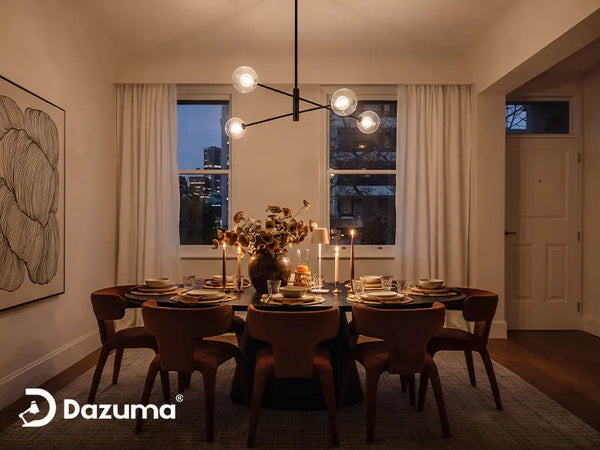
Wood makes a dining space feel settled and intentional. It works especially well over a substantial table or in a room with clean lines. Rattan makes the same room feel less formal and often more inviting for everyday meals. Its soft edges are useful when the dining area is part of an open-plan living room and you do not want the fixture to dominate every sightline.

Do Not Match Every Natural Material
A believable natural room has contrast. With a wood table, wood floors, and wood cabinets, another exact wood match can make the ceiling feel heavy. Try rattan, or choose a wood pendant in a lighter tone and more open construction. Conversely, a room full of linen, boucle, and woven baskets may need a wood fixture to add definition.
Bedroom and Reading Corner: Favor Softness
Rattan is often the more soothing bedside choice because it looks light and diffuses light around the room. Use a warm bulb and make sure the bulb is screened from someone lying in bed. Wood suits a quieter Japandi bedroom, especially when the fixture uses rounded slats rather than a dense solid shade. In either case, a wall dimmer or lower-lumen lamp is more useful than relying on a bright decorative bulb.
Entry and Stair Landing: Think in Silhouette
These spaces are seen from several angles, so the fixture’s shape matters as much as its downlight. A wood cage looks graphic and architectural; a rattan shade feels softer against tall walls. In a compact entry, either material can work, but leave enough open air around the fixture so the natural texture is readable rather than cramped.
A slatted wood pendant is a strong middle ground: it has the structure of wood but allows some of the visual lightness people like in rattan. This bird-cage form also offers several diameters, making it easier to scale the same design to a breakfast nook, dining room, or taller open area.

Structured Wood With an Airy Profile
Bird Cage Pendant Light Japanese Basswood Body Wooden Ceiling Light
Price: $111.99
Best for Japandi dining rooms, tea spaces, entries, and calm bedrooms that need natural wood grain with a more defined silhouette.
- Slatted construction creates a lighter look than a fully solid wood shade.
- Included light switches among 3000K, 4000K, and 6000K with a standard wall switch.
- The hanging length is adjustable; brightness itself is not dimmable.
Size and Placement Matter More Than the Label
A poorly scaled natural fixture can look decorative in the showroom and awkward at home. Rattan shades tolerate a slightly larger diameter because you can see through them, while solid wood shapes appear heavier at the same size. That does not mean rattan should always be oversized; the edge should still stay comfortably inside the width of the table or island below.
Over a dining table, 30 to 36 inches from the tabletop to the bottom of the pendant is a common starting range. Adjust for the fixture’s visual density, ceiling height, and seated sightlines. A wide woven shade may need to hang a little higher if it spreads outward near eye level. A narrow wood cage may sit lower without blocking conversation. For a fuller placement framework, use The Golden Rules Of Pendant Lighting: Sizing & Placement.
Use a Cardboard Silhouette Before Ordering
Cut a piece of cardboard to the fixture’s listed diameter and hold it at the planned height. Then look from the doorway, seated position, and nearby room. This simple test reveals whether a solid wood shade feels too large or whether an open rattan shade is visually disappearing. It is more reliable than judging diameter from a product photo alone.

Modern rooms can use either material without becoming bohemian or rustic. The key is restraint: a simple outline, limited color palette, and clean canopy keep the natural surface from looking themed. The modern pendant lights collection is useful when you want organic material expressed through cleaner contemporary geometry.
Cleaning, Humidity, and Long-Term Appearance
Both materials prefer gentle care. Turn off the power, let the bulb cool, and use a dry microfiber cloth or soft brush attachment. Avoid saturating wood or natural fibers with cleaner. For rattan, work along the weave with a soft brush; compressed air can push dust deeper or damage delicate strands if used too closely.
Wood is usually quicker to dust, although closely spaced slats take patience. Rattan has more intersections where dust can settle, which matters in kitchens and near frequently opened windows. Neither material should be treated as outdoor-ready unless the product page gives an appropriate damp- or wet-location rating. A photo beneath a canopy is not a substitute for a stated environmental rating.
Color also changes over time. Natural wood and plant fibers can shift slightly with sunlight and age, and that variation is part of their character. If exact color matching is important, avoid trying to match a pendant perfectly to existing furniture. Coordinate undertones instead: warm honey with warm oak, muted tan with white oak, or darker wood with blackened hardware.
A Practical Buying Checklist
- Decide what “natural” means in your room: grounded and architectural, or airy and handcrafted.
- Count existing textures: add rattan to a wood-heavy room, or wood to a room dominated by soft woven materials.
- Check the actual material field: do not assume rattan, wicker, bamboo, and wood are interchangeable.
- Look through the shade: consider glare, downlight, ceiling light, and shadow pattern.
- Confirm bulb details: base, maximum wattage, included bulb, color temperature, and dimming compatibility.
- Test the diameter at home: visual density changes how large a fixture feels.
- Plan the cleaning: intricate weaves need more attention in dusty or grease-prone rooms.
- Verify location suitability: only use a fixture in damp or outdoor conditions when its rating allows it.
Final Advice: Choose the Missing Texture
If you want the pendant to feel connected to furniture and architecture, wood is usually the better answer. It brings visual stability, a clear silhouette, and a natural surface that can still look polished in a modern home. If you want the ceiling to feel lighter and the room to feel more relaxed, rattan is usually the more expressive choice. Its weave makes the material visible even from across the room and turns the light pattern into part of the design.
The most natural-looking result often comes from choosing the texture the room does not already have. A wood-filled kitchen may benefit from rattan’s softness. A pale room full of linen and plaster may need wood’s structure. Choose the material that balances the space, then verify shade openness, size, bulb visibility, and maintenance before buying. That approach creates a room that feels naturally assembled over time—not decorated around a trend.