
Who This Is For: This guide is for homeowners choosing a flush mount light for a 7.5-, 8-, or 9-foot ceiling and trying to balance comfortable headroom, useful light output, and a fixture that looks properly scaled to the room.
A low ceiling creates a very specific shopping problem. You want a light that stays out of the way, but choosing the smallest fixture on the page can leave the room looking under-scaled and dim. Choosing only by diameter creates the opposite problem: a broad, heavy-looking light can make the ceiling feel even closer.
The useful answer is to size a flush mount in two directions. First, choose enough width to relate to the room and furniture. Then confirm that the installed depth preserves headroom and keeps the ceiling visually open. Light output is a third, separate check. A fixture can be physically large yet too dim, or nearly invisible in profile yet bright enough for a large room.
Quick Answer: What Size Flush Mount Works on a Low Ceiling?
For many bedrooms, offices, and small living rooms with 8-foot ceilings, a flush mount around 18 to 24 inches wide and 2 to 6 inches deep is a practical starting range. Smaller rooms may look balanced with 12 to 18 inches. Larger rooms can use 24 to 32 inches—or multiple fixtures—provided the design remains shallow and the light output suits the space.
A familiar sizing shortcut is to add the room's length and width in feet, then use that number as an approximate fixture diameter in inches. A 10-by-12-foot bedroom suggests about 22 inches. Treat that as a visual starting point, not a rule. Room shape, bed size, ceiling color, fixture opacity, and the number of other light sources all affect the final choice.

| Approximate Room Area | Useful Diameter Range | Low-Ceiling Strategy | Typical Examples |
|---|---|---|---|
| Under 75 sq. ft. | 12–16 in. | Keep both width and profile compact. | Closet, small entry, laundry nook |
| 75–120 sq. ft. | 16–22 in. | Use a diffused shade to avoid a bright hot spot. | Office, guest room, short hall |
| 120–180 sq. ft. | 20–26 in. | Balance width with a shallow body. | Bedroom, den, compact living room |
| 180–250 sq. ft. | 24–32 in. | Check lumens and visual weight carefully. | Primary bedroom, family room |
| Over 250 sq. ft. | 30 in. or multiple fixtures | Layer or divide the room into lighting zones. | Large living room, open-plan area |
These ranges are intentionally broad. If you want more styles to compare after measuring, start with Flush Mount Ceiling Lights rather than filtering only by room name.
Measure Width and Installed Depth Separately
The product diameter tells you how much ceiling area the light occupies. The installed depth tells you how far its lowest point sits below the finished ceiling. Both dimensions matter, but they solve different problems.

Use the Complete Installed Depth
Do not stop at the shade thickness. Include the canopy, mounting plate, frame, diffuser, decorative rim, and any bottom finial. A light described as “low profile” can still project farther than expected once assembled.
Measure the ceiling after finished flooring is installed. If the room has exposed beams, a dropped soffit, or an uneven ceiling, use the lowest mounting surface—not the tallest point in the room.
Check the Electrical Box and Nearby Obstacles
A wide flush mount needs uninterrupted ceiling space. Mark the proposed diameter with painter's tape or a paper template and check for smoke alarms, sprinklers, HVAC registers, cabinet doors, beams, and attic access panels. Also confirm that the electrical box is rated to support the fixture's weight. An extra-wide light may be shallow, but it is not necessarily light in weight.
Estimate the Right Diameter, Then Adjust for the Room
The length-plus-width shortcut works best in a simple square or rectangular room. For a 9-by-11-foot office, 20 inches is a reasonable first diameter to mock up. The related guide What Size Ceiling Light Do I Need? Room Size Guide explains broader room-sizing considerations. On a low ceiling, make the second adjustment for visual weight.
A thin white disc tends to recede, so it can often be wider without feeling oppressive. A black frame creates a sharper outline. A dense crystal or opaque metal shade can look heavier at the same diameter. An open, curved design may occupy a large footprint yet preserve more visible ceiling between its arms.
The curved fixture below is a useful example. Every listed version is only 3.15 inches high, while the available footprints range from about 23.62 inches to 39.37 inches. That combination allows a homeowner to add scale without introducing the vertical drop of a pendant.

Curved LED Ceiling Light Artistic Geometric Acrylic LED Light
Listed Price: $166.99
Its flower-like aluminum form spreads horizontally while keeping a verified 3.15-inch profile, making it suitable when a low room needs more visual presence without more drop.
- Multiple footprints support different room sizes and furniture layouts.
- Integrated LED and acrylic elements provide ambient illumination.
- Three-color and remote-dimmable versions are listed separately.
How Shallow Should a Flush Mount Be?
Start with floor-to-ceiling height, then subtract the complete installed depth. In an open walking area, keeping at least 7 feet beneath the lowest part of the fixture is a useful planning baseline. Local requirements and unusual locations can differ, so verify them with your installer.
On a 7.5-foot ceiling, a 4-inch fixture leaves 86 inches, or 7 feet 2 inches, of clearance. On an 8-foot ceiling, a 6-inch fixture leaves 90 inches, or 7 feet 6 inches. A 9-foot ceiling is far more forgiving, but a shallow profile can still make the room feel cleaner and taller.
- 7.5-foot ceiling: Favor a 1- to 4-inch profile in open circulation areas.
- 8-foot ceiling: A 2- to 6-inch profile usually feels comfortably low; deeper fixtures may still clear physically but look more prominent.
- 9-foot ceiling: A 3- to 8-inch flush mount works easily in many rooms, allowing more layered shapes.
If a product page lists only shade height or body height, request the total installed depth. The distinction between flush, semi-flush, and other ceiling fixtures is also covered in What Is a Flush Mount Light? The Ultimate Designer's Guide.
Choose the Size for the Room, Not Just the Ceiling Height
Bedrooms
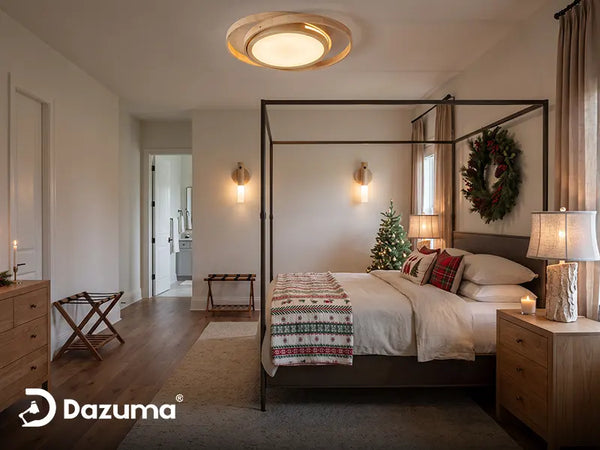
Use the bed and nightstands as the visual anchor. In a 10-by-12-foot room, a fixture around 20 to 24 inches often feels more intentional than a 13-inch dome. If the fixture sits over the bed, a slightly wider form can work because no one walks directly below its edges.
Choose a diffuser that hides the LED points from someone lying down. Warm or adjustable light is usually more comfortable at night than fixed cool white light.

Living Rooms and Family Rooms
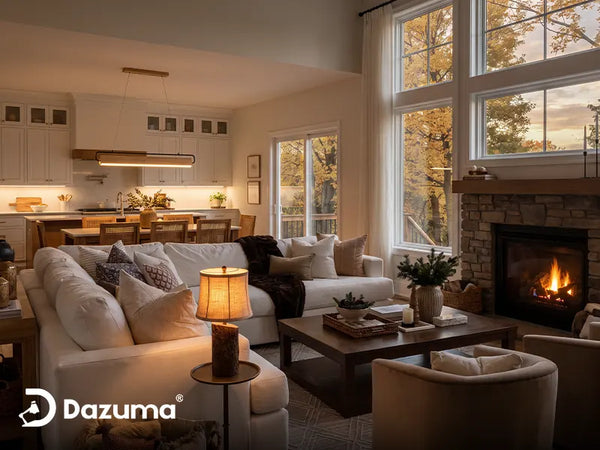
Align the light with the main seating zone rather than automatically centering it on the room shell. A large low-profile fixture can work well above the coffee table, while an elongated room may need two medium fixtures to prevent dark ends. Compare the ceiling light with the width of the seating group, not just the sofa.
The round LED fixture below demonstrates how diameter and depth can move in opposite directions. It measures 30.71 inches across but only 0.39 inch high. Its 3430-lumen output and broad diffuser make more sense in a larger zone than in a tiny closet, even though the profile is exceptionally shallow.

Round LED Ceiling Lights Modern Ultra-Thin Recessed Light
Listed Price: $458.99
This broad round panel is useful when a larger low-ceiling room needs strong general light and an almost ceiling-hugging silhouette.
- Aluminum construction and an acrylic diffuser create a clean profile.
- White and black trim options change how strongly the edge reads.
- Fixed white and remote-dimmable versions have different controls.
Kitchens
A single center light rarely solves countertop shadows. Size the flush mount for safe circulation and general illumination, then add under-cabinet or task lighting. In a long galley, two smaller fixtures often distribute light better than one oversized center disc. The Kitchen Lighting collection can help you compare the overhead layer with fixtures for more focused tasks.
Home Offices
Choose enough diameter and output to prevent a bright center with dark walls, but place the desk so the ceiling light does not reflect directly in a monitor. Adjustable color temperature is useful when the room shifts between focused daytime work and softer evening use. Browse Office Lighting if the room also needs a desk or reading layer.
Hallways, Entries, and Closets
In a narrow hallway, keep the diameter around one-quarter to one-third of the clear width as a starting point. A 36-inch-wide hall often looks comfortable with a fixture around 9 to 12 inches, while a wider entry can take more. Check door swings and shelving before choosing a broad square or asymmetrical design.
Fixture Size Does Not Tell You How Bright the Room Will Be
Diameter is a visual measurement, not a brightness rating. Compare lumens when the manufacturer lists them. For general residential ambient light, roughly 10 to 20 lumens per square foot can serve as an initial estimate; kitchens, offices, detailed tasks, dark finishes, and older eyes may require more layered light.

Look at Distribution, Not Wattage Alone
LED wattage describes energy use more than perceived brightness. A broad diffuser can spread light gently, while a narrow or opaque shade may concentrate it downward. Dark walls and high-contrast furnishings absorb more light than pale reflective surfaces.
A dimmer adds flexibility, but verify that the fixture, driver, control method, and wall control are compatible. “Three color temperatures” does not automatically mean the brightness is dimmable.
Color temperature affects comfort as much as output. Bedrooms and living rooms usually feel relaxed around 2700K to 3000K. Kitchens and offices often suit 3000K to 4000K. A fixed 6000K source can feel crisp and bright, but many homeowners find it too cool for a restful bedroom.
Flush Mount vs. Other Low-Ceiling Lighting Options
| Fixture Type | Ceiling Presence | Strength | Watch For |
|---|---|---|---|
| Flush mount | Low | Decorative surface-mounted light with minimal drop | Diameter, diffuser glare, driver access |
| Recessed light | Very low | Clean ceiling and distributed coverage | Ceiling cavity, layout, insulation rating |
| Semi-flush mount | Medium | More shape and some ceiling bounce | Installed drop in walking areas |
| Track or directional light | Medium | Aims light toward walls, art, or work surfaces | Visual clutter and glare angles |
The best answer may be a combination: one shallow decorative fixture for orientation, plus recessed, wall, or task lighting for coverage. The broader Ceiling Lights collection is useful when you want to compare silhouettes before committing to one mounting type.
Common Mistakes When Sizing Flush Mount Lights
Buying From a Close-Up Product Photo
Isolated product photos hide scale. A 30-inch fixture can look compact without a sofa, bed, doorway, or person nearby. Recreate the footprint on your ceiling with taped paper or cardboard and view it from the room entrance.
Leave the mock-up in place through daylight and evening. A dark outline may feel heavier at night, while a white fixture can nearly disappear during the day.

Choosing a Tiny Light to “Make the Ceiling Feel Higher”
Small diameter does not create height by itself. An undersized dome can look like a builder-grade afterthought and produce a harsh bright spot. A wider, thinner fixture often makes the ceiling feel calmer because it distributes light and visual weight more evenly.
Ignoring Room Shape
A 12-by-20-foot room is not served the same way as a square 16-by-16-foot room, even though the areas are similar. Long rooms often need two fixtures, a linear form, or added perimeter lighting. One large round fixture can leave distant corners flat and dim.
Assuming Every LED Option Dims
Integrated LED fixtures may offer fixed color, selectable color, or true brightness dimming. Read the variant details and control requirements. If the page says a remote controls brightness, do not assume a standard wall dimmer will work.
Final Buying Checklist
- Measure the finished ceiling height at the exact electrical box.
- Calculate the floor clearance using the total installed fixture depth.
- Add the room length and width to estimate a starting diameter.
- Adjust for room shape, furniture footprint, finish color, and visual weight.
- Compare lumens or documented coverage separately from fixture width.
- Confirm color temperature, brightness dimming, and control compatibility.
- Check door swings, vents, alarms, beams, and ceiling-box support.
- Mock up the diameter before ordering an unusually large or asymmetrical fixture.
The main lesson is simple: for a low ceiling, choose shallow first—but not small by default. The most convincing fixture is wide enough to belong to the room, thin enough to protect headroom, and bright enough for the actual activities below it. When those three checks agree, a flush mount can make a low ceiling feel intentional rather than compromised.