
Who This Is For: This guide is for homeowners who are early in a remodel, replacing builder-grade fixtures, or trying to understand why one room needs a simple ceiling light while another needs a pendant light with more character. If you are looking at an empty ceiling box and wondering what actually belongs there, this is written from the practical side of residential design—not from a showroom script.

Quick Answer
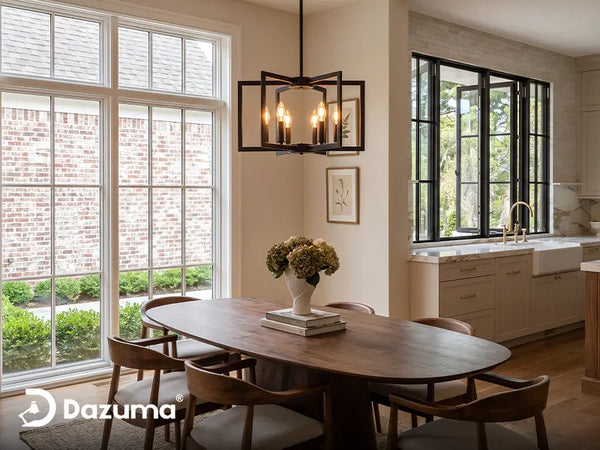
A ceiling light is usually mounted directly to the ceiling or sits close to it. It is meant to spread light across a room without taking up visual space. A pendant light hangs down from the ceiling by a cord, chain, rod, or stem. It brings the light source lower, creates a stronger design statement, and often works best over a kitchen island, dining table, reading corner, bedside area, or entry console.
In plain homeowner terms: choose a ceiling light when you need practical, room-wide brightness and head clearance. Choose a pendant light when you want the fixture to define a zone, add style, or bring light closer to a work surface. Many finished homes need both. The mistake is treating them as interchangeable just because both attach to the ceiling.
The Basic Difference Between Ceiling Lights And Pendant Lights
The difference starts with position. A ceiling light lives at the ceiling plane. A pendant light drops below it. That one detail changes almost everything: how the room feels, where shadows fall, whether the fixture becomes part of the decor, and how much clearance you have underneath.
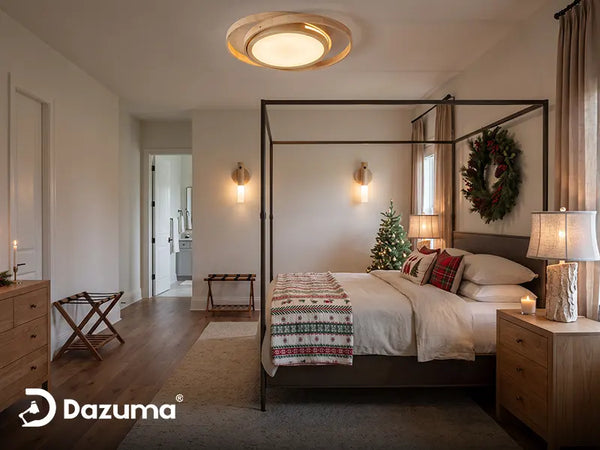
When I help homeowners choose fixtures during the early design stage, I usually ask one simple question first: “Do you want this light to disappear, or do you want people to notice it?” A ceiling light is often the quieter choice. A flush mount, semi-flush mount, recessed light, or compact surface light can brighten a room without interrupting the ceiling line. If you are comparing broad options, the Ceiling Lights category is the right starting point because it covers the practical overhead layer most homes need.
A pendant light is different. It hangs into the room, so it naturally asks for attention. Even a simple glass pendant can create a “designed” moment over a kitchen island or breakfast table. If you are new to this fixture type, our guide What Is A Pendant Light? Complete Guide is a helpful next read after you understand the basic ceiling-light comparison.

Ceiling Lights Stay Close To The Ceiling
This is why they are so useful in bedrooms, hallways, closets, laundry rooms, kids’ rooms, and smaller home offices. They keep the walkway open and reduce the chance of bumping into a fixture when you carry laundry, open cabinet doors, or move furniture.
Pendant Lights Drop Into The Room
The drop is the point. A pendant helps bring light down to a countertop, dining surface, or seating area. It also gives the room a vertical element, which is why a plain kitchen can suddenly feel more finished after pendants are installed.

How Each Fixture Changes The Way A Room Feels
Lighting is not just about visibility. It changes the emotional read of a room. A ceiling light can make a space feel clean, open, and easy to live in. A pendant can make a space feel intentional, layered, and more personal.
Think about walking into a newly built house with one basic dome light in every room. It works, but it rarely feels custom. Now picture the same house with a low-profile ceiling fixture in the hallway, a layered ceiling light in the bedroom, and two pendants over the island. The layout has not changed, but the home feels more considered.
That is why I rarely tell clients to choose one category for the whole house. A good lighting plan uses ceiling lights where you need dependable ambient light and pendants where the architecture needs a focal point. For rooms with limited height, Flush Mount Ceiling Lights keep things practical. For counters, tables, and design moments, Pendant Lighting gives you more shape, scale, and personality.
A useful designer trick: turn off every lamp in the room and stand where you actually use the space. In a kitchen, stand at the sink, the island, and the stove. In a bedroom, stand at the closet and sit on the bed. If the room needs broad, even brightness, start with a ceiling light. If one surface or zone still feels unfinished, a pendant may be the better layer.
Room-By-Room Design Advice
The right choice depends less on the name of the room and more on what happens under the fixture. A ceiling light over the center of a bedroom makes sense because the room needs general illumination. A pendant over the center of that same bedroom may look awkward unless it hangs over a seating area, nightstand, or specific design zone.
Kitchen
Kitchens are where people most often confuse the two. Recessed or ceiling lights help you move safely and see inside drawers. Pendants over an island help with prep, casual meals, and visual balance. If your kitchen has only one overhead ceiling light, it may technically be lit but still feel flat. That issue is often about missing layers, not about the ceiling light being “bad.” For more on that real-life problem, see Why Does My Kitchen Feel So Dark Even With Ceiling Lights?.
Dining Room
A dining room usually benefits from a fixture that relates to the table. That can be a chandelier, linear suspension light, or pendant, but it should feel connected to the furniture below it. A ceiling light in the exact center of the room can be useful only if the table is also centered. If the table shifts, the fixture suddenly feels wrong.
Bedroom
Bedrooms usually need a comfortable ceiling light first. It should help with getting dressed, cleaning, and moving around at night. Pendants can work beautifully as bedside lights, especially in smaller rooms where nightstands are narrow, but a pendant in the middle of a low bedroom ceiling can feel intrusive.
Hallway, Closet, Laundry, And Entry
These spaces usually call for ceiling lights because clearance matters. In an entry with a tall ceiling, a pendant or chandelier can make a strong first impression. In a narrow hallway, a low-hanging pendant is usually more frustrating than beautiful.

Ceiling Light Vs Pendant Light Comparison Table
If you are choosing fixtures before cabinets, furniture, or paint colors are finalized, this table gives you a practical starting point.
| Design Question | Ceiling Light | Pendant Light |
|---|---|---|
| Main purpose | General room lighting | Task lighting, accent lighting, or a focal point |
| Best for | Bedrooms, halls, closets, laundry rooms, low ceilings | Kitchen islands, dining tables, entryways, bedside zones |
| Ceiling height | Works well with standard 8-foot ceilings | Needs enough drop clearance below the fixture |
| Visual effect | Clean, quiet, open | Decorative, layered, more expressive |
| Common mistake | Choosing one that is too small or too dim | Hanging it too low or using it where clearance is tight |
A Ceiling Light Option For Lower Ceilings
For a room where you want visual interest but cannot afford a hanging fixture, a semi-flush or close-to-ceiling design is often the sweet spot. It gives the ceiling more character than a plain flat disk, but it does not drop into the room the way a pendant does.
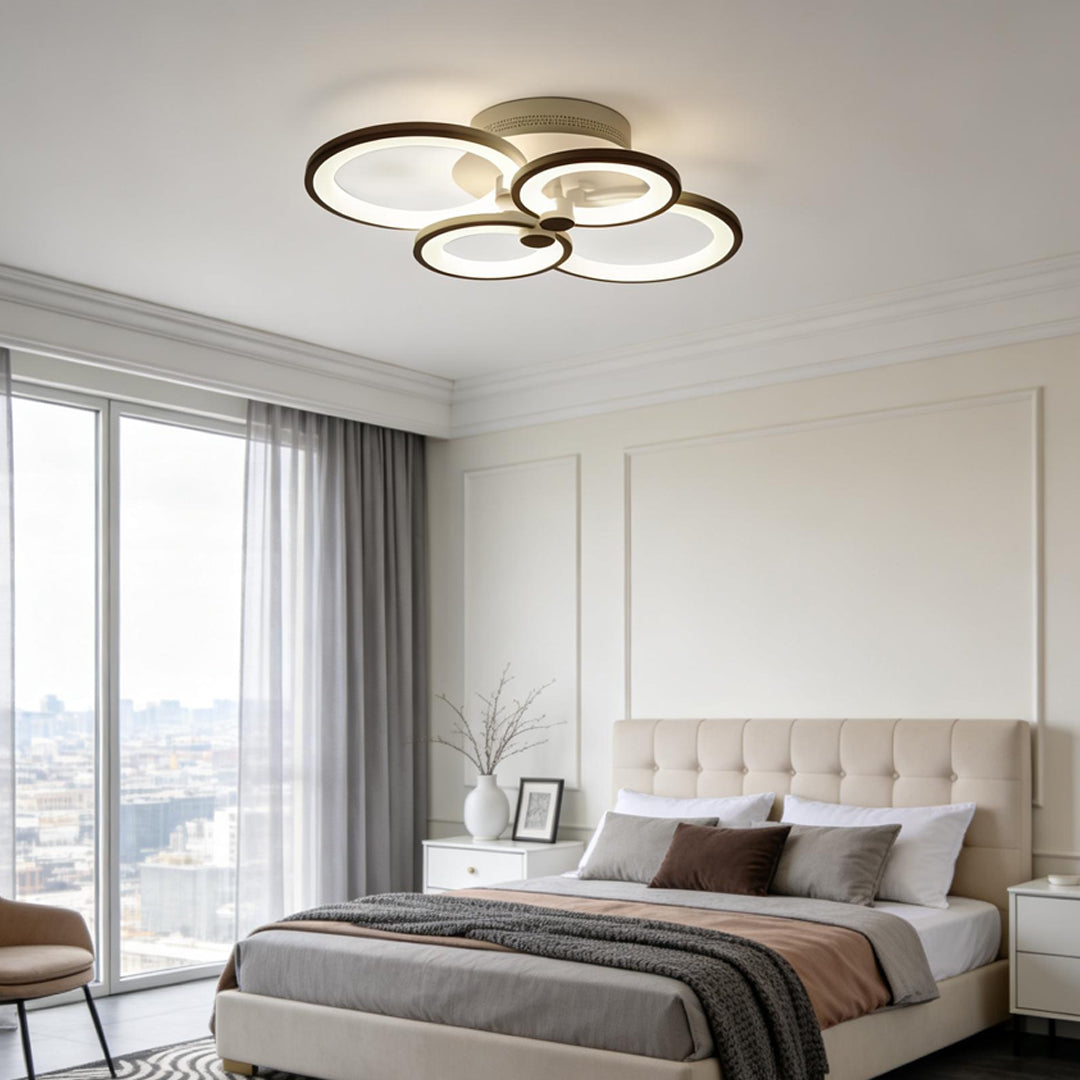
Close-to-ceiling design choice
Multi Ring Ceiling Lights Elegant Unique Overlapping Rings Lamp
Price: $149.99
Best for bedrooms, living rooms, home offices, and lower-ceiling areas where you want ambient light with more personality than a basic flush mount.
- The semi-flush structure keeps the room feeling open while adding layered ring detail overhead.
- Available in 4-light, 6-light, and 8-light configurations for different room sizes.
- Integrated LED light and acrylic shades help create a softer ambient spread instead of a bare-bulb look.
This is the kind of fixture I would consider for a bedroom with an 8-foot ceiling, a living room where a chandelier would feel too low, or a home office where you still want the ceiling to look designed on video calls. It is not trying to act like a pendant. It is solving a different problem: decorative overhead light without a hanging drop.
A Pendant Option When You Want A Focal Point
If the room has a clear surface below the fixture, a pendant can be the more satisfying choice. Kitchen islands, dining tables, bar counters, and small seating corners are all places where bringing the light down makes the space feel warmer and more human. For homeowners who want sparkle or a more decorative effect, Glass Pendant Lights can add texture without making the fixture feel visually heavy.

Use A Pendant Where There Is Something Below It
A pendant feels most natural when it relates to a table, island, counter, or seating zone. Without that anchor, it can look like a fixture floating in the wrong place.
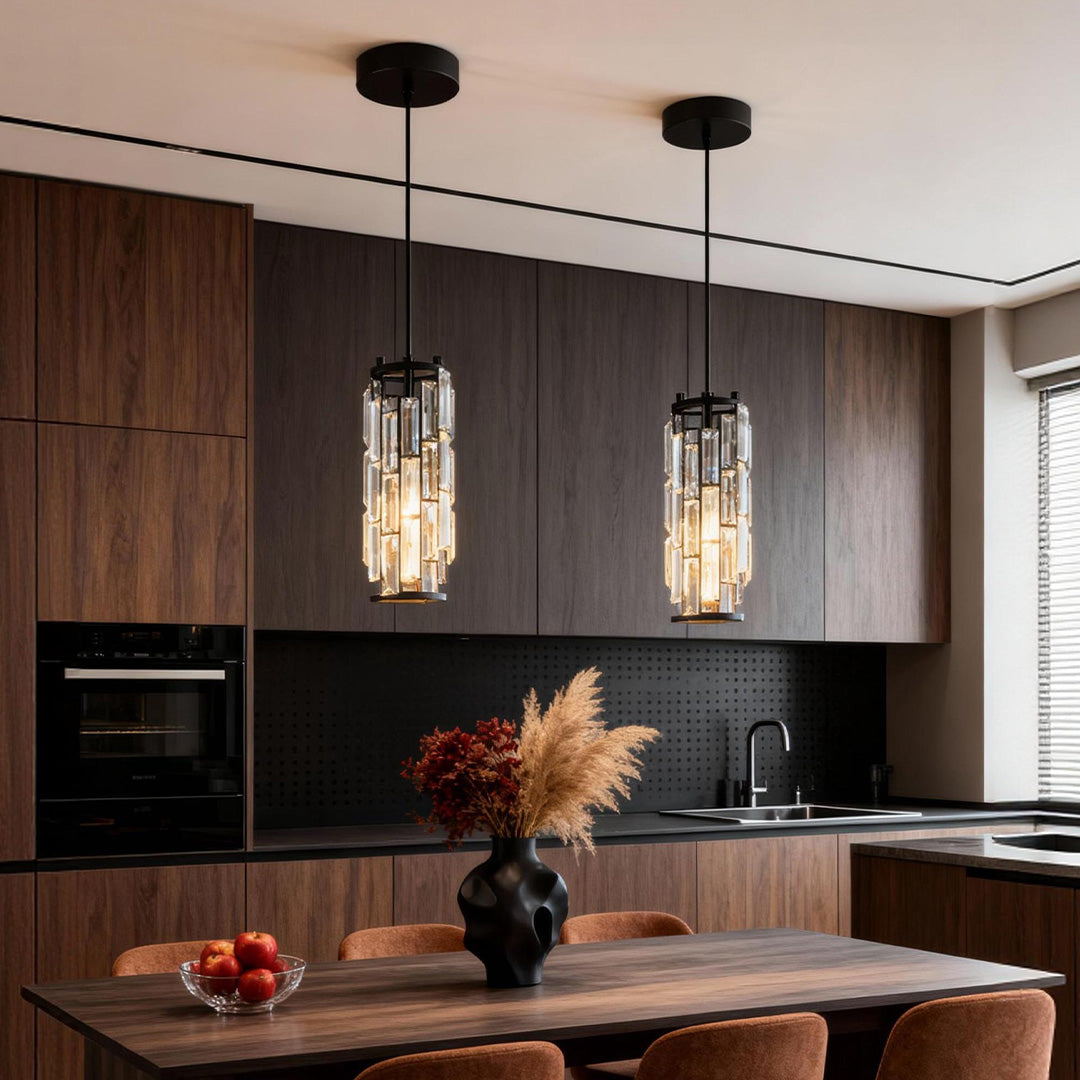
Decorative drop-light option
Mini Crystal Pendant Light Creative Art Crystal Island Ceiling Light
Price: $98.99
Best for kitchen islands, dining rooms, bar counters, cafes, and small accent zones where you want a compact hanging fixture with sparkle.
- The crystal glass shade refracts light, giving the pendant a brighter, more layered decorative effect.
- Available in black, gold, and chrome finishes, with 1-light and 3-light configurations.
- The adjustable hanging length makes it easier to tune the drop over a counter or table.
The key is not simply that a pendant looks prettier. It changes the scale of the space. A small pendant can make an island feel like a gathering spot instead of just a work surface. A row of pendants can visually stretch a long counter. A single pendant near a reading chair can make that corner feel intentional, even in an open-plan room.
Common Mistakes Homeowners Make
Choosing A Pendant Just Because It Looks Good Online
A pendant needs room to hang. Before buying one, measure the ceiling height, the surface below it, and the walking path around it. A fixture that looks perfect in a 10-foot-ceiling showroom may feel awkward in a standard suburban kitchen if the drop is too long.
Using One Ceiling Light To Solve Every Lighting Problem
One overhead fixture cannot do everything. It may light the room but still leave counters, corners, and faces in shadow. That is why designers layer ceiling lights with pendants, sconces, cabinet lighting, or lamps instead of expecting a single fixture to carry the whole room.
Ignoring Fixture Scale
A ceiling light that is too small can make a room feel under-designed. A pendant that is too large can block sightlines and crowd the space. If you are unsure about ceiling light diameter, our guide What Size Ceiling Light Do I Need? Room Size Guide can help you estimate proportion before you order.
Forgetting About Cleaning And Daily Life
A highly detailed pendant over a cooktop may collect grease. A fabric shade near a busy kitchen prep zone can be harder to keep fresh. A low-profile ceiling light in a hallway may be easier to live with than a beautiful hanging fixture that everyone brushes against.

Summary: The Designer’s Rule Of Thumb
Use a ceiling light when you need general brightness, clean clearance, and a fixture that feels integrated with the room. Use a pendant light when you want to bring the light lower, define a surface, or create a visual focal point.
If you are still unsure, look at what sits under the fixture. If there is open walking space below, a ceiling light is usually safer and more practical. If there is a table, island, counter, or seating zone below, a pendant may give the room more warmth and design intention. In a well-finished home, the two are not competitors. They are different tools. The ceiling light handles the room. The pendant handles the moment.
For early-stage planning, I would map the practical ceiling lights first, then add pendants only where they improve how the room is used or experienced. That approach keeps the house livable while still giving you the beautiful design details that make a remodel feel personal.