
Who This Is For: This guide is for homeowners who already have ceiling lights in the kitchen but still feel like the room is dim, shadowy, or frustrating to use. It is especially useful if your countertops look dark while chopping food, your sink area feels gloomy at night, or your kitchen looks bright in photos but not in real life.
Quick Answer: Why The Kitchen Still Feels Dark
If your kitchen feels dark even with ceiling lights on, the problem usually is not that the room has no light. The problem is that the light is not reaching the places where you actually need it. Ceiling fixtures brighten open floor space, but counters sit under wall cabinets, behind your body, beside appliances, and below upper shelves. That means the brightest light may be above you while the prep surface stays in shadow.
In real kitchens, people notice this most during small daily routines: trying to read a recipe card near the coffee maker, cutting vegetables near the sink, wiping a dark countertop after dinner, or checking whether chicken is fully cooked near the stove. The ceiling light may technically be bright, but your hands are working in the shadow zone.

The fastest way to solve the issue is to stop thinking of kitchen brightness as one big ceiling fixture and start thinking in layers: general light for the room, task light for counters, and softer accent light for comfort. If you are already browsing undercabinet lights, you are probably looking in the right direction because the counter is where most kitchen frustration happens.
Why Ceiling Lights Often Miss The Counter
A ceiling light shines from the center or upper part of the room. A kitchen counter is usually pushed against the wall. Between those two points, several things can block, weaken, or redirect light: upper cabinets, range hoods, tall people standing at the counter, deep shelving, and even the angle of the fixture shade. This is why a kitchen can look acceptable when empty but feel dark the second you start cooking.
Here is a practical test. Stand where you normally prep food, then look down at the cutting board. If your head, shoulders, or upper cabinets create a shadow on the board, the ceiling light is behind you or above the wrong zone. Adding a brighter bulb may help a little, but it often creates glare in the room without solving the shadow on the counter.

Your Body Becomes The Shadow
This is the most common kitchen lighting problem. The light source sits behind or above you, so your own body blocks it. That is why food prep can feel dim even when the floor, cabinets, and ceiling look bright enough.
Another reason is contrast. A white ceiling and light tile backsplash can trick your eye into thinking the kitchen is bright, while a dark countertop absorbs light. Matte black counters, deep wood cabinets, and dark green or navy cabinetry can be beautiful, but they need more direct task lighting than a white kitchen with glossy surfaces.
Find The Exact Dark Zone Before Buying Anything
Before replacing fixtures, spend ten minutes walking through the kitchen at the time you usually feel annoyed by the lighting. Evening is best because daylight can hide the problem. Turn on the ceiling lights only. Then look at the work surfaces, not the room as a whole.
Most dark kitchens have one or two specific problem zones, not a total lighting failure. Once you identify the zone, the fix becomes much more affordable and less overwhelming.
| What Feels Dark | Likely Cause | Best First Fix |
|---|---|---|
| Counter under wall cabinets | Upper cabinets block ceiling light | Under cabinet task lighting |
| Kitchen island looks dull | Ceiling light is too far away or too diffused | Pendants or directional lighting over the island |
| Sink feels gloomy at night | No focused light near the sink | Slim bar light, small pendant, or recessed task light |
| Room feels gray, not cozy | Wrong color temperature or low contrast control | Adjust bulb temperature and add layered light |
| Corners look dead | Cabinets and appliances create pockets of shadow | Small accent or cabinet lighting |
This is also where many homeowners overspend. They replace a ceiling fixture when the real problem is a dark coffee station. Or they install a brighter flush mount, then wonder why the backsplash still looks flat. If the dark area is under a cabinet, put light under the cabinet. If the dark area is the island, fix the island. If the whole room feels cold, evaluate color temperature before changing every fixture.
The Fix: Layered Kitchen Lighting
A kitchen needs more than one kind of light because it is not one kind of room. It is a food prep area, a cleanup zone, a homework counter, a breakfast spot, and often the visual center of an open-plan home. One ceiling fixture has to work too hard if it is expected to handle all of that.
Layered lighting breaks the problem into smaller jobs. Ambient lighting makes the room generally usable. Task lighting helps your hands and eyes do detailed work. Accent lighting keeps the kitchen from feeling flat after dinner. This is why a kitchen with moderate ceiling light plus good under cabinet lighting can feel brighter than a kitchen with one very strong overhead light.
Think In Light Layers, Not Just Brightness
If the ceiling light is the only source, every shadow becomes more noticeable. Adding a second layer close to the countertop gives the room depth and makes daily tasks feel easier.

For general brightness, good flush mount ceiling lights can still be useful, especially in lower-ceiling kitchens. For island work, pendant lighting can help bring light closer to the surface. But for the everyday problem of dark counters under wall cabinets, the most direct fix is almost always under cabinet lighting.
A Simple Fix For Everyday Counter Shadows
If you rent, do not want to open walls, or just need a low-commitment solution for one dark counter, wireless under cabinet lighting is often the easiest first move. It works especially well under a cabinet near the coffee maker, toaster, spice area, pantry cabinet, or the stretch of counter where you always end up chopping vegetables.
The biggest advantage is placement: you bring light directly to the surface instead of hoping ceiling light reaches around cabinets and your body.
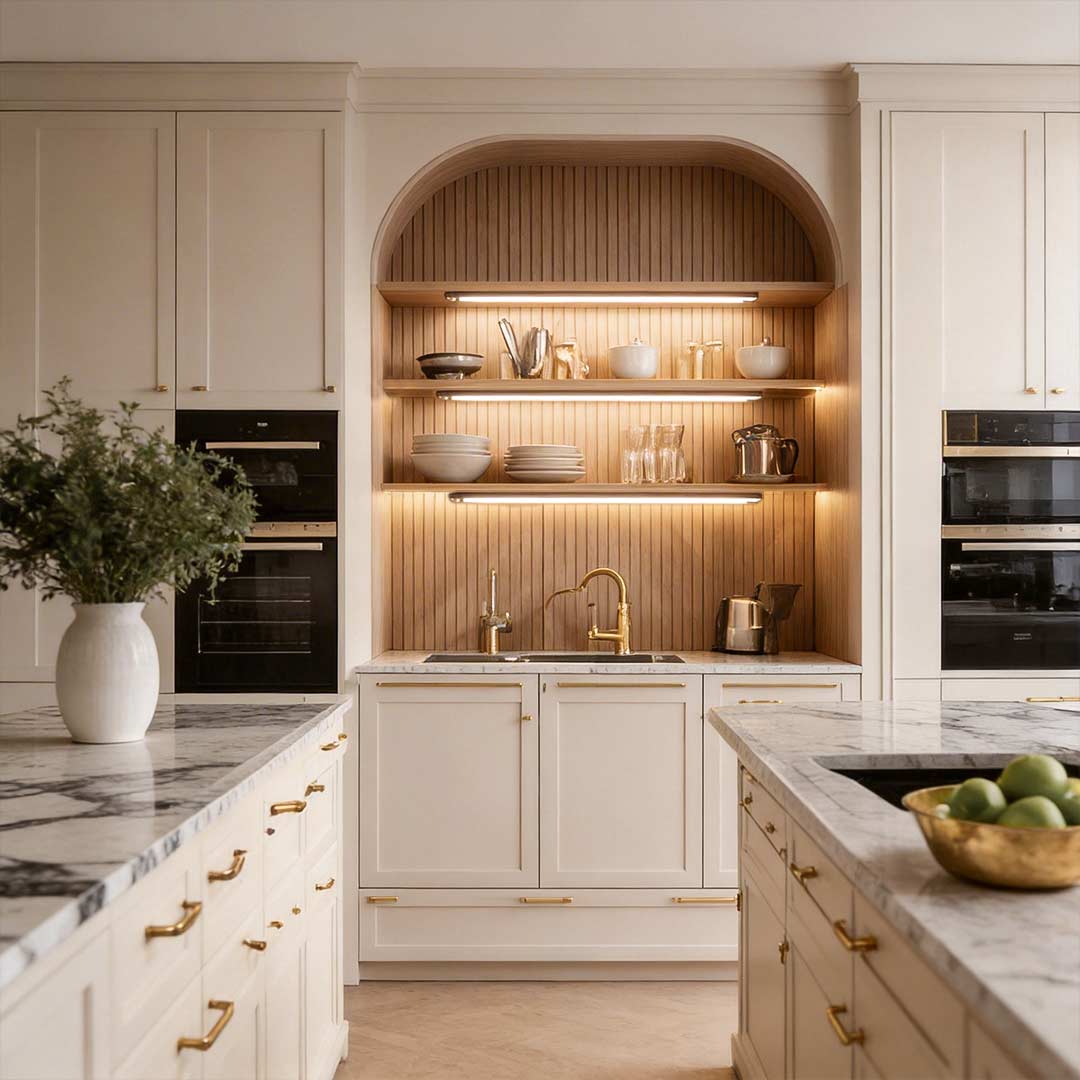
Wireless Under Cabinet Lighting LED Motion Sensor Light
Price: $28.99
This is a practical option for a cabinet, hallway-style kitchen corner, closet pantry, or small prep zone where you want light without hardwiring. The motion sensor makes sense for quick nighttime use, but the product note says the sensing function works only in a completely dark environment, so plan it for darker zones rather than a bright daytime task station.
- No wiring required, which makes it approachable for renters or quick kitchen upgrades.
- ABS and aluminum body with LED light source and downward light direction.
- Available in black or silver finishes for different cabinet and appliance styles.
For the best result, mount the light toward the front underside of the cabinet, not all the way against the back wall. If the fixture sits too far back, it lights the backsplash more than the counter. A forward position sends more light onto the cutting board and reduces the shadow from your hands.
When Ceiling Lights And Pendants Still Matter
Under cabinet lighting solves the counter problem, but it does not replace the whole lighting plan. Ceiling lights still matter because they set the base level of brightness when you walk into the kitchen. The issue is expecting them to solve every task.
If your ceiling fixture is centered in the room but your main work zones sit around the perimeter, a wider-spread fixture may help the room feel less cave-like. If your island feels dim, pendants can bring light down closer to the surface. For a kitchen with a long island, pendant placement matters because a beautiful fixture hung too high, too low, or too far from the prep area can create new shadows instead of fixing the old ones. For more detail on island placement, see Pendant Lighting Height Over Kitchen Island.

Match The Fixture To The Job
A ceiling light helps you walk through the kitchen. A pendant helps the island. An under cabinet light helps the countertop. When each fixture has a job, the room feels calmer and easier to use.
Directional fixtures can also help in kitchens where one corner is always gloomy. A few well-aimed directional lights can be useful when cabinets, ceiling beams, or an unusual floor plan make even lighting difficult. Just avoid pointing strong light directly into eye level, especially in open kitchens where people sit across from the cooking area.
A More Permanent Fix For Long Work Zones
If the dark area is not just one small spot but an entire run of counter, a bar-style cabinet light can feel cleaner and more consistent than several small stick-on fixtures. This is the kind of solution to consider during a remodel, cabinet update, or more planned lighting upgrade.
Longer linear lighting works well under cabinets because kitchen tasks usually happen in a line: washing, chopping, mixing, plating, and cleaning. A bar light spreads illumination along the counter instead of creating isolated bright dots.
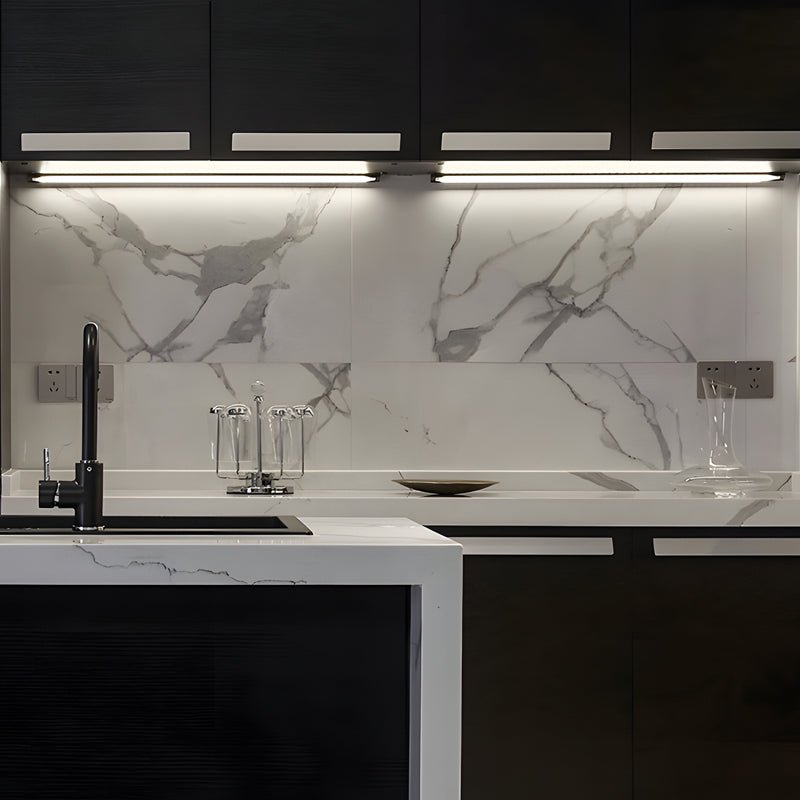
6PCS Long LED Bar 12V Surface Mounted LED Cabinet Lighting
Price: $93.99
This option is better suited to a planned cabinet lighting upgrade where you want a more continuous surface-mounted LED solution. Because the product page lists a 12V hardwired power supply, it is best for homeowners who are comfortable planning wiring or hiring a qualified electrician.
- Surface-mounted LED bar format helps spread light across longer work areas.
- Product selector includes white, warm white, warm yellow, and transformer options.
- Useful for kitchens where the entire countertop run feels underlit, not just one corner.
One useful detail many people miss: a hardwired under cabinet system should be planned around how the kitchen is actually used, not just where the cabinets are. The longest counter is not always the most important counter. If you use a smaller section every morning for coffee, school lunches, or meal prep, that section deserves priority.
Color Temperature, Surfaces, And The Mood Problem
Sometimes a kitchen is not truly too dark; it just feels unpleasant. This is where color temperature matters. A very cool bulb can make a kitchen feel sterile, especially at night. A very warm bulb can make white countertops look yellow or make food prep feel less crisp. For many kitchens, 3000K to 4000K is the comfortable working range, but the right choice depends on cabinet color, countertop material, and how the kitchen connects to nearby living spaces. For a deeper breakdown, see How to Choose the Right LED Lighting Color Temperature.
Bright Is Not Always Comfortable
A kitchen can have enough lumens and still feel off if the light temperature fights the cabinets, counters, or evening mood. The goal is clear work light without making the room feel harsh.

Surface finish also changes the result. Glossy tile and light quartz bounce light around the kitchen. Honed stone, dark butcher block, matte cabinet paint, and black appliances absorb more of it. A bright white kitchen photo may rely on daylight and reflective finishes, while your kitchen at 7 p.m. in winter needs a different strategy.
Real-Life Fixes For Common Dark Kitchen Complaints
If the sink feels dark, add light near the sink. If the island is dim, evaluate pendant height, spacing, and bulb output. If the back counter feels dead, under cabinet lights will usually do more than another ceiling fixture.

Fix The Routine, Not Just The Room
Think about where you actually complain: making coffee, washing dishes, packing lunches, or chopping food. Lighting those routines is more useful than chasing a perfectly even room.
If your kitchen style leans rustic or transitional, layered lighting also helps preserve warmth. A farmhouse kitchen, for example, can use decorative fixtures for character while relying on task lights for real visibility. The guide Modern Farmhouse Kitchen Lighting Ideas explains how pendants, chandeliers, and under cabinet lighting can work together instead of competing.
Common Mistakes That Keep A Kitchen Feeling Dark
Only Replacing The Main Ceiling Fixture
A new fixture can improve style, but it may not fix shadows. If the old light was in the wrong position, a new light in the same position may repeat the same problem.
Using Brighter Bulbs Without Checking Glare
More brightness can create glare on shiny countertops, polished tile, or stainless appliances. The kitchen may feel more tiring even if it measures brighter.
Ignoring The Underside Of Cabinets
Upper cabinets are useful for storage, but they are also shade structures. If you have wall cabinets above your main counter, under cabinet light is not a luxury detail. It is often the missing functional layer.
Choosing Color Temperature By Guessing
Always test bulbs or fixture color temperature at night. Daylight can make almost anything look acceptable. Evening shows the real mood.
Summary: What To Fix First
If your kitchen feels dark even with ceiling lights, identify where the darkness actually bothers you. Counters under wall cabinets usually need under cabinet task lighting. A dim island may need better pendant or directional lighting. A gray, unpleasant room may need a color temperature check.
The most useful kitchen lighting does not simply make the room brighter. It makes daily routines easier: chopping without shadows, cleaning without squinting, making coffee in the morning without turning on a harsh overhead light, and letting the kitchen feel comfortable after dinner. Once you think in zones and layers, the solution becomes much clearer.