
Who This Is For: This guide is for homeowners who want the front of the house to look more polished, welcoming, and high-end after dark without turning the yard into a bright parking lot. It is especially useful if you have a walkway, porch, garage face, stone wall, small tree, or planting bed that disappears at night.

Quick Answer: How Do You Create Dramatic Nighttime Curb Appeal With Lighting?
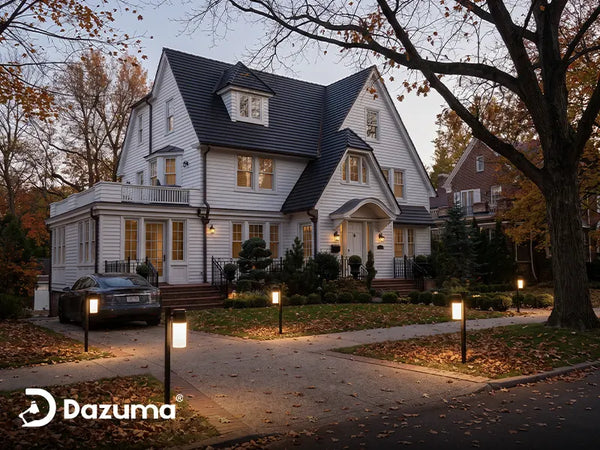
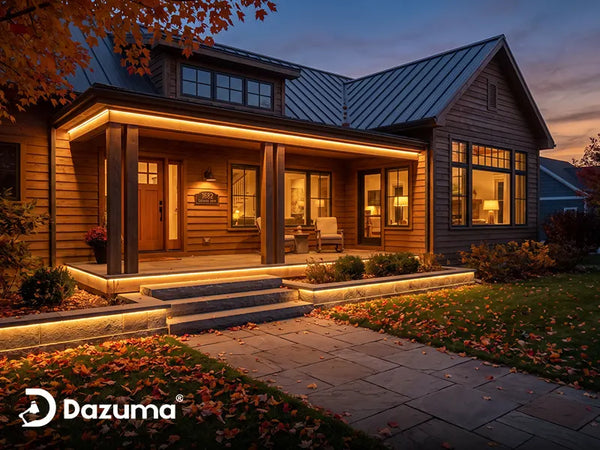
To create dramatic nighttime curb appeal with lighting, combine three things: low path lighting for safe movement, vertical accent lighting for trees or architecture, and warm entry lighting that makes the front door feel like the destination. The goal is to guide the eye from the sidewalk or driveway toward the home, then give the house enough shadow and highlight to look dimensional.
A strong outdoor lighting plan usually has one bright idea, not twenty competing ones. You might highlight a front tree, wash a textured wall, frame the porch with wall lights, or create a soft rhythm along the walkway. Once that main feature is chosen, the rest of the lighting should support it. If every fixture tries to be the star, the yard looks busy. If one feature leads and the other lights stay quiet, the home looks designed.
For most homes, warm white light is easier to live with than cool blue-white light. It looks better on brick, stone, mulch, wood doors, and greenery. It also feels more residential and less commercial. If you are comparing broader curb appeal ideas before choosing fixture types, Dazuma's guide on How to Use Outdoor Lighting to Improve Curb Appeal is a helpful companion piece.
Think Like A Camera Before You Buy Fixtures
The easiest way to improve a nighttime exterior is to imagine the house as a photograph. During the day, sunlight reveals depth automatically. At night, the lighting has to create that depth on purpose. A flat row of bright fixtures may make the yard visible, but it will not make it memorable. Drama comes from layers: a little light close to the ground, a little light on vertical surfaces, and a softer glow near the entrance.

Choose One Main View
Stand where guests, neighbors, or buyers first see the home. That may be the curb, the driveway, or the sidewalk. Design for that view first, then adjust the smaller details around the porch and pathway.
Start outside the property and look back at the house. Which part feels too dark? Which part already has enough light from the porch or street? Is the front door easy to find? Does the path look safe? Are there architectural features worth showing, such as columns, stone, arched windows, siding texture, or a mature tree?
This first walk-through prevents the most common mistake: buying a set of lights because they look good online, then spreading them evenly across the yard. Even spacing is not the same as good design. A straight row of identical lights may be useful for a long walkway, but dramatic curb appeal usually needs focal points, contrast, and restraint.
Use Three Lighting Layers For A More Dramatic Front Yard
Layering is what separates a basic lit yard from a polished nighttime scene. You do not need many fixtures, but each one should have a job. For curb appeal, the three most useful layers are path lighting, accent lighting, and entry lighting.
| Lighting Layer | Where To Use It | Curb Appeal Effect | Common Mistake |
|---|---|---|---|
| Path Lighting | Walkways, steps, driveway edges, garden borders | Creates direction and makes the home feel welcoming | Placing lights too close together like runway markers |
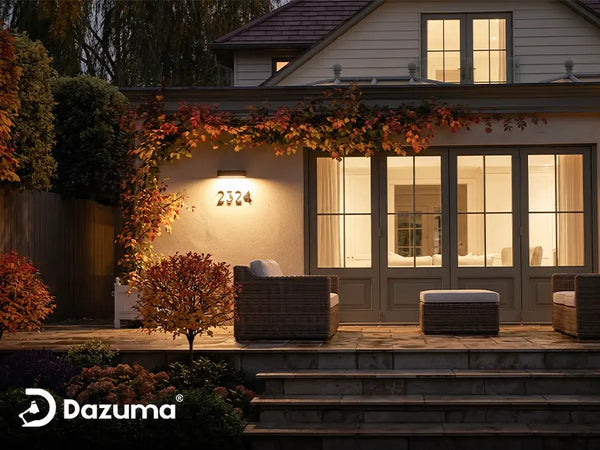
| Accent Lighting | Trees, stone walls, columns, address signs, facade details | Adds height, shadow, and a more expensive look | Aiming fixtures into windows or directly toward the street |
| Entry Lighting | Front door, porch, garage entry, house numbers | Turns the entrance into the visual destination | Using a porch light that is either too dim or too harsh |
| Wall Washing | Flat facades, retaining walls, textured exterior surfaces | Makes architecture look larger and more dimensional | Over-bright washing that removes natural shadow |
Path lighting is the foundation. It helps people move from the curb or driveway to the door without guessing where to step. A refined path lighting plan usually places fixtures at turns, steps, and transitions rather than at perfectly equal intervals. For product browsing or planning ideas, Path Lights are the category most homeowners compare first because they define the route before any decorative accents are added.
Accent lighting is where the drama begins. A small tree, a textured column, or a stone wall can look ordinary by day but sculptural at night. The trick is to light the surface, not the viewer. If you are deciding whether to aim light upward into trees or downward from the home, Dazuma's Uplighting vs Downlighting for Curb Appeal guide explains the visual difference in more detail.

Fixture Placement Guide For Dramatic Nighttime Curb Appeal
Placement matters more than the number of fixtures. A modest light in the right place often looks better than a powerful light in the wrong place. Before installation, place temporary markers in the yard and view the house from the street. This lets you check spacing, glare, and the overall rhythm before anything is fixed in place.
Start With The Path, But Do Not Over-Light It
The walkway should feel clear, not staged. On a straight path, a softer spacing pattern often works better than tight, symmetrical rows. On a curved path, place lights near the outside edge of the curve so the eye follows the turn naturally. If the front yard is small, use fewer fixtures and let the doorway glow complete the route. For more specific path ideas, see Best Pathway Lights for Front Yard Curb Appeal.
Add Height With Trees, Columns, Or The House Facade
A yard with only low lights can feel flat. Add one vertical element: a tree trunk, a tall shrub, a stone column, or a section of siding. For a subtle effect, keep the beam soft and partially hidden by planting. For a stronger architectural effect, aim at texture such as stone, brick, stucco, or wood. If the home has a broad blank wall, Wall Wash Lighting can help create an even glow across the surface instead of one harsh spotlight.
Keep The Front Door As The Anchor
Your lighting can highlight plants and architecture, but the front door should still read as the final destination. If the door area is darker than the landscape, the scene can feel pretty but confusing.

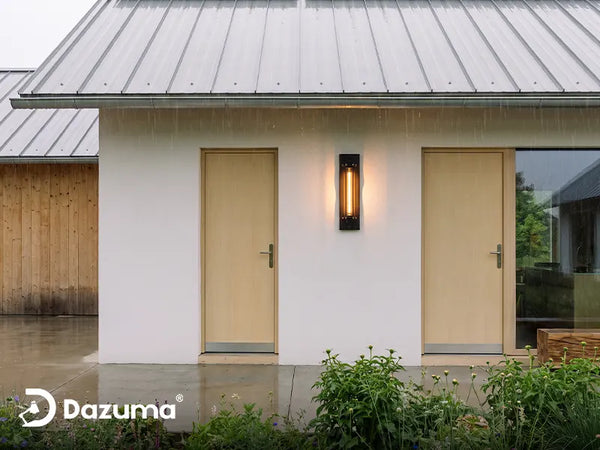
Entry lighting should flatter the door and make guests comfortable. If you use wall lights, mount them so the beam does not hit visitors directly in the eyes. If you use a ceiling or porch light, avoid a bare bulb that creates harsh shadows on faces. For exterior sconces and porch fixtures, Outdoor Wall Lighting is often the most practical category because it combines style, entry visibility, and a clear mounting location.
Choose Warm Light, Quiet Finishes, And A Consistent Style
Color temperature changes the mood of the whole exterior. Cool white light can make landscaping look stark and can exaggerate glare. Warm white light usually feels more inviting, especially on homes with brick, stone, tan siding, wood doors, bronze hardware, or green planting. It also photographs better for real estate listings and evening entertaining because it creates a softer transition between light and shadow.
Fixture finish should support the house instead of competing with it. Black and dark bronze tend to disappear into landscaping, which is useful when the light effect matters more than the fixture shape. Brass, copper, or warm metallic finishes can look beautiful near traditional doors, brick, and historic details, but they should be repeated somewhere else so they do not feel random.
| Home Feature | Lighting Move | Best Visual Result |
|---|---|---|
| Brick Or Stone Facade | Use warm wall washing or soft uplighting | Texture looks rich instead of flat |
| Modern Siding | Use clean black fixtures and controlled beams | Sharper architectural lines |
| Large Tree Or Tall Shrub | Aim a narrow accent light upward through the canopy | Height, shadow, and a resort-like feel |
| Small Porch | Use one soft entry light and low path lighting | Welcoming without clutter |
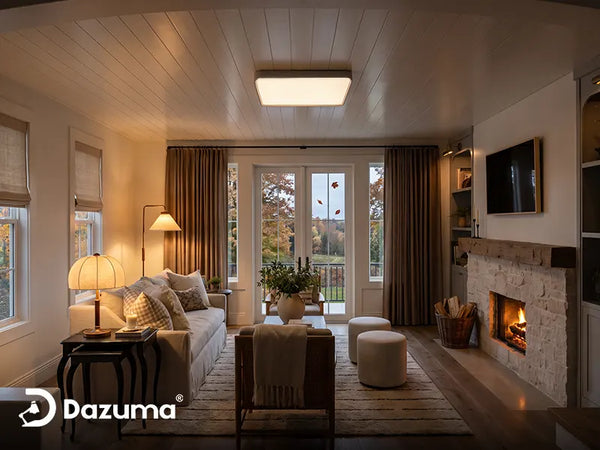
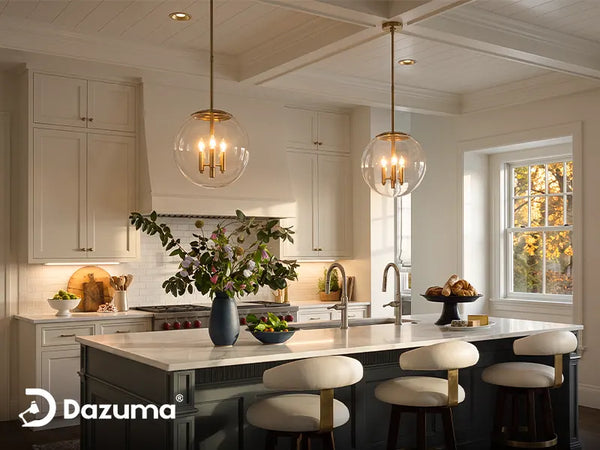
Do not forget the indoor view from the street. If an entry foyer, covered vestibule, or front window is visible at night, the fixture inside that space can affect curb appeal too. A softly diffused option such as a Milk Glass Pendant Light can create a warm interior glow that supports the exterior scene. Just remember that indoor pendants are not substitutes for outdoor-rated fixtures in exposed locations.

Let Interior Glow Support The Exterior
Sometimes the most inviting part of curb appeal is not a brighter yard, but a warmer entry window. Coordinate visible indoor glow with exterior lighting so the home feels lived-in and welcoming.
Avoid Glare, Light Trespass, And The “Too Much” Look
Dramatic lighting depends on shadow. If every surface is equally bright, the home loses depth. Glare also makes people uncomfortable and can create conflict with neighbors. A good test is simple: stand at the sidewalk, the driveway, and the front door. If any fixture shines directly into your eyes, lower the brightness, change the angle, add shielding, or move the fixture.
Use light only where it has a job. Steps, path turns, address numbers, and the front door deserve clarity. Planting beds, decorative walls, and trees deserve softer accent light. The lawn itself usually does not need to be fully lit. In fact, a darker lawn can make the highlighted parts of the home feel more dramatic.
Use Timers, Dimmers, Or Motion Sensors To Keep The Scene Controlled
A front yard that looks beautiful at 8 p.m. may feel too bright at 2 a.m. If possible, use timers, dimmers, dusk-to-dawn settings, or motion sensors so the strongest lighting is active only when needed. This is especially useful for garage areas, side gates, and security zones. For decorative curb appeal, a lower evening level often looks more refined than full brightness all night.
Check The Neighbor View
Walk across the street and look back. Then stand near each property line. A dramatic home exterior should not spill harsh light into a neighbor's window or make the street feel washed out.

If you are using plug-in seasonal lights, cords, or temporary fixtures as part of the scene, keep safety in mind. Use outdoor-rated equipment, avoid running cords through wet grass or under doors, and do not treat extension cords as permanent wiring. For permanent lighting, buried cables, new outlets, or hardwired exterior fixtures should be handled by a qualified professional.
A Simple Front Yard Lighting Plan You Can Follow
If you are starting from zero, do not light everything at once. Build the scene in stages and evaluate the result at night. Begin with the route: sidewalk, driveway, steps, and front door. Then add one vertical accent, such as a tree or wall. Finally, adjust brightness and color so the home feels cohesive.
- Mark the main view. Stand at the curb or driveway and decide what should be noticed first.
- Light the path lightly. Place fixtures at turns, steps, and decision points rather than filling every empty space.
- Add one dramatic feature. Choose a tree, wall, column, or facade surface for vertical depth.
- Make the front door warmer than the yard. The entrance should feel like the destination.
- Test for glare. View the layout from the street, porch, driveway, and neighboring side.
- Remove one light if the scene feels busy. Curb appeal often improves when the lighting becomes quieter.
A dramatic lighting plan does not need to be loud. In fact, the most expensive-looking exteriors usually feel quiet, warm, and deliberate. Light the route, define the entry, add one vertical accent, and let shadow do some of the work. That balance is what makes a house look inviting from the street without feeling over-lit when you live with it every night.