

Who This Article Is For
This guide is for homeowners, renters, remodelers, and interior designers trying to figure out why a ceiling fan sounds different than it used to. If you hear clicking, humming, rattling, grinding, scraping, buzzing, or wobbling from a fan in a bedroom, living room, kitchen, nursery, or home office, this article will help you narrow down the likely cause before you spend money on a replacement.
Some ceiling fan noise is simple: a loose screw, a dusty blade, or a canopy touching the ceiling. Other noises can point to electrical problems, worn bearings, unbalanced blades, or an incorrectly installed fixture. The key is knowing which sounds are harmless, which are fixable, and which ones should be handled by a licensed electrician.
Introduction
A ceiling fan should create airflow, not become the soundtrack of the room. In most homes I visit, the complaint starts the same way: “It was quiet before, but now the fan clicks every night,” or “The bedroom fan hums so loudly that we stopped using it.” If your ceiling fan making noise problem started suddenly, there is usually a specific cause.
Noise often comes from movement. A loose blade arm vibrates. A canopy rubs. A downrod connection shifts. A motor hums under the wrong dimmer. Dust buildup makes blades uneven. Even a small alignment issue can become obvious at medium or high speed.
The good news: many noisy ceiling fan problems can be fixed with careful inspection, cleaning, tightening, or balancing. The bad news: grinding, burning smells, flickering, hot motor housings, or repeated breaker trips are not DIY comfort issues. Those are safety signals.
A ceiling fan usually makes noise because of loose screws, unbalanced blades, dust buildup, canopy vibration, worn bearings, motor humming, or poor installation. Turn the fan off, inspect visible hardware, clean the blades, tighten loose parts, and balance the blades. Stop using it if you hear grinding, smell burning, or see wobbling at the ceiling box.

What Different Ceiling Fan Noises Mean
The sound tells you where to look first. A clicking ceiling fan usually has a different cause than a humming or grinding fan. Before touching the fixture, listen from a safe distance and note whether the sound happens at low, medium, or high speed.
| Noise Type | Likely Cause | First Fix To Try |
|---|---|---|
| Clicking | Loose blade screw, blade arm, light kit, pull chain, or decorative part | Tighten visible screws and check for parts tapping during rotation |
| Humming | Motor vibration, incompatible wall dimmer, electrical control issue | Use a fan-rated control and avoid standard light dimmers |
| Rattling | Loose canopy, glass shade, grille, or mounting hardware | Check the canopy, shade screws, and fixture housing |
| Grinding | Worn bearing, internal motor issue, or rubbing component | Turn the fan off and consider professional inspection |
| Buzzing | LED driver, light kit, remote receiver, or electrical vibration | Test fan-only and light-only modes separately |
| Scraping | Canopy touching ceiling, blade rubbing, or misaligned housing | Stop the fan and inspect clearance around moving parts |
In bedrooms and nurseries, even a small clicking sound feels louder because the room is quiet at night. Choose fans with stable mounting, low-profile construction, and remote control settings that allow gentle airflow without running the motor harder than needed.

A noisy ceiling fan does not always mean the motor is failing. In many cases, the sound comes from the outer parts of the fixture: blades, screws, glass shades, canopy covers, or decorative trim.
For homes with low ceilings or quiet bedrooms, browsing flush mount ceiling fans can help you compare designs that sit closer to the ceiling and reduce the long downrod movement that sometimes adds vibration.
Easy Fixes You Can Try First
Before replacing the fan, work through the basic checks. Always turn the fan off and let the blades stop completely before inspecting it. If you need to touch wiring, remove the light kit, or open the canopy, turn power off at the breaker.
1. Clean The Blades
Dust does more than make a fan look neglected. Heavy dust on one blade can throw off the balance, especially in kitchens, great rooms with fireplaces, and bedrooms where the fan runs nightly. Clean the top and bottom of each blade with a microfiber cloth.
2. Tighten Visible Screws
Check blade screws, blade arm screws, light kit screws, glass shade screws, and canopy screws. Do not overtighten glass or acrylic parts. The goal is snug, not forced.
3. Check The Canopy
The canopy is the cover near the ceiling. If it touches the ceiling unevenly or vibrates against the mounting hardware, it can create a faint scraping or rattling sound. Slight adjustment may stop the noise.
4. Test Speeds Separately
Run the fan on low, medium, and high. A sound that only happens on high speed often points to blade balance. A hum at all speeds may point to motor or control compatibility.
5. Separate Fan Noise From Light Noise
If your ceiling fan includes an LED light, test the fan with the light off, then the light with the fan off. Buzzing may come from the LED driver, bulb, remote receiver, or dimmer rather than the fan motor itself.
Many people assume a noisy ceiling fan needs a new motor. I usually check blade screws, dust buildup, glass shades, and canopy alignment first. These simple issues are responsible for a large share of clicking and rattling complaints.

Why A Wobbling Fan Gets Noisy
A fan that wobbles is more likely to become noisy because each rotation puts uneven stress on the blades, arms, mounting hardware, and motor housing. A small wobble at low speed can become a visible shake at high speed.
Common causes include mismatched blade weight, warped blades, loose blade arms, incorrect installation, or a ceiling box that is not fan-rated. If the wobble appears to come from the ceiling itself, stop using the fan until the mounting is checked.
| What You See | Possible Issue | Recommended Action |
|---|---|---|
| Blade tips move unevenly | Unbalanced or warped blades | Use a fan balancing kit or replace damaged blades |
| Fan shakes only on high speed | Minor imbalance becomes stronger at speed | Clean blades and test balance at each speed |
| Canopy moves near ceiling | Loose mounting or improper electrical box | Stop using the fan and call an electrician |
| Light kit rattles | Loose shade, ring, screw, or trim | Tighten carefully and check gasket contact |
| Fan swings on a long rod | Downrod movement or angled ceiling issue | Check downrod pin, set screws, and mounting bracket |
If the fan wobbles at the ceiling box, makes grinding sounds, smells hot, sparks, flickers, or trips the breaker, turn it off immediately. Do not keep testing it. A licensed electrician should inspect the mounting support and wiring.
For low ceilings, children’s rooms, compact bedrooms, and loft-bed layouts, long-blade fans may not be the most comfortable option. A compact or enclosed design can reduce blade exposure and keep the fixture visually cleaner.
That is why many homeowners compare ceiling fans with lights when they want both airflow and room lighting without installing two separate fixtures.

Real Room Scenarios
Bedroom: Clicking At Night
A bedroom fan that clicks once per rotation often has a loose blade screw, blade arm, pull chain, or light kit part. Because bedrooms are quiet, the sound feels more annoying than it would in a family room. I usually check the blade arms first, then the glass shade or acrylic lens, then the canopy.
For bedrooms, a quiet fan matters as much as airflow. A fan that has to run on high speed all night may be the wrong size or style for the room. A better design uses steady low or medium airflow, balanced blades, and smooth controls.
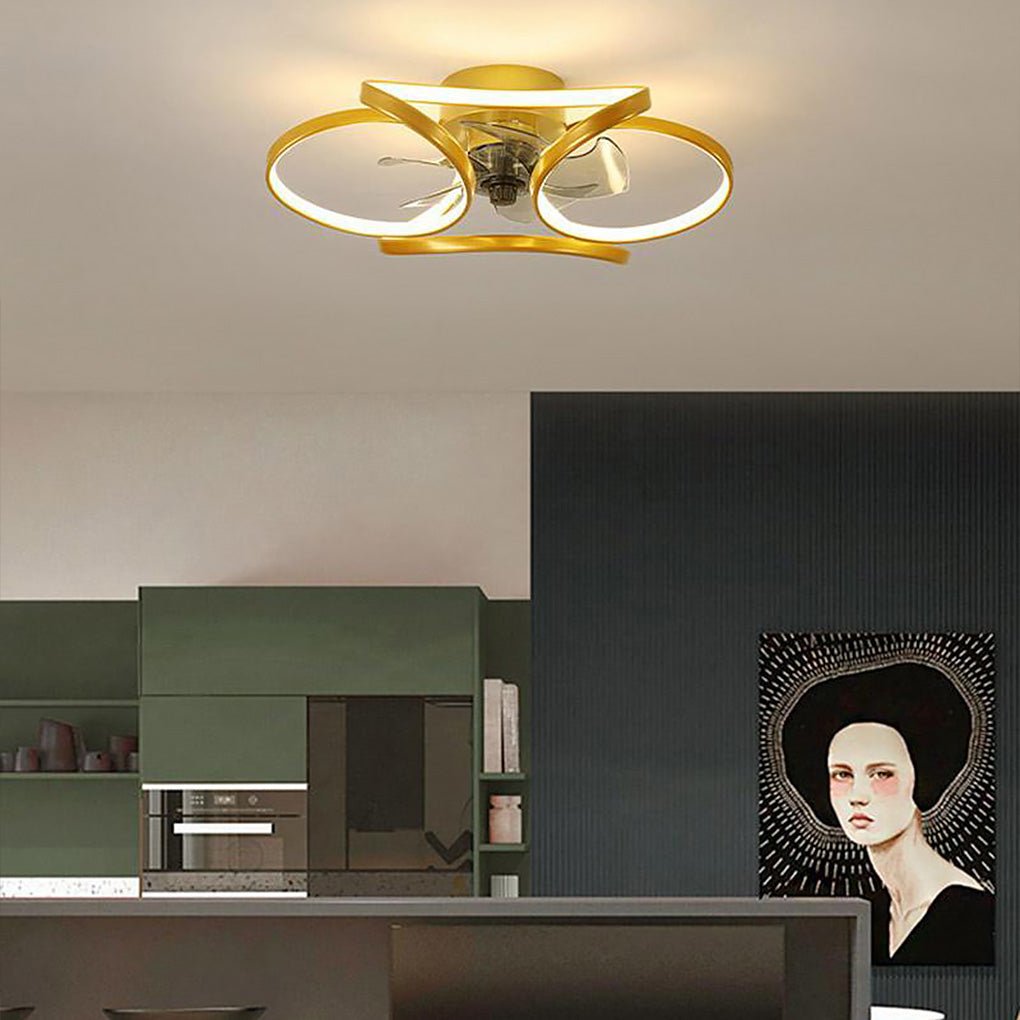
Flower Ceiling Fan With Light Modern LED Recessed Light
A decorative flush mount fan light for homeowners who want gentle airflow, integrated LED lighting, and a softer ceiling feature for bedrooms, dining rooms, and kitchens.
| Size Options | 18 in and 22 in diameter |
| Light | 24W integrated LED |
| Color Temperature | Remote dimming from 3000K to 6000K |
| Finish Options | Gold, white, and black |
| Best Use | Bedroom, dining room, kitchen, leisure room |
Kitchen: Rattling From The Light Kit
Kitchens create a different problem. Grease and dust can collect on blades and light covers faster than in bedrooms. A fan light over a breakfast nook may start to rattle because the shade, trim, or screws have loosened after months of daily use.
If the fan is near cooking zones, clean it more often and avoid letting residue build on one side of the blades. Uneven buildup can create imbalance, and imbalance can lead to noise.
Clean bedroom and living room fans every two to three months. Clean kitchen fans more often, especially if the fan is near a range or open cooking area. Always support glass or acrylic shades with one hand while loosening screws.
Home Office: Humming During Work Calls
A humming fan in a home office can be distracting, especially during video calls. If the fan hums but does not wobble, look at the control first. Standard wall dimmers are made for lights, not fan motors. A fan should use a fan-rated speed control, compatible remote receiver, or manufacturer-approved control system.
For deeper wiring guidance, see Dazuma’s guide on how to wire a ceiling fan with light. If you are not comfortable with wiring, bring in an electrician rather than guessing.

When It May Be Time To Replace The Fan
Not every noisy ceiling fan is worth repairing. If the fan is old, poorly balanced, hard to clean, too low for the room, or noisy even after tightening and balancing, replacement may be the better long-term fix.
Consider replacing the fan if it has persistent grinding, visible motor wear, repeated wobbling, outdated controls, poor airflow, or a fixture style that no longer fits the room. For low ceilings, compact bedrooms, children’s rooms, and modern apartments, bladeless ceiling fans with light can be a practical alternative because the airflow system is enclosed and the profile is often more compact.
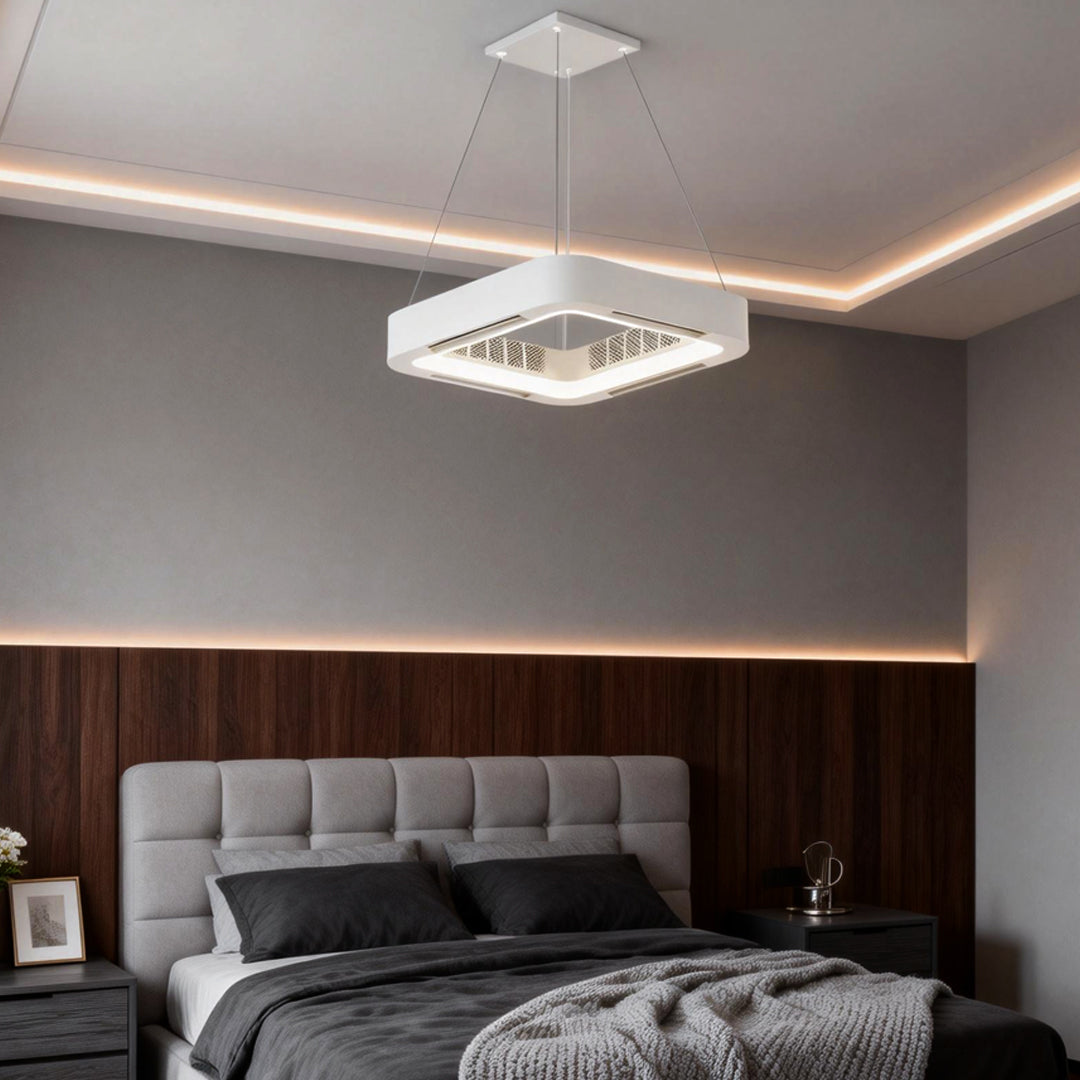
Low Profile Bladeless Ceiling Fan With Light Inverter LED Light
A modern enclosed fan light for low-ceiling rooms, bedrooms, studies, children’s spaces, and semi-outdoor covered areas where safety and quiet operation matter.
| Size | 22.83 in W x 22.83 in D x 4.72 in H |
| Installation | Flush mount or pendant style |
| Light | 45W LED, dimmable 3000K–6000K |
| Motor | Inverter motor with remote control |
| Recommended Area | 108–215 sq ft |
For low-ceiling bedrooms, I prefer compact flush mount or enclosed fan lights over long downrod fans. They keep the ceiling line cleaner, reduce visual clutter, and are usually easier to place above beds, desks, and walking paths.

Replacement is not only about noise. It can also improve clearance, lighting quality, room style, and daily comfort. A low-profile fan light can be especially helpful in apartments, condos, guest rooms, and children’s bedrooms where every inch of ceiling height matters.
If you are comparing broader styles before choosing, start with ceiling fans and narrow by ceiling height, room size, blade exposure, and lighting needs.
Maintenance And Safety Tips
A ceiling fan is both a moving fixture and an electrical fixture, so maintenance should be careful, not rushed. Good maintenance keeps noise down and extends the life of the fan.
| Task | How Often | Why It Helps |
|---|---|---|
| Dust blades and housing | Every 2–3 months | Prevents imbalance and improves airflow |
| Check visible screws | Every 6 months | Reduces clicking, rattling, and vibration |
| Inspect light shades or covers | Every 6 months | Prevents glass or acrylic parts from vibrating |
| Test wobble at each speed | Seasonally | Catches balance problems before they get worse |
| Review remote and wall control behavior | As needed | Helps identify humming, buzzing, or dimming compatibility issues |
After installing a new fan, run it at all speeds before putting tools away. Listen for clicking, watch the canopy, and check the light kit. Small installation issues are easiest to correct before the ladder is moved and the room is cleaned up.

Conclusion
If your ceiling fan making noise problem is a light clicking, soft rattle, or speed-related vibration, start with cleaning, tightening, and balancing. These fixes solve many everyday fan noise issues in bedrooms, kitchens, living rooms, and home offices.
If the fan hums, check the control compatibility. If it wobbles at the ceiling, makes grinding sounds, smells hot, or affects the breaker, stop using it and call a professional. A fan should feel stable, sound smooth, and support the comfort of the room.
For quiet, space-saving upgrades, browse Dazuma’s ceiling fans with lights, compact flush mount ceiling fans, and modern bladeless ceiling fans with light. Choose the fan that fits your ceiling height, airflow needs, lighting preference, and the level of quiet your room deserves.