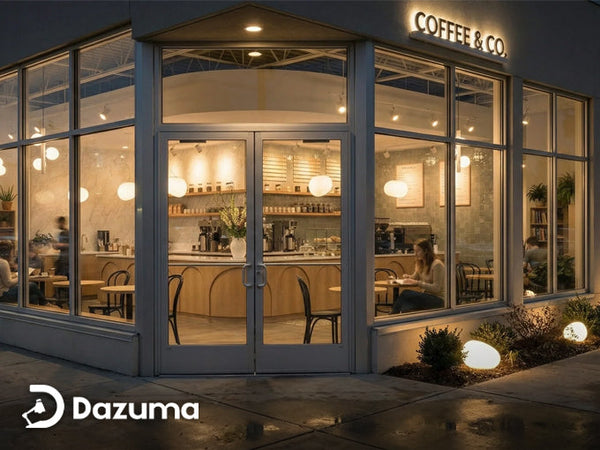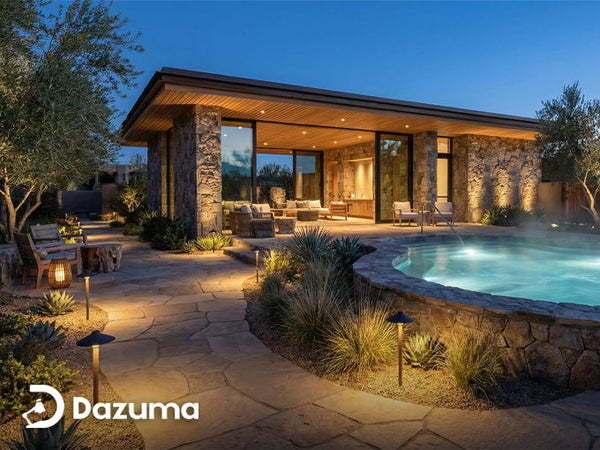

In hospitality, the guest experience doesn’t start at the front desk—it starts the moment someone arrives. That’s exactly what this project focused on: transforming a standard arrival courtyard into a space that immediately feels warm, upscale, and intentional.
Instead of relying on overly bright lighting, the design leaned into a more subtle approach. The idea was simple—create a space that feels welcoming and easy to navigate, while still delivering that premium, high-end look. The courtyard acts as a transition zone between outside and inside, so the lighting had to guide people naturally, highlight key features, and make the entire experience feel seamless.
A Layered Approach That Feels Effortless
One of the biggest shifts in this project was moving away from “flat lighting” and toward a layered setup. Rather than treating the space as one uniformly lit area, different lighting elements were combined to create depth and visual interest.
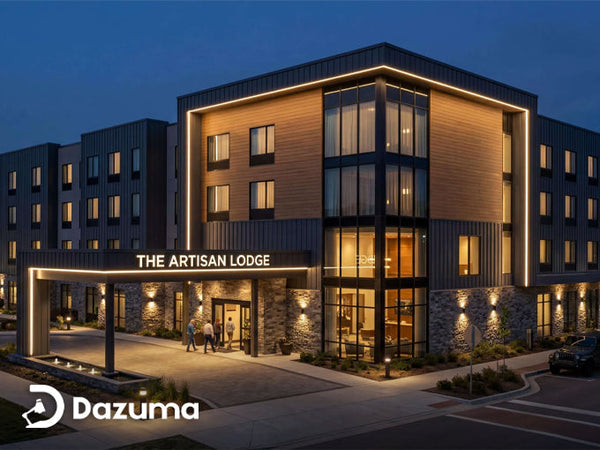
Path lights and bollards were used to gently guide guests through the space, making navigation intuitive without needing signage. At the same time, in-ground and landscape lighting brought out textures in greenery and architectural details, adding dimension after dark. Facade uplighting gave the building a strong but elegant presence, while canopy lighting ensured that key entry points were clearly visible and functional.
What makes this approach work is balance. Nothing feels too bright or distracting. Everything works together quietly in the background, shaping the experience without overwhelming it.

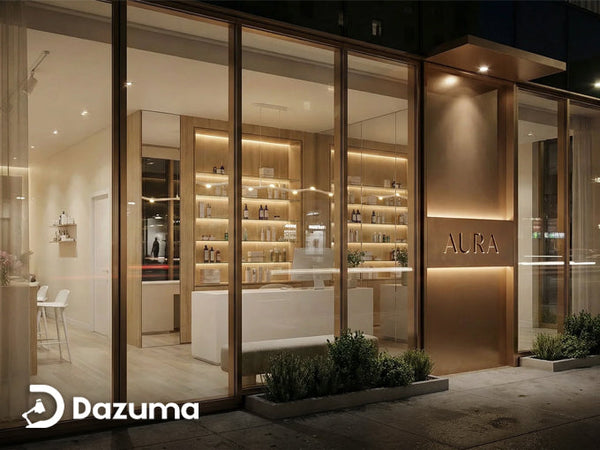
Architectural facade lighting gives the office building a strong and refined nighttime presence.
Comfort Over Brightness
A common mistake in outdoor lighting is thinking brighter equals better. In reality, too much light can make a space feel harsh and uncomfortable—especially in hospitality settings where people are looking to relax.
In this project, comfort was a top priority. Warm color temperatures were used throughout to create a softer, more inviting feel. Fixtures were carefully positioned to reduce glare, so guests aren’t hit with direct light as they walk through the space. The result is a courtyard that feels calm and easy on the eyes, even at night.
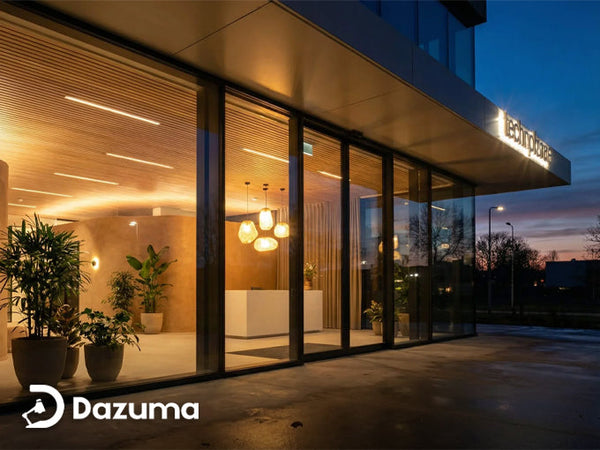
Another subtle but important detail is how the outdoor lighting connects with the interior. Instead of feeling like two separate environments, the lighting was designed to flow naturally from inside to outside. Warm light spills out from the building and blends with the courtyard lighting, creating a smooth, cohesive transition that just feels right.
Fixture Choices That Support the Experience
Every fixture in this project was selected with both function and aesthetics in mind. It’s not just about what the light does, but how it contributes to the overall atmosphere.
Decorative elements, like pendant fixtures near the entrance, act as visual anchors and reinforce the upscale identity of the space. Meanwhile, more subtle fixtures—like path lights and uplights—do the heavy lifting in shaping movement and highlighting the environment.
Nothing feels random. Every light has a role, and together they tell a consistent visual story.

Layered landscape lighting adds warmth, depth, and comfort to the workplace courtyard.
From Design to Execution
Great lighting design only works if it’s executed properly. This project required close coordination across multiple stages, from planning and fixture selection to installation and system integration.
Details like beam angles, spacing, and color temperature consistency were carefully considered to make sure everything works as intended. Even things like dimming compatibility and outdoor durability were factored in early on, which helps avoid issues down the line.
This kind of behind-the-scenes work is what allows the final result to feel so smooth and effortless.

Pathway lighting helps guide movement while enhancing the overall outdoor atmosphere.
The End Result: More Than Just Lighting
After completion, the courtyard became more than just an entry point—it became part of the overall guest experience. The space now feels welcoming, easy to navigate, and visually aligned with the brand’s upscale positioning.
Guests aren’t just walking through anymore—they’re arriving.
Key Takeaways for Hospitality Lighting Design
This project reinforces a few principles that consistently work in high-end hospitality environments:
- Less is more: Avoid over-lighting; focus on balance and intention
- Layering is essential: Combine ambient, accent, and functional lighting
- Think in transitions: Design for how people naturally move
- Prioritize comfort: Use warm light and reduce glare
- Execution matters: Good coordination brings the design to life