
Who This Is For: This guide is for homeowners choosing pendant lights for a kitchen island, dining table, bedside, or small entry—and wondering whether milk glass will feel too dim or clear glass will feel too bright and exposed.
Why the Prettiest Glass Pendant Can Become the Most Annoying Light
Glass pendants often look calm in daytime photos. The surprise comes after sunset, when a clear globe can reveal a sharp hotspot or a milk glass shade can feel underpowered over a work surface.
Glare depends on the light source, your eyes, and the surrounding room—not the glass alone. A clear pendant can feel comfortable with a low-output frosted bulb, while a small milk glass shade can still show a hot spot around an overly bright source.
The useful question is not simply, “Which glass is brighter?” It is, “Which shade gives me the right balance of visual comfort, useful light, and style from the places where I actually sit and stand?”
Quick Answer: Which Is Better for Glare?
Milk glass is usually the safer choice for reducing discomfort glare because the shade diffuses the light and makes the glowing area appear larger and more even. It is especially helpful where pendants sit close to eye level, such as above a dining table, beside a bed, or over an island viewed from nearby stools.
Clear glass is better when you want visual lightness, sparkle, and an unobstructed view through the fixture—but it does not hide an overly bright bulb. To keep clear glass comfortable, use a frosted bulb, moderate lumen output, dimming when compatible, and a hanging height that keeps the brightest part of the bulb out of normal sightlines.
Milk glass does not automatically make a room dark, and clear glass does not automatically provide better task lighting. Shade shape, bulb output, light direction, fixture spacing, surrounding surfaces, and other light layers all matter.
What Actually Causes Pendant Light Glare?
Discomfort glare is the sensation that a light source is uncomfortably bright compared with its surroundings. In a home, four factors matter most:
- Source brightness: A small, intense LED or clear filament can create a sharper hotspot than a larger diffused source.
- Source size: Spreading light across a larger shade surface generally feels softer than concentrating it in a tiny visible point.
- Viewing angle: A bulb directly in your seated line of sight is more bothersome than one hidden above the shade edge.
- Background contrast: A bright bulb feels harsher in a dark room than it does when walls, counters, and nearby lamps provide balanced ambient light.
This explains why a pendant can feel fine while you are standing at an island but uncomfortable when you sit at a nearby dining chair. Your eye position changes, and the bulb may suddenly become visible beneath the glass.
Always Test the Seated View
Stand-up measurements are not enough. Sit at the island stool, dining chair, sofa, or bed and check whether the bulb becomes a bright point in your normal field of view.
How Milk Glass Pendant Lights Handle Light
Milk glass is opaque or translucent white glass that scatters light instead of exposing the bulb. The shade becomes a larger luminous surface, which usually lowers the intensity of any one spot. That is why Milk Glass Pendant Light designs often feel calm in dining rooms, bedrooms, and family kitchens.
Where Milk Glass Helps Most
Milk glass is useful when the pendant is close to eye level, when children or guests sit directly beneath it, or when the room has dark surfaces that make a visible bulb feel excessively bright. It also hides the bulb shape, which creates a cleaner appearance when you do not want decorative filament bulbs to become part of the design.
The Tradeoff: Softer Does Not Mean Stronger Task Light
Diffusion redirects and softens light, so milk glass may deliver less concentrated light to the counter than an open-bottom metal shade or carefully aimed task fixture. The solution is not automatically a much brighter bulb. A bulb that is too powerful can make the whole globe glow aggressively or produce a bright central patch.
Instead, layer the room: use pendants for comfortable ambient and decorative light, then let recessed lights, under-cabinet lighting, or nearby task lighting provide the working brightness.
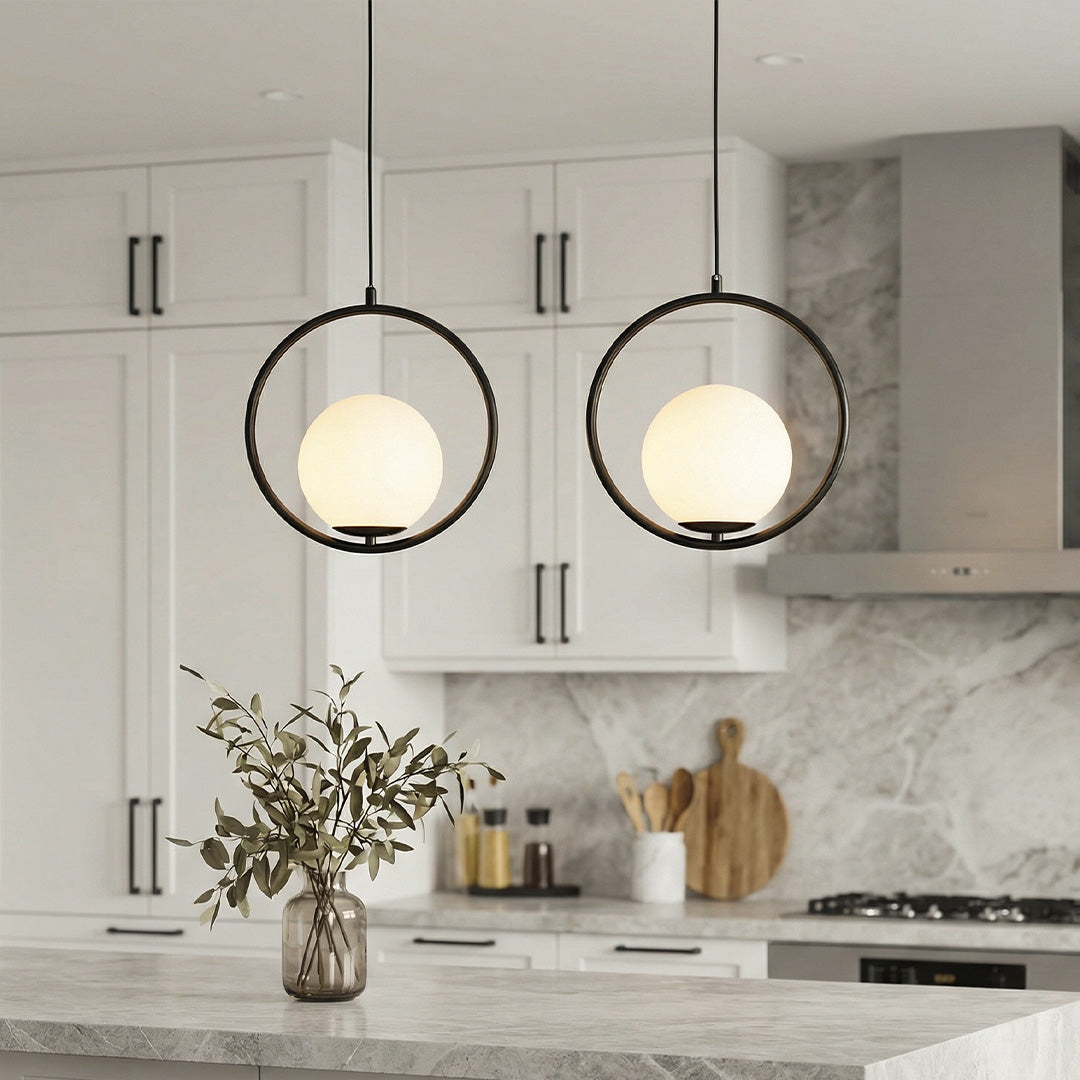
Soft Globe Light With Graphic Contrast
Modern Metal Circle Glass Globe Shaped Pendant Ceiling Light
Price: $171.99
Best for a small island, breakfast table, bedside, or reading corner where you want the glare-softening appearance of a white globe without losing a crisp modern silhouette.
- The white spherical glass visually enlarges the glowing surface compared with an exposed bulb.
- The black metal circle adds definition without making the shade feel visually heavy.
- The replaceable bulb base lets you select a comfortable frosted bulb and output.
How Clear Glass Pendant Lights Handle Light
Clear glass preserves sightlines and gives a pendant a lighter visual footprint, making it useful in small kitchens and open spaces where you do not want to block cabinetry, tile, or windows.
The Glass Pendant Lights category includes clear, tinted, textured, and opaque options, but clear glass provides the least shielding, so the bulb remains the dominant bright object.
Clear Glass Is Not the Same as Harsh Light
A clear globe can be comfortable when paired with the right source. A frosted LED hides the sharp internal diode pattern. A lower-output bulb reduces the peak brightness. A dimmer gives you flexibility between food preparation and late-evening atmosphere. A pendant hung high enough keeps the bulb out of the seated view.
When Clear Glass Is the Better Design Choice
Use clear glass when the room already has good general lighting and the pendant is primarily decorative. It also works when you want to repeat glass cabinet doors, a glass dining table, glossy tile, or polished stone without adding another solid visual mass.
Clear glass often looks brighter because you see the source directly, but perceived brightness is not the same as useful illumination on the work surface. A glaring bulb can make your eyes adapt to the hotspot, causing the surrounding counter to feel darker by comparison.
Use Clear Glass to Preserve the View
In a compact kitchen, transparent globes allow cabinet lines, backsplash, and windows to remain visible. Control glare through the bulb and hanging height rather than relying on the glass.
Milk Glass vs. Clear Glass Pendant Lights
| Decision Factor | Milk Glass | Clear Glass |
|---|---|---|
| Glare Control | Usually better because it diffuses the visible source | Depends heavily on bulb, output, dimming, and sightline |
| Visual Weight | More solid and noticeable | Airy and visually open |
| Task-Light Feel | Soft and even, but less directional | Can appear brighter, but may create a distracting hotspot |
| Bulb Appearance | Hidden | Visible and part of the design |
| Cleaning | Dust shows less from a distance, though fingerprints can remain visible | Dust, fingerprints, and internal film are easier to notice |
| Best Fit | Dining, bedside, family kitchen, low-glare ambient lighting | Small rooms, open sightlines, decorative islands, layered lighting plans |
Which Glass Works Best by Room?
Kitchen Island
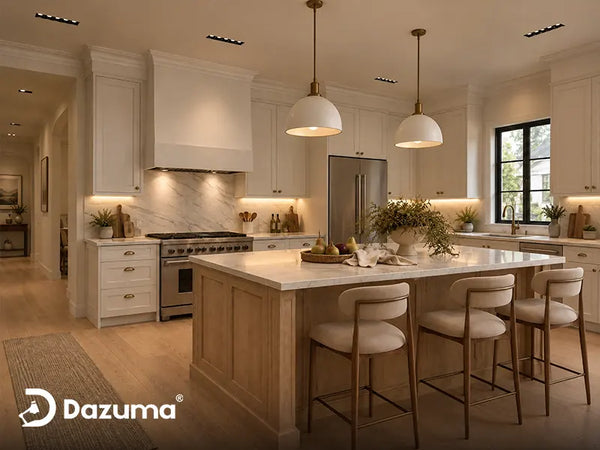
Choose milk glass when people regularly sit at the island. Choose clear glass when the kitchen is compact and recessed or under-cabinet lighting already provides work light. Explore Kitchen Lighting as a layered system rather than expecting pendants to do every job.
Dining Table
Milk glass is often more forgiving because diners remain seated beneath the fixture for long periods. Clear glass can work beautifully in a formal dining room, but test the view from every chair. A visible bulb near eye level can become tiring during a long meal.
Bedside
Milk glass is usually the comfortable choice because the fixture is close to the face and often used at night when the surrounding room is dark. If you prefer clear glass, select a low-output frosted bulb and keep the source above the normal reclining sightline.
Entryway and Hall
Clear glass can add sparkle without narrowing the visual path. Milk glass gives a calmer, more architectural glow. In both cases, check the view from stairs and upper floors, where the bulb may be visible from an unexpected angle.
Living Room Corner
A milk glass pendant can act like a suspended floor lamp, creating soft background light. A clear globe works better as a decorative accent when table lamps and floor lamps already balance the room.
A Clear Glass Option for Airy Island Lighting
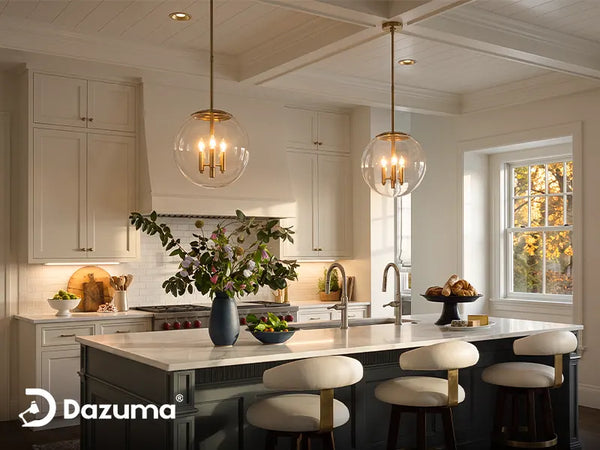
When clear glass is selected for a kitchen island, the bulb becomes part of the visual design. A small globe is easiest to live with when the bulb is frosted, the output is moderate, and the pendants are spaced so each source does not multiply the glare.
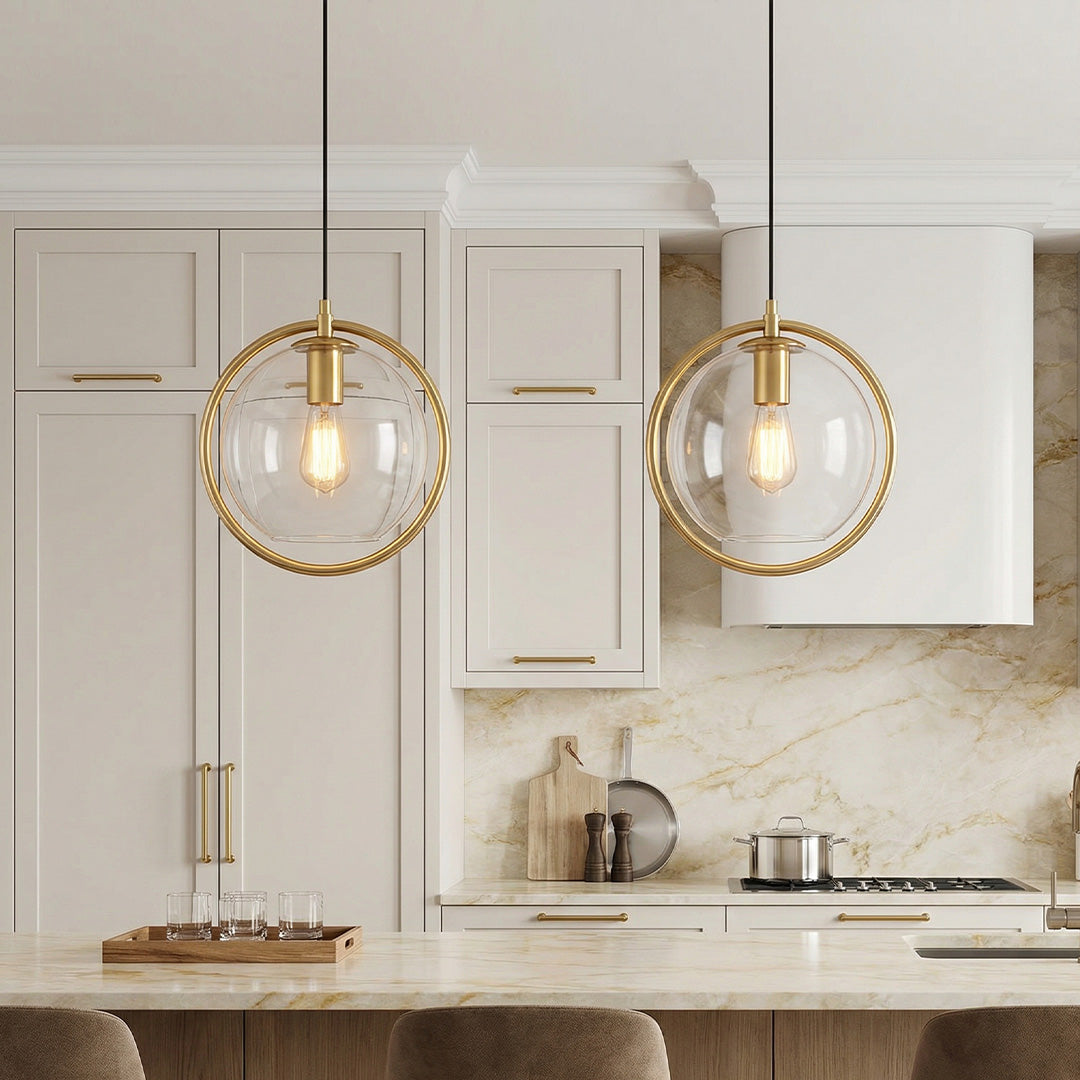
Airy Glass With Warm Metal Detail
Mini Gold Pendant Light Nordic Metal Round Glass Ceiling Light
Price: $92.99
Best for a marble island, compact dining area, or small counter where clear glass preserves sightlines and multiple pendants can be spaced as a light visual rhythm.
- Transparent, amber, and smoke-gray glass options create different contrast levels.
- Available in single and multi-light sets for islands and longer counters.
- The three-color-temperature version changes between 3000K, 4500K, and 6000K but does not dim brightness.
Bulb Choice Matters as Much as Glass Color
Use Frosted Bulbs Behind Clear Glass
A frosted bulb spreads the brightness over its own surface before the light reaches the clear shade. It will not make clear glass behave exactly like milk glass, but it usually feels calmer than a transparent filament bulb at the same output.
Do Not Choose Lumens by Habit
Many homeowners replace every pendant bulb with the brightest LED that fits. Start lower when the bulb is exposed or close to eye level, then add task lighting elsewhere. Three moderately bright pendants can feel more glaring than one because several high-luminance sources enter the visual field at once.
Warm Light Often Feels More Comfortable at Home
For dining, bedside, and relaxed evening use, 2700K to 3000K is usually easier to live with than a cool white source. Color temperature does not determine brightness, but cooler high-CCT light can feel more visually sharp, especially when the source is directly visible.
Dimming Is Valuable—but Check Compatibility
A dimmer lets the same pendant support food preparation, entertaining, and late-night use. Confirm that the bulb, driver, and wall dimmer are compatible. A product that changes color temperature is not automatically brightness-dimmable.
Hanging Height Still Controls Comfort
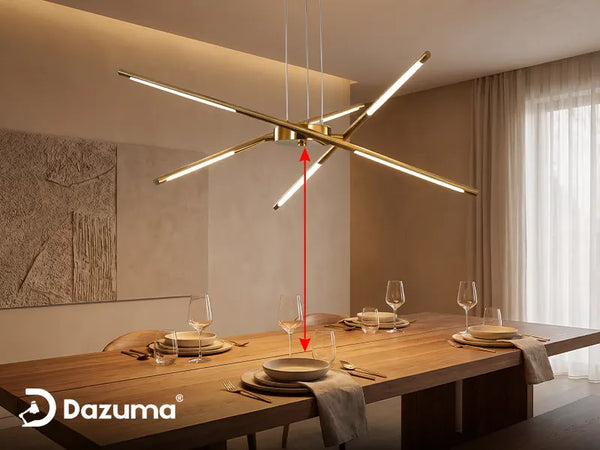
Even a good bulb can glare when the pendant is too low. The practical placement guidance in The Golden Rules Of Pendant Lighting: Sizing & Placement can help you protect sightlines while keeping the fixture connected to the table or island.
Clear Glass Makes the Bulb a Design Decision
Do not leave the bulb choice until installation day. Shape, frosting, lumen output, and color temperature all remain visible through transparent glass.
How the Two Glass Types Change the Room
Milk glass adds a solid white shape that can repeat cabinets, pale stone, plaster, or ceramics. Clear glass borrows color from its surroundings and connects mixed finishes without adding another opaque material.
Milk glass can soften rooms filled with polished stone, glossy tile, and steel. Clear glass can keep dark cabinets, beams, and solid furnishings from making the ceiling feel crowded.
For a broader comparison of glass, metal, wood, ceramic, and woven shades, see Pendant Light Materials Compared For Every Room. You can also compare globe proportions in the Globe Pendant Light collection before deciding how much visual weight the room needs.
Common Mistakes Homeowners Make
Assuming Milk Glass Eliminates All Glare
A small shade around a powerful bulb can still create a bright hotspot. Diffusion helps, but source output and shade size must stay in proportion.
Choosing Clear Glass From Daytime Photos
Daylight hides the bulb’s contrast. Ask for nighttime photos or test a similar globe after dark before ordering several fixtures.
Using Decorative Filament Bulbs for Every Clear Pendant
Visible filaments can be attractive at very low output, but multiple bright filament bulbs over an island often become distracting. Frosted bulbs usually provide better everyday comfort.
Trying to Get All Task Light From the Pendants
This often leads to bulbs that are too bright for comfortable viewing. Use layered lighting so the pendants can remain visually pleasant.
Mixing Different White Glass Tones Without Samples
Milk glass can look bright white, ivory, gray-white, or slightly green depending on the glass and bulb. Compare samples against cabinets and walls before committing.
Ignoring Maintenance
Clear glass shows dust and fingerprints more quickly, especially over a cooking area. Milk glass hides some marks at a distance but still needs regular cleaning to maintain even light transmission.
Buying Checklist Before You Choose
- Photograph the fixture location from standing and seated positions.
- Decide whether the pendant is task light, ambient light, or mainly decorative.
- Check whether the bulb will be directly visible through or below the shade.
- Compare the shade diameter with the bulb size and expected output.
- Confirm bulb base, included bulb, dimming compatibility, and color temperature.
- Use milk glass near prolonged seated sightlines when glare is a major concern.
- Use clear glass where preserving views and visual openness matters more.
- Plan under-cabinet, recessed, table, or floor lighting instead of overdriving the pendants.
- Mock up hanging height before the electrician shortens cords or rods.
- Consider cleaning access, especially above cooking surfaces or tall ceilings.
Final Advice: Choose the Glass, Then Design the Source
If glare is your first concern, milk glass is usually the more forgiving choice. Its diffused surface softens the visible source and makes the pendant easier to view from nearby seats. It works especially well over dining tables, beside beds, and in family kitchens where people spend long periods beneath the light.
Choose clear glass when the room benefits from transparency, sparkle, and a lighter ceiling profile. Then treat the bulb, lumen output, dimming, and hanging height as essential parts of the fixture—not afterthoughts.
The most comfortable plan uses diffusion where eyes stay close to the light and clear decorative glass where sightlines, openness, and layered lighting make the source easier to control.