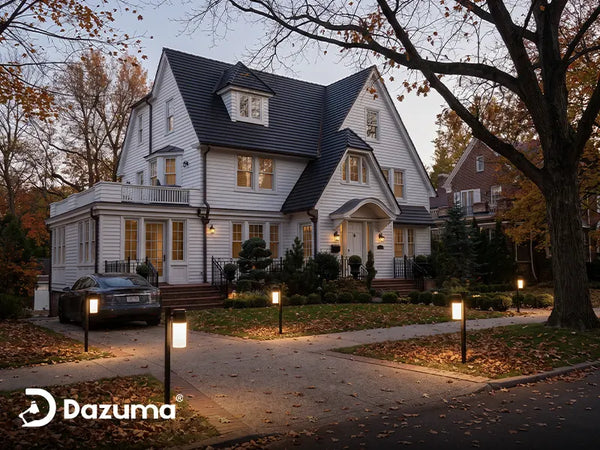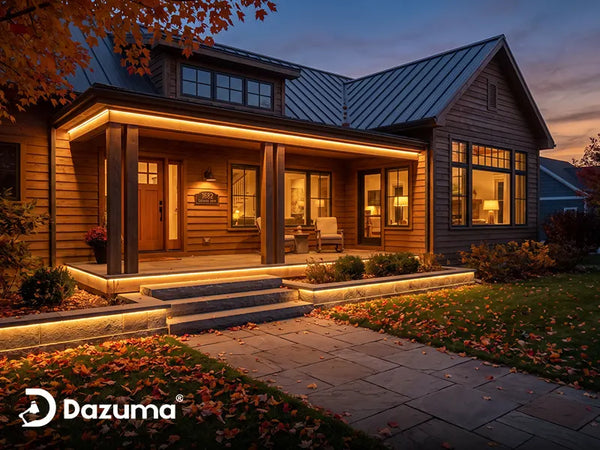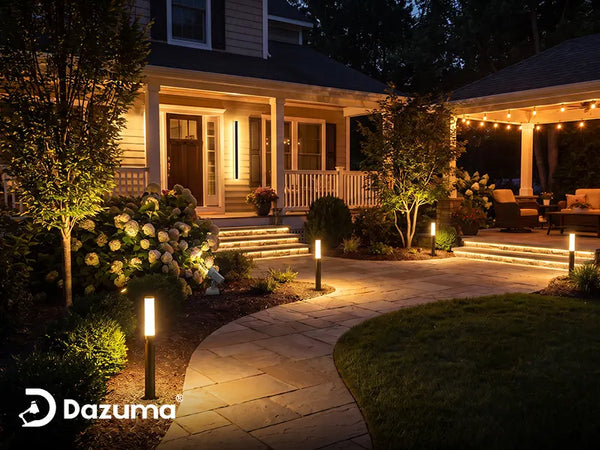

Who This Is For: This guide is for homeowners who want their porch to feel cozy in fall without making the entrance dim, glaring, or difficult to navigate. It is especially useful if you are choosing fixtures early in a remodel, trying to improve an existing front door, or preparing for earlier sunsets, wet leaves, guests, and seasonal deliveries.
Introduction: The Porch Changes When Fall Arrives
A front porch that worked in June can feel inconvenient by October. You arrive home in the dark, the keyhole disappears into shadow, damp leaves collect near the first step, and a bright bare bulb feels more like a loading dock than a welcome home. Add guests or a package left after sunset, and small lighting weaknesses become daily frustrations.
Good fall porch lighting is not about adding the most light. It is about putting useful light in the right places, keeping glare out of people’s eyes, and creating a warm visual transition between the dark yard and the front door. A successful plan should help someone recognize the entrance, see the walking surface, read the house number, find the lock, and identify who is at the door. It should also look comfortable from the street and from inside the house.

Start With the Tasks Your Porch Light Must Handle
Before choosing a fixture style, walk from the sidewalk or driveway to your door after dark. Notice where you hesitate, where your shadow falls, and whether the brightest object is actually the one that needs attention.
Can You See the Route, Not Just the Door?
The front door is often the brightest point, while the approach remains patchy. That creates a visual problem: your eyes adapt to the bright doorway, making the darker path or bottom step harder to see. If the walk bends, changes material, or rises unexpectedly, use low-level path lights to reveal the route. Space them by the changes that matter—turns, edges, steps, and planting pinch points—rather than making two perfectly straight rows that resemble a runway.
Can You Use the Door With Your Hands Full?
Picture the least convenient version of arriving home: one hand holds bags, rain is starting, and you are trying to find a key or keypad. The door area needs enough even light to reveal the handle, lock, doorbell, and any package on the mat. A fixture that throws all its light upward may make the facade beautiful but leave the hardware in shadow. A well-shielded wall light, ceiling light, or combination of the two should put illumination on the vertical door surface and the landing.
Can You Recognize a Face Without Squinting?
Security is not simply brightness. A harsh source behind a visitor can turn the person into a silhouette on a doorbell camera. A very bright light beside the door can also wash out facial detail. Aim for soft, overlapping illumination from the side or above, with the light source shielded from direct view. When choosing between a wall-mounted fixture and an overhead light, match the beam direction to the door, landing, and porch depth.
Build a Simple Three-Layer Lighting Plan
Most porches do not need a complicated landscape system. They do benefit from three clear jobs: approach light, door light, and accent light. One fixture can sometimes handle two jobs, but relying on a single bright source for everything usually creates deep shadows and glare.
| Lighting Layer | Real-Life Job | Useful Fixture Types | What to Check After Dark |
|---|---|---|---|
| Approach | Shows the walkway, first step, and changes in direction | Path lights, step lights, low wall lights | No dark gap between the driveway and porch |
| Door | Reveals faces, locks, packages, and the landing | Wall sconces, porch ceiling lights, downlights | Hardware is visible without a bright source in your eyes |
| Accent | Adds fall atmosphere and visual depth | Lanterns, restrained string lights, wall wash | Decorative light supports—not competes with—the doorway |

Think in Overlapping Pools, Not Isolated Bright Spots
Light should gently hand you from one zone to the next. If the path ends in darkness two feet before the porch, or the landing is bright while the first riser disappears, the plan is incomplete. Slight overlap reduces the time your eyes need to adjust and makes the entrance feel calmer.
Make the Porch Warm Without Making It Dim
Homeowners often assume “warm” means “low output.” It does not. Warmth is largely about color temperature, shielding, surface color, and contrast. A 3000K light can be clear enough for the front door while still feeling inviting. Around rustic brick, cedar, bronze hardware, pumpkins, and warm paint colors, 2700K can feel especially comfortable. On a very modern black-and-white exterior, 3000K often keeps the scene warm without making it look overly amber.
Color temperature is only one part of the decision. A bright lamp behind clear glass may still feel harsh at 2700K, while a diffused or downward-facing 3000K fixture can feel softer. If you are comparing choices, the guide to 2700K, 3000K, and 4000K outdoor lighting explains how the same exterior can change under different light colors.
Use the Wall as Part of the Light
A porch with pale siding or stucco reflects more light than a porch with charcoal brick, dark stone, or deep-stained wood. The same fixture can therefore look noticeably brighter on one house than another. Before increasing wattage, ask whether the beam is landing on a useful reflective surface. A controlled wash across the wall can improve visibility, emphasize the entrance, and avoid the “bright bulb in black space” effect.
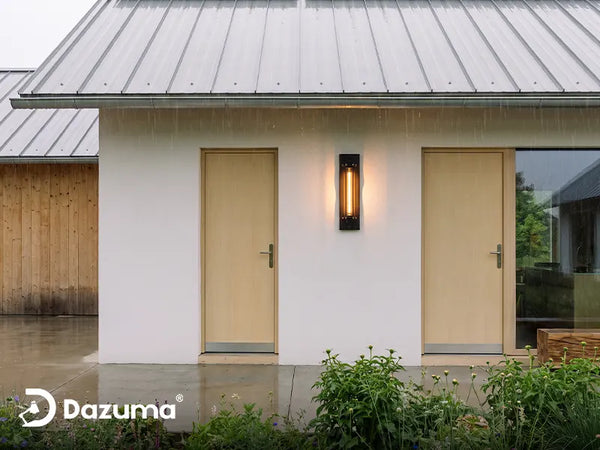
For a contemporary porch, a slim linear fixture can create that controlled wall wash while keeping the daytime profile quiet. It is most effective when you want the light to support a house number, a broad wall section, or a clean architectural entry rather than imitate a traditional lantern.
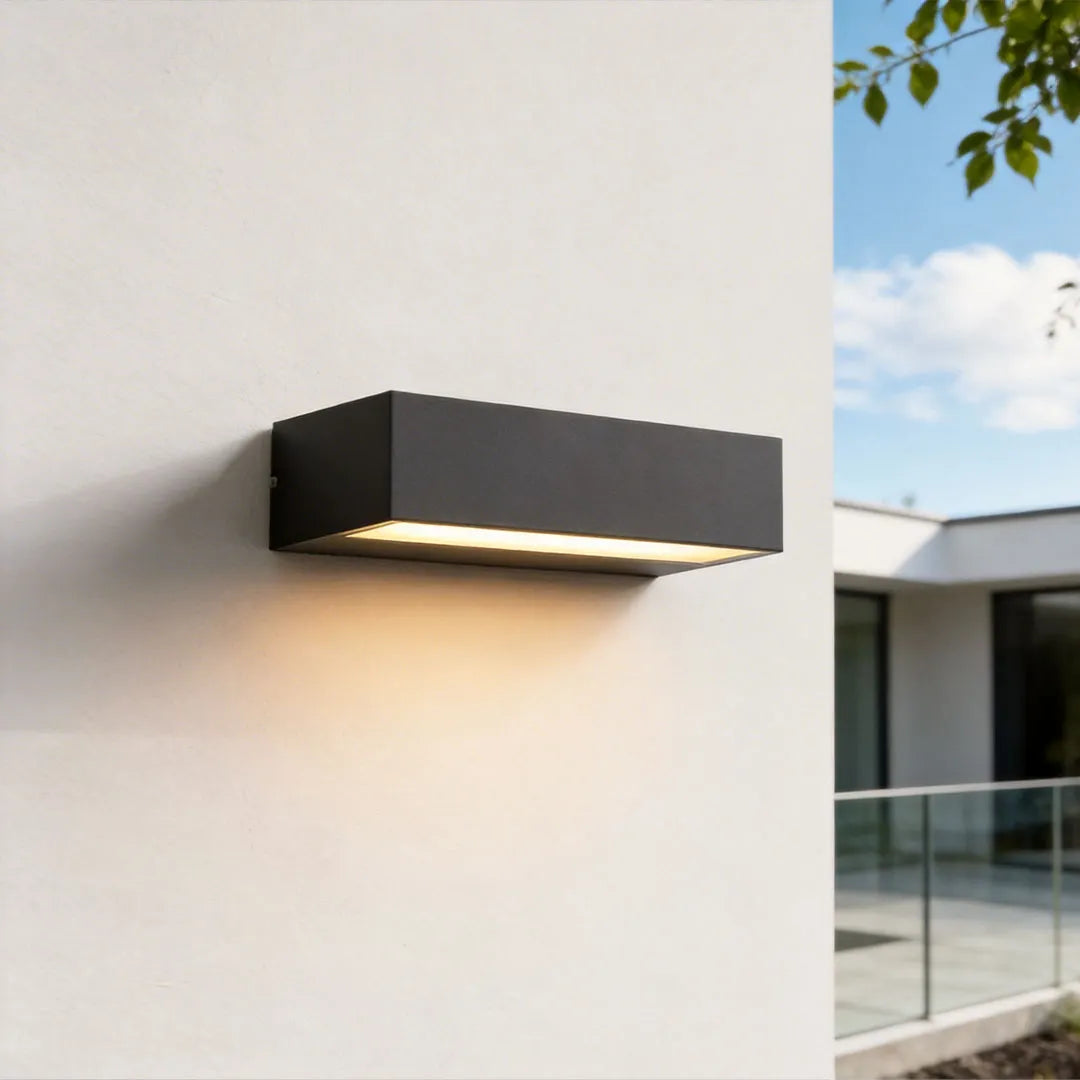
For Wide Walls and Modern Entries
Exterior Porch Light Fixtures Modern Waterproof Door Number LED Light
Price: $85.99
Best for modern porches where a clean downward wash can illuminate a door surround, house-number area, garage-side entry, or broad exterior wall.
- Four lengths help match a narrow door area or a wider facade.
- Warm white and white-light options suit different exterior palettes.
- Die-cast aluminum, a glass light panel, and a black finish create a restrained architectural look.
Place Lights Where They Solve Real Problems
Fixture height rules are starting points; door proportions, trim, ceiling height, sightlines, and beam direction should make the final decision. Tape a cardboard outline of the fixture to the wall before ordering. View it from the sidewalk, first step, and door. This catches scale mistakes and shows whether trim would block the light.
Beside the Door
If using one wall light, place it on the side where it illuminates the lock and the person using it without interfering with the door swing, storm door, or house-number plaque. For two lights, do not force perfect symmetry if one side has a downspout, narrow return wall, or camera. Good alignment matters, but usable clearance matters more. Browse outdoor wall lighting by beam direction and scale, not just by finish.
Above the Door
An overhead fixture can fill the landing well, especially under a deep covered porch. Check that it clears the door and does not create a bright reflection in a transom window. If the ceiling is low, a compact flush mount usually feels more comfortable than a hanging lantern. If the porch is open to rain, verify that the fixture’s location and rating are appropriate for the exposure; a roof overhead does not automatically keep wind-driven moisture away.
At Steps and Level Changes
The safest lighting reveals the front edge of each tread without shining horizontally into approaching eyes. Downward light, step lights, or low path lights can do this. Avoid placing a portable decorative lantern where a coat, bag, child, or pet can knock it into the walking line. Wet leaves hide edges, so clear them regularly and check the steps after rain, not only on a dry evening.
Perform a Shadow Test
Ask another person to walk from the path to the door while you watch from inside and outside. If their body blocks the only light and the lock or step goes dark, add light from another direction or move the source. This is particularly important when a deep porch roof prevents nearby landscape lighting from reaching the landing.

Choose Controls That Work With Fall Routines
The best fixture is not helpful if it is off when you need it. As sunset comes earlier and deliveries extend into the evening, controls should reduce the times you have to remember the porch light.
Use Dusk-to-Dawn for the Baseline
A photocell or astronomical timer can turn on the main entrance light as daylight fades. This provides a consistent welcome without leaving the light on around the clock. Recheck the timer after daylight-saving changes, power outages, or schedule changes. If setup is frustrating, follow a practical guide to setting up outdoor timer lighting.
Use Motion for a Boost, Not a Surprise
Motion activation is useful near a side approach, darker step, or package area, but an abrupt blast of light can feel unwelcoming at the main door. When possible, keep a modest baseline light on and use motion to increase coverage in the area that needs it. Aim the sensor away from busy sidewalks, moving branches, and the street. If the fixture has adjustable sensitivity or duration, start conservatively and test it over several evenings.
A directional downlight can work well here because it puts the brighter light on the landing instead of into a visitor’s face. The following option is useful when you want warm light with a selectable sensor version rather than a decorative lantern silhouette.
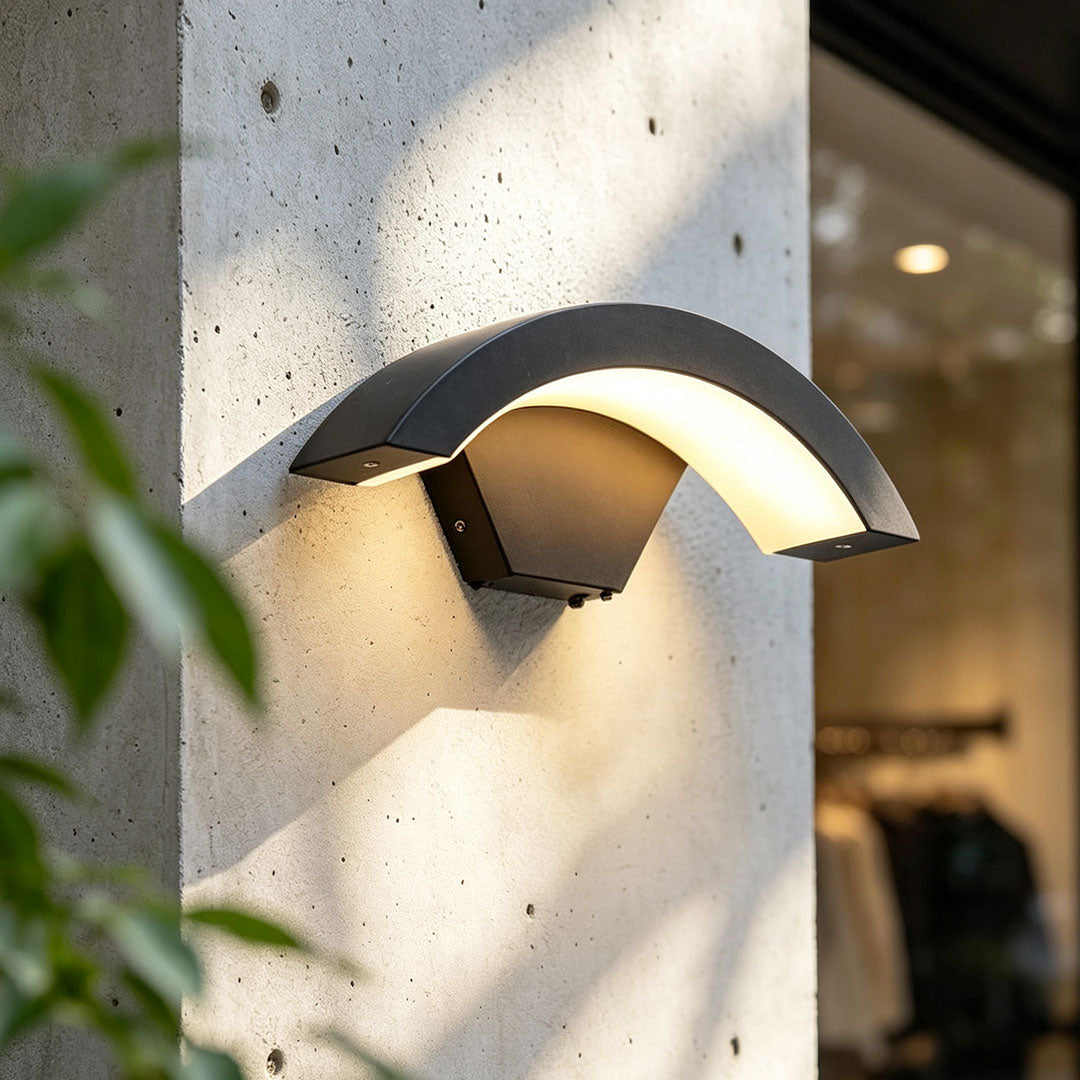
For Warm Downlight at the Landing
Curved Glow Outdoor Wall Light
Price: $89.99
Best for porches, side entries, and covered approaches where controlled 3000K downward light can help reveal the walking surface without exposing a bare light source.
- Available in standard and motion-sensor versions for different entry routines.
- Hardwired integrated LED construction keeps the profile compact.
- Black aluminum housing and an acrylic shade direct light downward.
Fall Porch Lighting Checklist
You do not need a full renovation to make a meaningful improvement. Work through this checklist on one evening before the busiest part of the season:
- Walk the full route after sunset. Start where a guest or delivery driver first arrives, not at the door.
- Clear leaves and trim plants. A light cannot reveal an edge that is physically covered, and foliage can block both beams and motion sensors.
- Clean lenses and shades. Dust, pollen, spiderwebs, and mineral residue reduce useful output and scatter light.
- Check for flicker and delayed starts. Intermittent behavior can become worse in cold or wet weather; investigate rather than assuming the bulb is simply aging.
- Confirm the lock, keypad, bell, and package area are visible. These small targets matter more than making the entire facade equally bright.
- Test the view from inside. Porch light reflecting in a sidelight or front window can make it harder to see outside.
- Verify timers and sensors. Make sure the light turns on before the entrance becomes difficult to read.
- Inspect seals and mounting. Look for loose fixtures, cracked lenses, corrosion, damaged caulk, or water inside the housing. Turn off power and use a qualified electrician for electrical repairs.
- Remove temporary cords from the walking route. Seasonal decor should not create a trip hazard or rely on indoor-only cords outdoors.
- Take one phone photo from the street. Cameras exaggerate bright hot spots and dark gaps, making unevenness easier to spot.

Fix Maintenance Before Buying More Light
A dirty lens, overgrown shrub, or timer set for summer sunset can make a good system seem inadequate. Restore what you already have first. If the porch remains dark in the wrong places, you can then choose new outdoor porch lighting with a clear purpose instead of guessing.
Common Fall Porch Lighting Mistakes
Making Every Fixture Equally Bright
Equal brightness flattens the scene and can make the entrance tiring to look at. Let the door be the visual destination, keep the path readable, and make decorative accents quieter. A clear hierarchy feels more welcoming than a wall of light.
Using Decorative Lanterns as the Only Safety Light
Battery candles and seasonal lanterns create mood, but their output and location may change. Use them as accents. Keep a dependable hardwired, plug-in, or properly rated solar source responsible for the path, steps, and lock area.
Choosing a Fixture Before Checking the Beam
Two black wall lights can produce completely different results. One may glow in all directions; another may create a narrow downlight; a third may wash the wall. Look for beam direction, shielding, color temperature, and verified output—not only the daytime shape.
Assuming More Lumens Automatically Mean More Safety
Brightness in the wrong direction can reduce visibility through glare and hard shadows. First improve placement and diffusion. Then increase output only if the useful surfaces remain too dim. For sensor-based areas, compare fixtures in the motion sensor wall lights collection by coverage and activation behavior, not merely wattage.
Waiting Until Guests Arrive to Test the Porch
Your eyes know your own steps, so you unconsciously compensate for poor lighting. Ask someone unfamiliar with the entrance to walk it, or approach while carrying bags and looking for the house number. If they pause, miss the bell, or step around a dark patch, the lighting is giving you useful feedback.
Final Advice: Design for the Ordinary November Night
The best fall porch is not the one that looks most dramatic in a photograph. It is the one that works when rain has darkened the pavement, your hands are full, the delivery driver is looking for the right house, and a guest is deciding where the first step begins. Start with those ordinary moments.
Give the approach a readable path, the landing soft but sufficient light, and the door a clear visual focus. Choose a warm color temperature that suits the materials, shield the source, and use timers or sensors to make the system dependable. Then add seasonal accents with restraint. When safety, comfort, and atmosphere support one another, the porch feels welcoming before anyone reaches the door.