
Who This Is For: This guide is for homeowners, property managers, HOA teams, and small commercial buyers comparing LED and HPS outdoor street lights for driveways, private roads, courtyards, parks, and community paths.
Introduction
For decades, high pressure sodium street lights were the familiar orange glow over roads, parking lots, sidewalks, and industrial yards. They were popular because they were efficient for their time, widely available, and powerful enough to cover large outdoor areas. But today, LED outdoor street lights have changed what buyers expect from exterior lighting. The conversation is no longer only about watts. It is about useful visibility, color quality, maintenance, energy control, solar compatibility, and how comfortable the space feels after dark.
If you are comparing LED vs HPS outdoor street lights, the short answer is simple: quality LED street lights usually offer better practical efficiency, better directional control, better color rendering, and lower maintenance over time. HPS can still be efficient in raw lumens per watt, especially in certain high-wattage lamps, but the yellow-orange output, warm-up time, optical losses, and maintenance cycle make it less attractive for many modern outdoor projects.
For a homeowner or property manager, this is not just a technical debate. The right street light affects whether a driveway feels safe, whether a path is easy to follow, whether a courtyard looks welcoming, and whether a private road can be lit without wasting energy. Let’s break it down in plain language.

Quick Answer: Is LED More Efficient Than HPS?
In most modern outdoor street lighting projects, LED is the better efficiency choice because it sends more usable light where it is needed, starts instantly, supports better controls, and typically requires less maintenance than HPS. A good LED fixture does not just produce light; it controls the beam. That matters on roads, driveways, sidewalks, courtyards, and community paths, where wasted upward or sideways light does not help people see.
HPS lights can still have respectable lamp efficacy on paper, but the full system tells a different story. HPS fixtures often rely on reflectors, ballasts, warm-up time, and broader light spread. LEDs are directional by nature, so they can place light more precisely on the ground. That is one reason LEDs have become common in street lights, parking garage lighting, walkway lighting, and outdoor area lighting.
If you are building a new exterior lighting plan, start with Dazuma’s Street Lighting options, then compare whether you need a solar-powered fixture, a hardwired post light, or a decorative lamp post for a driveway or community path.
What HPS Street Lighting Is
HPS stands for high pressure sodium. These lights produce the amber-orange glow many people associate with older city streets and parking lots. They were widely used because they could produce a lot of light for outdoor areas and had a long track record in municipal and commercial lighting. For years, HPS was a practical standard.
The weakness is not that HPS never works. The weakness is that it solves an older lighting problem in an older way. It gives you brightness, but not always clarity. Colors look muted. Landscape edges can feel flat. People, plants, cars, and walkway surfaces may not look as natural as they do under LED. HPS also needs time to warm up and typically depends on lamp replacement and ballast maintenance.
For a private home, villa driveway, courtyard, or community path, the orange tone may feel dated unless that is the exact look you want. Modern LED street lighting can provide a cleaner, more controlled look while supporting warm white or cool white options depending on the mood and visibility goal.

Usable Light Matters More Than Raw Wattage
A fixture that uses more watts is not automatically better. What matters is whether the light reaches the walking and driving surfaces. LED street lights usually make this easier because the light can be directed more precisely toward the target area.
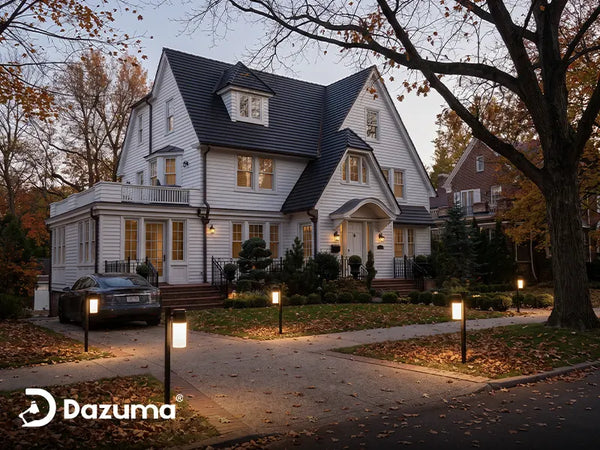
For driveways and large front yards, Lamp Posts can also add a classic vertical lighting layer that helps the property feel anchored after dark.
Why LED Street Lights Usually Win On Efficiency
The biggest efficiency advantage of LED is not only the diode itself. It is the whole fixture system. LEDs are small, directional light sources, so the fixture can send more of the light downward or outward toward the useful zone. That reduces the need for bulky reflectors and can reduce wasted light. LEDs also pair well with dimming, timers, motion controls, solar panels, and smart control systems.
HPS fixtures can be efficient at producing light, but they are less flexible. They are less friendly to frequent switching. They usually do not dim as easily as modern LED systems. Their color is narrow and yellow-orange. And even when the lamp still works, lumen depreciation and aging components can make the system feel weaker over time.
For homeowners, the most practical LED benefit is simple: the space looks clearer with less effort. A road edge, driveway curve, or garden path is easier to read. The lighting feels more intentional. You also have better choices for color temperature, from cozy warm white to bright white for visibility.

LED Vs HPS Efficiency Comparison
Here is the practical comparison most buyers need. This is not about making HPS look useless. It is about showing why LED is usually the stronger choice for new outdoor street lighting, especially for private roads, garden driveways, community paths, villa entrances, and modern exterior spaces.
| Factor | LED Street Lights | HPS Street Lights |
|---|---|---|
| Energy Use | Typically lower for the same useful outdoor visibility. | Can be efficient, but more light may be lost through fixture optics and spread. |
| Light Direction | Directional and easier to control. | Requires reflectors and may produce more scattered light. |
| Color Quality | Better color rendering and more color temperature options. | Orange-yellow tone with poor color distinction. |
| Warm-Up Time | Instant on. | Needs warm-up time. |
| Controls | Works well with solar, dimming, timers, and remote controls. | Less flexible for modern controls. |
| Maintenance | Usually lower maintenance over time. | Lamp and ballast maintenance can become a recurring task. |
Where Solar LED Street Lights Fit
Solar LED street lights are a newer part of this conversation. HPS street lights are generally tied to traditional electrical infrastructure. LED fixtures, however, work naturally with solar because they can deliver useful light with lower power demand and controlled output. This makes solar LED street lights attractive for long driveways, garden roads, private paths, parks, courtyards, and areas where trenching wire is expensive or inconvenient.
That said, solar is not magic. A solar street light still needs enough daytime sun, the right battery capacity, suitable mounting height, and realistic expectations for working time. A solar LED fixture may be ideal for a villa driveway or garden road, but a heavily shaded area may need hardwired lighting instead.
If you want a low-wiring exterior upgrade, compare Solar Outdoor Lighting with hardwired street lights. The best choice depends on sun exposure, usage hours, brightness needs, and whether you want the fixture to act as a functional road light or a decorative post light.
Solar LED Is Best When The Site Supports It
A solar street light can feel wonderfully simple when the pole receives strong sunlight. During the day, it charges without new wiring. At night, it provides guidance for the road, path, or courtyard. The key is matching the fixture to the amount of sun the location actually gets.
If the route is more of a walking path than a vehicle road, Path Lights may create a softer and lower lighting layer.

Recommended LED Street Lighting Options
The two products below are LED-based outdoor street or lamp post options. They are not HPS replacements in a municipal retrofit sense; instead, they show how modern residential and property-level street lighting has moved toward LED, solar compatibility, weather protection, and more comfortable exterior design.
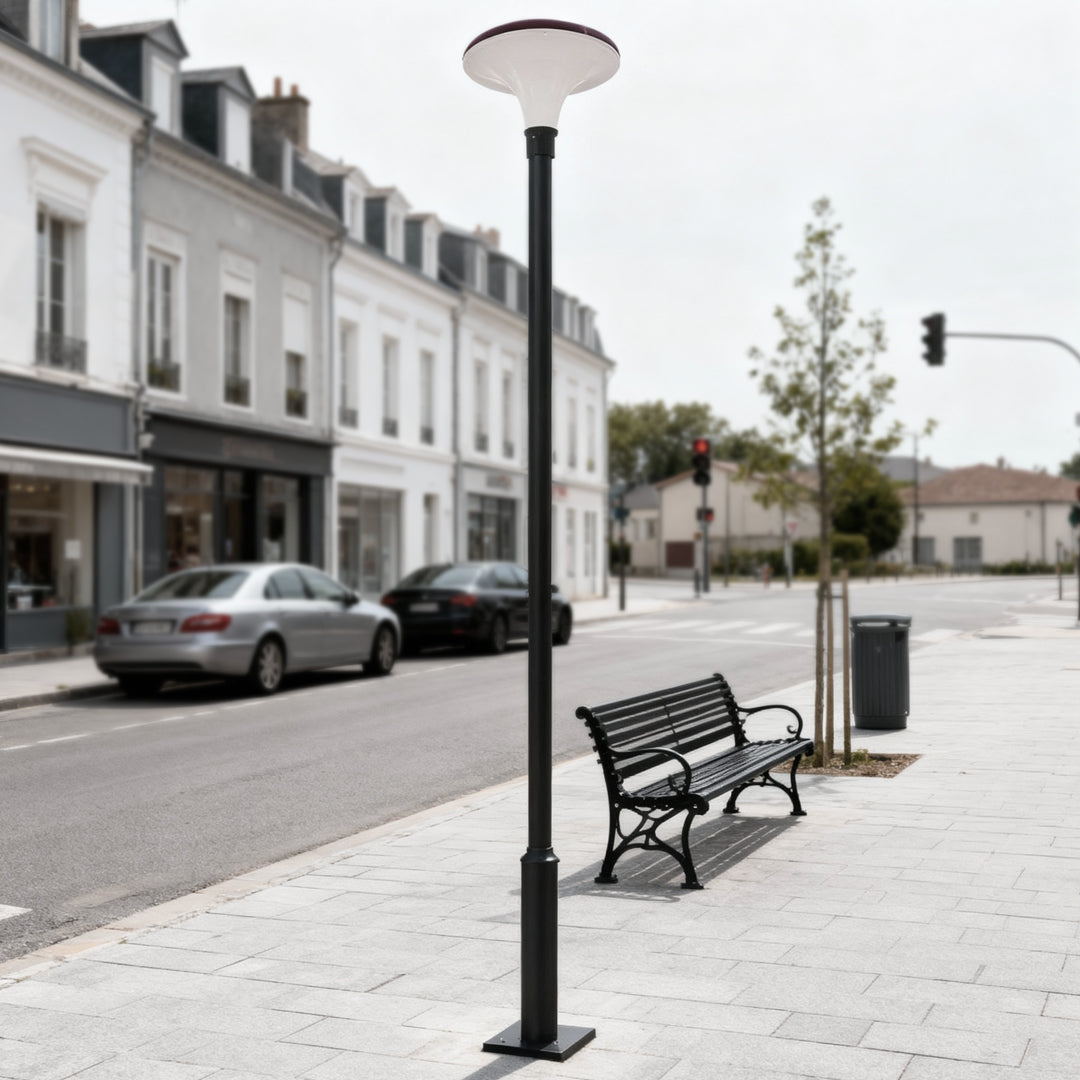
UFO Solar Street Light Waterproof Solar Powered Black LED Pole Lamp
Best For: Villa driveways, community courtyards, park paths, garden roads, outdoor sidewalks, and modern solar street lighting projects.
| Price | $366.99 |
| Product Type | Street Lighting |
| Power Supply | Solar / Hardwired |
| Power | Solar 20W / Hardwired 50W |
| Voltage | 100–240V / 110–240V |
| Material | Die-Cast Aluminum, PC Shade |
| Waterproof Rating | IP65 |
| Battery | 3.2V / 20000mAh |
| Working / Charging Time | 5–6 Hours / 5–6 Hours |
| Color Temperature | Warm White 3000K / White 6000K |
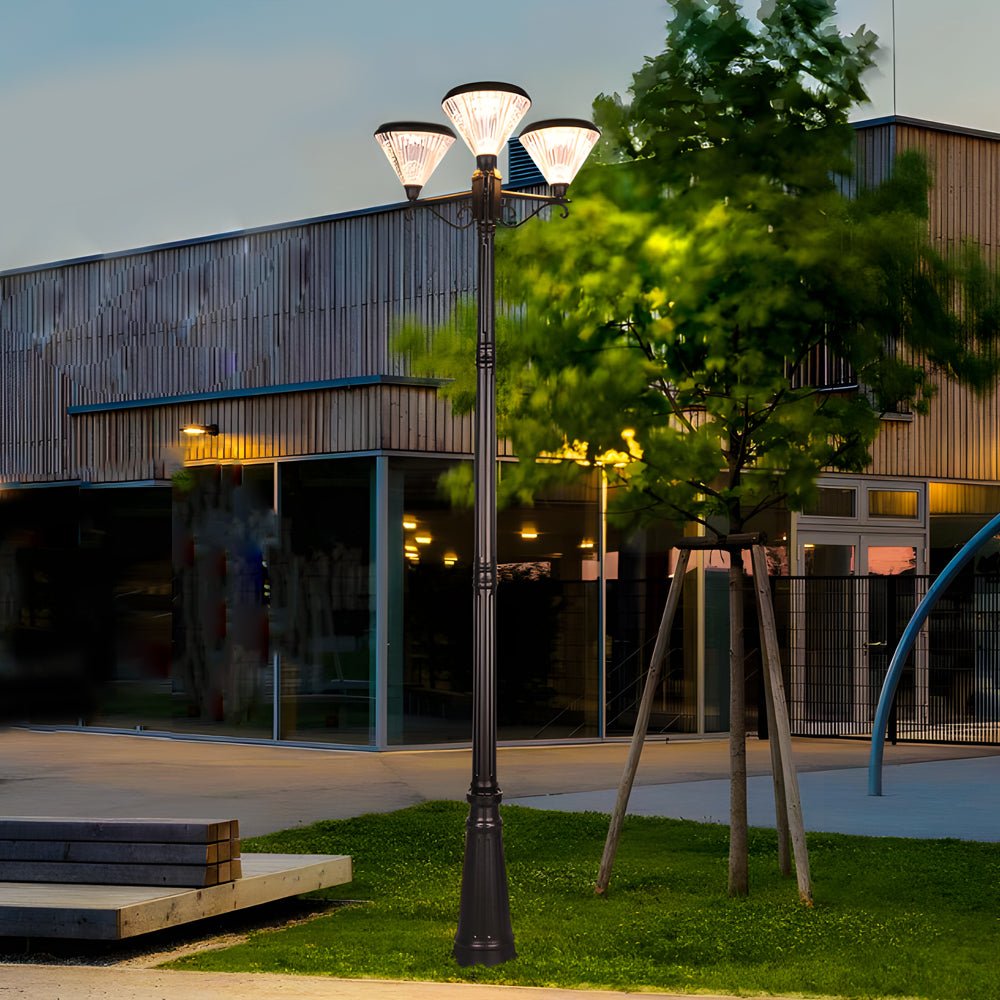
102-Inch Black Outdoor Street Light With 3-Light Post Lamp And Pole
Best For: Driveways, walkways, garden lawns, courtyards, parks, community spaces, and classic multi-head outdoor post lighting.
| Price | $743.99 |
| Product Type | Lamp Post |
| Power Source | Solar Powered |
| Light Source | LED |
| Number Of Lights | 3 |
| Fixture Material | Aluminum |
| Shade Material | PC |
| Waterproof Rating | IP65 |
| Solar Panel / Battery | 5V/4.5W x 3 / 3.2V 8000mAh x 3 |
| Size | 29.5" L x 29.5" W x 102" H |
What The Space Feels Like After Switching To LED
The emotional difference between LED and old HPS lighting is bigger than many people expect. Under HPS, outdoor areas can feel functional but tired: orange, flat, and hard to read. Under well-chosen LED street lighting, the same space can feel cleaner and more secure. Driveway edges are easier to see. Planting areas look more natural. Guests can understand where to walk without feeling like they are under a harsh industrial lamp.
For residential and property-level spaces, that matters. A lamp post at the end of a driveway becomes a welcome point. A solar street light beside a private road becomes a quiet guide home. Instead of simply “making it bright,” LED street lighting helps the outdoor space feel organized and cared for.

Think About Visual Comfort, Not Just Output
A brighter light is not always better. A comfortable street light should help people move safely while keeping glare under control. Warm white can feel more welcoming for homes, while white light may feel clearer for functional driveways and community paths.
If you want to compare color choices in more detail, read 2700K Vs 3000K Vs 4000K Outdoor Lighting.
How To Choose For A Real Outdoor Space
Here is a simple decision framework: choose LED street lights based on power source first, beam comfort second, and style third. If you do this in the opposite order, you may buy a beautiful fixture that does not fit the site.
1. Decide Solar Or Hardwired
Solar is attractive when wiring is difficult, trenching is expensive, or the light is for a garden road, park path, or villa driveway with strong sunlight. Hardwired lighting is better when you need predictable output every night regardless of weather and sunlight.
2. Match Height To The Area
A tall lamp post can cover a wider zone and create a stronger visual anchor. A lower light may be better for paths where you want a softer residential feel. Do not use one tall fixture when several lower fixtures would guide movement more comfortably.
3. Choose Color Temperature By Mood And Task
Warm white around 3000K feels calmer and more residential. White light around 6000K can feel brighter and more alert, but may also look cooler and sharper. For many home settings, warm or neutral light is easier to live with long-term.
4. Check Weather Rating And Materials
Outdoor street lights need to handle rain, dust, and seasonal exposure. Look for waterproof ratings, rust-resistant materials, and product care instructions. For pole-mounted fixtures, also think about wind, mounting surface, and base stability.
Common Street Lighting Mistakes
Comparing Only Watts
Watts measure power use, not how well the ground is lit. Compare useful illumination, beam pattern, control options, and the way the fixture fits the site.
Ignoring Maintenance
Street lights are often mounted higher than typical wall lights. Every replacement or repair can become more work. LED fixtures can reduce maintenance pressure compared with older lamp technologies.
Choosing A Commercial Look For A Residential Space
Private driveways and courtyards do not need to feel like public highways. Choose a fixture that provides safety and direction while still matching the home’s style.
Assuming Solar Works Anywhere
Solar LED street lights need direct sun exposure. A shaded driveway under tall trees may need a hardwired solution or a different placement strategy.

Final Advice
For most new outdoor street lighting projects, LED is the smarter direction than HPS. It gives better control, clearer visibility, easier integration with solar or hardwired systems, and a more modern nighttime appearance. HPS still has a place in lighting history, but for homeowners and property managers planning driveways, courtyards, community paths, or private roads, LED offers more practical choices.
To build a complete outdoor plan, explore Dazuma’s Street Lighting, Lamp Posts, Solar Outdoor Lighting, and Outdoor Lighting collections. The right LED street light will not only save energy. It will make the road, path, or driveway feel clearer, safer, and more welcoming every night.