
Who This Is For: This guide is for homeowners who like wall sconces but are stuck on a surprisingly common question: should you install one, or will the room look more finished with a matching pair? If you are still planning furniture, paint, wiring, or a remodel, the decision is easier when you stop thinking in terms of “one looks cheap, two looks designer” and instead look at symmetry, function, wall width, and what your eye naturally expects to see.
Quick Answer
Install a matching pair of wall sconces when the architecture or furniture already has a clear center: a bed, fireplace, large mirror, console table, or piece of artwork. Two sconces reinforce that center and make the arrangement feel intentional. Install one wall sconce when the light has a specific job—such as lighting a reading chair, brightening a dark corner, or acting as a decorative wall accent—or when the room is naturally asymmetrical.
The biggest mistake is forcing symmetry where the room does not have it. Two sconces are not automatically more elegant. In a small room, a pair can create visual clutter, especially when there is already a floor lamp, artwork, shelving, or a doorway nearby. On the other hand, a single tiny sconce beside a large king bed or wide fireplace can look accidental because the scale does not match the furniture.
If you are still browsing shapes and proportions, start with the main Wall Sconces collection, but look at the room first. Ask yourself what the wall is centered on and whether the sconce is supposed to create symmetry, provide task light, or behave like decorative art.

When One Sconce Works Better Than Two
A single wall sconce works best when it has a clear reason to be there. This is especially true in rooms that are not symmetrical to begin with. Think about a reading chair in the corner of a living room, one side of a hallway that feels dark, a narrow wall between windows, or an artwork that needs one sculptural light nearby. In those situations, adding a second sconce just to “make a pair” can feel artificial.
I often tell homeowners to imagine removing the light from the wall and asking what remains. If the furniture and architecture do not create a clear center, the wall probably does not need two matching fixtures. A single sconce can follow the way the room is actually used rather than trying to impose a formal layout that does not exist.

Use One When the Light Has One Specific Job
A reading chair does not need a second wall sconce on the opposite side of the room just for balance. In fact, a focused single light can make that corner feel more intentional. If you prefer a portable solution instead of hardwiring, compare the idea with Floor Reading Lamps before deciding where to add wiring.
Single sconces also work well when the fixture itself is decorative. A bird, flower, sculptural globe, or asymmetrical wall light can behave more like artwork than architectural hardware. Repeating that kind of fixture can sometimes reduce its impact. The first one looks special; the second one can make the wall feel themed.
When a Matching Pair Is the Better Choice
A matching pair is strongest when your eye already expects symmetry. Beds are the obvious example. If a bed is centered on a wall with two nightstands, one sconce above only one nightstand will usually make the arrangement feel incomplete unless there is a clear functional reason for the asymmetry. Two matching sconces create a frame around the headboard and free up nightstand space at the same time.
The same idea applies to a fireplace with artwork centered above it, a wide console in an entry, or a large mirror where the sconces sit on both sides. The pair gives the central feature a visual boundary. It says, “this is the focal point.”
That does not mean both fixtures need to be physically close to the center. In a large living room, a pair can sit farther apart and still read as one composition as long as they clearly relate to the same furniture or architectural feature.
Pairs Work Best When There Is Something in the Middle
Two sconces with no central anchor often look like two unrelated objects. Give them something to frame—a headboard, art, a mirror, a fireplace, or a console—and the symmetry immediately makes more sense.

For bedrooms specifically, the existing guide How High to Hang Wall Sconces Next to Bed? Installation Guide is useful once you decide that a pair is right. It is much easier to plan electrical boxes before paint and headboard installation than to correct poorly placed sconces later.
One vs Pair by Room and Situation
| Room or Wall | Usually Better | Why | Watch Out For |
|---|---|---|---|
| Centered bed with two nightstands | Matching pair | Frames the bed and supports both sleepers | Mounting too high or too far outside the headboard |
| Reading chair or corner | One | The light has one specific task | Adding a second fixture with no purpose |
| Fireplace with centered art | Matching pair | Creates a strong architectural frame | Crowding the mantel with too many decorative elements |
| Small entry wall | One | Keeps the wall from becoming visually busy | Choosing a fixture too small to be noticed |
| Wide console with mirror | Matching pair | Balances the width and gives the mirror structure | Installing sconces too close to the mirror edge |
| Decorative feature wall | One or asymmetrical group | Feels more like art than formal architecture | Forcing equal spacing when the design is intentionally organic |
A Linear Sconce That Works Especially Well in Pairs
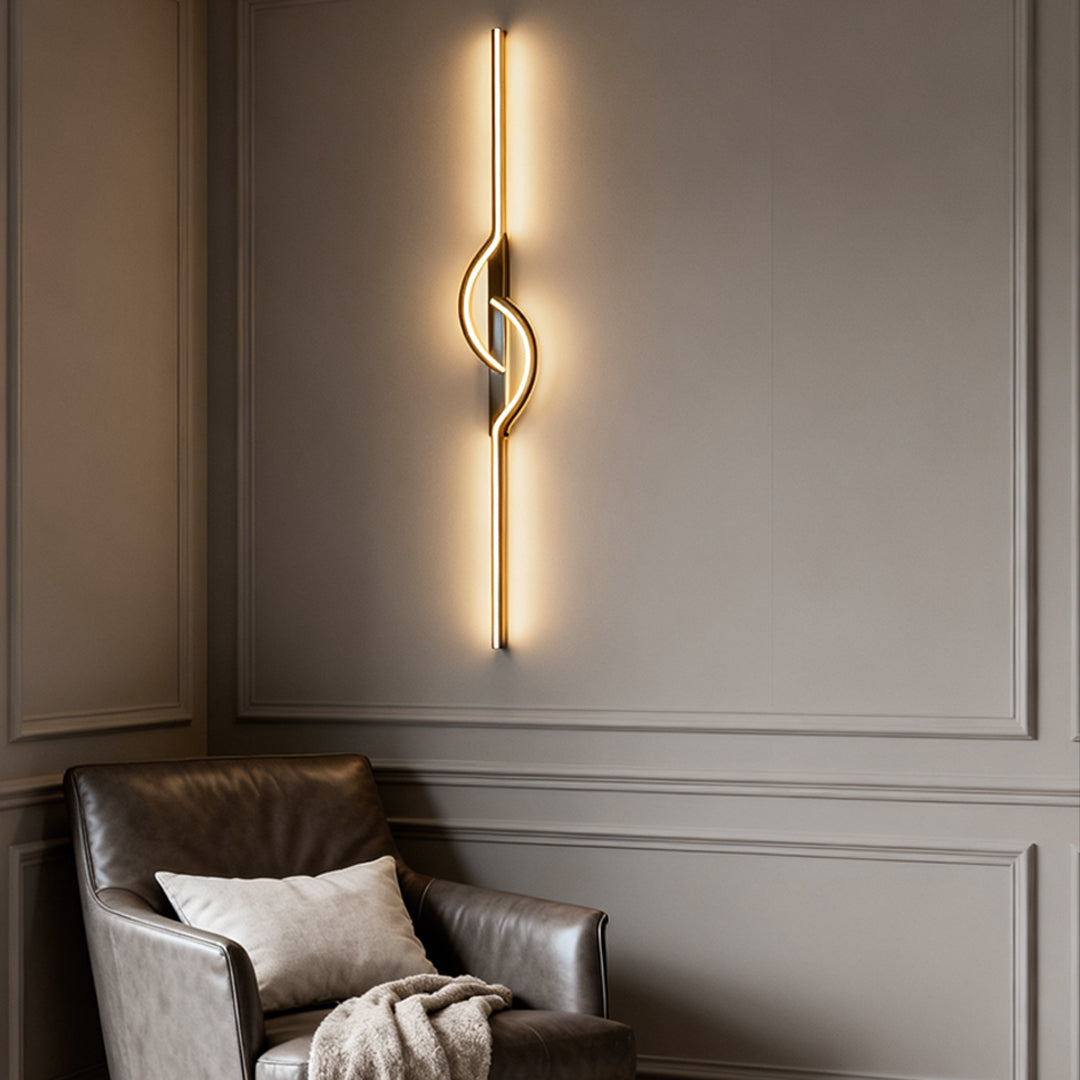
Long linear sconces are naturally good at creating symmetry because their vertical or horizontal lines behave like architectural punctuation. The Modern Linear Wall Sconce below is offered as a single fixture and in sets of two or more, which makes it especially practical for homeowners planning a matched installation.
I would use a pair vertically on both sides of a bed, a wide feature wall, or a large piece of art when the goal is a clean contemporary frame. The black aluminum body is visually strong, but the slim profile keeps the pair from becoming bulky. Because the fixture comes in several lengths, you can also scale the sconces to the wall instead of assuming one size works everywhere.
Best for Symmetrical Modern Layouts
Modern Linear Wall Sconce Creative Black Aluminum Lamp
Price: From $100.99
Best for bedrooms, living-room feature walls, corridors, and other modern spaces where a matching pair can create a strong architectural frame.
- Five fixture lengths make it easier to match the sconce to a small bedside wall or a large feature wall.
- The integrated LED is available in warm white, three-step color switching, and dimmable configurations.
- The page lists hardwired 110V installation and indoor use in bedrooms, corridors, and living rooms.
This is also a good example of why buying a pair should happen after you settle the wall measurements. The 23.6-inch version can feel comfortable beside a smaller headboard, while a 47- or 59-inch fixture makes a much stronger statement on a tall living-room wall. Two oversized sconces can overwhelm a modest room, so “matching pair” does not mean “largest pair.”

Pairs Need Enough Wall Between Them
When two sconces are too close together, they stop framing the centerpiece and start competing with it. Give the artwork, mirror, bed, or fireplace enough breathing room so the pair reads as an outer boundary rather than two objects crowding the center.
A Decorative Sconce That Often Looks Better as a Single Accent
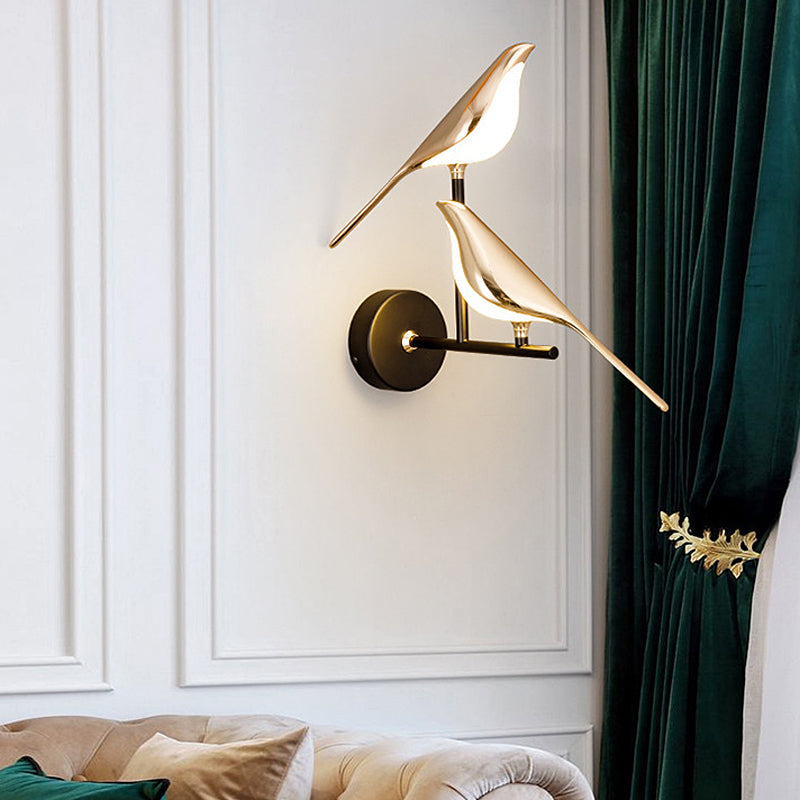
The Bird Wall Light shows the opposite approach. Its bird shape is expressive enough to work as a focal point by itself. Instead of using two identical fixtures on both sides of a small wall, I would often install one near a reading corner, beside a console, on a bedroom accent wall, or in an entry where it can act like illuminated sculpture.
The product is available in one-bird and two-bird configurations, so you can create a little more presence without necessarily installing two separate matching sconces. That is useful when the room needs personality but not formal symmetry.
Best for a Single Decorative Accent
Bird Wall Light Nordic Style Creative Minimalist LED Lamp
Price: From $131.99
Best for a living-room corner, bedside accent, entry, or decorative wall where the fixture should feel more like illuminated art than a formal architectural pair.
- The one-bird version measures about 7.1 inches wide by 8.3 inches high; the two-bird version is about 11 inches wide by 15 inches high.
- The dimmable version is listed with remote control for color and brightness adjustment from 3000K to 6000K.
This is the kind of fixture that helps homeowners break the habit of assuming everything must be mirrored. A room can feel balanced without being perfectly symmetrical. A bird sconce on one wall can be balanced visually by a plant, floor lamp, artwork, or window on the other side of the room. Balance is about visual weight, not identical objects.
Height, Spacing, and Visual Balance
Once you decide on one or two sconces, placement matters just as much as quantity. A common starting point for wall sconces is around 60 to 66 inches from the floor to the center of the fixture, but furniture and eye level can change that. Bedside sconces are a special case because they need to work for reading and should relate to the mattress and headboard, not only the room height.
Beside a Bed
Mount the sconces where the light can reach the book or bedside area without shining directly into your eyes. Do not place them so far outside the headboard that they look disconnected. If two people use the bed, a matching pair usually makes both function and composition easier.
Around a Mirror or Artwork
Measure the centerpiece first. The sconces should sit far enough away that the mirror or art still has breathing room. If the wall is narrow, one overhead or side sconce may be better than squeezing in two fixtures.
In a Living Room
Wall sconces should support the room’s larger lighting plan. They are rarely the only light source. Use them to add warmth at eye level while a ceiling light, floor lamp, or table lamp handles general or task illumination. If you are still building that mix, Table Lamps are worth comparing before hardwiring additional wall fixtures.
Stand Back Before You Finalize the Electrical Boxes
One of the best renovation tricks is to tape paper templates to the wall at the actual fixture size. Then look from the doorway, sofa, and bed. It is much easier to move painter’s tape by four inches than to move a junction box after drywall is finished.

If you are adding new hardwired locations, the older guide How to Install a Wall Sconce Light Fixture: A Step-by-Step Guide provides a useful installation overview. For new electrical boxes, unfamiliar wiring, or changes inside the wall, use a qualified electrician.
Common Mistakes to Avoid
Buying Two Before Measuring the Wall
A pair needs more space than homeowners often expect. Remember that you need room for the sconces, the central feature, and breathing space between them. Two fixtures squeezed onto a small wall rarely look more finished than one.
Assuming Symmetry Is Always Better
Symmetry is calming when the architecture supports it. When the room is asymmetrical, identical sconces can call attention to the imbalance instead of solving it. Follow the furniture arrangement instead of forcing a formal rule.
Choosing Decorative Sconces Like Task Lights
A sculptural sconce may create beautiful ambient light but still be weak for reading or grooming. Decide whether the fixture’s job is illumination, decoration, or both. This prevents disappointment after installation.
Using a Pair That Is Too Large
Two large sconces create twice the visual weight. A fixture that looks moderate by itself can feel dominant when repeated. This is why scale should be judged as a full composition, not one product image at a time.
Ignoring Switch and Dimming Control
For bedside or living-room pairs, consider how both fixtures will be controlled. Do you want one wall switch to operate both? Individual control for each side of the bed? Dimming for evening use? These decisions are much easier to solve before wiring is complete.
Final Advice
If the wall has a clear center—a bed, mirror, fireplace, console, or major artwork—a matching pair of sconces usually creates the strongest result. If the light has one specific task or the room is naturally asymmetrical, a single sconce often feels more relaxed and more intentional.
The Modern Linear Wall Sconce is especially well suited to a matched pair because its long architectural shape, multiple sizes, and multi-piece set options make symmetry easy to plan. The Bird Wall Light is a good example of the opposite approach: its sculptural form already creates enough personality to work beautifully as one decorative accent.
Do not decide based on the idea that two is more expensive-looking than one. A room feels finished when the lighting matches the architecture, furniture, and way people actually live in the space. Sometimes that means two perfectly aligned sconces. Sometimes one well-placed light is exactly enough.