
Who This Is For: This guide is for homeowners choosing a wagon wheel chandelier during the early stages of a living room remodel—especially anyone worried that a fixture will look too small in a large room, hang awkwardly from a high ceiling, or feel oversized once it arrives.
Introduction
Wagon wheel chandeliers look simple in product photos: a circle, evenly spaced lights, and a few suspension lines. In a real living room, however, that circle has to relate to the sofa group, ceiling height, fireplace, windows, and open pathways all at once. A 36-inch fixture can feel generous in one room and almost invisible in another.
The concern I hear most often from homeowners at the planning stage is, “What if I order the large one and it overwhelms everything?” The next concern is the opposite: “What if it looks tiny once it is up there?” Both are reasonable. The solution is to separate three decisions that are often mixed together: diameter, vertical depth, and light count. Choose them in that order, and the room becomes much easier to read.

Quick Answer
For many large living rooms, a wagon wheel chandelier between 36 and 48 inches in diameter is a useful starting range. Rooms around 16 by 20 feet often look balanced with a fixture near 36 to 42 inches. A larger 18-by-24-foot room, vaulted ceiling, or two-story volume may call for 42 to 60 inches, a double-tier design, or a fixture that serves a clearly defined seating zone rather than the entire open plan.
A common sizing shortcut is to add the room’s length and width in feet and translate that number to inches. A 16-by-20-foot room points to roughly 36 inches. Treat this as a starting estimate, not a guarantee. An open iron ring has less visual weight than a dense crystal fixture of the same diameter, so wagon wheel designs can often be sized slightly larger without making the room feel crowded.
If you are still comparing shapes and construction, browse the dedicated Wagon Wheel Chandeliers collection before committing to a number. The width is only one part of the decision; ring thickness, tier count, finish, and lamp style change how large a fixture appears.

Visual Weight Changes the Answer
A thin open ring can be wider than a heavy two-tier frame without feeling larger. When comparing products, look at how much solid material fills the circle—not just the listed diameter.
Measure the Zone, Not Just the Room
Large living rooms are often open to a kitchen, breakfast area, entry, or dining space. If you use the dimensions of the entire open floor plan, the formula may recommend a chandelier that is too large for the sofa group beneath it. First decide what the fixture belongs to.
If the chandelier is centered over the main conversation area, measure that zone: the width and length defined by the sofa, chairs, rug, and coffee table. If it hangs in the architectural center of a great room with furniture arranged around it, use more of the room’s full dimensions. In an open plan with separate dining and living fixtures, each light should support its own zone rather than competing to fill the entire ceiling.
Mark the proposed diameter on the floor with painter’s tape. Then raise your phone to the planned hanging position and use the taped circle as a visual reference. A lightweight hoop or cardboard outline suspended temporarily is even better. Check the mockup from the entry, the sofa, the kitchen, and any upper landing. This fifteen-minute test catches more sizing mistakes than studying another dozen styled photos.
A Realistic Planning Scenario
Consider a 20-by-26-foot open great room with a 14-foot vaulted ceiling. The main seating group occupies only about 16 by 18 feet, while the remaining floor area is circulation and a console zone. Adding the full room dimensions suggests a 46-inch chandelier. Measuring the seating zone suggests about 34 inches. In practice, a 38- to 42-inch open wheel can bridge those numbers: large enough for the architecture, but still related to the rug and furniture. The lesson is not that one formula is wrong; it is that the fixture must answer both the room and the zone.
Wagon Wheel Chandelier Size Chart
Use this chart as a practical first filter. Final sizing should also account for furniture scale, ceiling slope, fixture density, and whether the chandelier is viewed from one or two floors.
| Room or Seating Zone | Ceiling Height | Starting Diameter | Useful Configuration |
|---|---|---|---|
| 14 × 18 ft | 9–10 ft | 30–36 in | Open single tier |
| 16 × 20 ft | 10–12 ft | 36–42 in | Large single tier or shallow double tier |
| 18 × 24 ft | 12–14 ft | 42–52 in | Double tier or visually substantial ring |
| 20 × 25 ft or larger | 14 ft or two-story | 48–60+ in | Large double tier or custom-scale fixture |
Not every large room needs a 60-inch chandelier. If a 39-inch fixture has two tiers, a stronger frame, and many lights, it may carry more visual presence than a wider single ring. For additional sizing principles beyond wagon wheel styles, the existing guide What Size Ceiling Light Do I Need? Room Size Guide offers a useful second reference.
A Contemporary Wheel With Multiple Scale Options
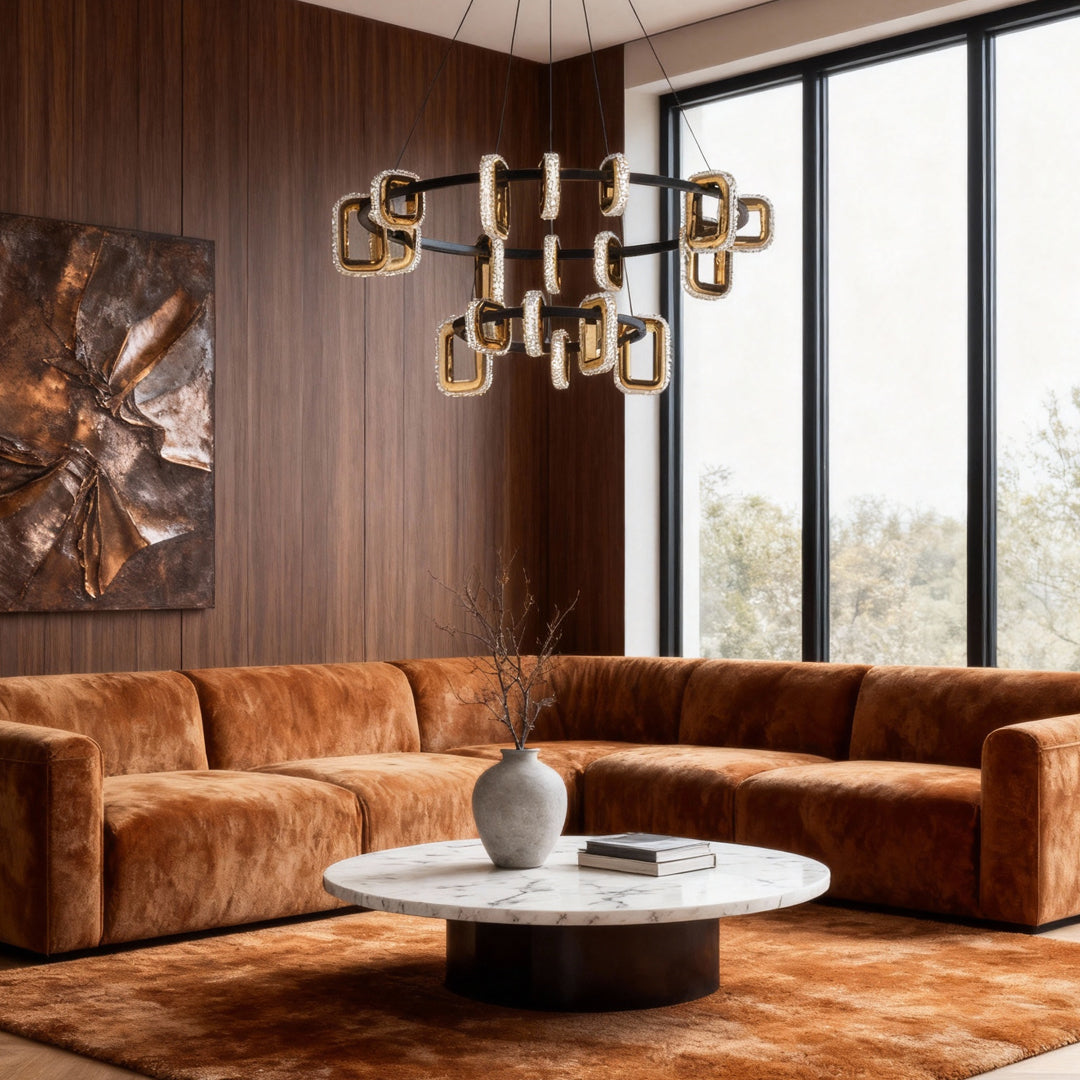
For homeowners who like the symmetry of a wagon wheel but not the traditional candle look, a circular frame with diffused acrylic elements can make the room feel lighter and more contemporary. Multiple head counts and tier arrangements also make it easier to scale one design language from a moderate seating zone to a taller great room.
Modern Ring Proportions
Modern Gold Chandeliers Personalized Acrylic Ceiling Light
Price: $714.99
Best for large contemporary living rooms that need a circular focal point with softer diffusion and a choice of single- or double-tier depth.
- The aluminum frame has a gold finish with white acrylic shades.
- A 47.2-inch adjustable suspension supports different ceiling heights.
- Listed configurations range from six heads to two-tier arrangements.
Use Diameter and Depth Together
A two-tier chandelier fills more vertical space than a single ring of the same width. In a vaulted room, that extra depth can be more effective than adding several inches of diameter.

Adjust for Ceiling Height
Ceiling height changes how far away the chandelier is from the people who see it. A 36-inch ring can look substantial at nine feet and undersized at fourteen feet. As the ceiling rises, you can add diameter, choose a thicker frame, increase tier count, or lower the fixture into the room. Often, a combination of modest changes works better than one extreme move.
In an open walking area, keep the bottom of the chandelier at least about 7 feet above the finished floor, with additional clearance for tall occupants and active circulation. Do not automatically hang it close to the ceiling just because the room is tall. A fixture that is too high becomes ceiling decoration instead of part of the living space.
For vaulted ceilings, confirm whether the canopy and suspension system can accommodate the slope. Also check the longest available chain, cable, or rod. A fixture may have the right diameter but still fail visually if its suspension cannot bring it down to an intentional height. In a two-story room, study the view from the upper floor so exposed lamps do not sit directly at eye level.

Check the Bottom Edge, Not Just the Chain
Product height may include the suspension, the fixture body, or both. Confirm exactly what the listed measurement represents before calculating clearance.
Single Tier or Double Tier?
A single-tier wagon wheel emphasizes width. It works well in a broad room with a ceiling that is high but not cavernous, or when the fireplace, beams, and tall windows already provide strong vertical elements. Its open center keeps sightlines cleaner and usually feels less formal.
A double-tier design adds height and visual density. It is often the better choice for a vaulted great room, a two-story living room, or a seating area surrounded by oversized architecture. It can also help a 39- or 40-inch fixture feel appropriate where a thin single ring of the same diameter would disappear.
Do not choose two tiers simply because the room is “large.” If the ceiling is only nine or ten feet, the added vertical depth may bring the lower ring too close to eye level. In that situation, a wider single tier can give you scale without sacrificing clearance.
How Many Lights Do You Need?
Light count affects visual rhythm and potential brightness, but it is not a substitute for diameter. A 20-light chandelier may still look small if its ring is compact. Likewise, a large open wheel with 12 lights may appear perfectly scaled while allowing other fixtures to handle the room’s general illumination.
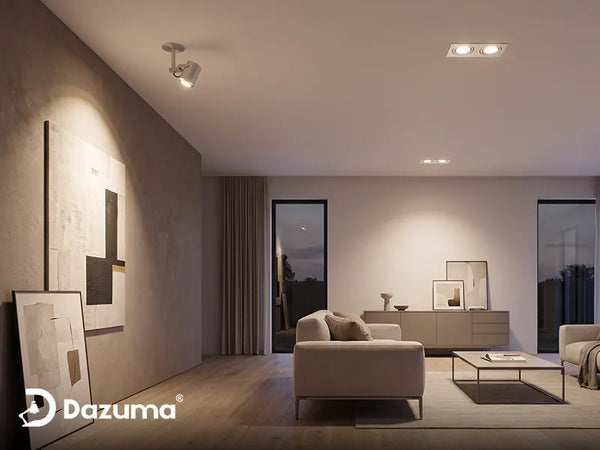
In a large living room, think of the chandelier as one layer. Use lamps for faces and reading, recessed or directional lights for artwork and architectural surfaces, and the wagon wheel for ambient glow and visual focus. This prevents the common mistake of installing very bright exposed bulbs simply because the ceiling fixture is expected to do everything. The Living Room Lighting collection can help you think beyond a single overhead source.
When the design uses exposed candle-style lamps, consider glare from the sofa and any second-floor balcony. Lower-output warm lamps or dimming can make a large head count more comfortable. If you want this traditional expression, compare options in the Candle Chandeliers collection.
A Traditional Wheel for a Vaulted Room
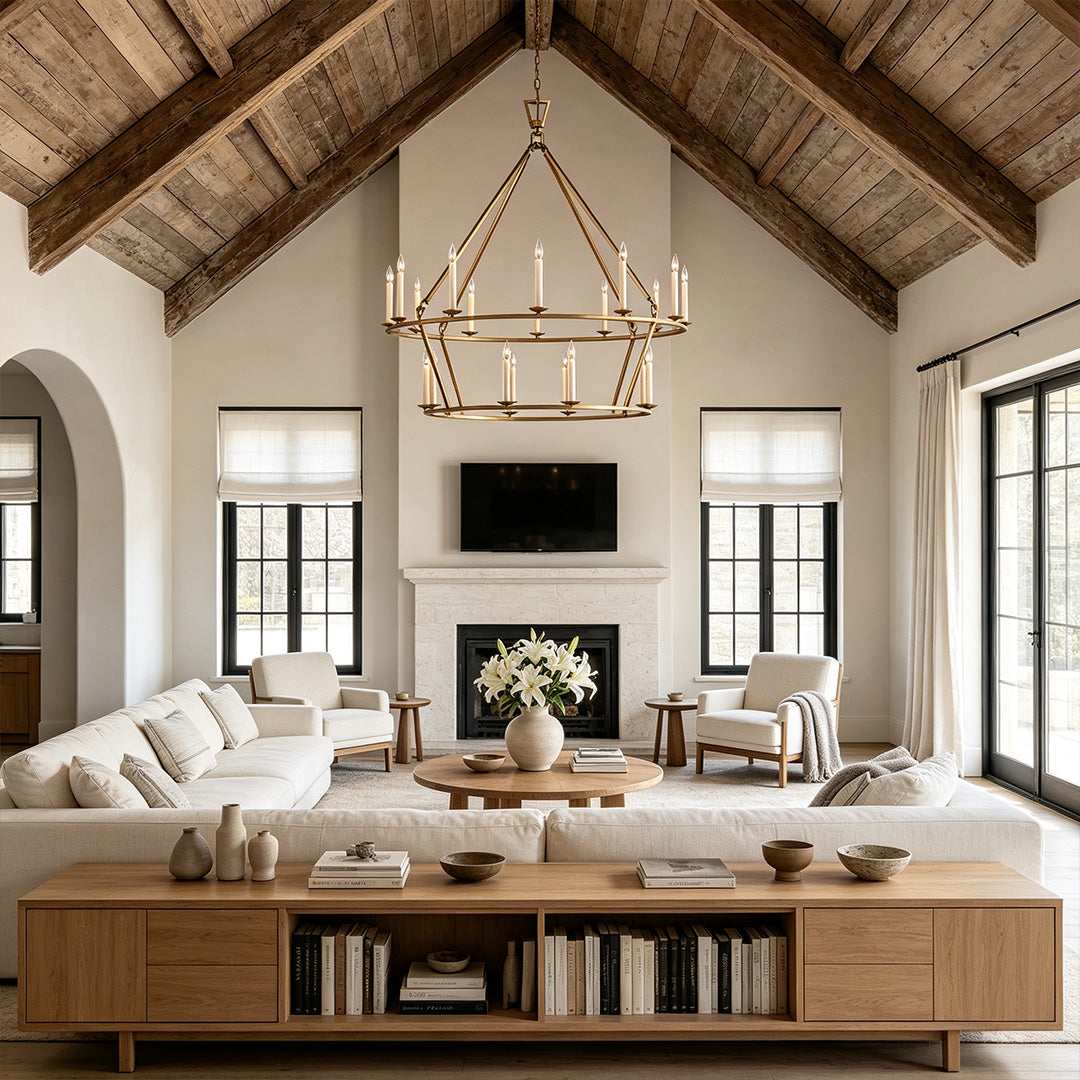
A gold iron frame with evenly spaced candle lights gives the wagon wheel silhouette a warmer, more architectural presence. The choice between 12 and 20 heads lets homeowners coordinate the light count and diameter rather than treating them as separate guesses.
Warm Candle-Style Scale
Candles Chandelier American Retro Style Metal Ceiling Light
Price: $1,248.99
Best for vaulted or generously sized living rooms that need a traditional wagon wheel silhouette with a stronger candlelit presence.
- The 20-head version adds both diameter and vertical depth.
- The 19.7-inch adjustable suspension supports different mounting heights.
- The fixture is hardwired for 110V with wall-switch control.
Match the Light Count to How You Use the Room
A room used for conversation and television needs lower, dimmable ambient light than a multipurpose great room used for games, homework, and entertaining. Plan brightness around activities, not appearance alone.
Placement and Installation Checks
Before ordering, confirm the fixture weight, ceiling-box rating, framing, canopy size, suspension type, voltage, and access for future cleaning. Large wheel chandeliers may distribute their visual mass broadly, but the mounting point still carries the physical load. Vaulted ceilings and heavy fixtures are good reasons to involve a qualified electrician before the ceiling is closed or refinished.
Center the chandelier on the intended furniture arrangement, not automatically on the room’s four walls. In a large living room, a fireplace, asymmetrical windows, or open kitchen may shift the visual center. If the sofa group moves during installation planning, recheck the fixture location before wiring is finalized.
Also consider how the chandelier will arrive and be assembled. Measure doorways, stair turns, and available floor space. Decide how bulbs or integrated components will be serviced once the fixture is overhead. For a safety-focused overview, see How To Hang A Chandelier Safely And Correctly.

Approve the Fixture From the Sofa
The most important view is usually not directly underneath the chandelier. Sit where your family will sit and check scale, glare, fireplace overlap, and television sightlines.
Common Sizing Mistakes
- Using the entire open-plan footprint: Size to the zone the chandelier serves unless it truly anchors the whole space.
- Choosing diameter without checking depth: A double tier can add more presence than several extra inches of width.
- Assuming more lights mean a larger fixture: Confirm the actual ring diameter and overall height.
- Hanging too close to the ceiling: High rooms often need the chandelier lowered into the occupied visual field.
- Ignoring fixture density: Thin open wheels can usually be wider than heavy, detailed frames.
- Relying on one overhead light: Layered lighting is more comfortable and flexible in a large living room.
- Waiting to verify structure: Confirm mounting support, slope compatibility, and access before purchase.
Final Advice
Start with the room-length-plus-width shortcut, then test the result against the seating zone, ceiling height, and visual density of the fixture. For many large living rooms, 36 to 48 inches is the practical middle ground; taller or more expansive rooms may need 48 inches or more, a double tier, or a visually stronger frame. Use a temporary mockup, check every major sightline, and plan the chandelier as part of a layered lighting scheme.
If you want to compare wagon wheels with other large-room silhouettes, browse the broader Chandeliers collection. The right choice should feel generous from across the room, comfortable from the sofa, and practical to install and maintain.