
Who This Is For: This guide is for homeowners, remodelers, and DIY-minded kitchen planners who are trying to decide whether pendant lights over kitchen islands should line up with the island, the room, the sink, the seating, or the electrical boxes already in the ceiling.

Quick Answer: Should Pendant Lights Over Kitchen Islands Be Centered?
Most of the time, yes: pendant lights over kitchen islands should be centered on the island, not centered in the entire kitchen. That means the pendant layout should follow the island's length, width, and main work surface. If the island is not perfectly centered in the room, the pendants usually should not be centered in the room either.
The cleaner rule is this: center the pendant group over the island, then fine-tune around how the island is used. If the island has seating on one side, pendants should still feel centered over the countertop, but they should not hang so far toward the seats that they block faces or feel like they are floating over someone's head. If the island has a sink, cooktop, beam, skylight, or range hood nearby, a slight adjustment may look more intentional than forcing strict symmetry.
A simple rectangular island used mostly for prep may look best with evenly spaced lights down the center. A large island with a sink at one end may look better when the pendants are centered over the open prep and seating zone instead of landing directly over the faucet.
Center The Pendants On The Island, Not The Room
One of the most common kitchen lighting mistakes is using the ceiling as the main reference point. It seems logical at first. The builder may have placed a junction box in the center of the room, or the ceiling joists may make one location easier to wire. But pendant lights are not general ceiling decorations. They are task and focal lighting for the island.
In a real kitchen, the island is often shifted to improve walkway clearance, line up with lower cabinets, or leave enough space near the refrigerator and range. If you center the pendants in the room while the island sits slightly to one side, the lights can look wrong from every daily angle. They may line up with the ceiling, but they will not line up with the counter, stools, or work surface.
A better starting point is to mark the island's centerline. For the width, measure front to back and mark the center of the countertop. For the length, mark the midpoint or divide the usable length into equal sections. Then view the island from the main entry, the living room, and the sink wall. The layout should look connected to the island from the places where people actually see it.
If you are still comparing shapes and finishes, browsing modern pendant lights can help you visualize how clean globe, cone, and linear forms behave over a long counter. The fixture shape matters because a narrow pendant can tolerate tighter spacing, while a wide shade needs more visual breathing room.

The Island Is The Visual Anchor
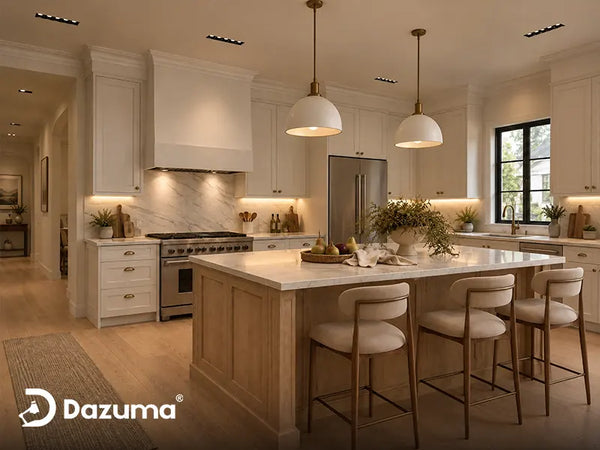
When someone walks into the kitchen, they read the island and pendants as one composition. If those two elements agree with each other, the room feels intentional even when the island is not perfectly centered in the architectural space.
Single Pendant Vs. Multiple Pendants Over A Kitchen Island
The centering rule changes slightly depending on how many fixtures you use. With one pendant, the fixture is usually centered over the island's main work zone. With two or three pendants, the group should be centered as a whole. Each pendant does not need to line up with a cabinet door, stool, or drawer. In fact, trying to match every pendant to another kitchen element often makes the ceiling feel busy.
For One Pendant
A single pendant works best over a small island, compact prep table, or square island. Center it on the island's top, unless there is a sink or cooktop that would put the pendant directly in an awkward line of sight. If the island is long and the single fixture is decorative rather than task-focused, consider whether a larger shade or a linear fixture would look more balanced.
For Two Pendants
Two pendants should usually divide the island into thirds. In practical terms, each pendant often lands about one-third of the way in from either end. This gives the pair enough distance from the island edges and keeps the center from feeling empty. Two pendants can be especially good on medium islands where three small lights would feel crowded.
For Three Pendants
Three pendants should read as a centered row. The middle pendant often sits on the center point of the island, with the other two spaced evenly to the left and right. This layout is popular because it feels balanced from the kitchen entry and gives even light along the counter. For more detail on height, you can pair this centering guide with Pendant Lighting Height Over Kitchen Island: The Ultimate Guide, since height and centering affect each other visually.

When Off-Center Pendant Lights Make Sense
Perfect symmetry is not always the best answer. A kitchen island is not just a rectangle on a floor plan; it is a working surface with habits built around it. If the island has a sink, you may not want a pendant directly over the faucet where it competes with the window view or makes the faucet area look cluttered. If the island has seating, you may want the pendants slightly closer to the work side so they illuminate prep space without hanging over a guest's face.
A small offset is also common when a ceiling beam, HVAC register, recessed light, or skylight conflicts with the ideal spot. The goal is not to hide every compromise. The goal is to make the final placement look intentional. If the pendants are moved a few inches, keep the spacing consistent and make sure the row still feels related to the island.
One field trick is to tape the pendant locations on the counter first. Use painter's tape or small paper circles to mark the center of each fixture on the island top. Then stand where you normally enter the kitchen. If the tape looks balanced on the island, transfer those marks to the ceiling with a laser or plumb bob. This simple step catches mistakes that a tape measure alone can miss.
Offset By Function, Not By Accident
If you move pendant lights away from the exact island center, make the reason clear: avoid a faucet, protect a sightline, or improve task light. Random offsets look like mistakes. Functional offsets feel designed.

Kitchen Island Pendant Spacing Guide
Centering looks best when the spacing also feels comfortable. A pendant can be technically centered and still look wrong if it hangs too close to the island edge, too close to another pendant, or too low in front of someone's eyes. The following measurements are useful starting points for most American kitchens, but you should always adjust for fixture diameter, ceiling height, and the scale of the room.
| Placement Question | Practical Starting Point | What To Check |
|---|---|---|
| Distance From Island Ends | About 12 to 18 inches in from each end | Avoid a cramped edge, especially with large shades. |
| Space Between Pendants | Often 24 to 30 inches between fixtures | Measure shade edge to shade edge, not only canopy to canopy. |
| Height Above Countertop | Commonly 30 to 36 inches above the counter | Keep faces, views, and serving platters unobstructed. |
| Width Centerline | Usually centered front to back on the island | Shift slightly toward prep side only when seating glare is an issue. |
| Number Of Pendants | Two for many medium islands, three for longer islands | Use fixture diameter and island length together. |
Do not treat these numbers as a rigid formula. A pair of large metal shades may need more negative space than a row of slim glass globes. A low ceiling may call for smaller pendants or a slightly higher hang height. If your island is extra long, a set from pendant lighting collections can help you compare scale before committing to the ceiling layout.
A Soft Modern Globe Option For Centered Island Layouts
For kitchens where the pendant row needs to feel light, polished, and not too heavy above the island, a glass globe shape is often forgiving. It gives you a clear center point, but the transparent shade keeps the visual weight softer than a solid metal dome. This can be helpful when the island is already busy with stools, veined stone, open shelving, or tall cabinet panels nearby.
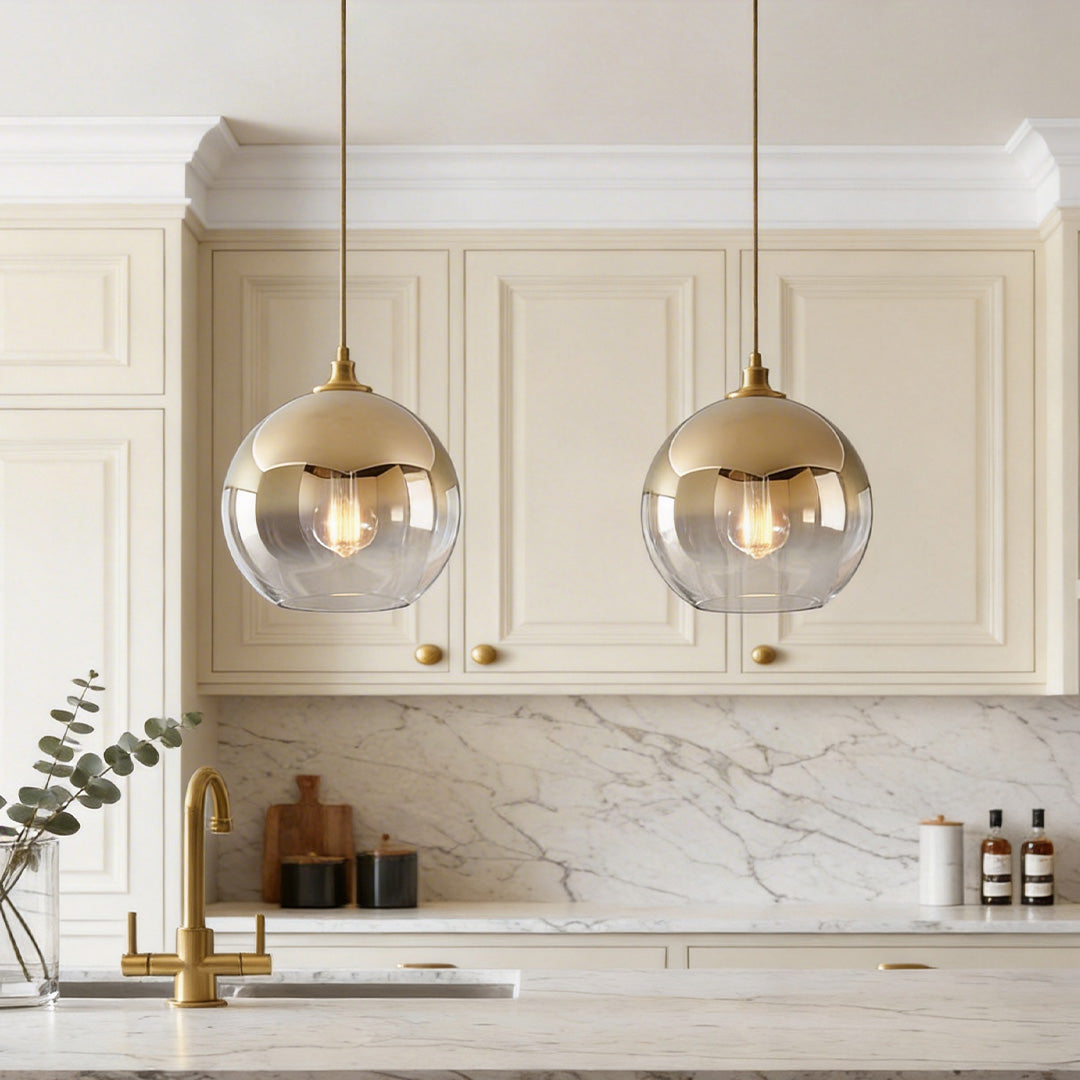
Glass Round Pendant Light Modern Single-Ball Ceiling Light
Price: $119.99
This works well when you want centered pendant lights over a kitchen island to feel refined without visually closing in the space. The glass shade is especially useful when the island faces an open living or dining area.
- Single-globe design gives each fixture an easy visual center point.
- High-transparency glass helps soften the row above the island.
- Available in gold or silver finishes for modern kitchen palettes.
Check Sightlines Before You Commit
The island is often where people talk, eat, help with homework, and set out food when guests come over. That means pendant placement has to work while people are standing and sitting. A layout that looks perfect on a floor plan can feel annoying if the shade blocks your view of the person across from you.
Before installation, stand at the sink and look toward the island seats. Sit at one stool and look toward the cooktop or living room. If the pendants land directly in the middle of normal eye contact, raise them, choose a smaller shade, or move the row slightly toward the working side of the island. The fix is usually small, but it matters every day.
Style also affects sightlines. Glass pendants feel more open. Wide metal domes feel more grounded and directional. Farmhouse, industrial, and vintage kitchens often benefit from deeper shades, but those shades need enough clearance. If your kitchen leans warm, rustic, or transitional, farmhouse pendant lights are worth comparing because the shade depth and finish can change how centered placement feels from across the room.

Centered Does Not Mean In The Way
A pendant can be centered over the island and still be raised or sized to keep the kitchen comfortable. Visual balance matters, but daily use matters more.
A Vintage Metal Option For Stronger Downlight
If your island needs a more defined pool of light, a metal shade can be a good fit. Compared with a clear glass globe, a semi-globe metal pendant has more visual weight and directs light downward. That makes it useful over prep zones, home office-style island work areas, or kitchens where the pendant row is meant to be a stronger design feature.
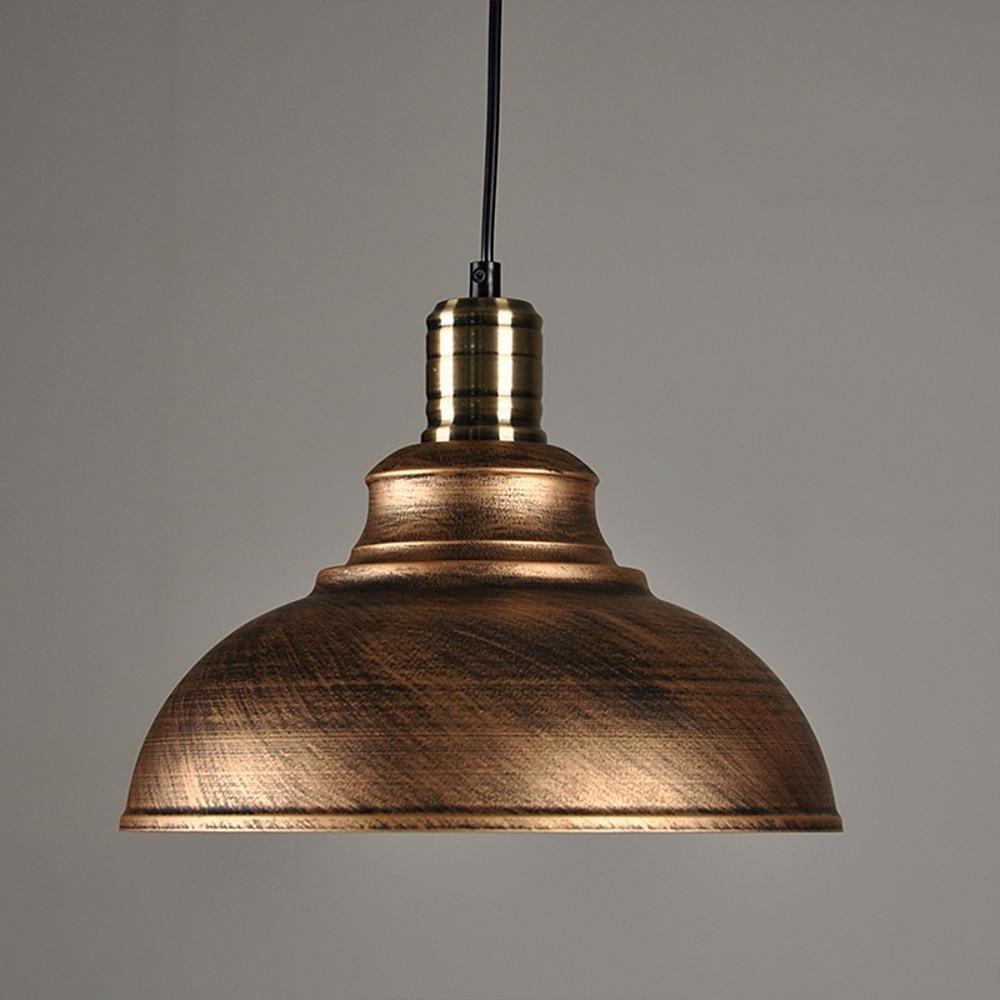
Semi Globe Metal LED Vintage Pendant Light Hanging Lamp For Kitchen Island
Price: $124.99
This style makes sense when the pendant row is meant to look more substantial. Because the shade is metal, spacing and height should be checked carefully so the lights feel balanced rather than heavy.
- Metal construction gives the fixture a clean industrial presence.
- Adjustable cord helps fine-tune height over the island surface.
- Available in red bronze, white, black, and silver finishes.
Common Centering Mistakes To Avoid
Mistake 1: Centering On Old Junction Boxes
Many kitchens have old electrical boxes left from a previous light fixture. Do not assume those boxes are in the right place for the new island layout. If the island moved during a remodel, the ceiling boxes may need to move too. Swagging a cord can work in some casual spaces, but for a clean kitchen island row, proper box placement usually looks better.
Mistake 2: Ignoring Fixture Diameter
Spacing should account for the outside edge of the shade, not only the center point of each canopy. Two 16-inch pendants can look much closer than two 8-inch pendants even if the center-to-center spacing is the same. Always tape the actual shade diameter on the counter if you are unsure.
Mistake 3: Matching Pendants To Stools
It is tempting to place one pendant above each stool, but that can make the lighting feel like it belongs to the seats instead of the island. Stools move. People add or remove them. The island is permanent. Center the lighting layout on the counter first, then make sure the seats still feel comfortable.
Mistake 4: Forgetting The View From Adjacent Rooms
Open-concept kitchens are seen from the dining area, living room, hallway, and sometimes the front door. A layout that looks centered from the sink wall may look slightly off from the sofa. The best solution usually balances the most important viewpoints rather than chasing mathematical perfection.

Summary: The Practical Centering Rule
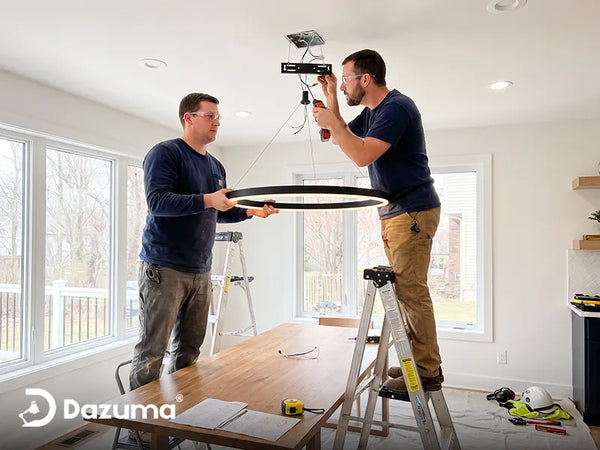
Before the electrician cuts, moves, or installs boxes, run through a final placement check. First, confirm the island centerline front to back. Second, confirm the pendant group is centered along the usable island length. Third, check that each pendant has enough distance from the island ends. Fourth, sit and stand around the island to test sightlines. Fifth, compare the shade diameter to the spacing, not just the canopy location.
The best answer to “Should pendant lights over kitchen islands be centered?” is not a simple yes or no. They should usually be centered on the island, but adjusted for real life. A kitchen is not a showroom drawing. It has people moving through it, stools sliding in and out, dishes being passed, and conversations happening across the counter. When the pendant layout respects those daily patterns, the island feels calmer, better lit, and more finished.
In short, start with the island centerline, center the pendant group as one visual unit, then make small practical adjustments for sinks, seating, beams, sightlines, and shade size. That approach gives you a layout that looks centered without ignoring how the kitchen is actually used.
If you are planning a full kitchen lighting refresh, you can also compare style direction in Best Pendant Lights for Kitchen: Top Picks & Styling Tips. Once you know the fixture size and shade shape, the centering decision becomes much easier to make with confidence.
The Best Layout Feels Centered And Livable
A good pendant plan should make the island look balanced at first glance and feel comfortable during everyday use. When those two goals disagree, choose the solution that supports how the kitchen is actually used.