
Who This Is For: This guide is for homeowners, renovators, and designers who want a modern villa exterior to feel refined, welcoming, and safe after dark without turning the property into an overlit showroom.
Introduction: Let the Architecture Lead
The best outdoor lighting ideas for a modern villa exterior begin with restraint. Modern architecture already has strong lines, deep overhangs, large windows, textured walls, and carefully planned landscaping. Lighting should reveal those features in a deliberate order. It should not make every surface equally bright.
A useful nighttime view has a foreground, a focal point, and some shadow. The front door may be the brightest destination, a stone wall may carry a soft wash, and a specimen tree may appear as a secondary accent. Paths and steps should be easy to read, but their fixtures do not need to dominate the scene. That balance is what makes a villa feel calm and expensive rather than busy.
The Quick Answer
Use a layered plan with shielded wall lights at entrances, wall-wash or grazing light on selected architectural surfaces, low path lighting along changes in direction, integrated light at stairs, and a few landscape accents. Keep most decorative and ambient light in a warm 2700K to 3000K range, place sources below normal sightlines when possible, and put separate zones on timers or smart controls. The modern look comes from clean placement and controlled contrast—not from maximum brightness.

Build the Outdoor Lighting Plan in Layers
Think of the exterior as a composition instead of a list of fixtures. Start with three layers and give each one a job.
Ambient Light Establishes the Scene
Ambient light is the low, comfortable base layer around the entrance, terrace, or courtyard. It may come from covered wall sconces, ceiling fixtures under an overhang, or concealed linear light. It should support movement and conversation without flattening every texture.
Task Light Protects Movement
Task lighting belongs where people unlock doors, use an outdoor kitchen, walk down stairs, or move between parking and the house. It can be brighter than the ambient layer, but it should be tightly aimed. A small pool of useful light is more comfortable than a bare lamp visible from across the property.
Accent Light Creates the Villa’s Nighttime Identity
Accent lighting reveals a stone column, sculptural tree, water feature, or long stucco plane. Choose only a few elements. If every tree, wall, and planter becomes a focal point, none of them feels important. For a broad architectural surface, well-aimed wall wash lighting can create a quieter result than a row of exposed decorative fixtures.

Design the Arrival Sequence, Not Just the Door
Walk the route from the street or driveway to the front door. The eye should pick up the gate, the path, any change in level, and finally the lock and handle. This sequence feels effortless when each pool of light overlaps slightly but the sources themselves remain discreet.
Plan Modern Villa Lighting by Exterior Zone
Before selecting finishes, decide what each zone must accomplish. The table below is a practical starting framework rather than a rigid specification; mounting height, surface reflectance, landscaping, and local code can all change the final output.
| Exterior Zone | Useful Fixture Approach | Desired Effect | Common Mistake |
|---|---|---|---|
| Front entry | Shielded sconces, recessed downlights | Clear face, lock, address, and threshold | Bare lamps at eye level |
| Façade | Wall wash, grazing, narrow accent beams | Reveal form and selected materials | Lighting every wall equally |
| Paths and driveway | Low shielded path lights, bollards | Show edges, turns, and transitions | Perfectly even runway spacing |
| Stairs | Recessed step lights, concealed linear light | Make every tread and landing readable | Lighting only the top and bottom |
| Garden | Downlights, spotlights, sculptural lawn lights | Create depth with a few focal points | Spotlighting every plant |
| Patio or pool deck | Indirect wall light, under-seat light, low accents | Comfortable faces and safe boundaries | High-output cool floodlights |
Use Façade and Entry Lighting to Clarify the Architecture
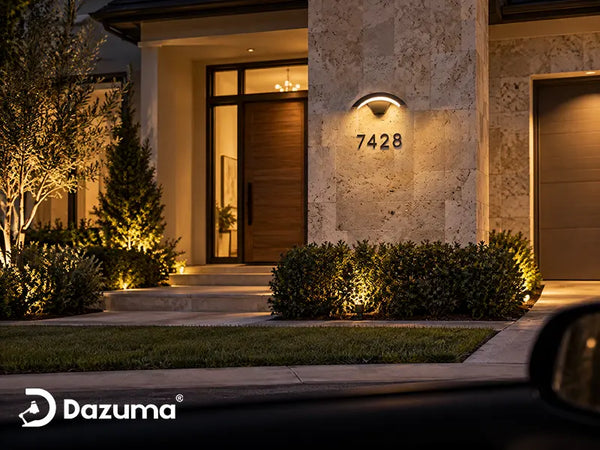
A modern villa often combines smooth stucco, stone, concrete, wood, and glass. These materials should not all be lit the same way. A soft wash suits a broad, calm wall. A closer grazing light emphasizes rough stone or ribbed concrete. A narrow beam can pick out one column or canopy edge. Test the direction before permanently installing fixtures; grazing can also exaggerate surface imperfections that were nearly invisible by day.
Match the Beam to the Surface
Place wall-wash fixtures farther from the wall for an even field, and use closer placement only when you intentionally want texture and shadow. Keep beams below rooflines and away from bedroom windows. This improves the composition and reduces stray light.

At the front door, scale matters. A tall pivot door or double-height porch can handle longer vertical fixtures, while a low canopy may look better with compact, shielded forms. Browse modern outdoor wall lighting by beam direction as well as appearance. An attractive fixture can still be uncomfortable if its brightest point sits directly in a guest’s line of sight.
Use symmetry only when the architecture calls for it. Matching lights on both sides of a centered door reinforce formal balance. For an offset entry, one well-proportioned sconce plus concealed canopy light may feel more intentional. If you want a more detailed comfort check, see how to avoid glare from outdoor wall lights before deciding the mounting position.
Shape Paths and Landscaping with Rhythm and Shadow
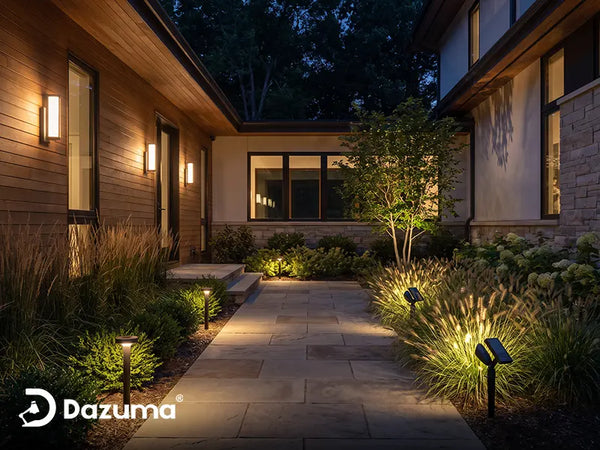
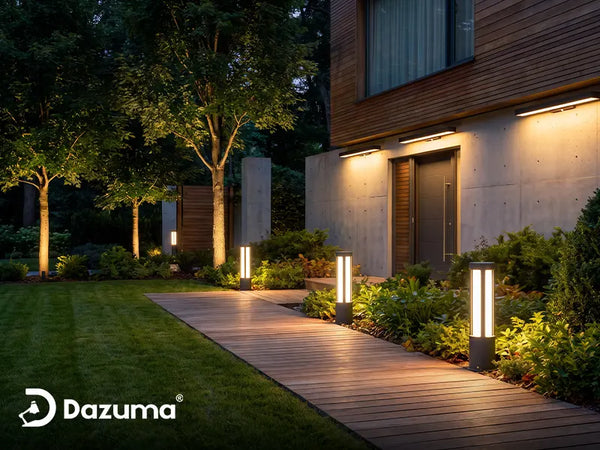
Modern path lighting should describe the route without turning it into an airport runway. Place lights at bends, grade changes, intersections, planting pockets, and destinations. Alternate sides when the path allows it, and use landscape features to create rhythm. The spacing does not need to be mathematically identical if the result is visually balanced.
Low fixtures work best when their light reaches the walking surface and their bright source stays hidden. The clean silhouettes in a modern path lights collection can support minimalist architecture, but fixture appearance is only half the decision. Also consider the beam spread, nearby foliage, irrigation, mower clearance, and the way plant growth may block light later.

Add One Sculptural Moment
A villa landscape can support a single decorative surprise: a glowing sphere near ornamental grass, a lantern beside a lounge chair, or a lit sculpture at the end of a sightline. Keep it separate from the safety-lighting grid so it reads as art rather than another marker.
For a garden that needs a stronger nighttime identity, the following moon-shaped light creates a soft focal object while still fitting a modern landscape. It is especially useful where ordinary stake lights would feel too repetitive.

Sculptural Garden Accent
Moon Light Modern Waterproof Outdoor LED Lawn Light
Price: $269.99
Best for lawns, courtyards, garden paths, and terrace edges that need one memorable decorative feature rather than another conventional post light.
- The moon-textured PE plastic body becomes a visible landscape object by day and a warm focal point at night.
- Available diameters are 9.8, 15.7, and 23.6 inches for different lawn and courtyard scales.
- The IP65 rating suits exposed outdoor placement, while the E27 bulb base simplifies future light-source replacement.
Keep Patios, Courtyards, and Pool Areas Relaxed
Outdoor living spaces need enough light for faces, food, and safe movement, but they should still feel connected to the night. Put the strongest task light over a grill or prep counter, then use softer indirect light around seating. Under-bench lighting, low wall light, and a shielded floor or table lamp can create a more residential atmosphere than a single bright fixture overhead.
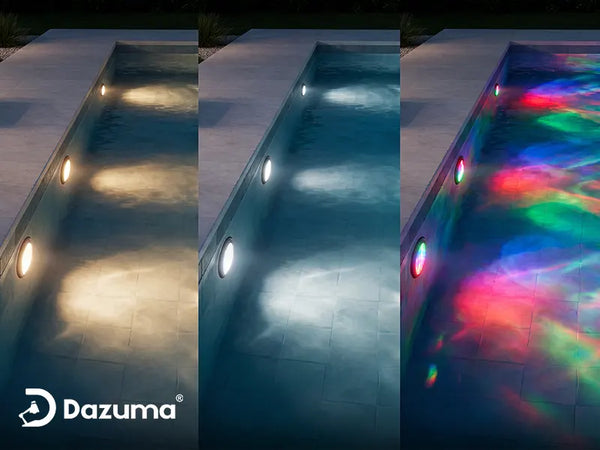
Reflections matter near glass doors, dark windows, polished stone, and water. A fixture that looks mild in daylight may produce a distracting bright point after sunset. View the mockup from the sofa, dining chair, pool edge, and interior rooms—not only from the installation location.

Make Stairs and Level Changes Read Clearly
Good stair lighting makes the front edge of each tread visible without placing a bright source in the user’s eyes. Recessed sidewall lights work well on straight runs. Concealed linear light can suit floating steps, long contemporary stairs, curved landscape walls, or a continuous bench edge. Whatever the style, check the view from both directions and avoid shadows that make one tread blend into the next.
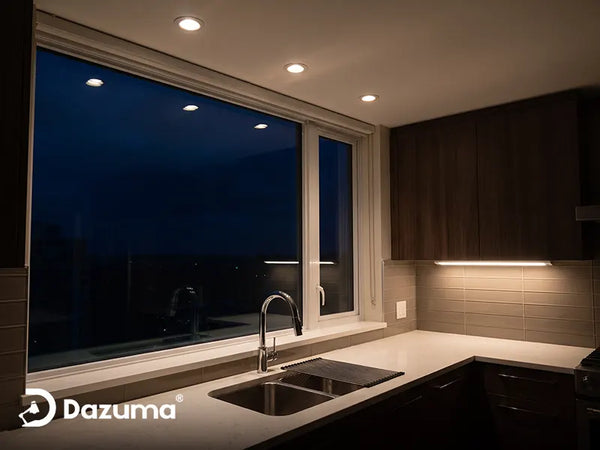
If construction is still open, coordinate channels, drivers, drainage, cable routes, and service access before masonry or decking is finished. Retrofitting a clean linear detail later is usually more disruptive. For additional placement and installation considerations, read how to put a light on outdoor stairs.
Flexible outdoor LED strip lights are especially useful when a crisp line of light supports the architecture. The product below offers flat and three-sided lighting models, multiple lengths, and three color-temperature choices.

Integrated Step and Edge Lighting
Outdoor Embedded LED Light Strips Modern Flexible Light
Price: $49.99
Best for recessed stair-tread edges, curved paths, low walls, courtyard details, and other continuous architectural lines.
- The flexible silicone-gel strip can bend and be trimmed at marked lines for custom layouts.
- Its flush-mounted profile creates a clean integrated effect along modern hardscape details.
- A compatible 24V transformer is required and is not included, so plan the power supply and service location before installation.
Choose Color Temperature, Control Glare, and Add Smart Timing
For most villa façades, wood details, planting, and social spaces, 2700K to 3000K creates a warm, residential mood. A neutral 3500K can work for select contemporary task areas, but mixing warm and very cool white within the same sightline often makes the exterior feel pieced together. Choose a dominant color temperature first, then allow exceptions only where a specific task or material benefits.
Color rendering also matters around finishes, food, plants, and faces. Compare actual samples at night because stone, paint, and wood may shift under different LEDs. The guide to choosing the perfect color temperature of outdoor lighting can help you narrow the range before ordering every fixture.
Use Darkness as Part of the Design
Shield sources, aim beams onto intended surfaces, and dim decorative layers after activity ends. Darker perimeter zones make the entrance easier to recognize, preserve garden depth, reduce bedroom-window spill, and keep the sky from becoming a gray background.

Create separate control zones for the entry, façade accents, paths, outdoor living area, and service spaces. A practical evening scene may keep the entrance and essential circulation on while dimming the façade and garden accents later. Timers, astronomical controls, dimmers, and motion sensors can reduce wasted light, but confirm that the selected fixtures and drivers are compatible before purchasing.
Modern Villa Exterior Lighting Buying Checklist
- Define the job: Decide whether each fixture provides orientation, task light, architectural emphasis, or decoration.
- Confirm outdoor suitability: Match the product’s listed ingress protection and installation location to rain, sprinklers, dust, and possible standing water.
- Check voltage and accessories: Verify transformers, drivers, junction boxes, connectors, dimmers, and controls before walls or paving close.
- Review the beam: Consider direction, spread, cutoff, and potential glare—not only lumen output.
- Coordinate finishes: Repeat one or two exterior fixture finishes instead of introducing a new finish at every zone.
- Mock up at night: Temporarily position fixtures and test views from the street, rooms, doors, seating areas, and neighboring sightlines.
- Plan maintenance: Leave access to drivers and connections, keep fixtures clear of growing plants, and choose surfaces that can be cleaned safely.
- Use a qualified installer: Outdoor hardwiring, low-voltage systems, wet locations, pools, and code requirements should be reviewed by the appropriate licensed professional.
Common Mistakes That Make a Villa Look Less Modern
Avoid rows of identical high-output fixtures, uncontrolled upward beams, mixed color temperatures, and decorative lights that compete with the architecture. Do not rely on one floodlight to cover the whole yard. Also resist choosing fixtures one zone at a time without a property-wide finish and control plan. The most polished exteriors repeat a small visual vocabulary while changing the light distribution to suit each task.
Final Advice
Begin with the nighttime experience you want: a clear arrival, a calm entrance, a few revealed materials, safe changes in level, and a garden that still has shadow. Then choose fixtures that perform those jobs with the least visible clutter. Test one section before buying for the entire property, especially when working with reflective stone, large glass walls, or very dark exterior finishes.
If you want to develop the plan further, start with the path, wall-wash, wall-light, and linear-light collections linked throughout this guide. A modern villa does not need more light everywhere. It needs the right light in a small number of carefully chosen places. That discipline keeps the result elegant in every season.