
Who This Is For: This guide is for homeowners furnishing a roofed porch, screened room, balcony, or covered patio who want softer, more flexible lighting without automatically adding fixtures to every wall.
Introduction
A covered patio often behaves more like an outdoor living room than a passageway. You may have a sofa, dining table, reading chair, or conversation area, but not a convenient junction box where you actually want light. That makes outdoor floor lamps appealing: they bring light down to a comfortable human scale and can visually finish a seating arrangement in a way a high wall fixture cannot.
Still, a floor lamp and a wall light do different jobs. The right question is not whether one fixture type is universally better. It is whether your patio needs localized atmosphere, dependable circulation light, architectural illumination, or a mix of all three. Once you define the job, the answer becomes much clearer.

The Quick Answer: Yes, but Not for Every Lighting Job
Outdoor floor lamps can replace wall lights for ambient lighting around a covered patio seating or dining zone. They are especially useful when you rent, do not want to open a finished wall, or regularly rearrange furniture. A pair of well-placed lamps can make faces easier to see, soften a dark corner, and give the patio the visual warmth of an indoor room.
They are not a complete substitute when the wall light is responsible for a door, step, grill, narrow walkway, house-number visibility, or general security. Those locations benefit from a fixed source that stays in the correct position every night. For many patios, the strongest plan is one restrained wall or ceiling layer for safe movement plus one or two floor lamps for comfort.
This is the same layered approach used indoors: ambient light helps people navigate, task light supports an activity, and accent light adds depth. If your patio has several functions, the zone-by-zone method in How To Light A Patio: 7 Zones You're Probably Missing is a useful companion to this decision.
Outdoor Floor Lamps vs. Wall Lights on a Covered Patio
| Decision Factor | Outdoor Floor Lamp | Wall Light |
|---|---|---|
| Best role | Localized ambient or task light | Fixed circulation, entry, or architectural light |
| Placement | Moves with furniture and changing patio zones | Stays aligned with a door, wall, or walkway |
| Installation | Solar, rechargeable, plug-in, or ground-mounted options | Usually requires a wall box and permanent wiring |
| Floor space | Needs a stable footprint outside traffic paths | Keeps the patio floor clear |
| Visual effect | Warm, residential, furniture-level glow | Defines architecture and broad wall surfaces |
| Reliability | Depends on charging, outlet access, and lamp stability | Consistent fixed position and hardwired power |
When Outdoor Floor Lamps Can Do the Job

A Lounge Area Needs Light Where People Sit
A wall sconce behind a deep outdoor sofa can leave faces in shadow, especially when the fixture is high or located across the room. A shaded floor lamp beside a chair or at the end of a sectional brings the light closer to eye level while keeping the source visually soft. That makes conversation feel more relaxed and can support casual reading without flooding the whole patio.
Floor lamps are also a smart answer when the patio layout changes with the season. You can move the lamp from a spring reading corner to a summer entertaining zone without relocating electrical work. They work particularly well in spaces where the architecture is attractive and you would rather not interrupt stone, brick, wood cladding, or large windows with additional fixtures.
The strongest candidates have a sufficiently wide, stable base; an outdoor-rated body; and a shade that controls glare. Browse outdoor floor lamps designed for exterior use rather than moving an indoor lamp outside. An indoor cord, socket, coating, and shade may not tolerate condensation or wind-blown rain, even under a roof.
A Solar Floor Lamp for Flexible Ambient Lighting
If the seating arrangement is far from an outlet, a solar and USB-rechargeable design can create a usable pool of light without running a cord across the floor. The important catch is charging: a lamp tucked deep under an opaque roof may not receive enough direct daylight, so plan a sunny charging position or use the USB option when needed.
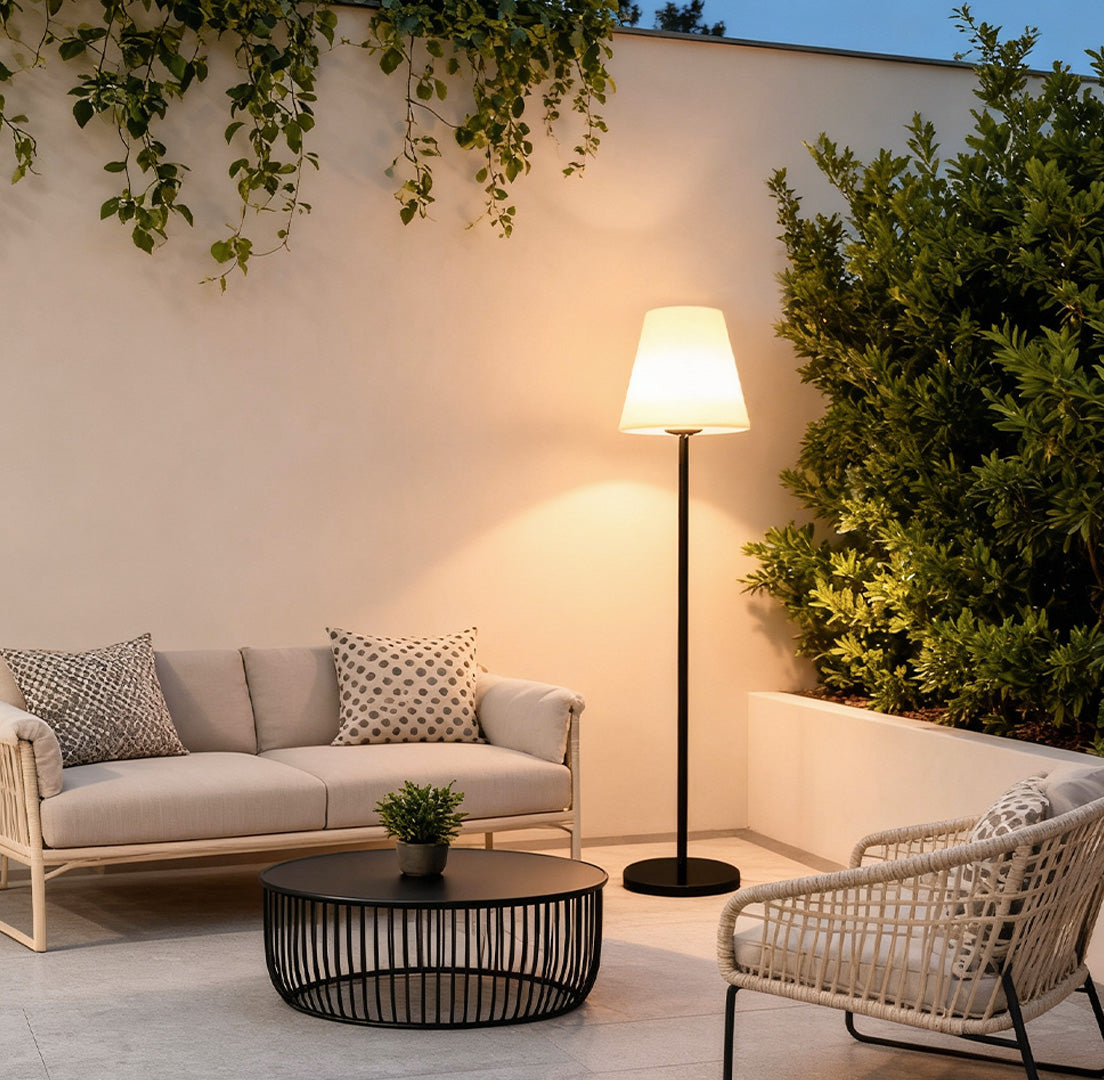
Modern Outdoor Floor Lamps Outdoor LED Metal Lights
Price: $215.99
This 59.84-inch lamp suits a modern lounge zone that needs portable ambient light and flexible color control.
- Warm white and RGB options adapt from quiet evenings to parties.
- The iron body and PE shade create a clean, contemporary silhouette.
- Remote control lets you adjust the light from the seating area.
When Wall Lights Still Win
Doors, Steps, Grills, and Narrow Paths Need Fixed Light
A fixture beside a door helps people find the handle, see the threshold, and identify visitors. A fixed light near a grill or change in level also stays aimed at the task instead of being shifted with the furniture. In these locations, a floor lamp is better as a secondary comfort layer than the only source.

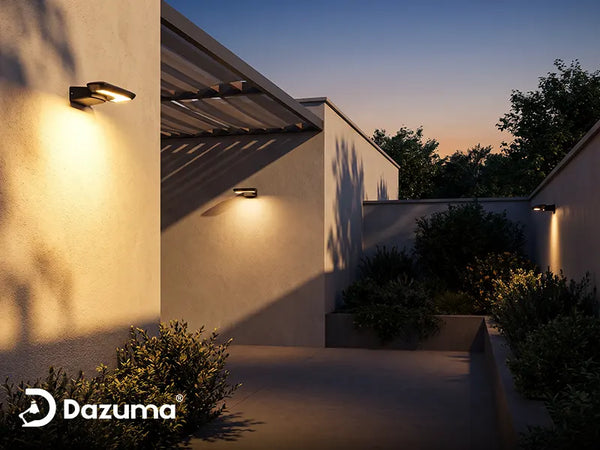
Wall lights also make sense on compact patios where every square foot matters. A standing lamp base can crowd a narrow balcony, interfere with a sliding door, or become a trip obstacle beside a dining chair. In those cases, properly shielded outdoor wall lighting supplies useful light while preserving the floor plan.
Choose the fixture by its job. A wall light can wash textured masonry, frame a door, or distribute light across a larger circulation area. A floor lamp typically creates a smaller, more intimate zone. Asking one small lamp to illuminate an entire patio usually produces a bright hot spot near the shade and gloomy edges elsewhere.
Covered Does Not Automatically Mean Dry

Match the Rating to the Actual Exposure
A roof blocks falling rain, but it does not stop humidity, condensation, sprinklers, or wind-driven water. A deep, protected porch is commonly treated as a damp location, while an exposed edge may behave like a wet location. Use the lamp only where its manufacturer permits, and do not assume an indoor fixture becomes safe simply because it sits under cover.
For a plug-in model, use an outdoor receptacle with appropriate GFCI protection and a weather-resistant cover, and keep the cord away from doors, chair legs, and drainage paths. Do not use an indoor extension cord as a permanent installation. If a lamp is hardwired or must be anchored, follow the supplied instructions and use a qualified electrician where local rules require one.
Wind matters too. A tall lamp can act like a lever even when it looks stable in a showroom. Check the weight and base footprint, place it on a level surface, and move or secure it before severe weather. Solar models add another planning question: the panel needs meaningful daylight. On a north-facing or deeply shaded porch, rechargeable or hardwired power may be more dependable.
A Lantern-Style Option with Solar and Hardwired Variants
A lantern-shaped standing light can visually bridge the gap between an indoor floor lamp and a traditional exterior fixture. This style works beside a sofa, at the open edge of a covered patio, or as a decorative marker between a dining and conversation zone. If the layout is permanent, a hardwired variant offers consistency; if flexibility matters more, the solar option avoids a floor cord.
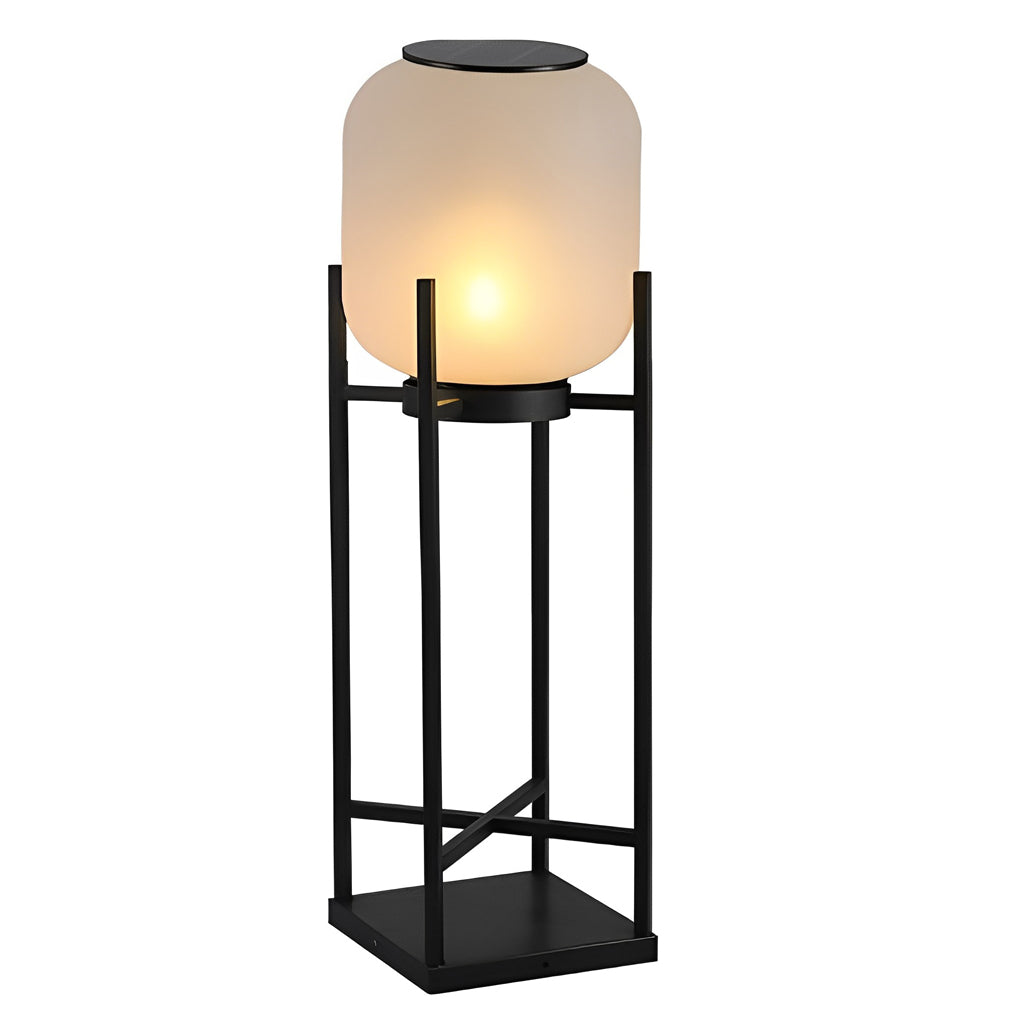
Outdoor Standing Light Lantern LED Metal Floor Lamp
Price: $399.99
The retro-modern lantern profile adds warm, decorative light to a lounge, garden-facing edge, or covered balcony.
- Stainless steel construction supports exterior placement and easy care.
- The acrylic lantern shade diffuses warm light around the seating zone.
- Available heights help match low lounge furniture or larger patio layouts.
A Practical Patio Placement Plan
Plan from the Activity Outward
Start with the chair, table, door, and walkway rather than the fixture. Put floor lamps just outside the main circulation line, where the shade can illuminate people without sitting directly in their field of view. Then walk the patio after dark and identify any threshold, corner, or route that still disappears.

For a Small Covered Balcony
Use one slim floor lamp beside the primary chair or sofa arm. If the door already receives light from inside, that may be enough for relaxed use. If the balcony is narrow, skip the standing lamp and consider a compact wall fixture instead. The dedicated outdoor porch lighting collection can help you compare fixture types for limited spaces.
For a Medium Lounge Patio
Place one lamp at each end of a sectional or use a floor lamp on one side and a ceiling fixture on the other. Symmetry is not mandatory; balanced brightness is more important. If one side borders the house and the other opens to the yard, a wall light on the house side plus a floor lamp near the open edge often feels natural.
For a Patio with Dining and Seating Zones
Treat the areas separately. A floor lamp can make the sofa zone intimate, while a pendant or flush fixture supports dining and cleanup. Browse outdoor ceiling lights if the table needs broader, more even coverage. For more floor-lamp-specific inspiration, see Best Outdoor Floor Lamps for Patios and Decks.
Brightness, Color, and Glare

Comfort Usually Matters More Than Maximum Output
On a covered patio, light reflects from the roof, walls, and floor. A lower-output shaded lamp can therefore feel more comfortable than a bare, high-output source. Warm white around 2700K to 3000K usually complements wood, stone, wicker, and evening skin tones, while brighter neutral light may be useful at a grill or work surface.
Do not evaluate brightness from the wattage alone. LED wattage indicates energy use, not the complete visual result. Look for lumen information where available, but also consider shade opacity, beam direction, mounting height, surface colors, and the size of the zone. Dark brick and charcoal furniture absorb more light than pale stucco and light cushions.
Glare is the faster way to ruin a patio than slightly low light. When seated, check whether you can see the LED source directly beneath or through the shade. A diffused or well-shielded lamp should brighten faces and tabletops without making people squint. Dimming or multiple lower-output sources gives you more control than one overpowering fixture.
Buying Checklist Before Replacing Wall Lights
- Define the job: Is the lamp for conversation, dining, reading, safe movement, or security?
- Confirm the exposure rating: Match the fixture to dampness, wind-driven rain, condensation, and sprinklers at the exact location.
- Check the power plan: Verify solar access, charging routine, outlet location, cord path, or hardwired installation needs.
- Protect the walkway: Keep the base and any cord outside the route between doors, chairs, steps, and the yard.
- Consider wind and pets: Choose a stable footprint and follow any anchoring guidance from the manufacturer.
- Control glare: Favor a diffused or shielded source, especially when the lamp will sit near eye level.
- Match the scale: A low lantern works beside lounge furniture; a taller floor lamp can serve a larger seating group.
- Keep one fixed layer when needed: Do not remove dependable door, step, or task lighting just to simplify the fixture count.
Common Mistakes to Avoid
Using One Decorative Lamp as Whole-Patio Lighting
A floor lamp may look bright in a product photo yet illuminate only the nearby furniture. Test the farthest seat, door, and step after dark. If those areas disappear, add a separate fixed layer rather than choosing an uncomfortably bright lamp.
Putting a Solar Panel Permanently in Deep Shade
A covered patio can protect the lamp while also blocking the sunlight needed to charge it. Observe the location over a full day. If the roof prevents useful exposure, choose a USB-rechargeable or hardwired alternative, or move the lamp to charge as the instructions allow.
Assuming IP65 Solves Every Installation Problem
An IP rating describes enclosure protection, but it does not make a poor cord route, unstable surface, damaged connector, or improper wiring safe. The complete installation still needs to suit the patio and follow the product instructions.
Choosing Style Before Checking the Footprint
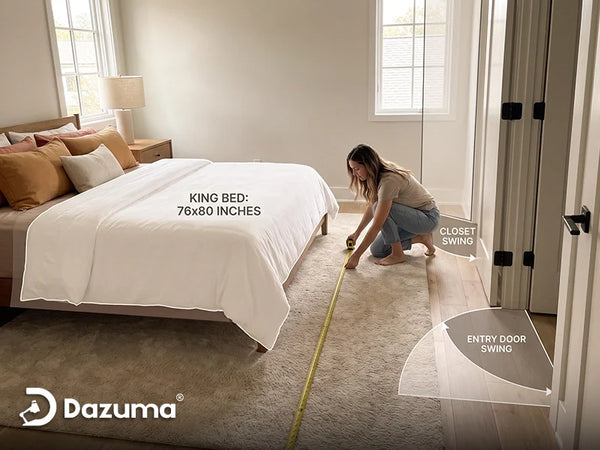
Mark the base dimensions on the floor with painter's tape. Pull out every dining chair and open every door. This quick test reveals whether the lamp will feel integrated or become an obstacle.
Final Advice
Outdoor floor lamps can replace wall lights on a covered patio when the main goal is warm, flexible illumination around furniture. They are particularly effective for renters, finished walls, changeable layouts, and lounge zones that feel flat under high-mounted light.
Keep wall or ceiling lights when you need dependable illumination at a door, step, grill, or narrow traffic path. In most medium and large patios, the best-looking result is not a strict either-or choice. Use fixed fixtures sparingly for safety and circulation, then use floor lamps where people actually sit. That combination makes the patio feel intentional after dark without overlighting it. Always test the finished layout after sunset.